











Diagnostics and troubleshooting: open circuit, short circuit, panel inspection
Diagnostics is the first stage of any work with wiring: without precise fault detection, replacing a cable or sockets does not solve the problem, but merely moves it to another section of the network.
How we look for an open circuit and a short circuit
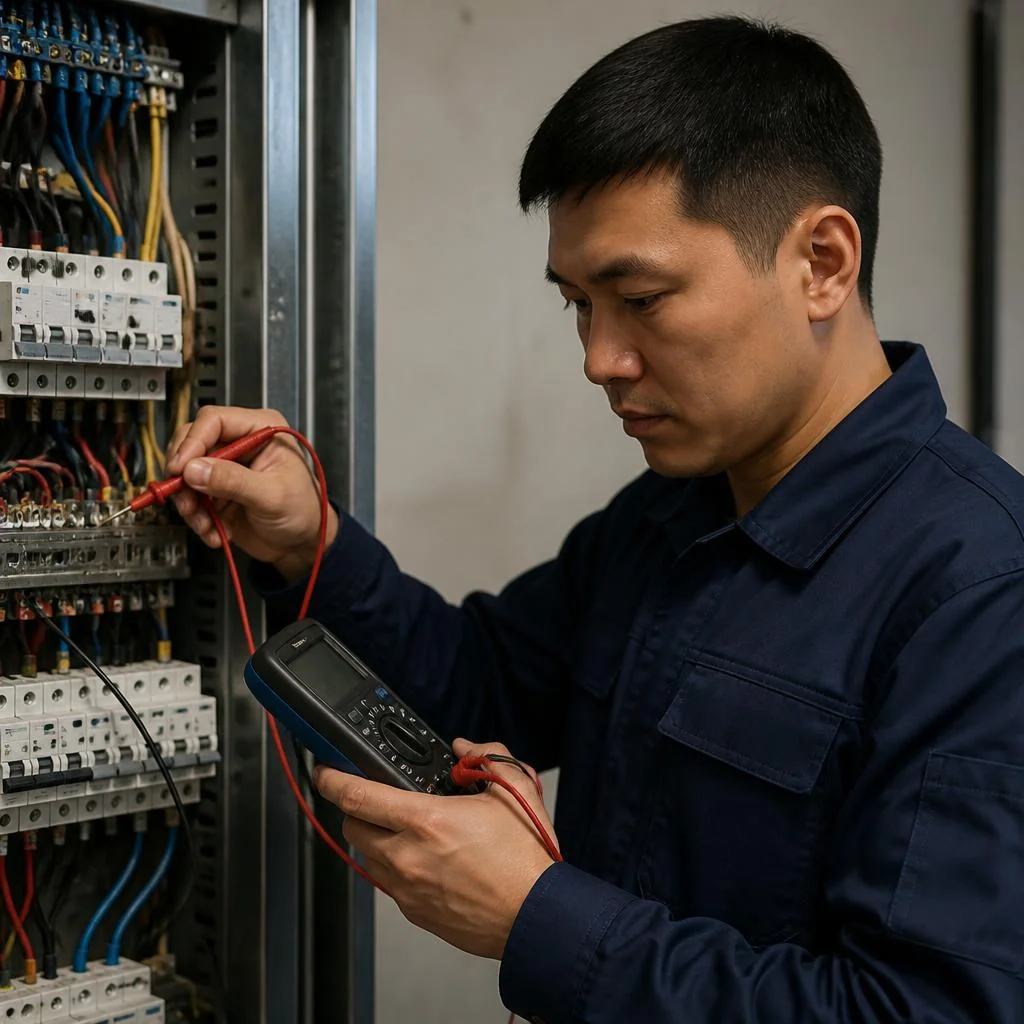
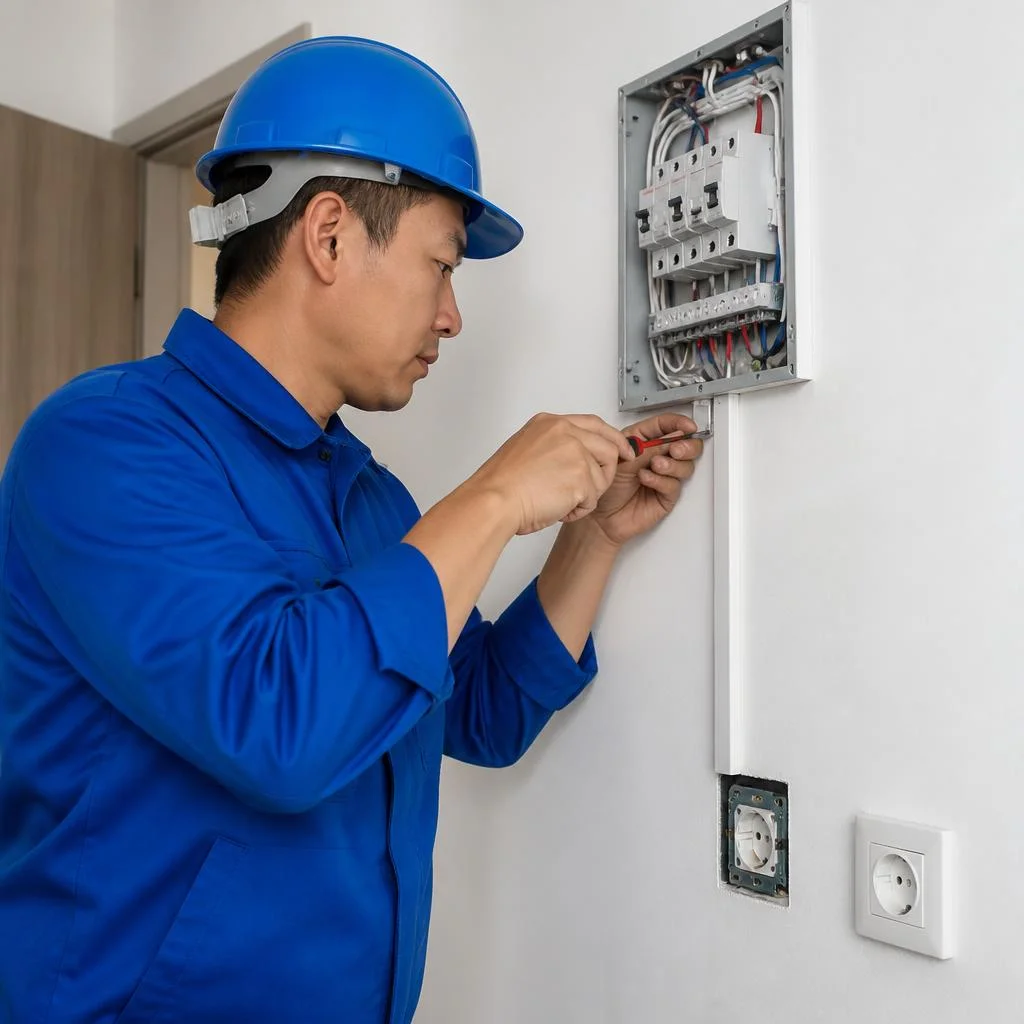
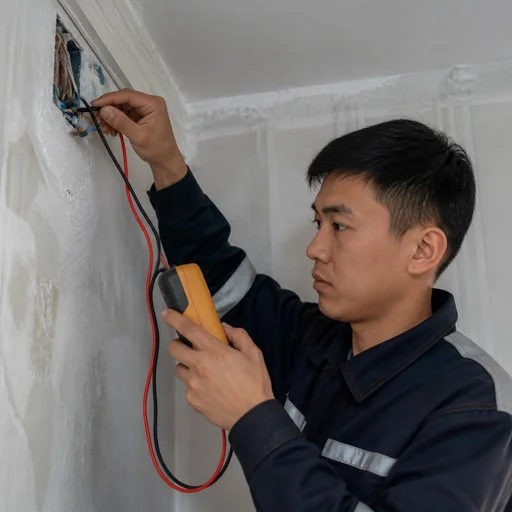
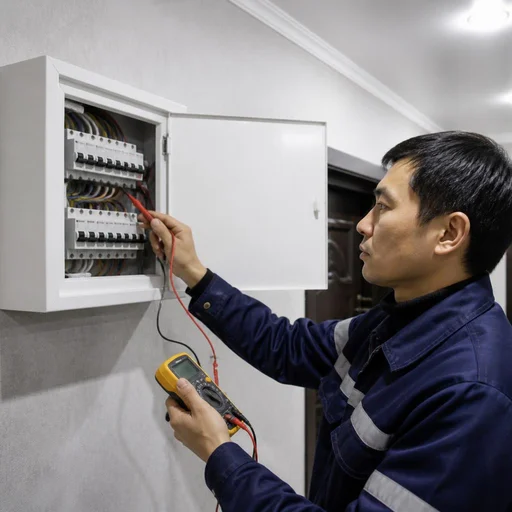
Eco-Service starts by looking for an open circuit and a short circuit — this is basic diagnostics, without which any wiring replacement remains guesswork. A technician with electrical safety certification tests the lines with a multimeter and searches for the loss-of-contact zone section by section, and for a short circuit uses current clamps and a thermal imager: insulation overheating is visible in the image within seconds. An open circuit and a short circuit produce similar symptoms — tripped fuses — but the causes are different: an open circuit more often hides in twisted joints and old aluminum lines, while a short circuit hides in damaged insulation or overloaded junctions. If the breaker trips again after being switched on, do not reset it more than twice — each cycle under voltage finishes off the insulation at the defect point. In search queries, terms like electrician Bishkek appear constantly — they show that the person has already understood: without an instrument, the cause cannot be found.
Panel inspection and wiring diagnostics before repair
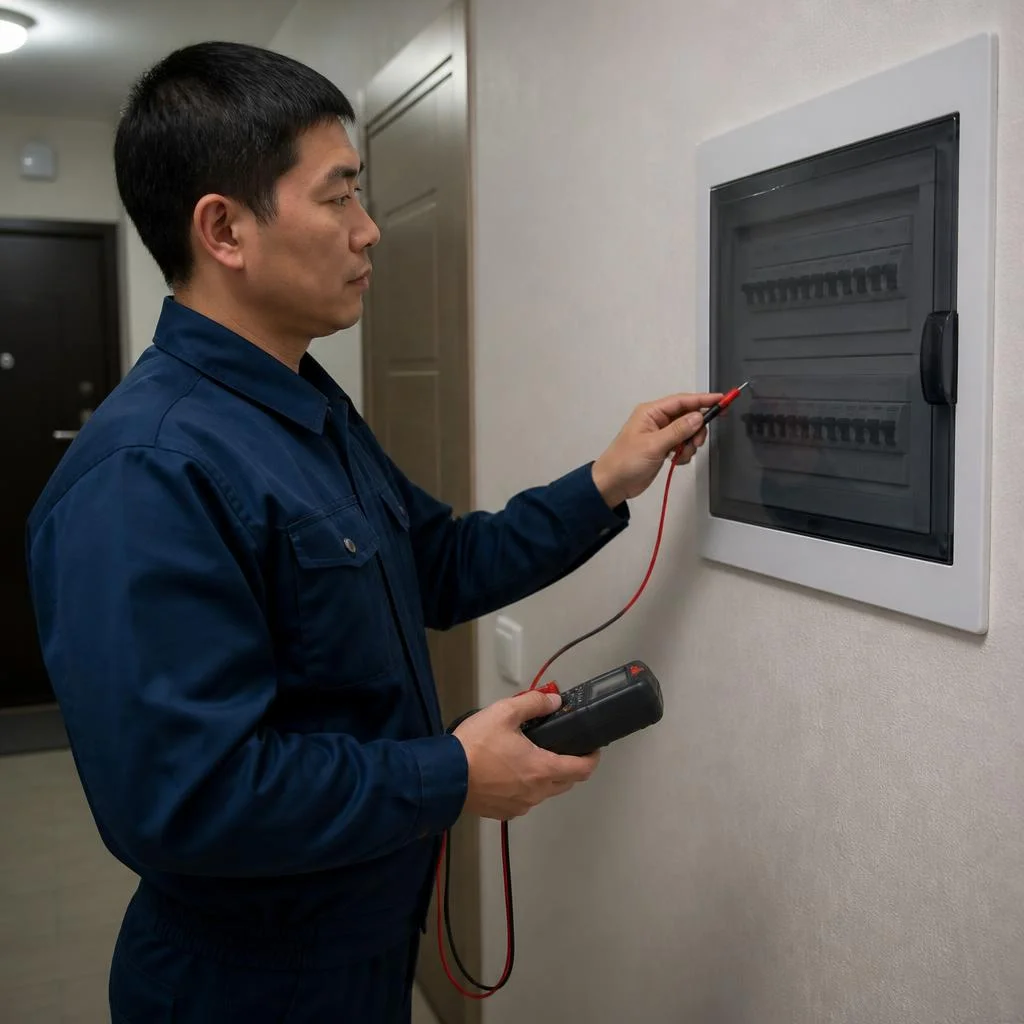
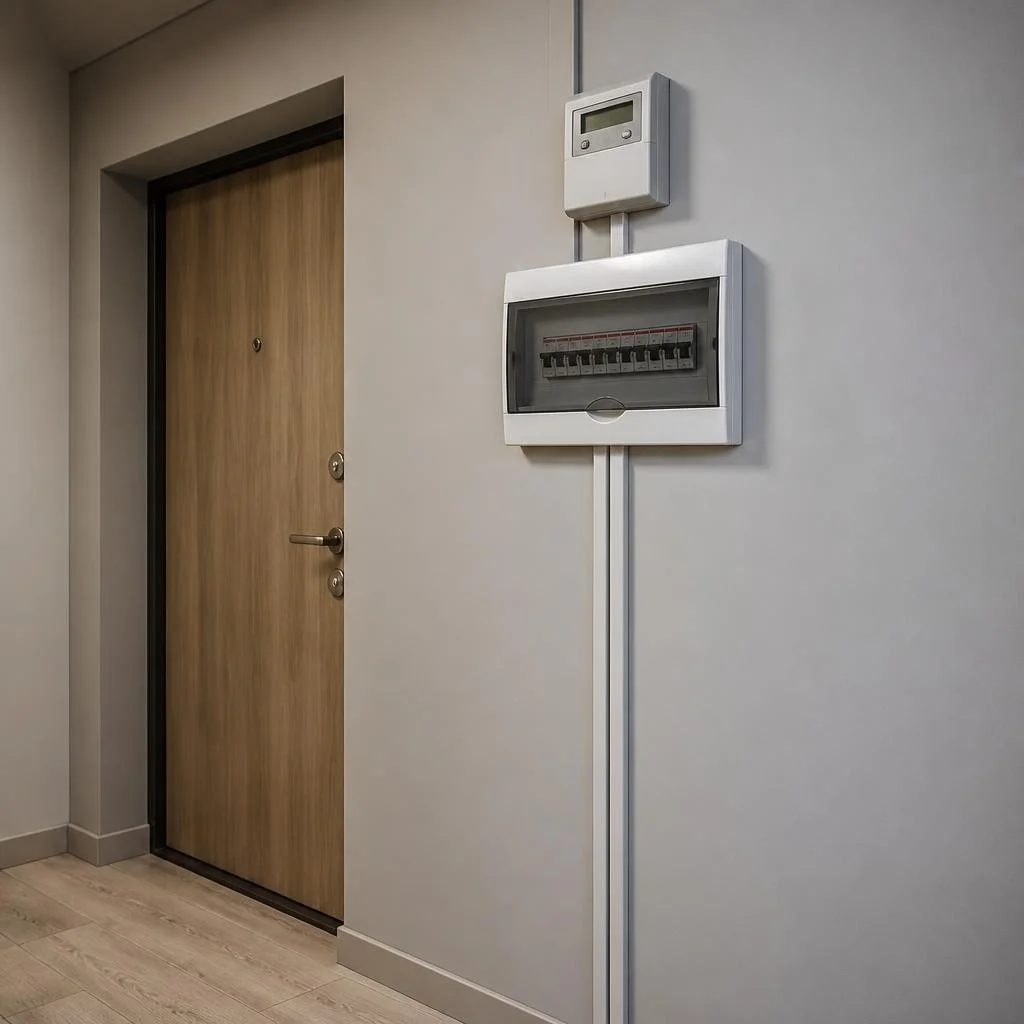
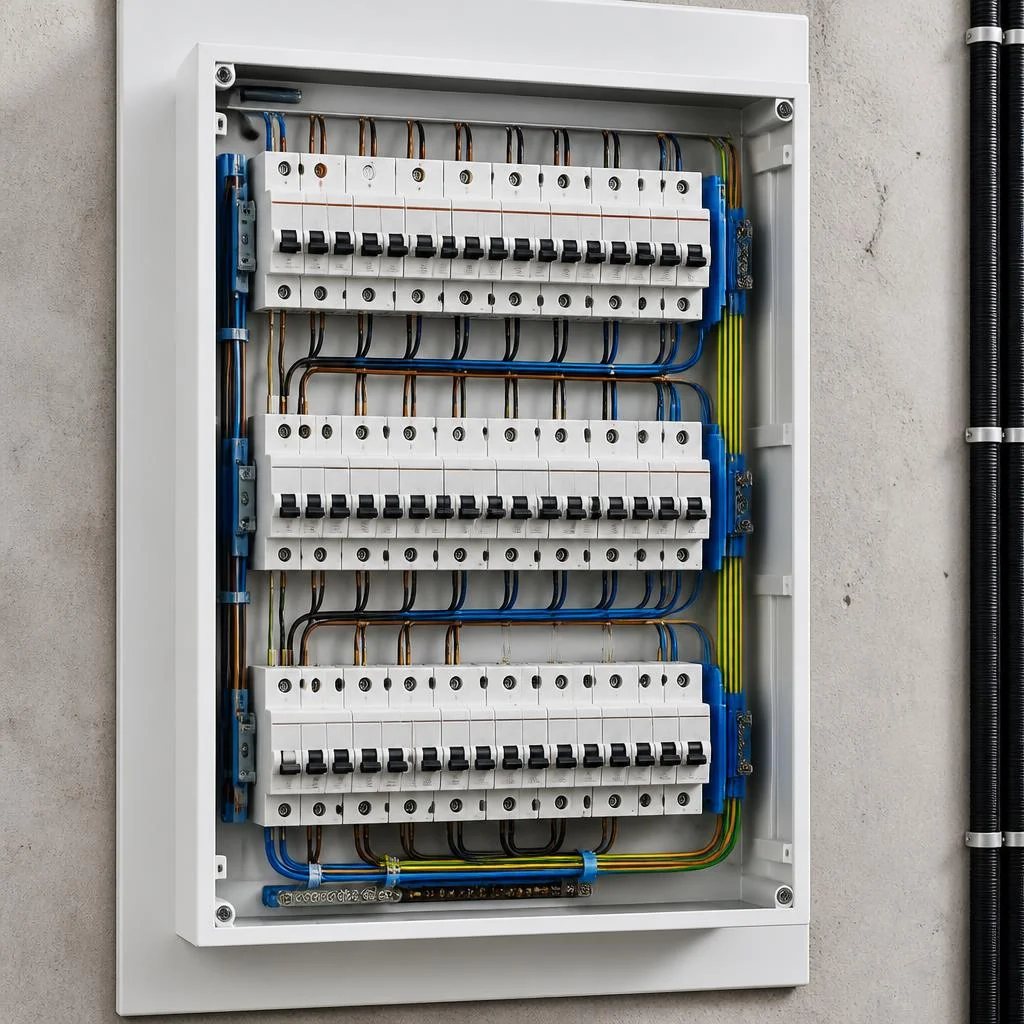
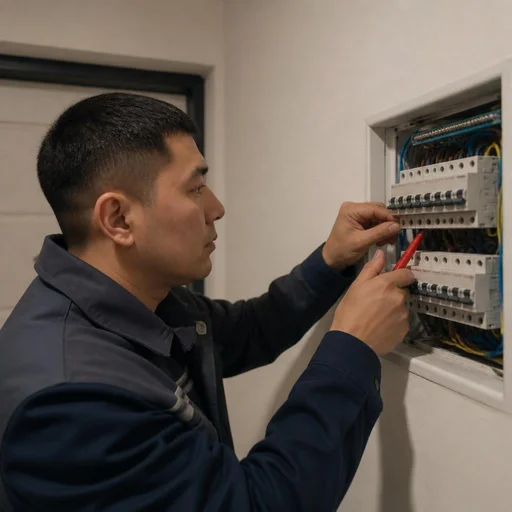
We carry out a panel inspection and wiring diagnostics before any installation work begins — this way the client sees the real condition of the network, not just the symptom. A panel inspection reveals not only the breakers but also the quality of grounding and the load distribution across the lines: in Bishkek apartments of the Stalin-era and Khrushchev-era housing stock, there is often a single breaker for the whole apartment, and the grounding loop is absent altogether. Wiring diagnostics includes measuring insulation resistance with a megohmmeter, checking the cross-section of the conductors and inspecting the connections in the junction boxes — based on the results, the technician names the sections to be replaced and the plan for further installation. It is worth ordering the inspection before buying a new panel: half of the clients change the project after diagnostics, because the old wiring will not withstand the declared load. Candidates who are looking for a job as an electrician often come to us precisely after such diagnostics — they are interested in how the process works from the inside.
When a preventive wiring inspection is needed
- Apartments older than 15 years: the insulation of aluminum conductors loses its elasticity, and a preventive wiring inspection detects wear before the first accident.
- After a network overload: if the breaker tripped when a heater or washing machine was switched on, check the section where the protection tripped.
- Before buying high-power appliances: an induction cooktop, boiler or air conditioner requires a dedicated line — an inspection will show whether the existing one can handle it.
- At the first signs of wear: warm sockets, the smell of plastic near the panel, flickering lights when high-power appliances are switched on appear long before an accident.
- After neighbors' renovations: wall chasing and drilling in adjoining walls damage hidden wiring that cannot be seen without an instrument.
- Routinely every 3-5 years: for apartments older than 15 years, regular inspection is cheaper than emergency repairs after a fire.
- Change of owner: when buying a pre-owned home, the condition of the network is unknown — an inspection before moving in removes the risks.
Electrical wiring installation: wall chasing, cable routing, section replacement
Wiring installation is not just "running a cable," but choosing the method of routing, protection and route for a specific room, wall material and renovation stage. Let's break down the technologies we use on sites.
Wall chasing and open cable routing
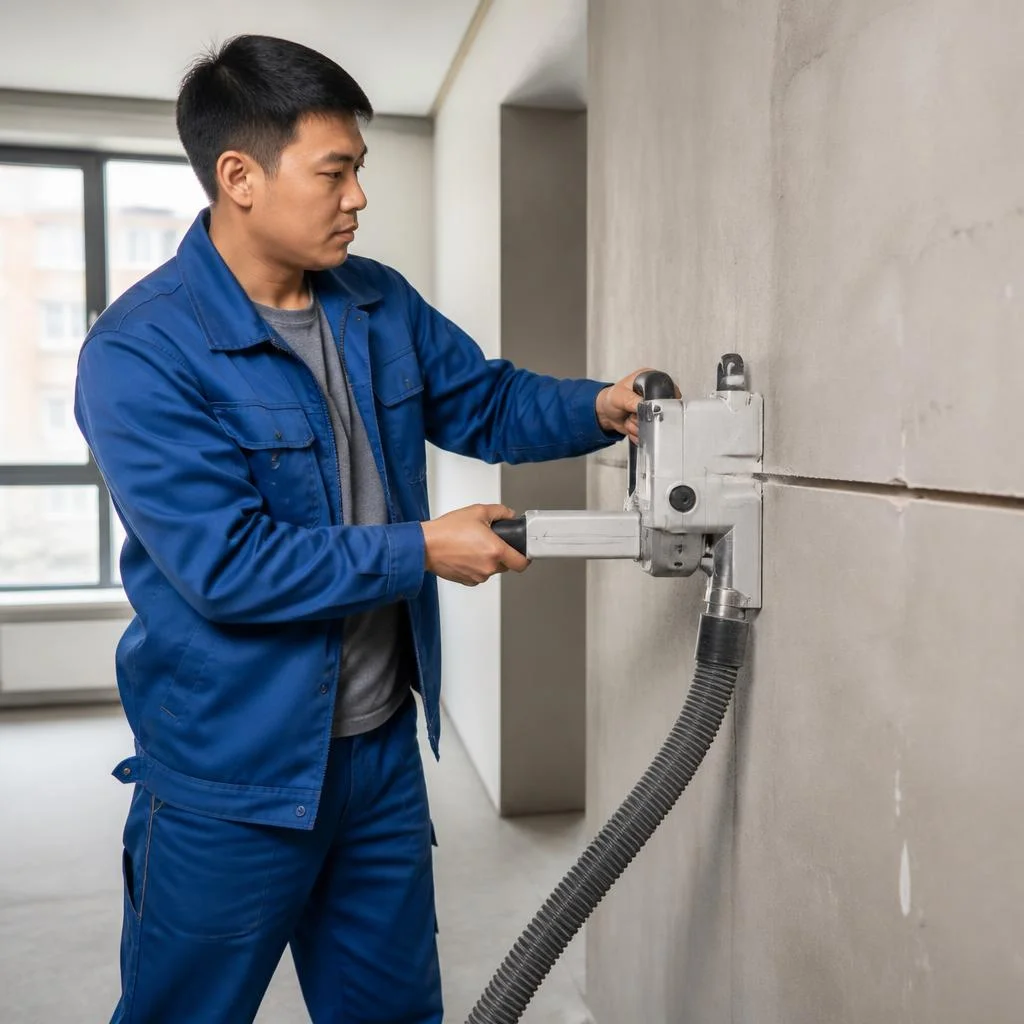
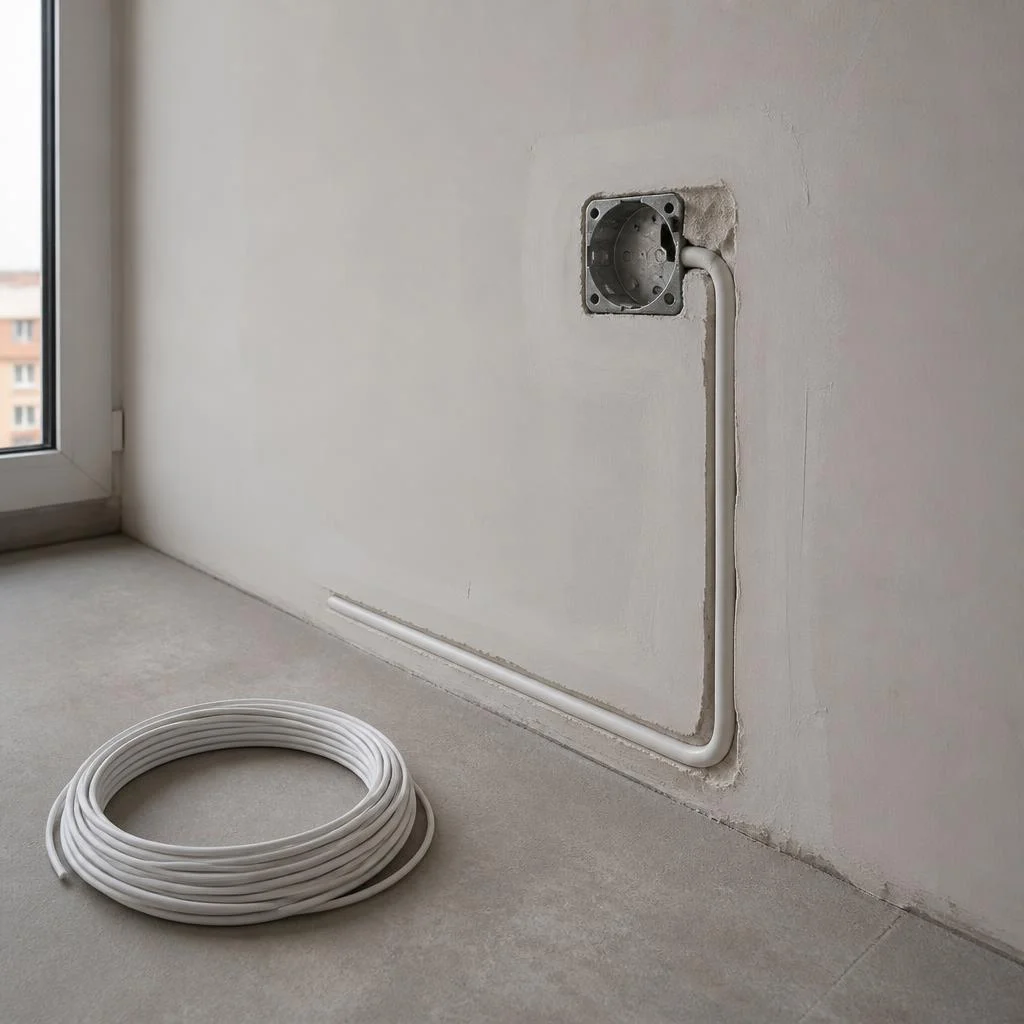
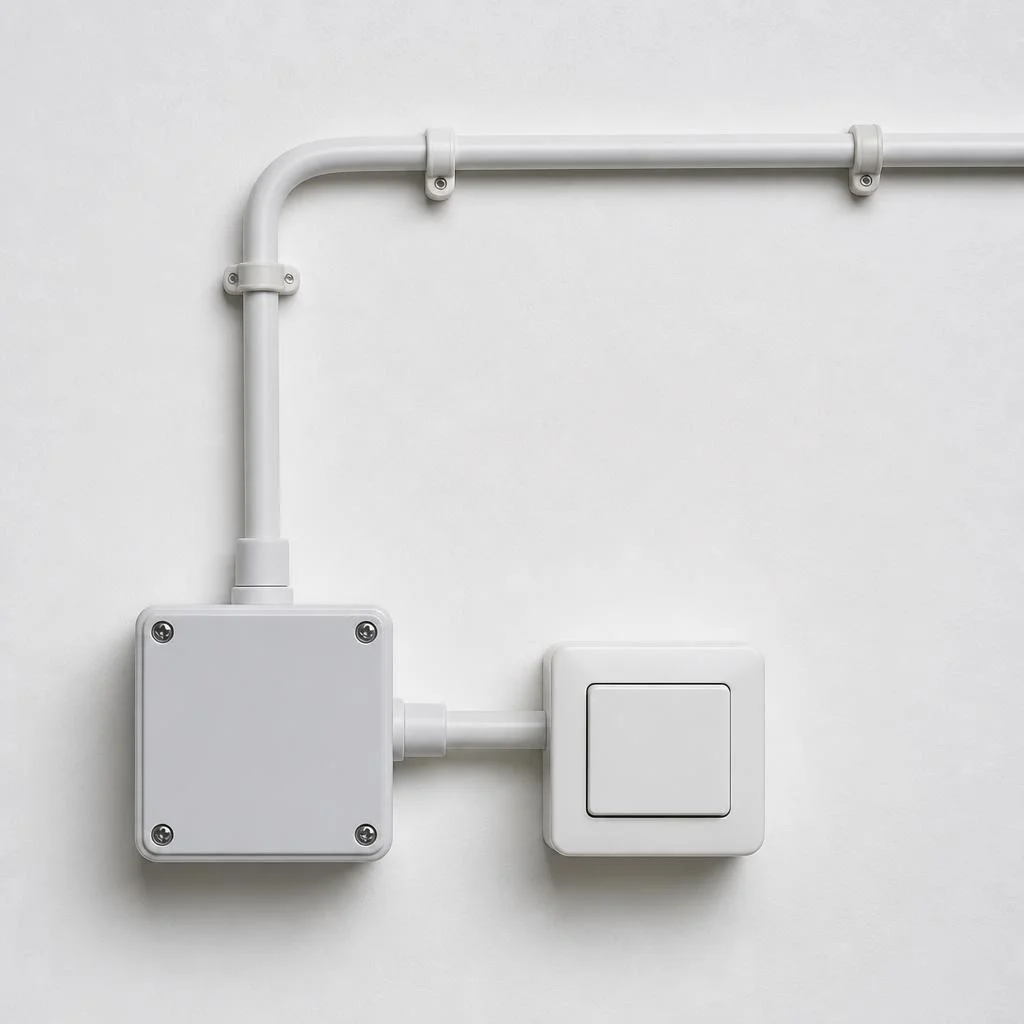
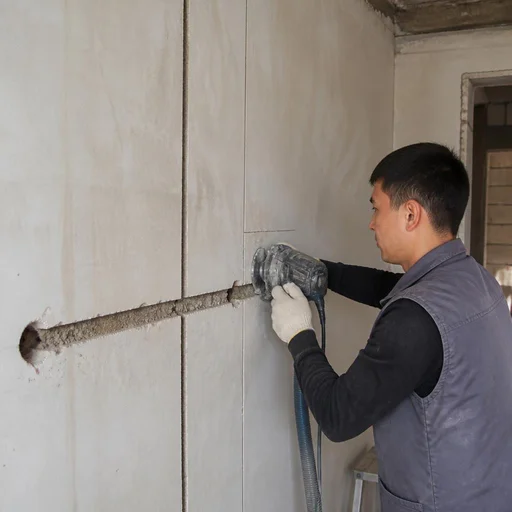
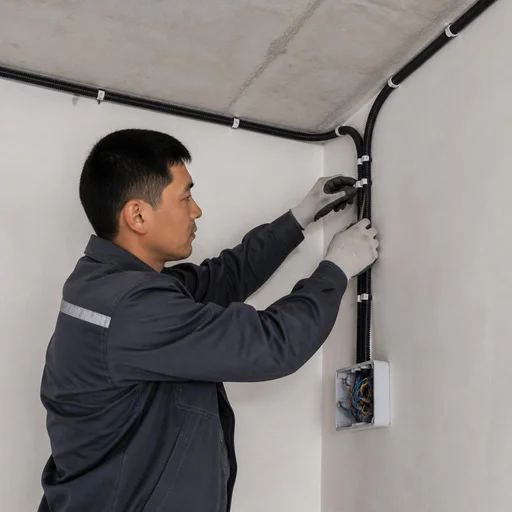
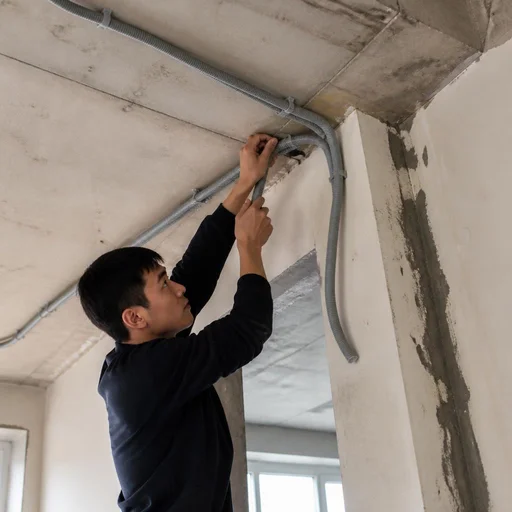
Eco-Service performs wall chasing for cables and open cable routing — the choice of method depends on the wall material and the renovation stage. For chasing we use a wall chaser with diamond blades and a vacuum cleaner, for concrete — a rotary hammer with a core bit, for brick and gypsum block — an angle grinder with a stone cutting disc; the chase depth for VVGng-LS cable with a cross-section of 3×2.5 mm² is 25-30 mm, the width is designed for two or three cables at once. Open routing runs along the ceiling and walls on clips, in trays or on a cable — this is appropriate for renovations without dismantling walls and is convenient for maintenance. Chasing provides concealed wiring, but requires a completed rough-work stage: if the walls are already plastered and painted, the route will have to be coordinated with subsequent patching and finishing. Clients often describe the task in their own words — electrician Bishkek, and from such a phrasing the technician immediately understands the scope.
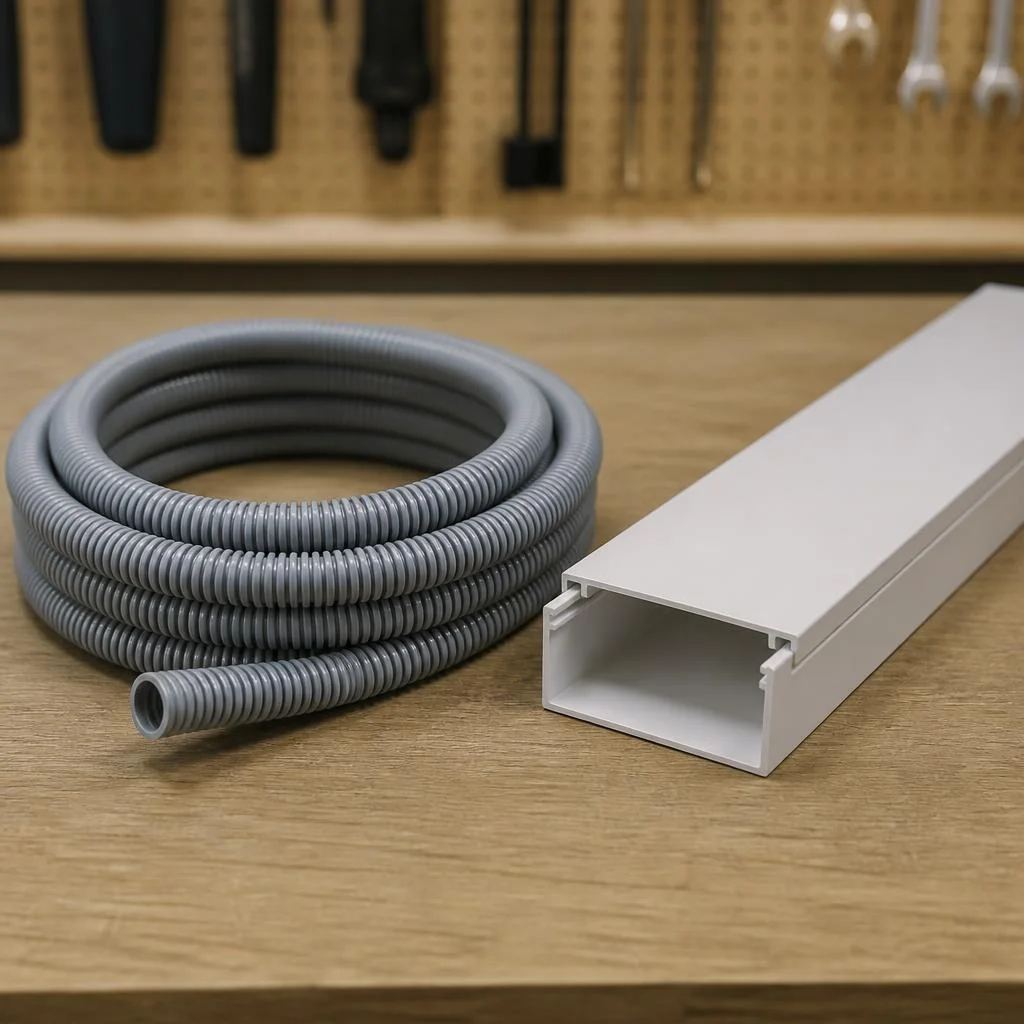
Cable routing in corrugated conduit and cable channel installation
| Method | Where used | Protection | Maintenance |
|---|---|---|---|
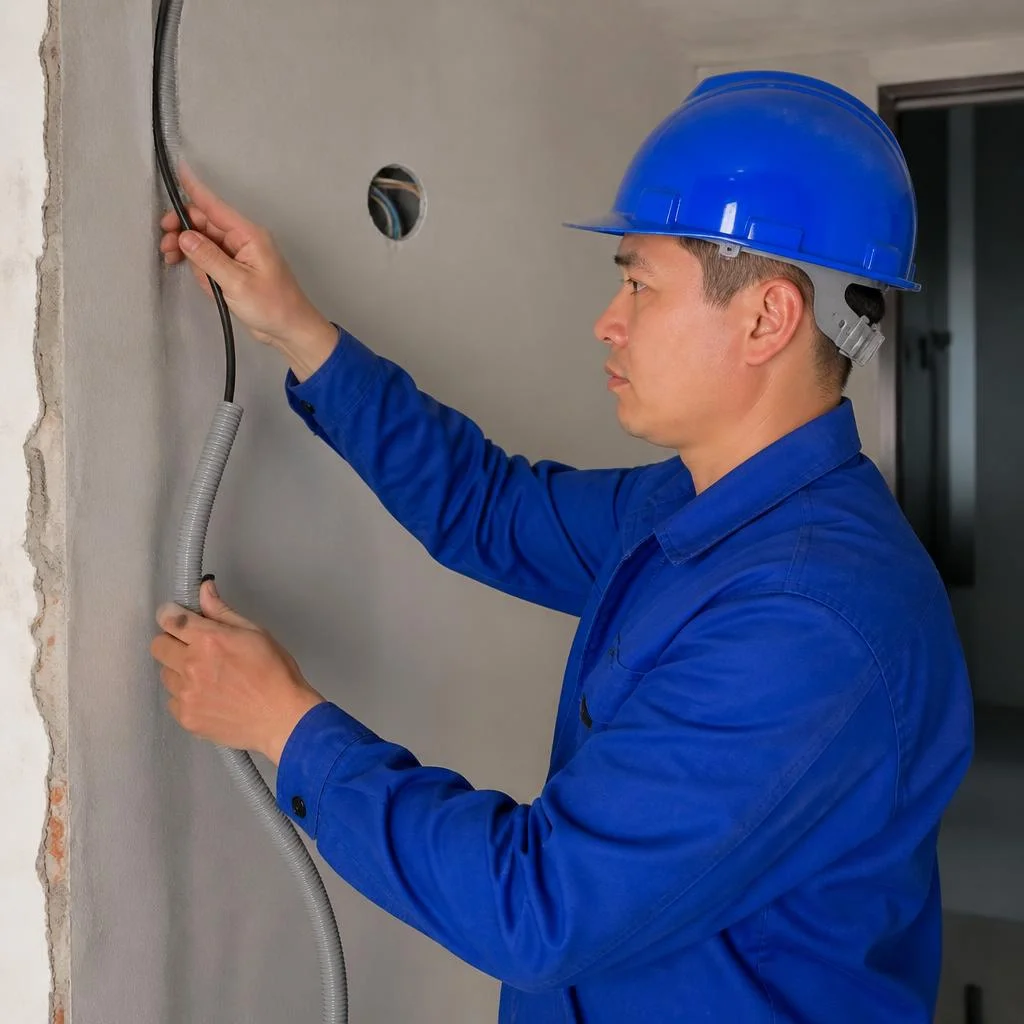
| PVC corrugated conduit | Inside walls, screed, ceiling | Against mechanical damage and moisture | Line replacement — with opening up |
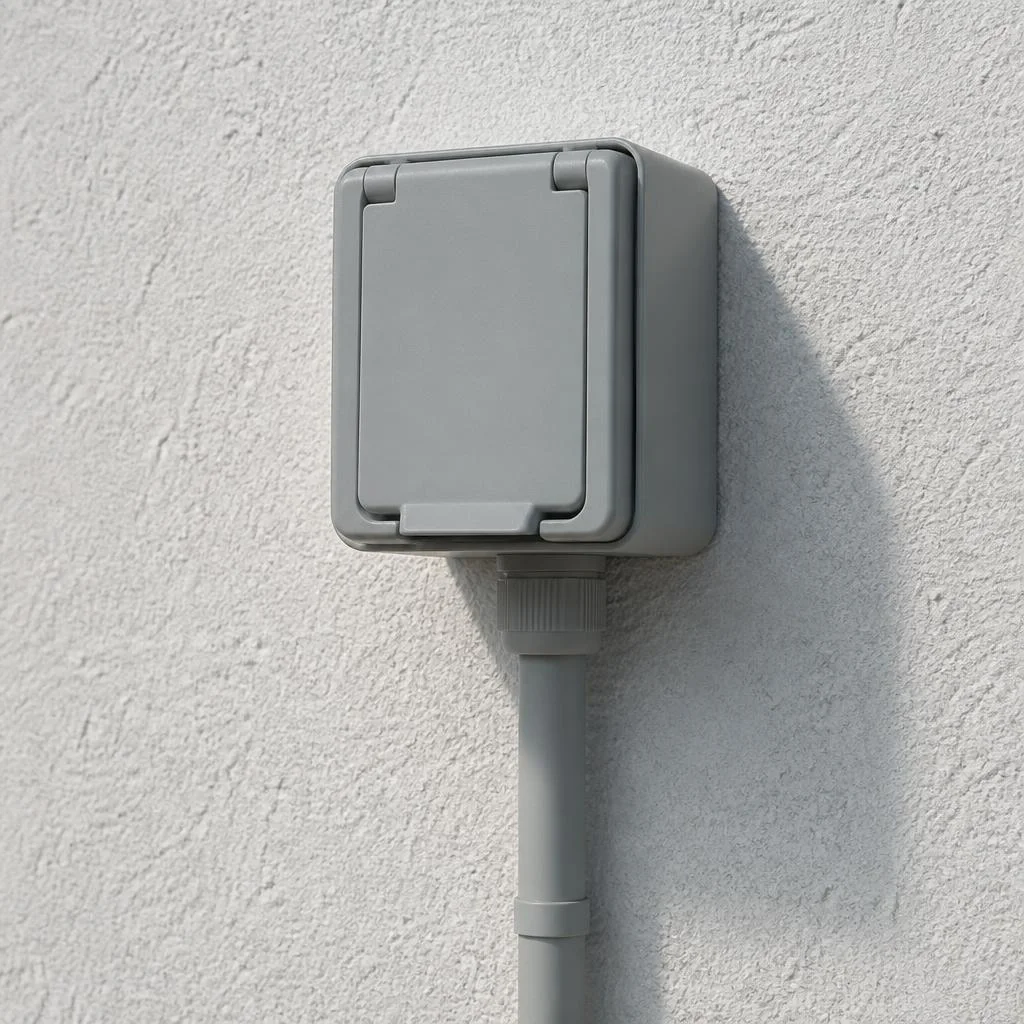
| Metal corrugated conduit | Attic, garage, outdoors | Against mechanical damage and rodents | Access to the route required |
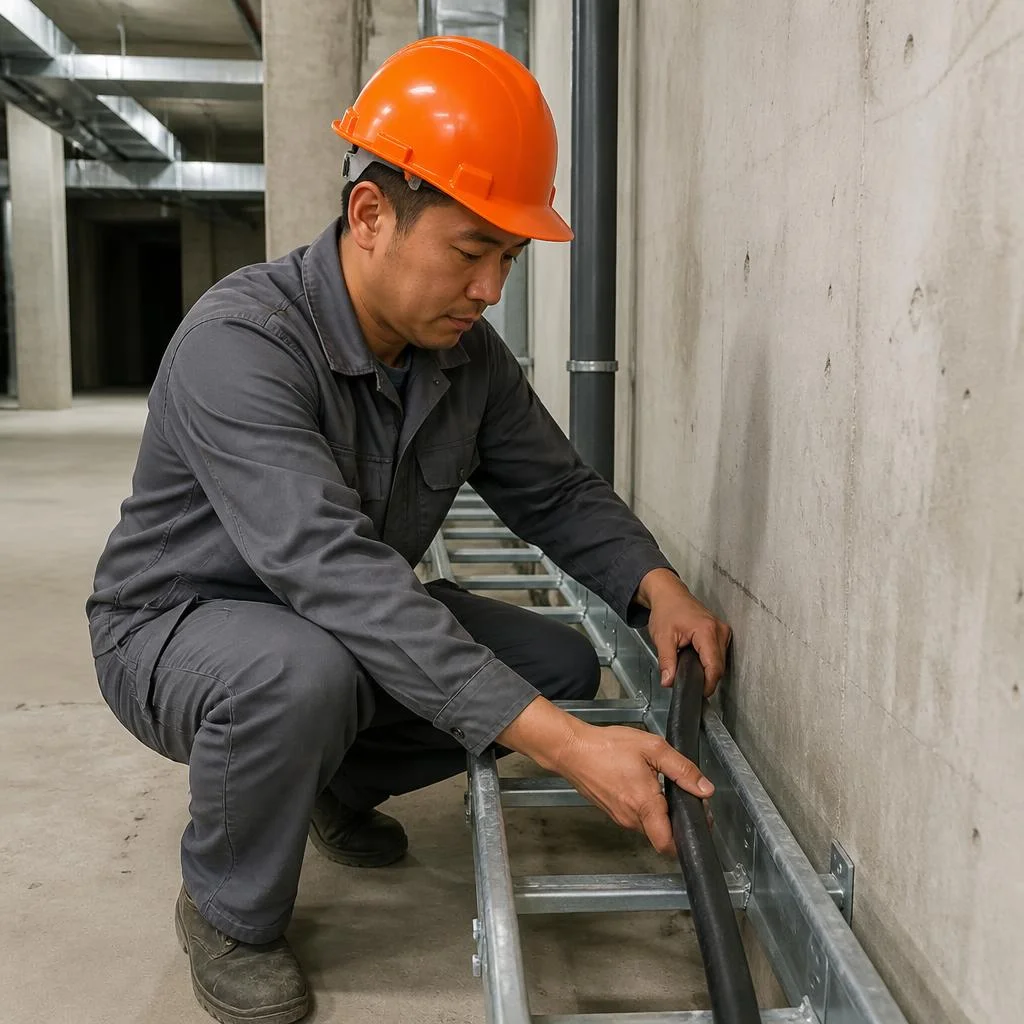
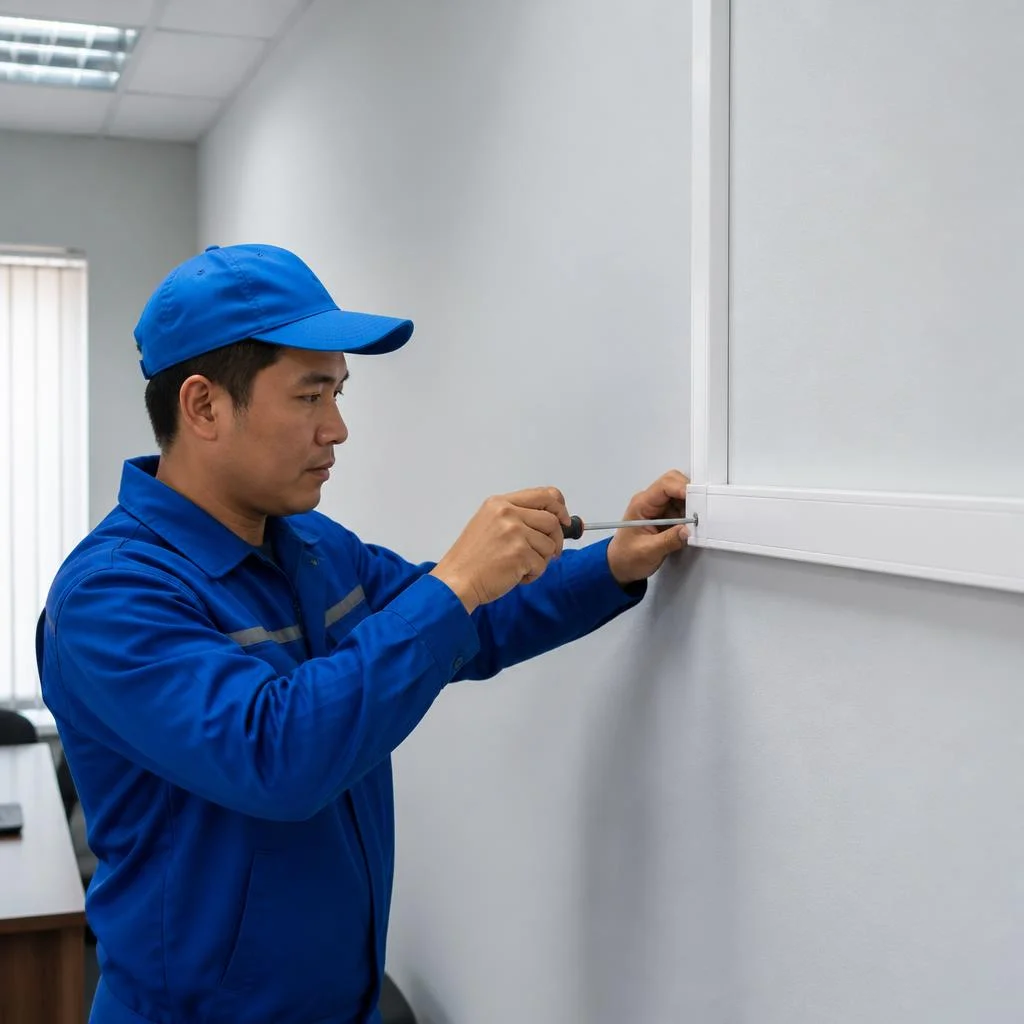
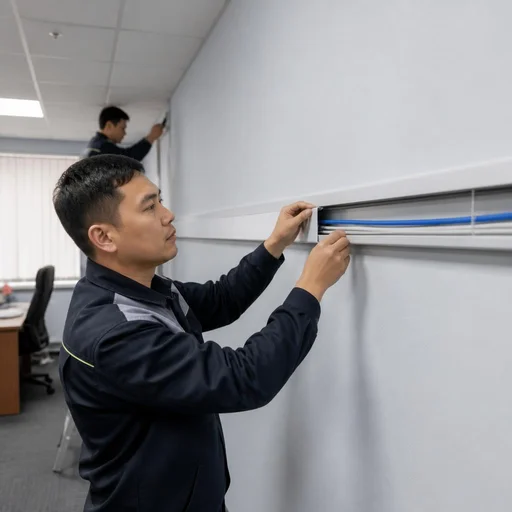
| Cable channel | Exposed walls, office, basement | Against dust and accidental contact | Lid opens, line can be replaced |
| Corrugated conduit + cable channel | Entry into the panel, transitions | Double protection at joints | Inspection without dismantling the wall |
Replacing a section of wiring and complete wiring replacement in an apartment
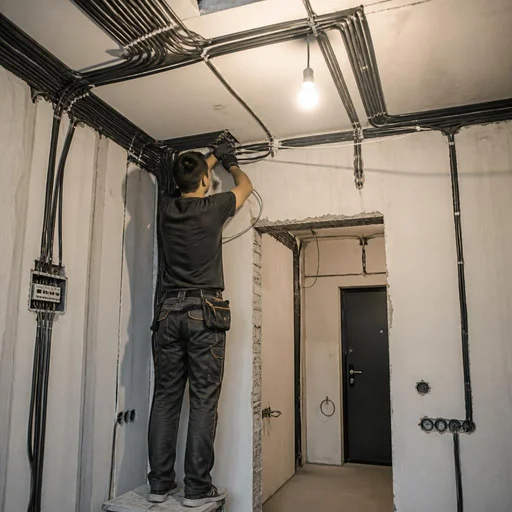
Eco-Service performs replacement of a section of wiring and complete wiring replacement in an apartment — the scope of work is determined by diagnostics, not by the client's assumption. In panel buildings in Bishkek from the 1970s-1990s, aluminum wiring often remains: a 2.5 mm² conductor loses contact at twists, heats up in junction boxes and cannot handle the load from a washing machine, induction cooktop and boiler. Partial replacement helps with local damage to a single line, but if aluminum remains on several circuits, a spot repair will lead to a repeat call within a year — so we then suggest immediately replacing all lines with copper VVGng-LS. Installation work in Bishkek requires an understanding of routes and loads: before starting we draw up a circuit diagram, calculate the current for each line and only then chase. In searches such tasks are often phrased briefly — electrician work, but in essence it is the same set of operations with cable and panel. Job seekers and contractors sometimes search for electrician vacancies in Bishkek, but for the customer something else matters more: the scope of work, the circuit diagram and a two-year warranty on the completed lines.
Installation of sockets, switches, and lighting
Installing electrical points and lighting is the most common task after diagnostics: from replacing a socket to wiring lights in a room. What matters here is the connection diagram, careful opening of walls, and access to connections for the future.
Installation and replacement of sockets, switches, two-way switches
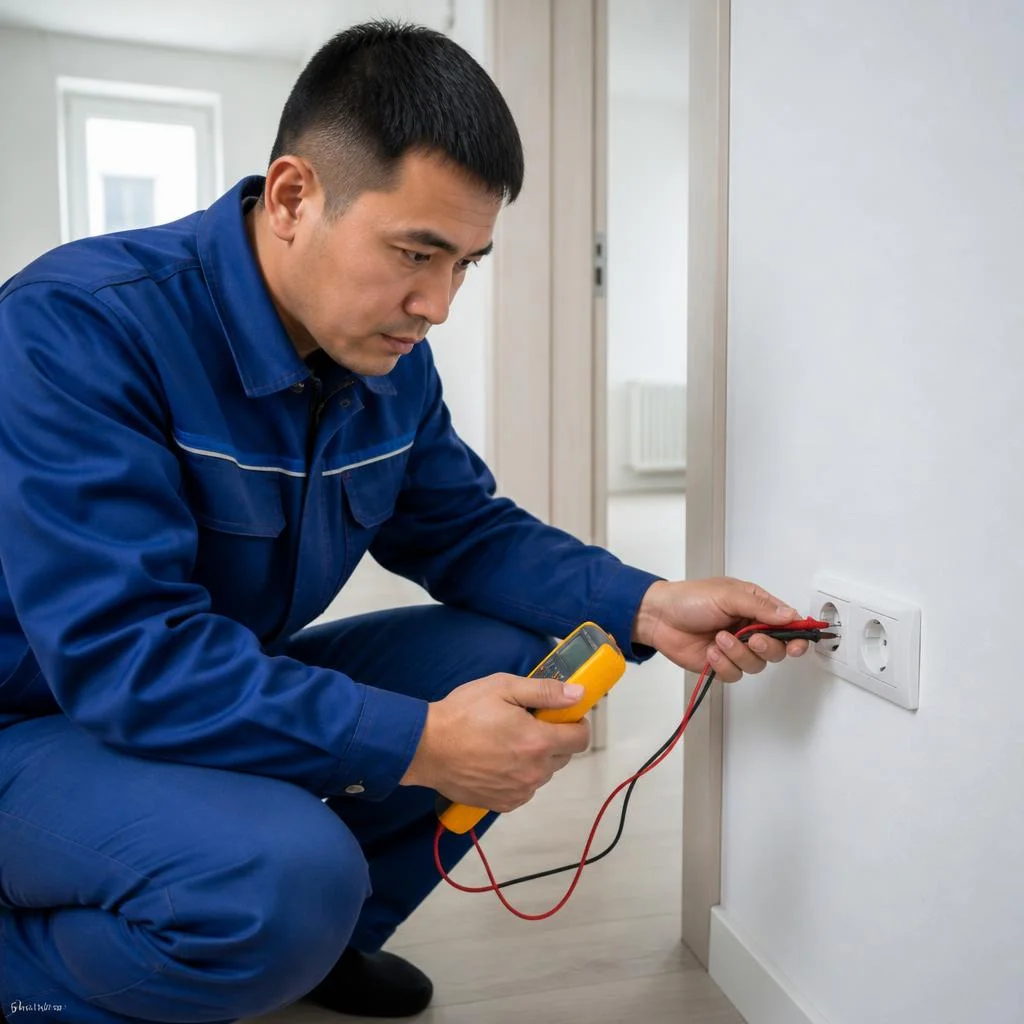
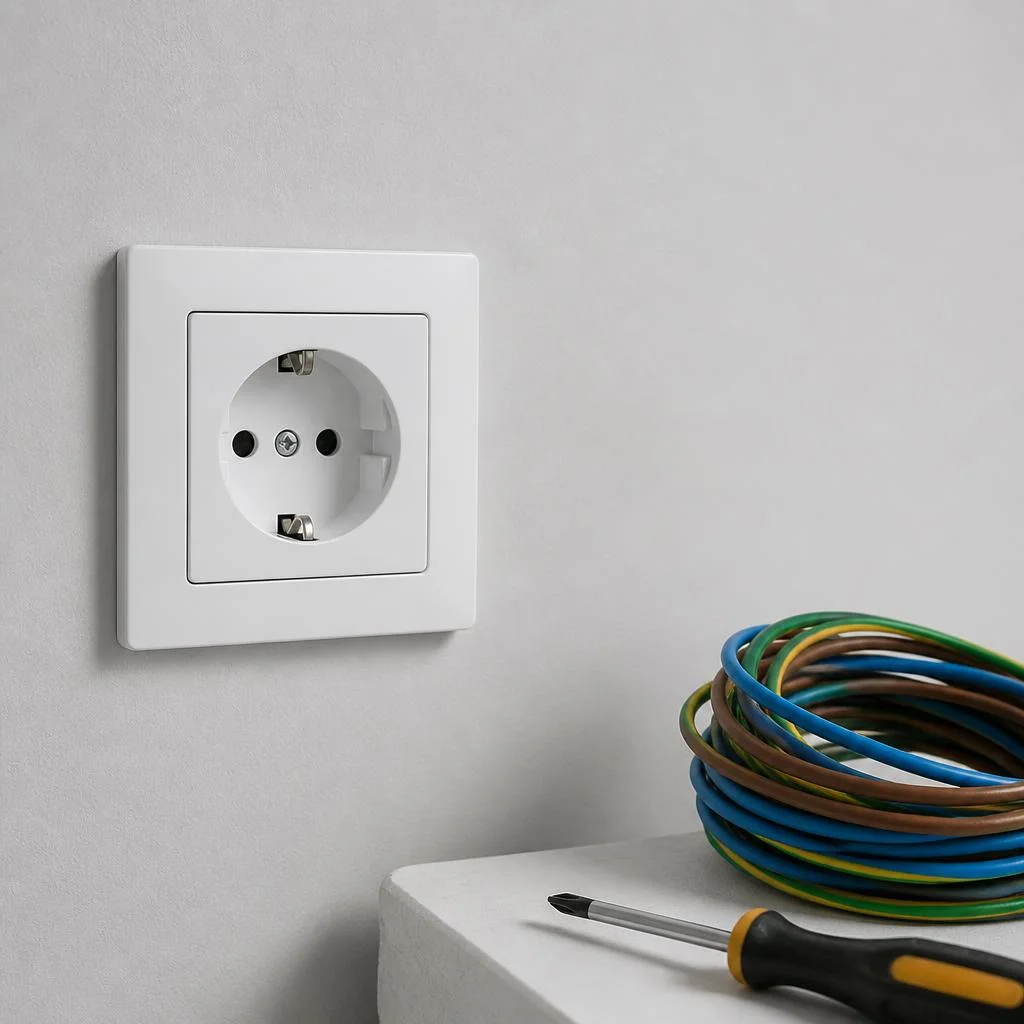
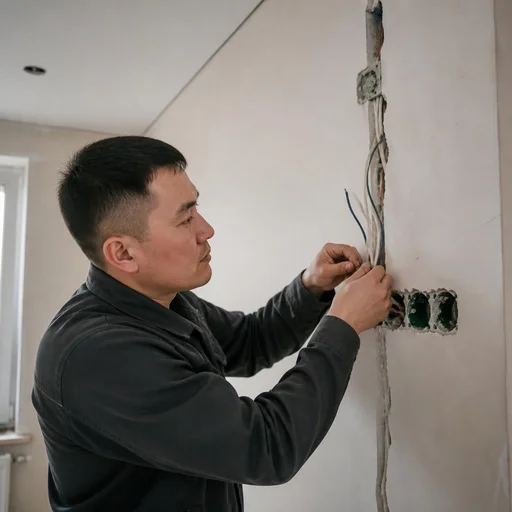
Eco-Service installs and replaces sockets, switches, and two-way switches — including connecting a washing machine to a dedicated line. Work on a single point takes from half an hour, but when replacing a socket in a concrete wall with a damaged back box, we first restore the mounting seat, otherwise the new unit won't hold and falls out the first time a plug is inserted. Installing a two-gang switch requires two phase leads to the light fixtures, and installing a two-way switch requires a crossover circuit: one light is controlled from two points, and a wiring mistake causes one of the switches to stop working. We connect a washing machine to a dedicated line with a circuit breaker and an RCD: washing is a wet mode with a high inrush current. Clients often describe the task with the words "electrician work in Bishkek" — and from that phrasing the technician immediately understands the scope: a point, a line, or full wiring. We recommend photographing the connection diagram before closing the back box — on the next replacement this saves diagnostic time.
Moving a socket: when it's needed and how it's done
We move sockets during remodeling and furniture installation — the old point is dismantled, and the new one is connected to the same line. Most often the client shifts a block in the kitchen under a new countertop or in the bedroom behind the headboard: a shift of 30-60 cm to the side doesn't require a new line; it's enough to extend the cable from the junction box. Moving a socket doesn't always mean a new chase: if the line allows, the technician extends the cable in a cable duct or under the baseboard, and the wall stays intact. We connect concealed wiring in concrete only through terminal blocks in the back box — a twist in a chase without access is prohibited: when heated, the contact oxidizes and the point starts to overheat. In requests, this task is often phrased as "electrical work," although in fact it's about moving one point and checking the load on the line. The nature of the work here shifts from installation to calculation: before moving, we check the conductor cross-section and the total load on the line so that the added segment doesn't become the weak link.
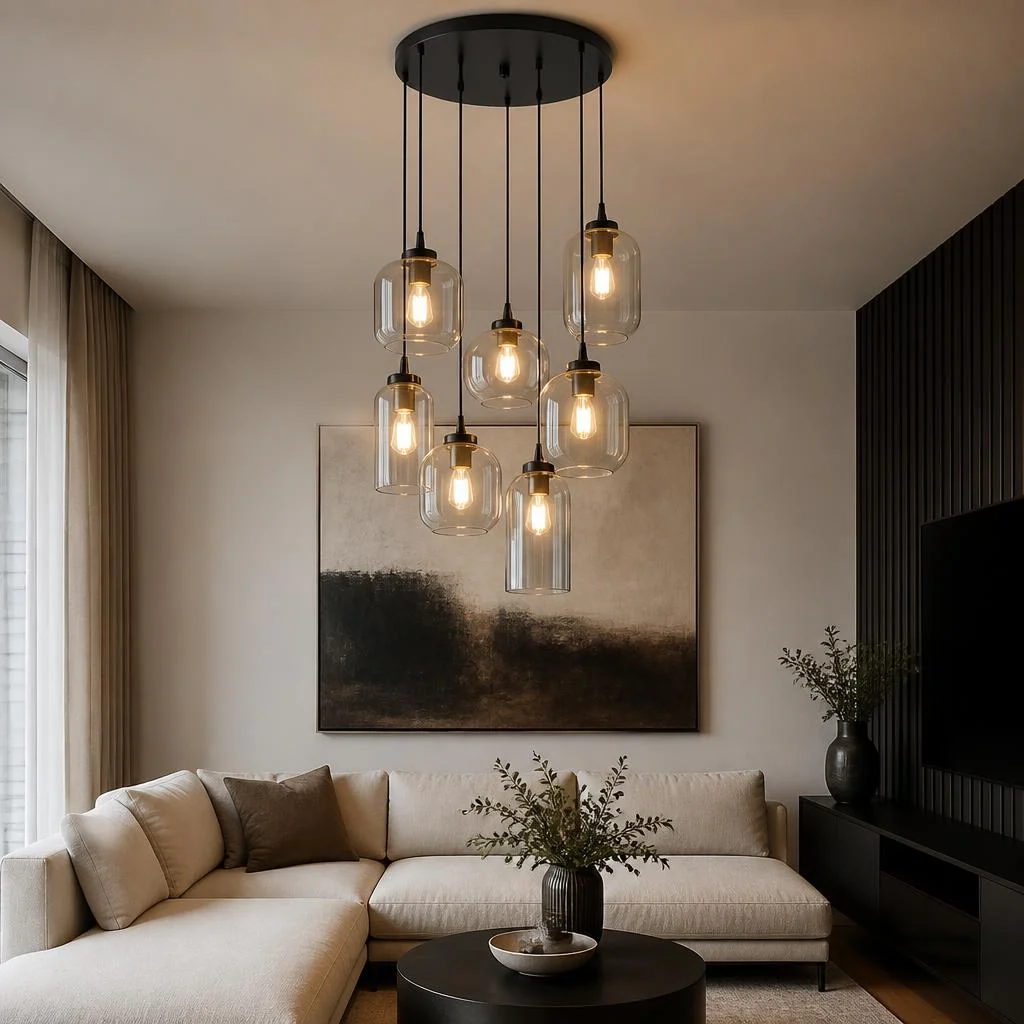
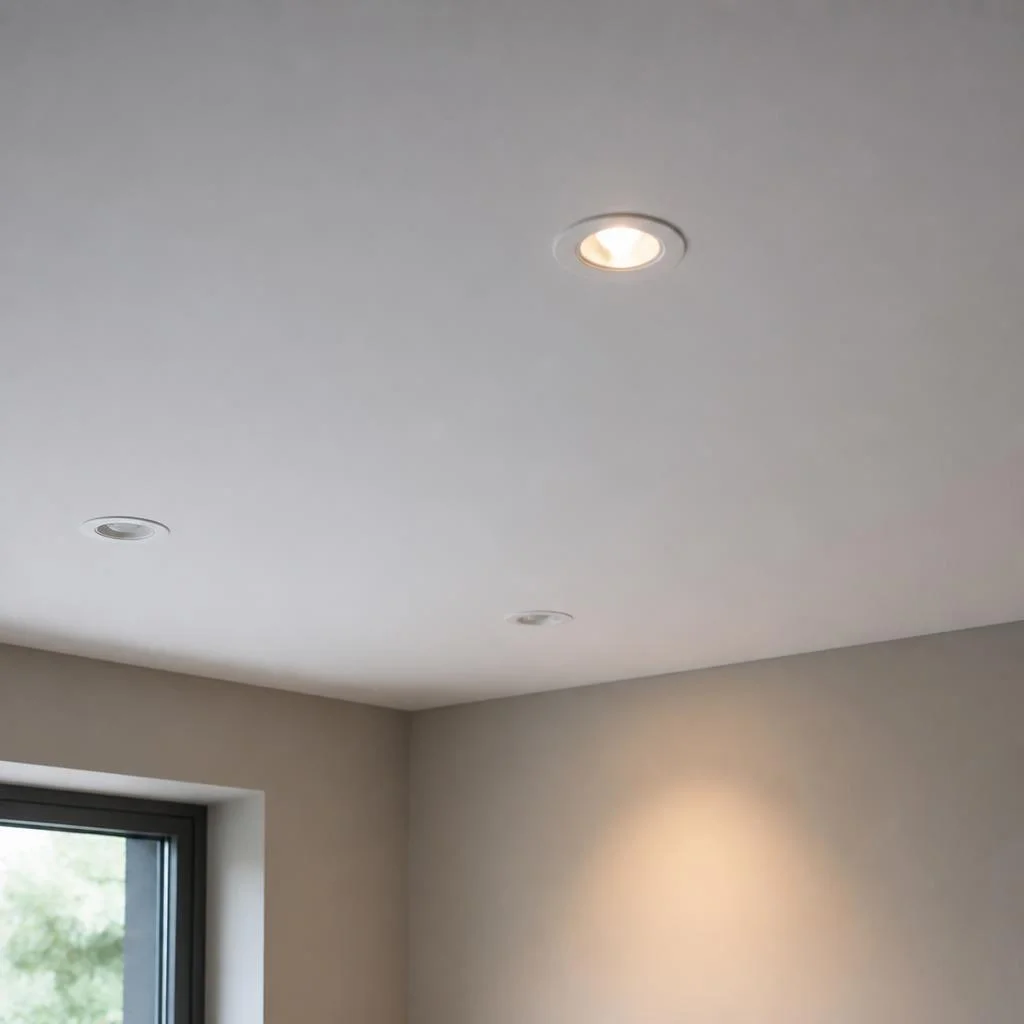
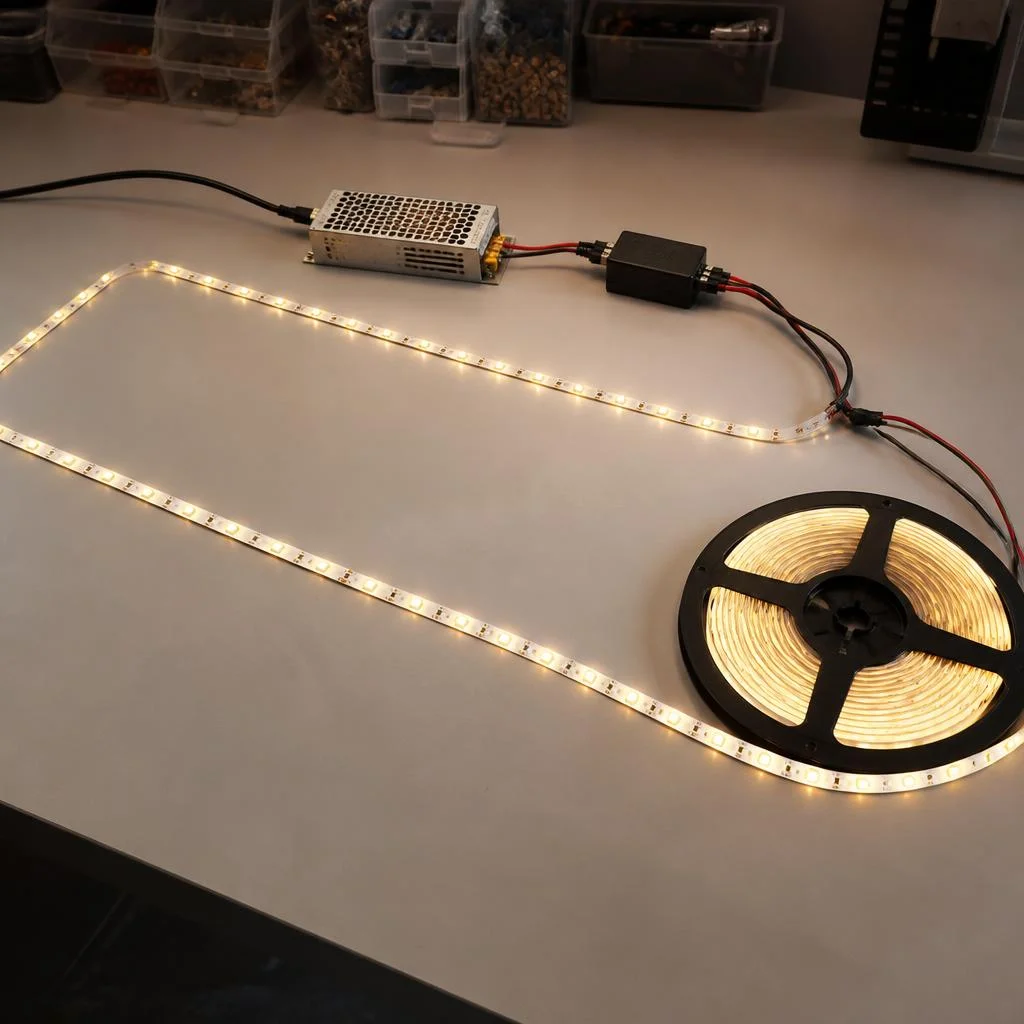
Installation of chandeliers, sconces, spotlights, and LED strip
| Type of lighting | What's included | Installation specifics |
|---|---|---|
| Chandelier | Hook or mounting bar, connection, suspension | Ceiling must support the weight |
| Sconce | Wall mounting, line lead-out | Concealed wiring to the point |
| Spotlight | Template cutout, terminal block | Clearance for heat dissipation |
| LED strip | Profile, driver, connection | Access to the driver is mandatory |
Eco-Service installs chandeliers, sconces, spotlights, and mounts LED strip — with connection to an existing or new line. For strip, not only the power point matters but also the driver unit: if it's hidden without access, replacement upon failure will require opening the ceiling. We install spotlights in stretch ceilings on thermal rings — without them, the fabric around the lamp sags from heat within a season.
Chandelier repair: what can be restored
- Socket replacement: a burnt-out or cracked socket is replaced with a new one with the same base, and the contact is restored.
- Internal wiring: the old insulation inside the housing crumbles, so we run new wire from the terminal block to each arm.
- Starter and ballast: for fluorescent models, we replace the starting gear if the lamp flickers and does not reach operating mode.
- Contact restoration: oxidized terminals are cleaned and tightened, otherwise the chandelier hums and heats up under load.
- Fasteners and suspension: a cracked bar or deformed hook is reinforced so the housing does not fall from the ceiling.
Private technician or service company: how to choose a specialist
The choice of contractor determines who is responsible for the result after the work is handed over. The difference between a private technician and a service company lies in the contract, the warranty and the scope of responsibility for the consequences.
How a private specialist differs from a service company
| Parameter | Private technician | Service company |
|---|---|---|
| Contract | Verbal agreement | Official document before work begins |
| Warranty | Verbal, without a term | 2 years for the completed work |
| Who is responsible for defects | You have to find the same technician | The service center under the contract |
| Certification and grade | Often without confirmation | Electrical safety certification |
| Payment | Cash | MBANK, O!Деньги, Optima Bank |
| Estimate | Changes as work progresses | Fixed in the contract |
A private technician may do the work more cheaply, but if the fault recurs, the client has nowhere to turn: the phone number may no longer be in service, and there is no one to file a claim against. Eco-Service operates as a service company — with an official contract, a 2-year warranty and its own service center in Bishkek, so the organization, not a specific individual, is responsible for the result.
How to verify a specialist's qualifications
- Electrical safety certification: the group confirms the right to work on a live network — the technician must have a document, not a verbal statement.
- Grade and experience: the grade determines which work the technician performs independently and which only under the supervision of a crew.
- Portfolio of sites: ask to see assembled panels and installed cable runs — the photos show the neatness and quality of the installation.
- Reviews on platforms: check the profile on 2GIS, Google Maps and Instagram — there you can see the order history and the response to comments.
- Documents upon completion: both private technicians and companies issue a work completion report and a warranty card — the absence of paperwork should raise suspicion.
2-year warranty and official contract
Eco-Service provides a 2-year warranty for the completed work and concludes an official contract before installation begins. The document records the scope of work, the materials used and the warranty period — if the fault recurs, the client contacts the service center instead of looking for a technician again. This procedure closes the main risk of private contracting: a verbal agreement gives no grounds for a claim, while a document with a seal does. When ordering in several stages (chasing, cable routing, socket installation), each item is included in the contract separately — this makes it possible to file a claim for a specific stage rather than the entire job as a whole. When searching for a contractor using the query electrician work in Bishkek, you can see how many technicians are actually looking for orders with a confirmed certification group, and not just with experience "on paper." The query electrician jobs Bishkek often leads to private individuals without a contract — check whether the contractor is ready to put the obligations in writing before the visit.
Electrician home visits and emergency call-outs in Bishkek
The format of the visit depends on urgency: scheduled work or an emergency call-out, when every minute counts. Let's look at how a technician's visit works, what to do before they arrive, and how to settle the payment.
How a technician's home visit works
Eco-Service makes home visits across Bishkek: the technician arrives with tools, carries out diagnostics on site and agrees the scope of work before installation begins. This format covers all districts of Bishkek — from Jala and Asanbay to Vostochny and the Tunguch microdistrict, so diagnostics usually take a single visit. The technician carries a multimeter, a voltage tester screwdriver, a hammer drill and a stock of circuit breakers — common faults such as a broken circuit or a burnt terminal are fixed on the spot. Scheduled installation is carried out by staff technicians with permits, not random contractors: a permanent staff covers both the request for an electrician in Bishkek and the replacement of a departing specialist without any loss of qualification. When looking for candidates, we are also helped by a query such as electrician vacancy Bishkek — it shows which technicians are looking for extra work in the city. On a visit it is important to determine straight away whether a new line is needed or whether repairing the existing one is enough — this determines whether the work will be done in a single visit.
Emergency call-out: what to do before the technician arrives
- Switch off the main breaker: flip the switch on the panel and cut the power to the apartment before the specialist arrives.
- Do not switch it back on: if the breaker trips immediately, switching it back on is forbidden — it is a sign of a short circuit.
- Cut power to wet areas: keep the bathroom and kitchen unpowered if there is a smell of burning or soot is visible nearby.
- Remove flammable items: move curtains, paper and carpets away from sockets and the panel.
- Meet the technician: provide access to the panel and sockets, move furniture away from the problem line.
Payment for services: MBANK, O!Dengi, Optima Bank
- MBANK: transfer by phone number or QR code — the funds arrive within a couple of minutes.
- O!Dengi: payment via mobile wallet, convenient when paying from your phone at the work site.
- Optima Bank: cashless transfer from an account, suitable for large volumes and legal entities.
- Cash: accepted if it is more convenient for the client to settle after acceptance.
- Receipt and act: we issue documents for the completed work regardless of the chosen method.
Eco-Service's own service center in Bishkek
Having your own service center is what distinguishes a direct service provider from an intermediary who passes the request on to a contractor and bears no responsibility for the result. Let's break down what this gives the client and how to verify the quality of the work.
What an in-house service center gives the client
Eco-Service is a direct provider of electrician services with its own service center, which you can visit in person. This fundamentally changes the way things work: the request is taken by the same organization whose technicians go out to the site, not by a dispatcher distributing orders among third-party crews. In-person reception matters for complex cases: the client can show a photo of the electrical panel, bring a floor plan of the apartment or documents for the property, and the technician can more accurately assess the scope of work even before the visit. For a planned rewiring of an apartment, we ask you to bring the layout of the premises — it shows where the risers and load-bearing walls run, and this saves one measurement visit. In our practice, there have been cases where a client came in with a photograph of an old panel with circuit breakers, and from it the scope of work was determined immediately without on-site diagnostics. Clients often find us by searching for electrician work — that way the request goes directly to the service center, not to an intermediary who will pass it on to a third-party crew. Another common search is electrician job vacancy: through it, not only customers but also technicians come to us who want to work as staff rather than on contract.
Reviews and verification of work: 2GIS, Google Maps, Instagram
- 2GIS: a listing with a rating, photos of sites and client reviews for specific addresses in Bishkek.
- Google Maps: reviews with dates and ratings — convenient for tracking how the quality of work has changed over recent months.
- Instagram: examples of completed sites, before-and-after photos of electrical panels, short videos of wiring installation.
- Telegram: quick communication, clarification of request details and photo reports on completed work.
- Checking a review: look not at the rating but at the description of the situation — how the company resolved a disputed case, whether it came back, whether it issued a 2-year warranty.
- Comparing channels: on maps, people more often write about timelines and price; on social media, about specific technicians and complex sites.
- Recency: reviews older than a year are less indicative — crews and equipment get updated.
Conclusion
Repair and installation of the electrical network rests on a sequence: first accurate diagnostics, then the correct laying method, then careful installation of outlets and line protection. Below are brief takeaways before contacting any technician.
Key takeaways
- Diagnostics is the first stage: without locating a circuit break and a short circuit, any repair remains guesswork and leads to the line failing again.
- The cable laying method depends on the stage of renovation: wall chasing is suitable for concealed wiring, while corrugated conduit and cable trunking are for protected surface-mounted installation.
- Installing sockets, switches and lighting requires checking the line: replacing an outlet without checking the phase and neutral conductors leaves a risk of the connection overheating.
- When choosing a contractor, what matters is a contract, a 2-year warranty and the ability to contact the service center in case of a recurring fault, not just the speed of arrival.
- In an emergency, before the technician arrives, it is safer to switch off the main breaker and not turn it back on — this prevents the cable from heating up and catching fire.