







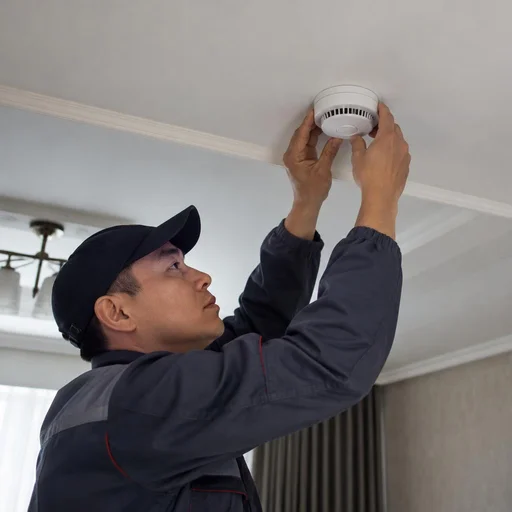
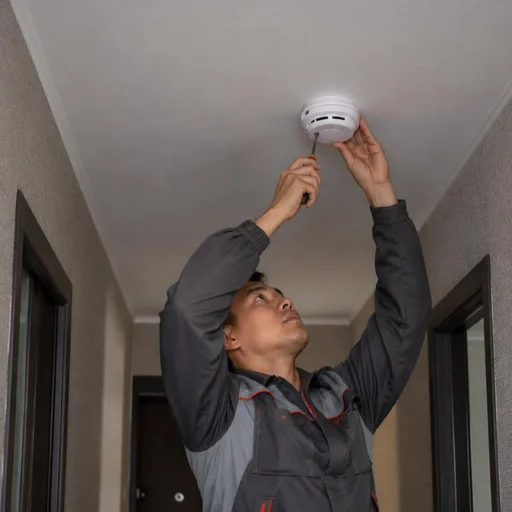
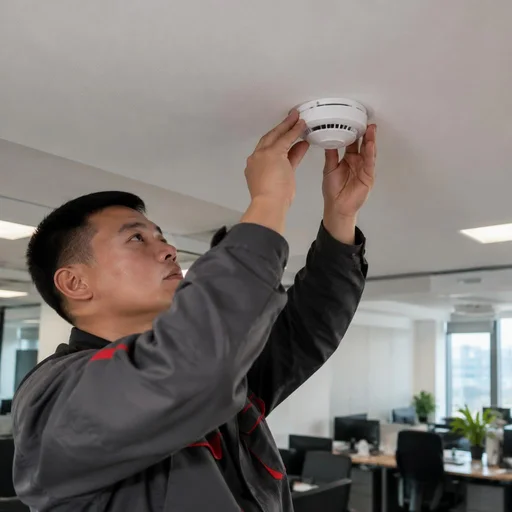
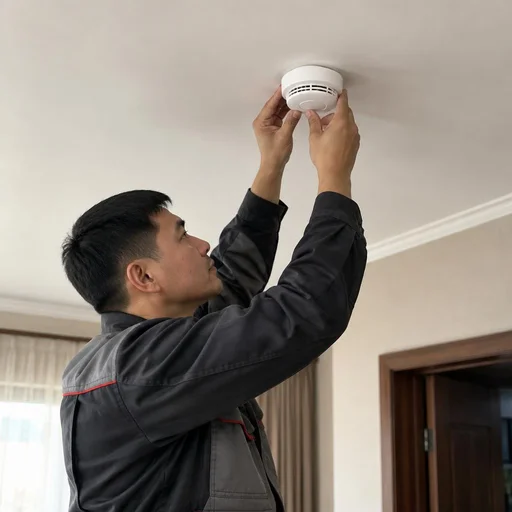
Why a smoke detector is needed and what tasks it solves
Early fire detection provides extra time for evacuation and calling the fire brigade. We explain how the detector works, how a standalone model differs from an addressable system, and in which premises installation is mandatory under the norms of the Kyrgyz Republic.
What a smoke detector detects and how it triggers
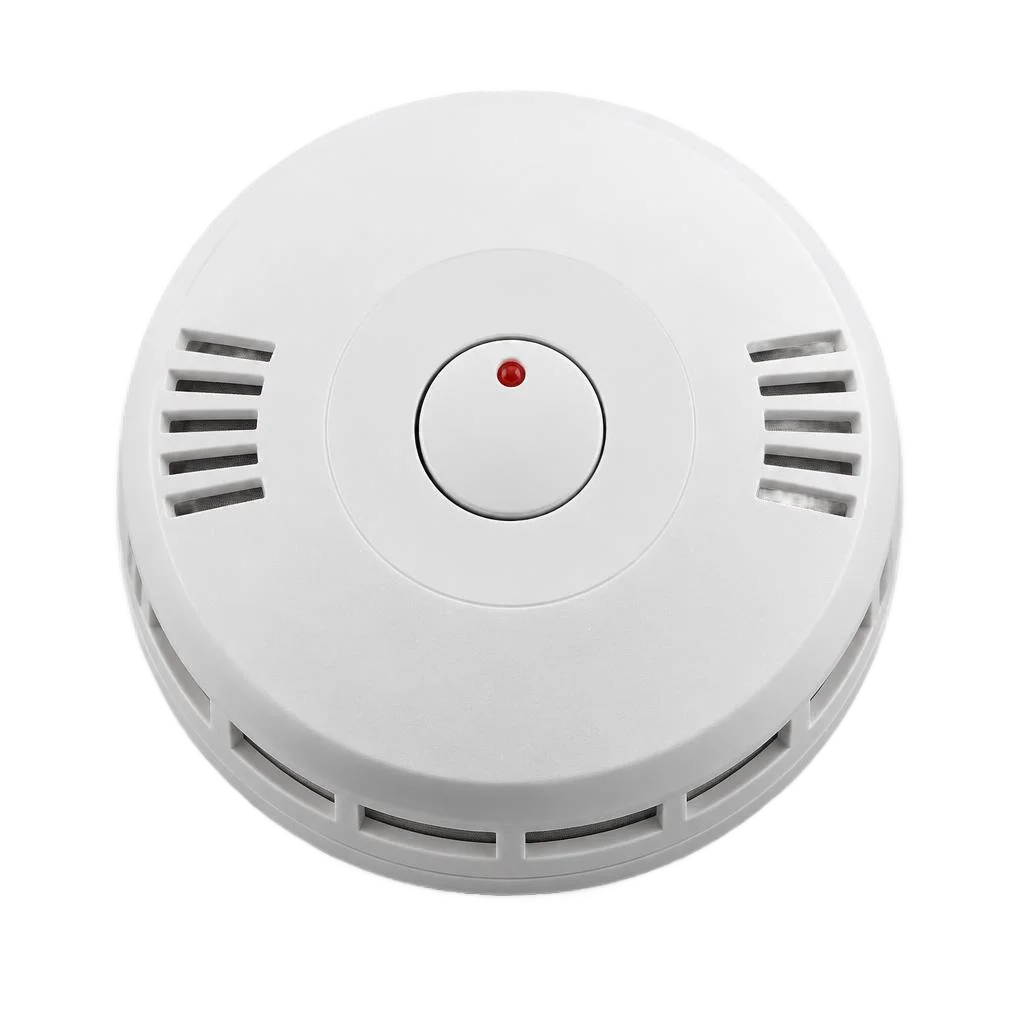
A smoke detector responds to smoke particles in the smoke chamber and emits an audible alarm before the source of the fire spreads. The sensor detects the scattering of an infrared beam: when aerosol appears, the light flux is deflected, and the circuit closes the siren circuit. Household models trigger within 10-30 seconds after smoke enters the chamber, a standalone power source — a "Krona" type battery or a lithium cell — keeps the device ready for years, and a test button allows you to check the electronics without lighting a fire. The sensitivity threshold is set so as not to trigger on shower steam, but to detect smoldering wiring — that is why the installation location matters more than the siren's power.
Standalone detector or addressable system: what to choose for a home and office
We select the type of detector for the facility: for an apartment a standalone one is sufficient, for an office and warehouse — an addressable one with output to the control panel. A standalone smoke detector is mounted without a loop, is powered by a battery and signals only locally — with a siren in the room. An addressable smoke detector operates as part of a loop, transmits the receiving and control code of a specific room to the panel and triggers an alert throughout the entire building. The difference in response is critical if the facility is unattended at night: a standalone model does not transmit a signal to the monitoring station, and the fire is only discovered in the morning. Installing a smoke detector with output to the monitoring station requires designing the loop in advance — converting a standalone scheme into an addressable one after renovation is more expensive than including it at the installation stage.
Where a smoke detector is mandatory under the fire safety norms of the Kyrgyz Republic
- Residential rooms: bedrooms, children's rooms and living rooms in apartments and private houses — a detector is installed in each room according to the KR SNiP.
- Corridors and evacuation routes: hallways, stairwells and common corridors of apartment buildings must be equipped with detectors.
- Technical rooms: boiler rooms, electrical switch rooms, basements and warehouses — high-risk zones where installation is mandatory.
- Commercial facilities: offices, shops and cafes pass fire supervision inspections with a detector inspection log.
- Penalty for absence: the inspector issues an order, and in case of a repeat violation the facility is suspended until it is remedied.
Types of smoke detectors and their differences
We break down the five categories of detectors we work with: standalone, battery-powered, hardwired, wireless, and addressable. They differ in power supply, signal transmission method, and the type of site where each type performs best.
Standalone and battery-powered models: when one detector is enough
We install standalone battery-powered smoke detectors where running a cable is impractical — in apartments with a fresh renovation, rental housing, and summer homes near Bishkek. Such a model doesn't require a loop: once triggered, the built-in 85 dB siren turns on, and it can be heard through two closed doors. The lithium battery life in most models is 5 to 10 years; in cheap alkaline cells, about a year. Battery-powered models are cheaper to install but require battery replacement: during installation, the technician records the date and reminds you about the next check. In private homes in Verkhnyaya Ala-Archa and Kok-Zhar, where owners leave for the winter, we recommend installing the standalone option — it works without external power and isn't affected by substation outages.
Hardwired and wireless detectors: power and communication
A hardwired smoke detector is connected to a 220 V network or to a loop, while a wireless model transmits a signal over a radio channel without laying cable. A hardwired scheme is more reliable during a power outage only if there is a backup source — otherwise a wireless device with a battery will survive the outage, while a hardwired one won't. For hardwired lines we use KSVV 2×0.5 or KVT 2×0.75 cable; for the radio channel, frequencies of 433 or 868 MHz with a range of up to 100 m within a floor. Installing a radio-channel smoke detector at sites in Bishkek with metal partitions requires repeaters: the signal attenuates between floors. When installing in a finished renovation, a wireless scheme saves 6–8 hours of wall chasing and leaves no dust — a decisive argument for residential apartments.
Addressable detectors: precise location of the fire
We install addressable smoke detectors at sites where it's important to know the specific room of the fire — offices, warehouses, boiler rooms. Each device is assigned an address, and when triggered, the control panel displays not "fire in general" but the loop number and position — for example, "Loop 2, detector 14, server room." The addressable system shows the device number on the control panel, so security or the duty officer goes straight to the right room instead of walking around the entire building. Commissioning takes longer than with standalone models: you need to flash the addresses, check communication with the panel, and log the positions. In warehouses of 1,000 m² or more in Bishkek's industrial zone, addressing saves the duty officer 5–10 minutes on each activation — with a false alarm, that's critical.
Comparison of detector types by installation parameters
| Detector type | Power supply | Communication method | Where we install |
|---|---|---|---|
| Standalone | battery | audible siren | apartment, summer home |
| Battery-powered | battery | local signal | rental housing |
| Hardwired | mains / loop | wired line | house, office |
| Wireless | battery | radio channel | finished renovation |
| Addressable | loop | addressable line | office, warehouse, boiler room |
When choosing, don't look at the price of the model, but at who will respond to the signal at night — this determines whether a connection to a monitoring station is needed.
Installing smoke detectors in an apartment: choosing a location and mounting
We plan the installation points based on the layout: the bedroom, children's room, kitchen and hallway each require a different approach. Let's look at exactly where to place the detectors, how to attach them to different surfaces, and how many devices are needed per apartment.
Where to place a detector in the bedroom, children's room and hallway
- Bedroom: we mount the detector on the ceiling closer to the center of the room, stepping back at least 30 cm from the wall — this is where smoke accumulates earliest.
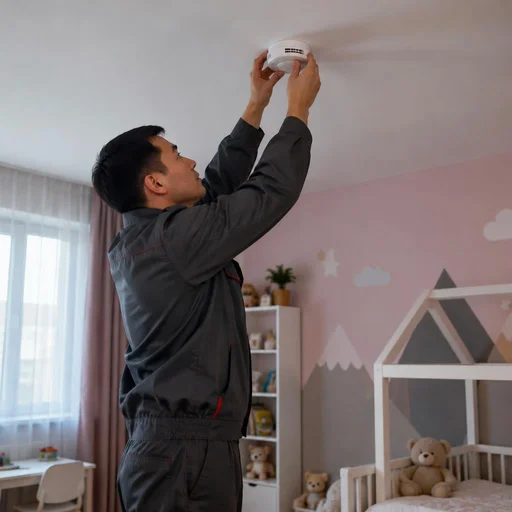
- Children's room: we repeat the same scheme in the children's room, but shift the point away from the crib so that a nighttime alarm doesn't blast a sharp sound right above the child's head.
- Hallway: we install one device at the exit from the living area — it covers the path of smoke toward the front door and the stairwell.
- Closed doors: if the detector is placed only in the hallway, a closed bedroom door will muffle the siren — that's why we install separate devices in the living rooms.
- Two-room apartment: that's two separate detectors plus one in the hallway, not one for the entire home.
Specifics of installation in the kitchen: how to avoid false alarms
Mounting a smoke detector in the kitchen requires a clearance of at least one meter from the stove and the range hood — otherwise steam and grease settle in the smoke chamber and cause false alarms. We place the detector on the ceiling offset toward the window, away from the active cooking zone, and check that the airflow from the range hood doesn't blow directly onto the device. In our practice, the most common false alarms come from detectors mounted directly above a gas stove or 40-50 cm from it — owners take them down within a month. If the kitchen is combined with the living room, it's wiser to install a heat detector near the stove and a smoke detector in the living area, rather than two smoke detectors side by side. We can help you choose such a combined option for your specific layout.
Ceiling vs. wall mounting: technical differences
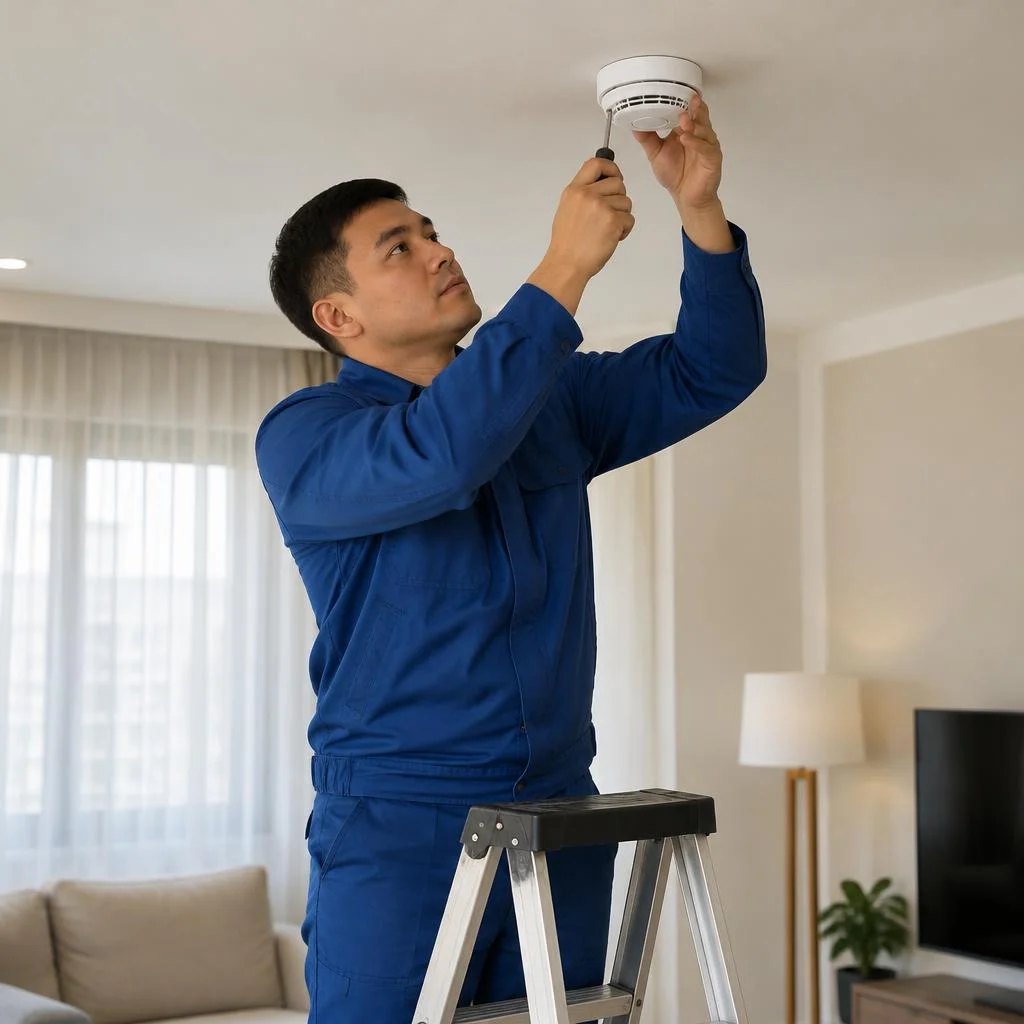
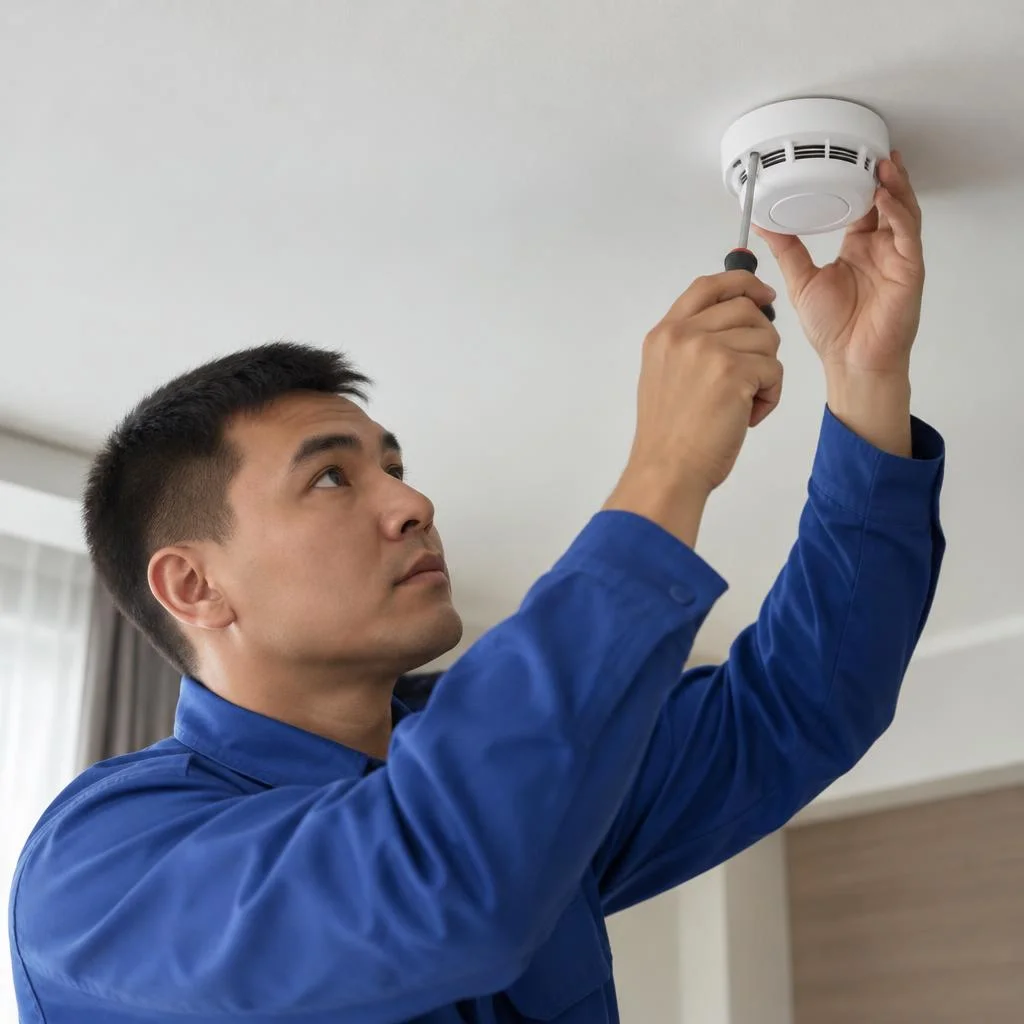
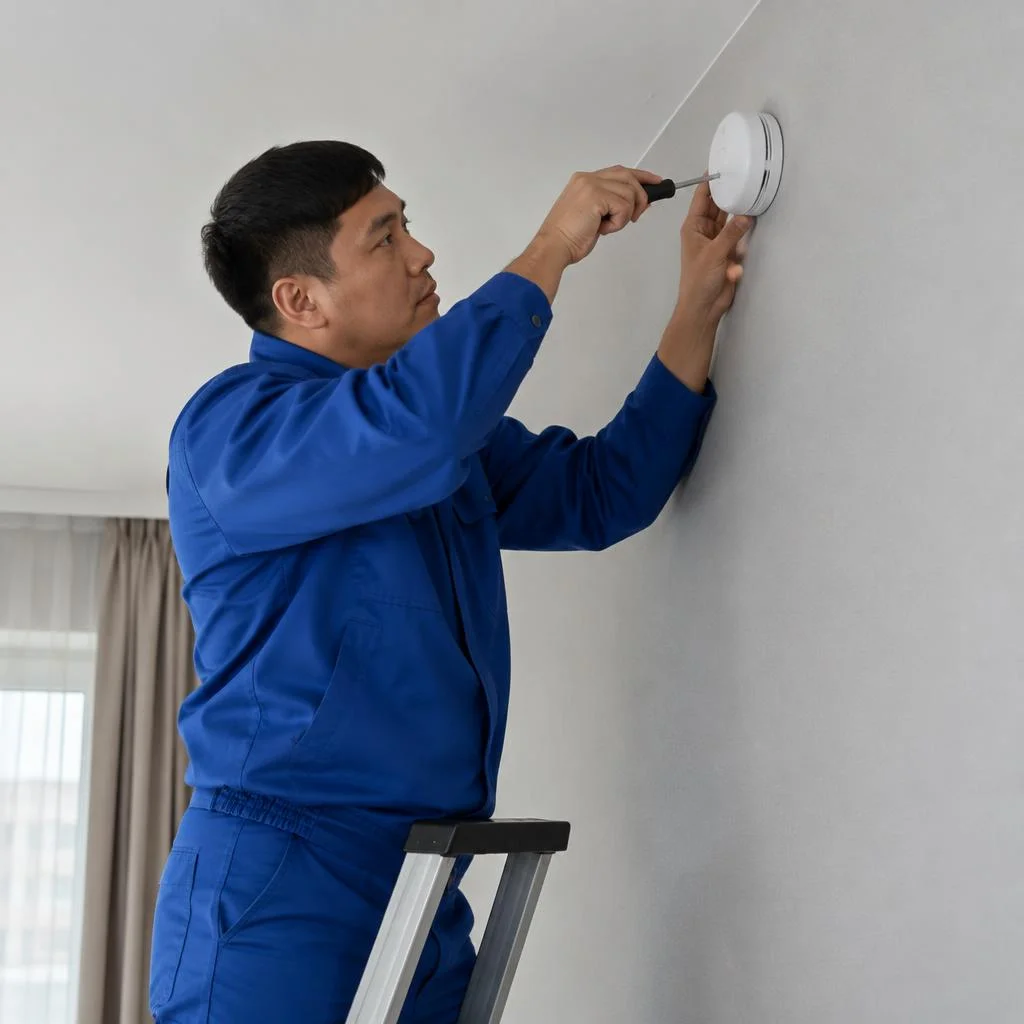
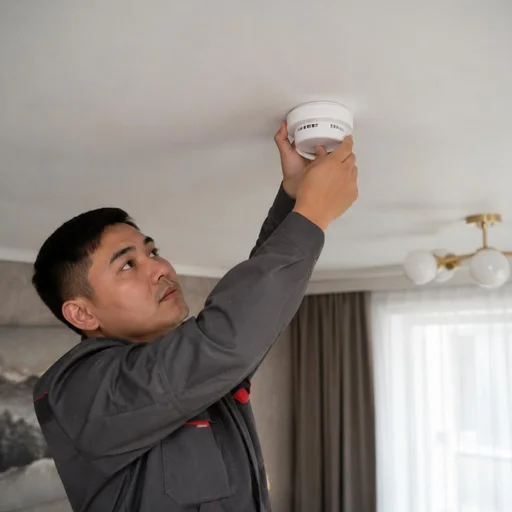
The detector is attached to the ceiling via a mounting plate, and to the wall — no lower than 30 cm from the ceiling and no closer than 50 cm from the corner. On the ceiling we secure the plate with two 6×40 mm dowels, then snap the device body onto it — this makes it easy to remove for cleaning and battery replacement. On the wall, the point must fall within the zone where smoke rises along the surface rather than flowing around furniture protrusions. On a stretch ceiling, the detector is installed on a backing plate or via a spacer — you can't drill into the fabric, or it will creep across the entire room. For stretch ceiling structures we use a heat-resistant spacer and fasten it to the concrete base.
How many detectors are needed per apartment
- One-room: a minimum of two devices — in the living room and in the hallway by the exit.
- Two- and three-room: one in each living room plus the hallway; the kitchen is counted separately, taking into account the clearance from the stove.
- Children's room and bedroom: separate detectors, even if the rooms are adjacent — a closed door blocks the spread of smoke.
- Hallway: one device for the entire length; if longer than 10 meters — two with a spacing of about 5-6 meters.
- Calculation by area: one detector for every 25-30 m² of living space, but no fewer than one per room regardless of size.
Installation of smoke detectors in private homes, offices, and technical rooms
Installation in a private home, office, and technical rooms differs from apartment installation: here, ceiling height, rack storage, drafts along evacuation routes, and proximity to gas equipment all matter. Let's break down the specifics of each type of facility.
Private home and boiler room: high-risk zones
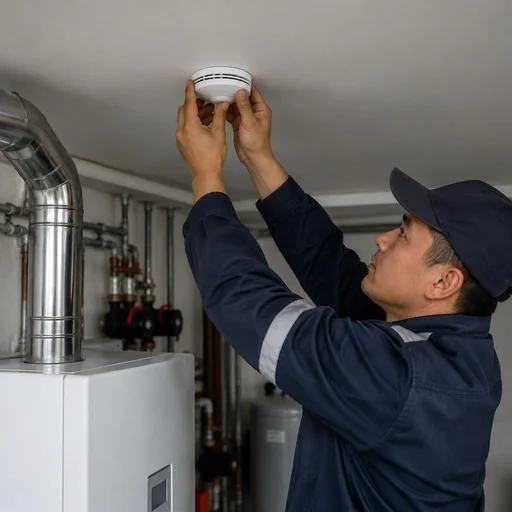
Installing a smoke detector in a private home includes the boiler room and garage — there we mount the detector on a non-combustible base and outside the zone of direct heating from the boiler or exhaust pipe. In two-story homes in Bishkek with an open staircase, we additionally install a detector on the upper landing: smoke rises through the stairwell and reaches the second-floor bedrooms before the detector on the first floor triggers. In a boiler room with a gas boiler, the smoke detector is supplemented with a gas detector — a methane leak produces no smoke, and the smoke detector will not detect it. For garages with a gas-powered vehicle, the scheme is the same. When installing in a private home in Bishkek, we keep at least one meter away from the boiler and do not place the detector above the firebox door. In the boiler room, the smoke detector is supplemented with a gas detector — a gas leak produces no smoke, and the smoke detector will not detect it.
Office, warehouse, and basement: addressable systems and output to the fire alarm control panel
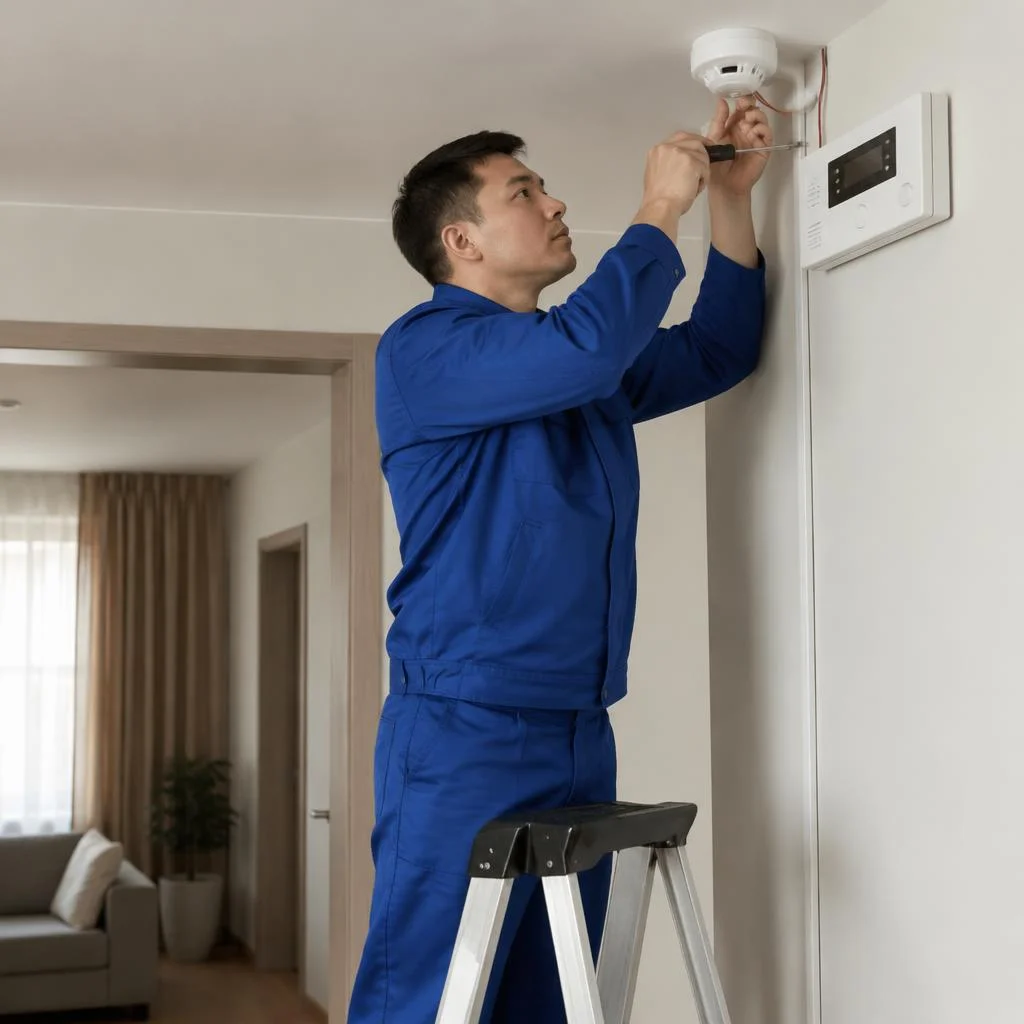
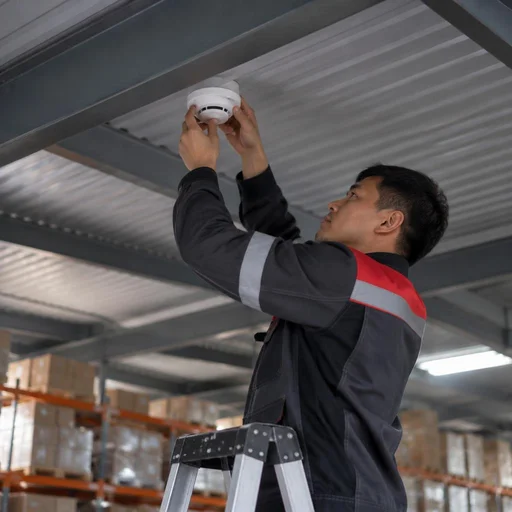
Installing smoke detectors in an office, warehouse, and basement requires a unified system with signal output to the fire alarm control panel (FACP) and the security monitoring station. In Bishkek offices with an area of 200 m² or more, we design addressable lines: each detector gets its own address, and when triggered, the panel shows the specific office rather than the entire floor. In basements with electrical switchboards and pump rooms, detectors with moisture protection are installed: condensation on the ceiling destroys a standard chamber within a single season. In a warehouse, high-rack storage changes the layout — detectors are placed in the aisles between racks, otherwise smoke rises to the ceiling past the detector. For facilities with round-the-clock security, the signal is duplicated to an off-site monitoring station — this speeds up the response team's arrival.
Vestibule, entrance hall, and common corridor
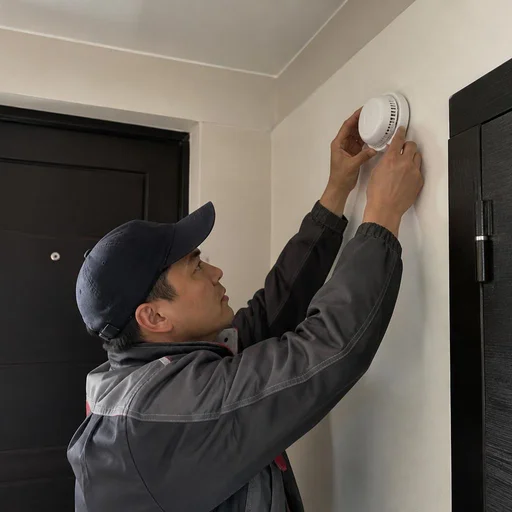
- Evacuation routes: in vestibules and common corridors, detectors are mounted on walls at a height of 2.2–2.5 m — smoke blocks the exit before it reaches the apartments.
- Draft protection: near the entrance door, the detector is moved at least 1 m deeper into the corridor — airflow blows smoke away from the chamber, and triggering is delayed.
- Base material: on concrete and brick walls of the entrance hall, fasteners are selected for a nail-in anchor, on drywall partitions — for a toggle anchor.
- Coordination with the management company: in Bishkek entrance halls, installation on common walls is coordinated with the management company or homeowners' association, otherwise the detector will be removed at the first inspection.
- Power supply: in entrance halls without access to an outlet, standalone models with a 10-year battery are installed.
Layout plan for detectors by facility room
| Room | Detector type | Installation |
|---|---|---|
| Apartment | standalone / battery-powered | ceiling |
| Private home | standalone / hardwired | ceiling |
| Office | addressable | ceiling |
| Boiler room | hardwired | ceiling, non-combustible base |
| Garage | standalone | ceiling |
| Basement | addressable | ceiling |
| Warehouse | addressable | aisle between racks |
| Corridor / vestibule | standalone | wall |
| Bedroom / children's room | standalone | ceiling |
| Entrance hall | hardwired | wall |
We design the placement plan for a facility in Bishkek taking into account the area, ceiling height and purpose of the premises. For each room, record not only the type of detector, but also the installation height — during a fire inspection, this is the first thing they look at.
How smoke detector installation works at Eco-Service
The technician's workflow: from the request and site visit to mounting, commissioning and testing the detector with test aerosol. Below is what happens at each stage and what to look for during acceptance.
Technician visit and site inspection
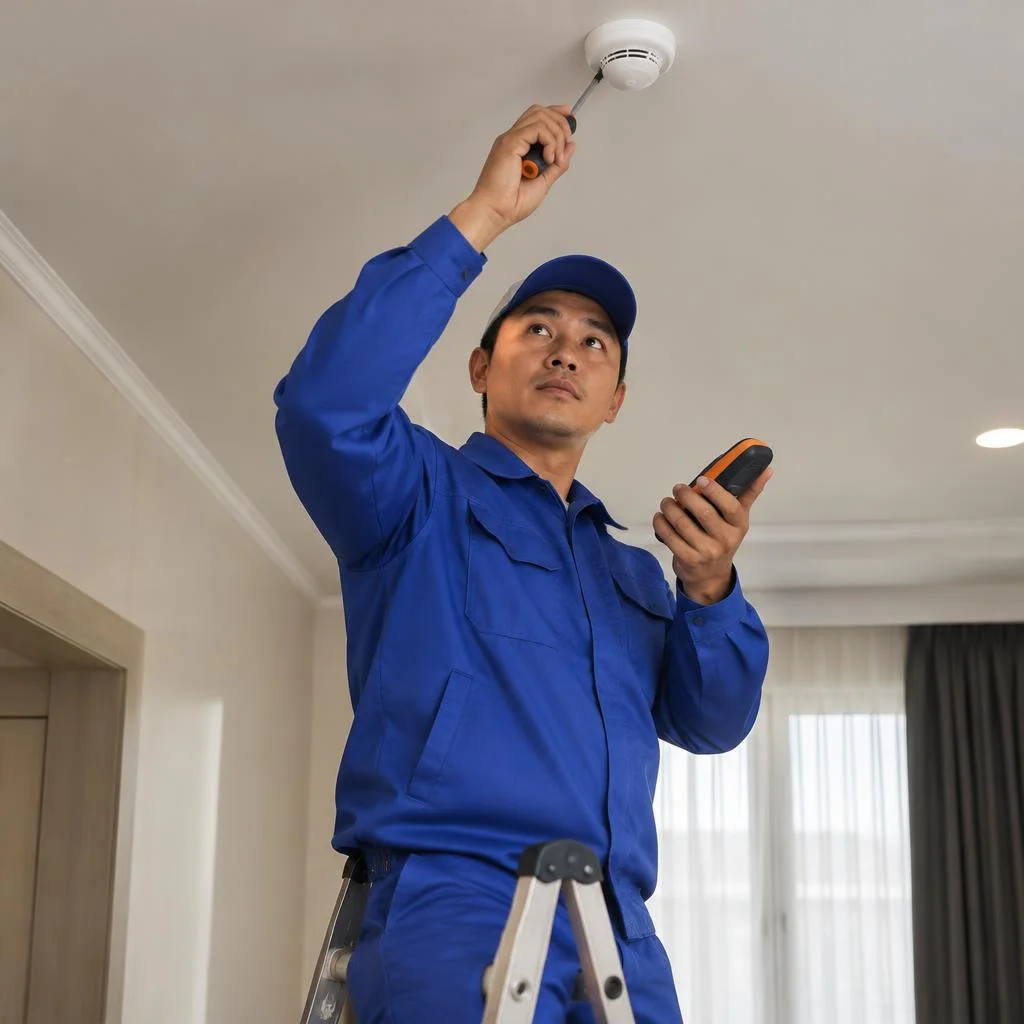
We take the request, the technician travels to the site in Bishkek, inspects the layout and determines the installation points. The specialist measures the ceiling height, checks the ceiling material — concrete, drywall, wooden beam — and clarifies where the routes for wired models will run. Then the locations are agreed: bedroom, children's room, hallway, kitchen, and if necessary the boiler room and garage. The inspection takes 20-30 minutes for an apartment and up to an hour for a private house with an area over 150 m². In search, clients often write briefly — smoke detector installation, and the technician immediately understands the task from such a query. During the inspection it is important to show the specialist where the furniture and appliances are — a detector whose installation is planned before rearranging may end up behind a wardrobe and lose sensitivity.
Installation, connection and commissioning
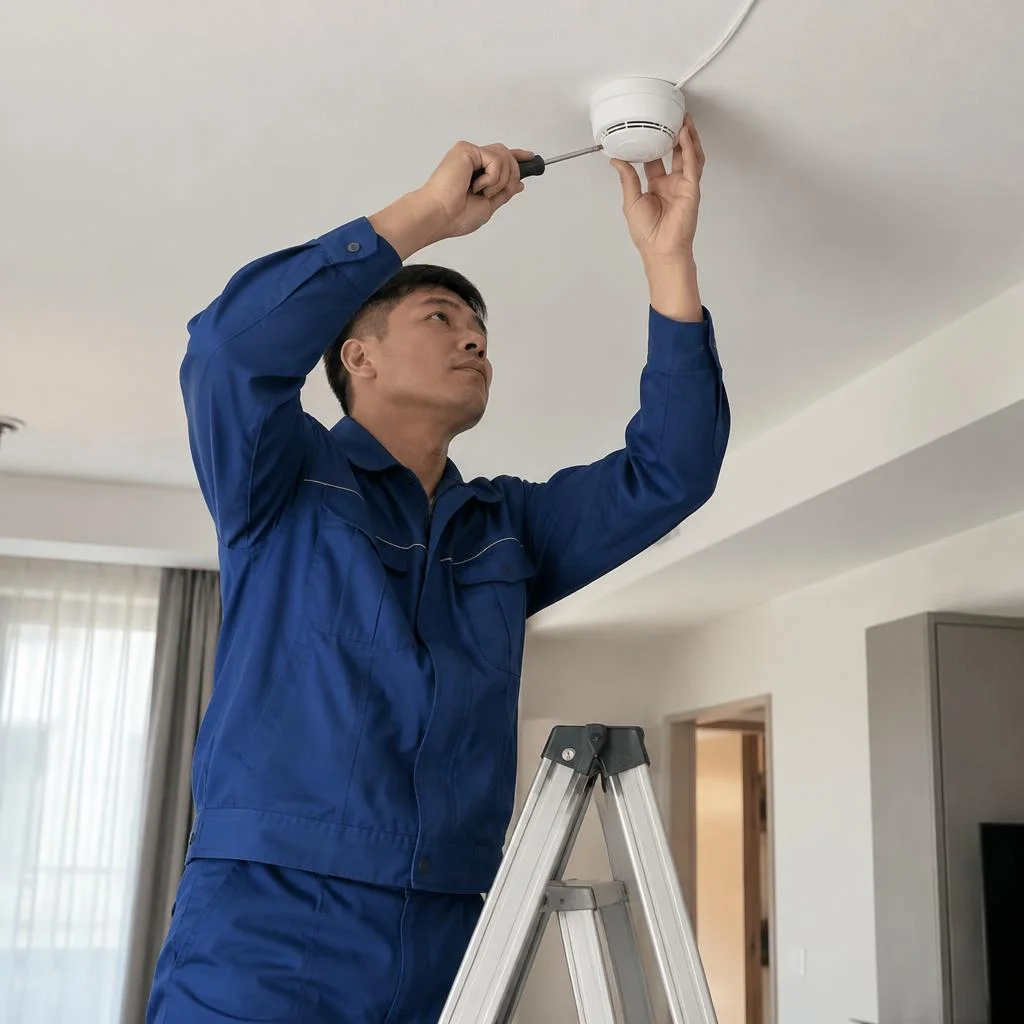
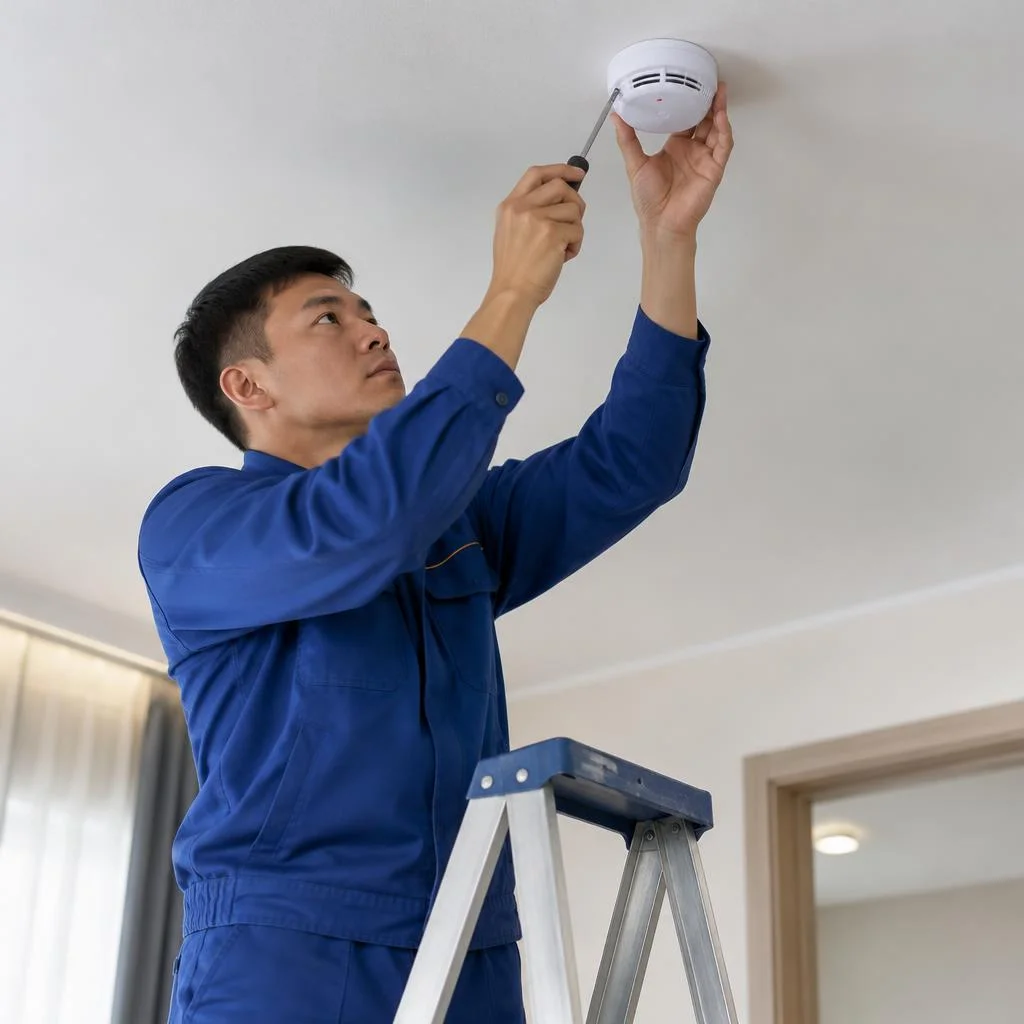
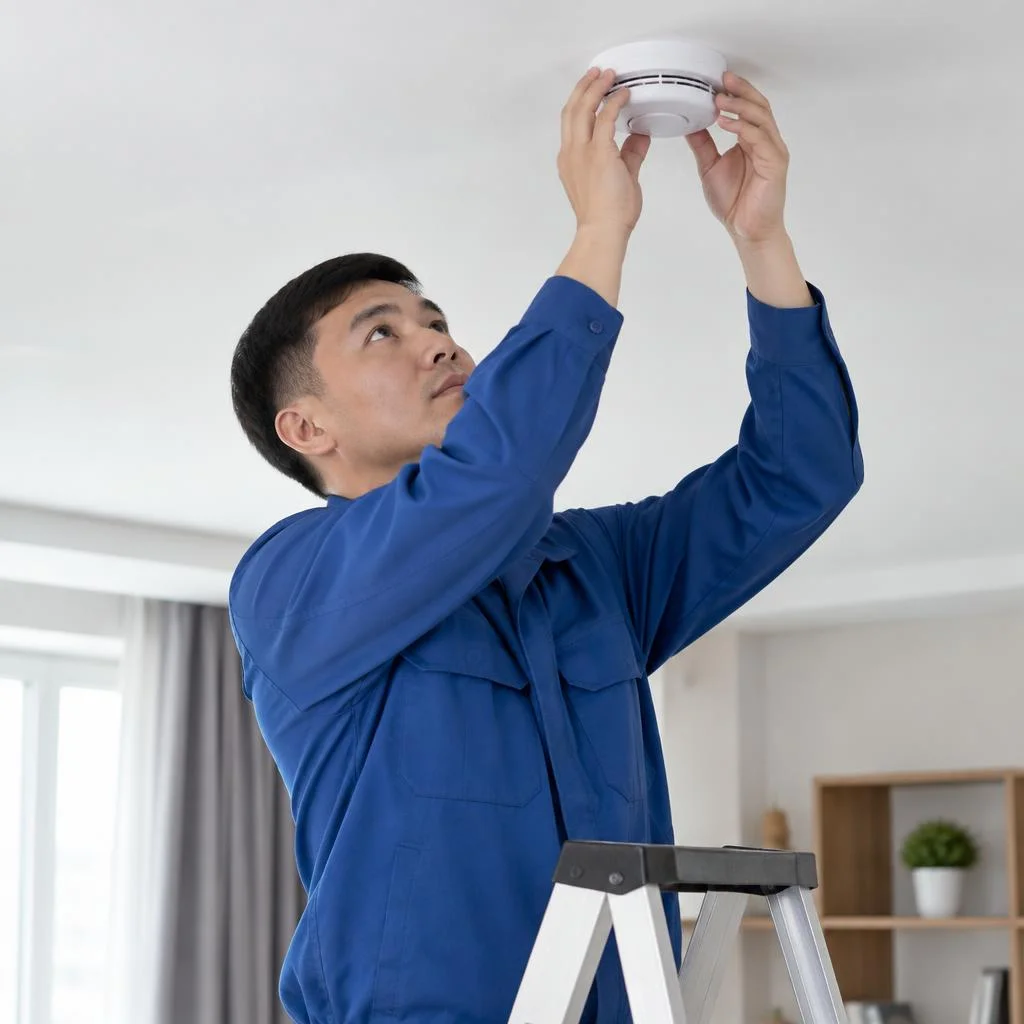
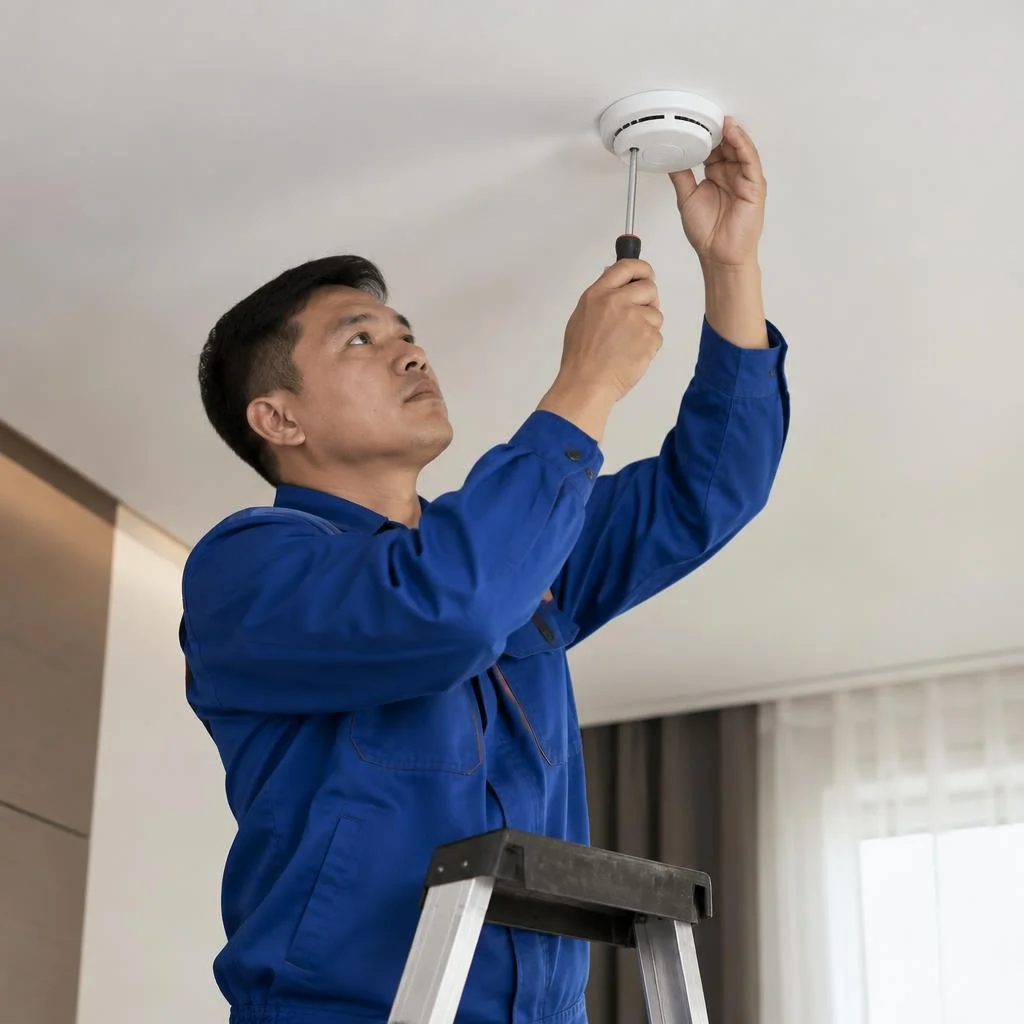
Our technician mounts the detector on the mounting base, connects wired and addressable models to the loop and performs commissioning. A standalone battery model is installed on two dowels in 10-15 minutes; an addressable detector requires laying a cable to the control panel and addressing in the system — according to the plan, 8 to 32 devices are connected to one loop. Power for a wired detector runs along the same line, so wall chasing is planned before the final finishing. After installation, a wired detector is checked for loop breakage — if the line is damaged, the detector looks functional, but the signal does not reach the control panel.
Testing with test aerosol and the test button
- Test aerosol: sprayed into the smoke chamber from a distance of 15-20 cm and activation is recorded within 10-30 seconds.
- Test button: checks the electronics and signal transmission, but not the optical sensor's response to smoke.
- Check at the control panel: the technician makes sure that the address or loop number is displayed correctly on the panel.
- Recording in the report: the document includes the test date, model type and test result for each detector.
Integration with smart home and alarm systems
We connect wireless and addressable detectors to alarm and smart home systems if the facility is already equipped. A wireless smoke detector transmits the alarm via radio channel at 433 or 868 MHz, so it is paired with a hub or GSM module without wall chasing — this is convenient in apartments with finished renovations and in wooden houses. When setting up scenarios, the action is specified: siren, push notification, gas valve shutoff, lights on. When integrating with a smart home, check that the notification scenario works when the internet is down — otherwise the detector will trigger, but the notification will not arrive.
Warranty, maintenance and the Eco-Service service center
This section covers what the installation warranty includes, how the detector is serviced after installation, and why having our own service center in Bishkek matters when choosing a contractor.
Installation warranty — 2 years
We provide a 2-year warranty on smoke detector installation — on the mounting and the connection. If the detector comes off the ceiling because of a loose dowel or an oxidized contact in the terminal block, the technician's visit and resoldering are covered under warranty. The coverage terms are set out in the acceptance certificate: it records the detector's serial number, the type of fastener — an anchor wedge or a drywall screw — and the commissioning date. The warranty does not cover battery replacement or contamination of the smoke chamber — these are wear items that are addressed by regular inspection. When filing a warranty claim, keep the certificate and receipt on hand: without them, the technician cannot confirm that the housing was not opened by you.
Service maintenance and detector inspection
- Cleaning the smoke chamber: blowing out with compressed air and a soft brush — removes dust that has settled on the optical sensor over the heating season.
- Checking the mounting: the technician checks the dowel and the mounting plate on the ceiling — vibration and temperature swings loosen the fasteners.
- Testing with the test button: the detector is put into test mode, and the siren activation and signal transmission to the receiving panel are verified.
- Battery monitoring: measuring the voltage of the power cell — it drains faster in an unheated garage or warehouse.
- Replacing the power cell: on a scheduled basis, per the maintenance schedule, rather than after the detector starts beeping at night.
Our own service center in Bishkek
We have our own service center in Bishkek — devices are accepted in person, and a technician travels to sites within the city. If the detector has been removed from the ceiling, it is brought to the center and tested on a bench: test aerosol is fed into the chamber and the optical sensor's response at different smoke concentrations is observed. The test button on site checks the electronics and the siren, but not the chamber's sensitivity — which is why bench diagnostics are more accurate. At the center, the installation technician also selects a compatible mounting plate if the old one has cracked. For addressable detectors, the address in the firmware and the correctness of communication with the receiving panel are checked here — this is harder to do on site.
Customer reviews on 2GIS and Google Maps
Reviews of our work can be found on 2GIS and Google Maps — there, customers describe the installation and maintenance. In the reviews, two points come up most often: how the technician walked through the apartment and explained why the detector in the bedroom is placed at that particular spot by the door and not above the bed, and how long commissioning of an addressable system took in an office with several rooms. When choosing a contractor, look not at the average score but at reviews with photos of the site — they show what the installation actually looks like after the technician is done: whether the plate is seated evenly, whether a wire is hanging, whether the cable ducts are closed. Photos of the installation are more honest than any advertisement.
Conclusion
Smoke detector installation comes down to three decisions: the right type of detector for the site, the precise installation location, and testing after connection. Below are brief takeaways that will save time during the selection stage and protect you from false alarms.
Key takeaways
- Detector type for the site: a standalone battery-powered one covers an apartment, while an addressable one with output to a fire alarm control panel is for an office, warehouse and basement, where the exact location of the fire matters.
- Location matters more than quantity: a separate detector is needed in the bedroom, children's room and hallway — a single device in the center of the apartment does not have time to trigger when doors are closed.
- Kitchen and boiler room are risk zones: there, the detector is installed at a distance from the stove, boiler and range hood, otherwise steam and heat cause false alarms.
- Testing with test aerosol is mandatory: the test button only confirms that the electronics are working, while the smoke chamber's sensitivity is checked with aerosol after installation.
- Cleaning and battery replacement: dust in the smoke chamber and a drained power cell are the two main causes of false alarms and failures — check them once a year.