









What clogs Eco-Service clears: from the sink to the main drain line
A clog is not one problem but ten different ones: from a plug in a sink siphon to a blockage in the main drain line in the basement. Let's break down exactly where a clog occurs, what causes it, and what to do about it.
Plumbing clogs in an apartment: sink, bathtub, shower, toilet
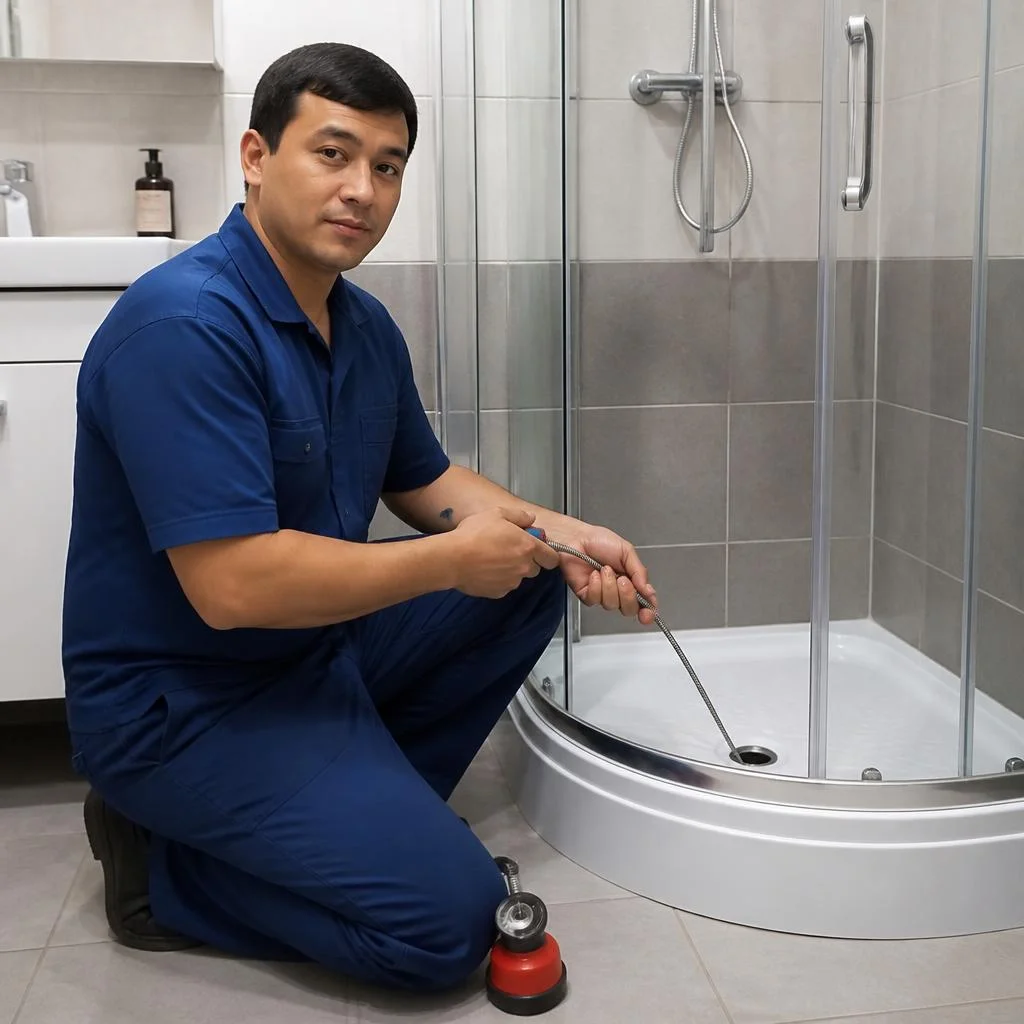
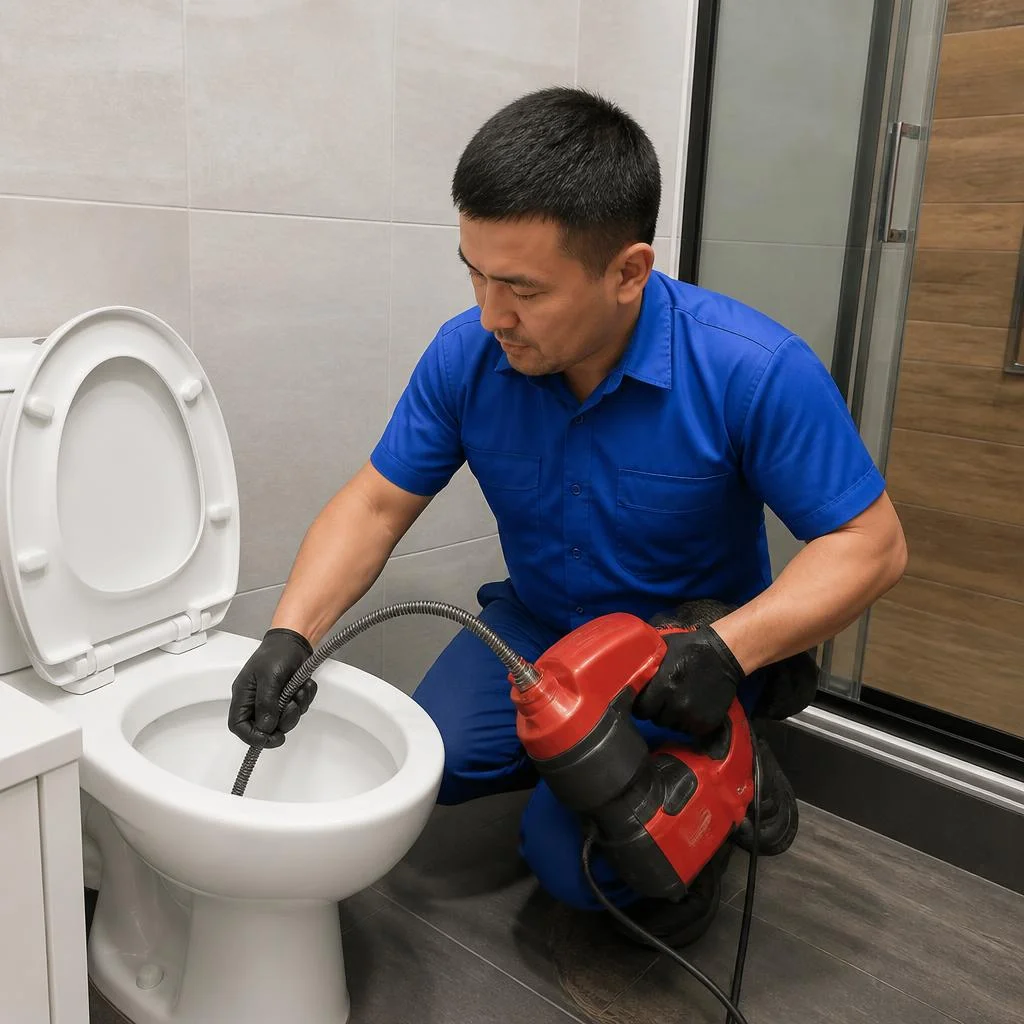
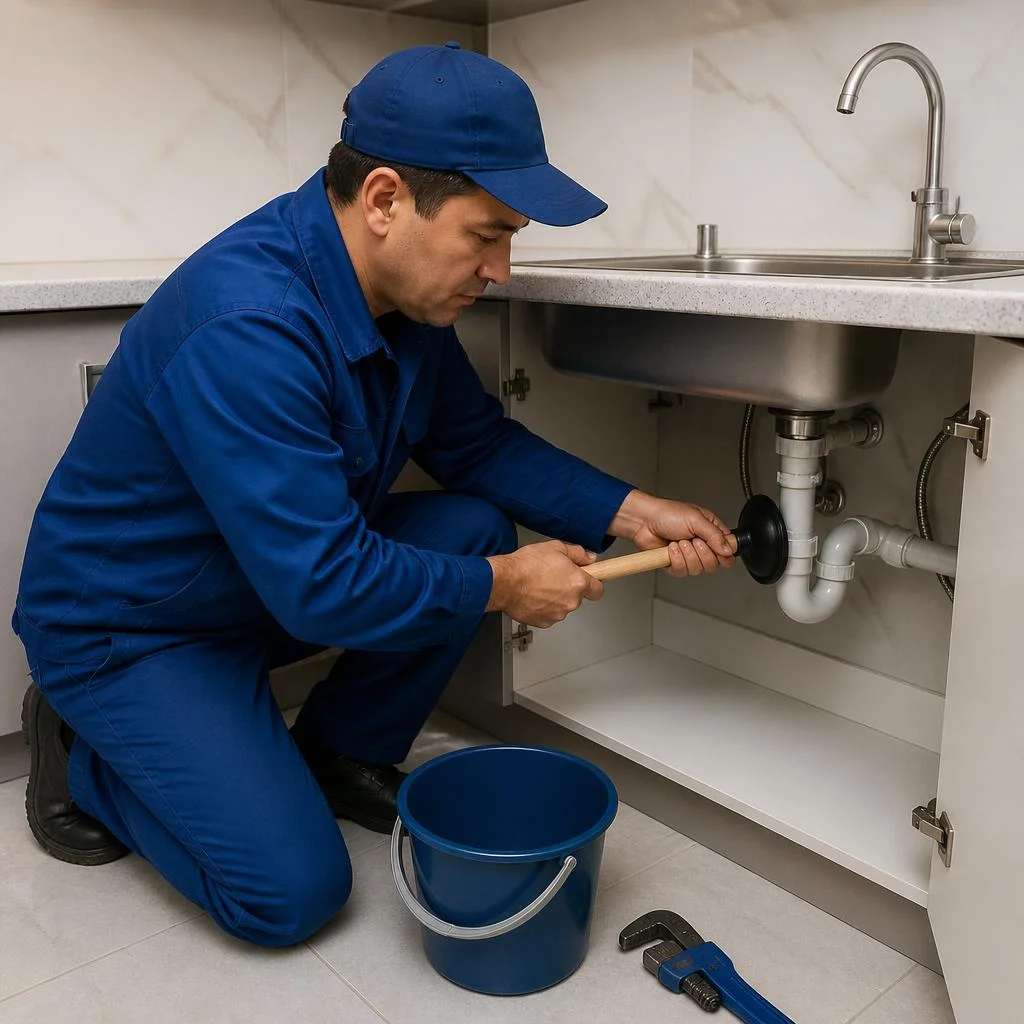
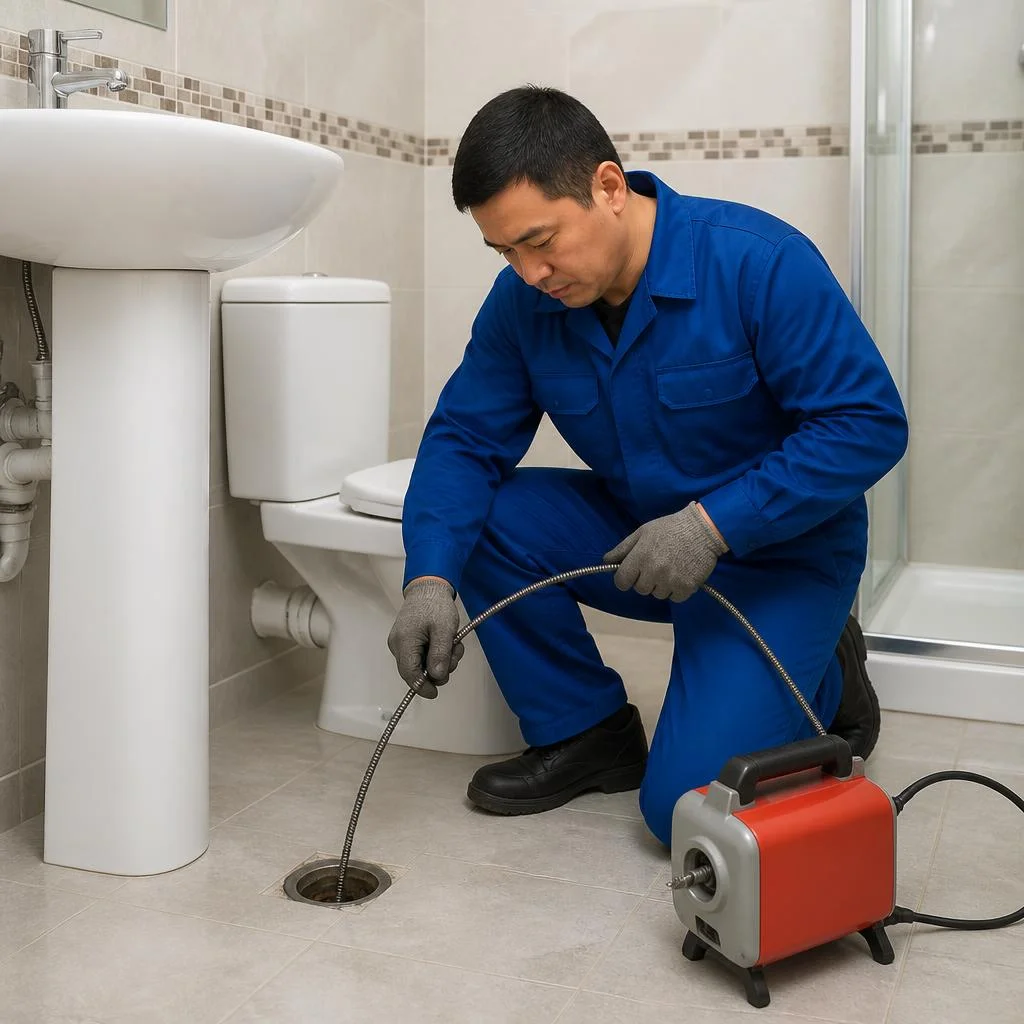
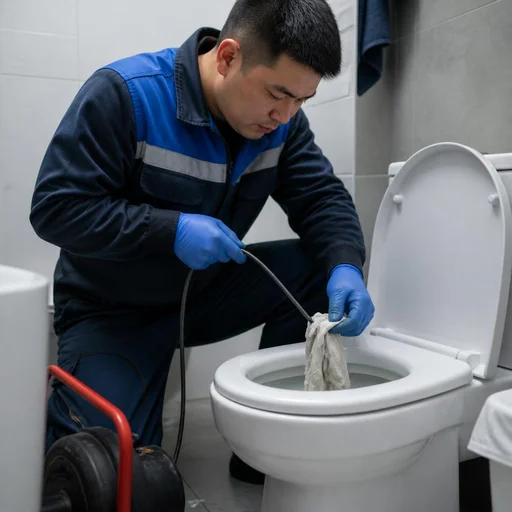
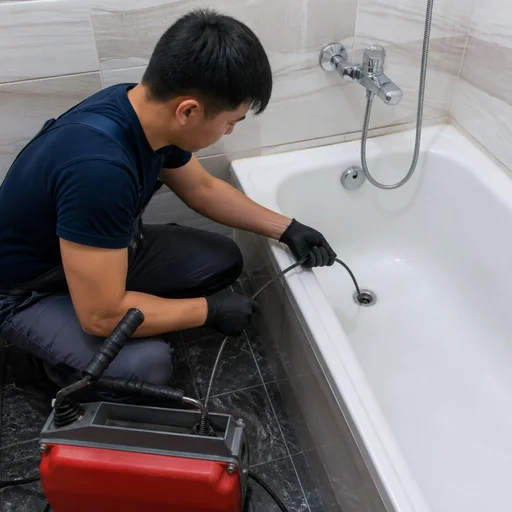
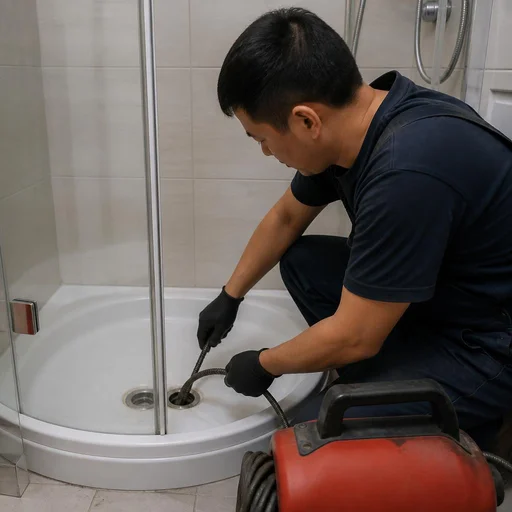
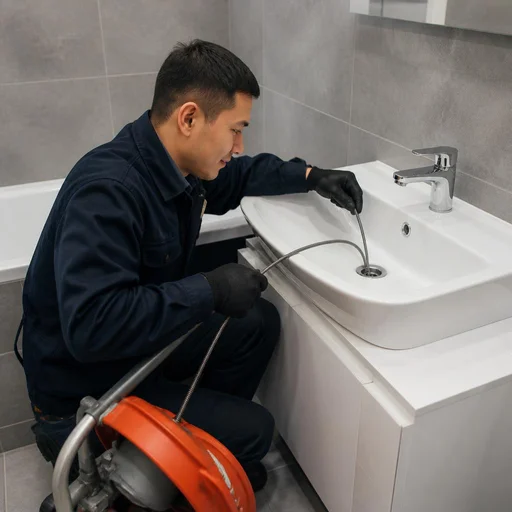
We clear clogs in sinks, bathtubs, shower stalls, and toilets — these are the four most common service call points in Bishkek, and they account for the majority of apartment requests. Sinks and bathtubs are usually clogged by hair mixed with soap scum: it sticks to the walls of the siphon and at the joint with the corrugated pipe, gradually narrowing the passage. In a toilet the cause is different — paper, wet wipes, and small objects that get stuck in the bend of the outlet. A shower stall collects the same hair as a bathtub, but because of the low drain and the drain grate, a plug forms faster. For cleaning at these points, the technician starts by checking the siphon: in 8 out of 10 cases the plug is right there, not in the riser, so the siphon is checked first to avoid paying for riser cleaning unnecessarily.
Kitchen sink, washing machine and dishwasher, heated towel rail
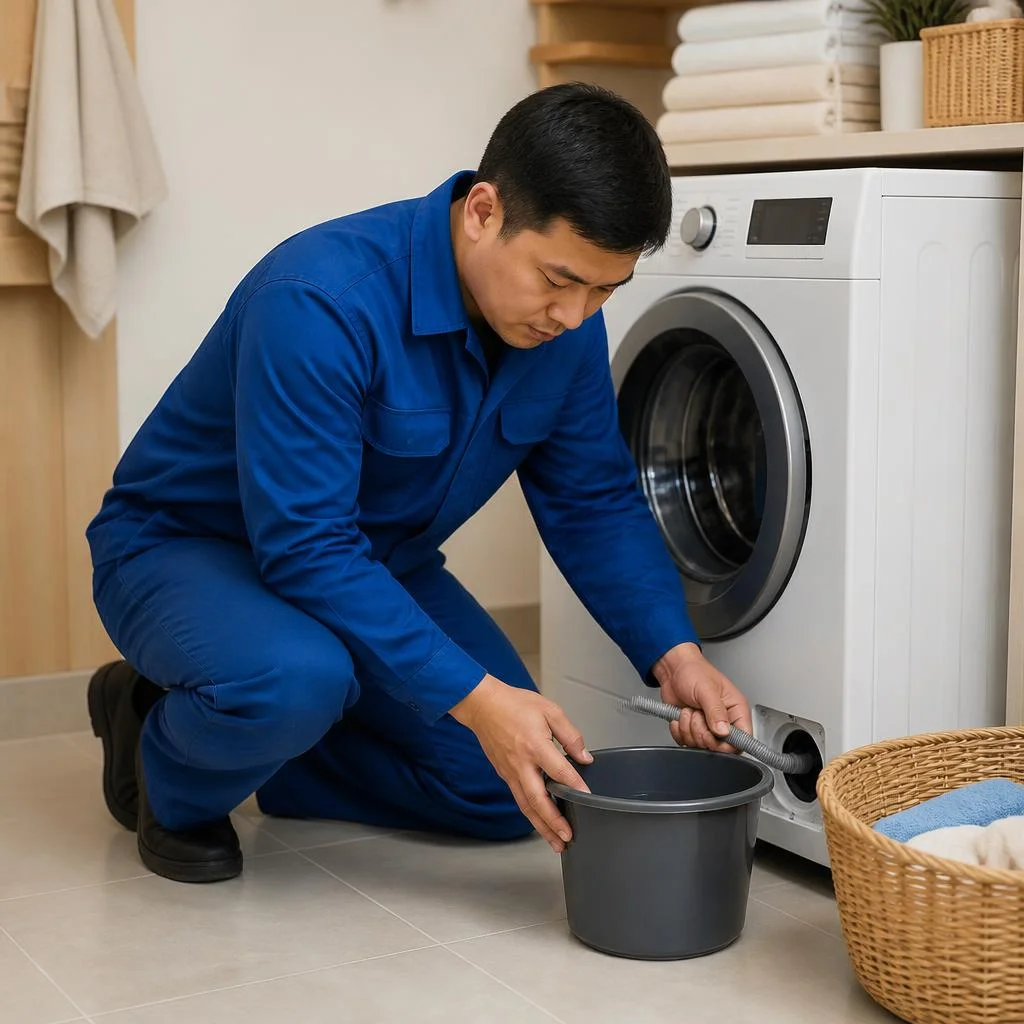
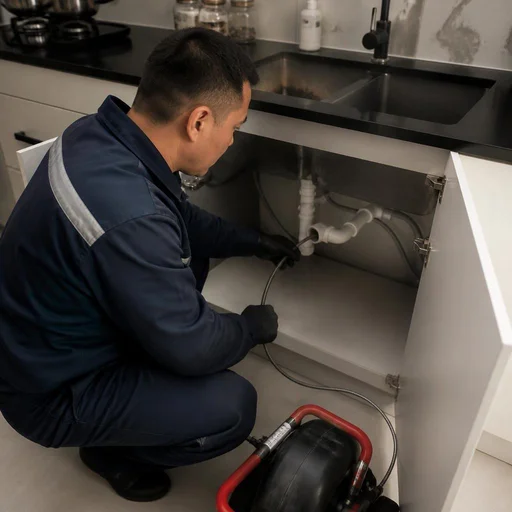
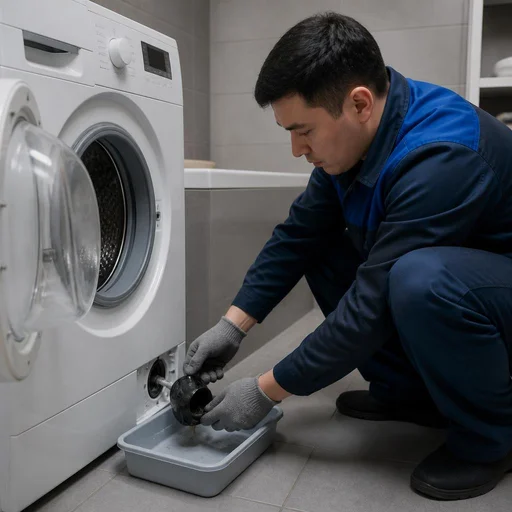
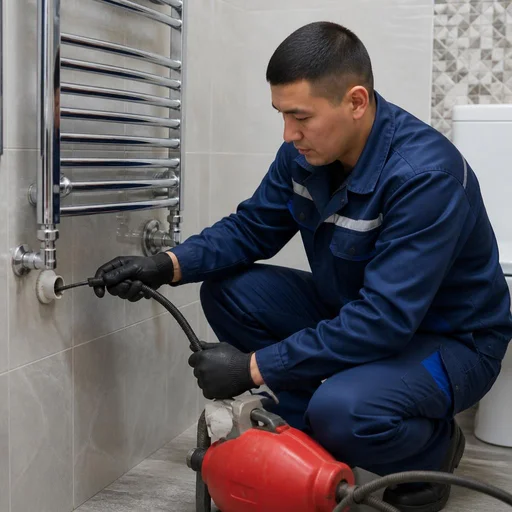
In the kitchen we clear clogs in sinks, washing machines, and dishwashers, as well as heated towel rails — here the cause is almost always grease or scale. Grease from dishes settles on the pipe walls and solidifies as the water cools, while food residue and fibers from sponges act as a framework for that grease to stick to. In a washing machine and dishwasher, the drain filter and hose get clogged: lint, threads, pieces of labels, and salt deposits from hard water. A heated towel rail gets clogged with sludge and scale from the hot water supply system — it stops heating across its entire surface or heats only at the top. Grease deposits on the walls of a kitchen pipe narrow the passage gradually, so the sink "works" until the last moment and then clogs in a single evening — a preventive flush once a year is cheaper than an emergency call.
Riser and main drain line: when the clog is shared by an entire building entrance
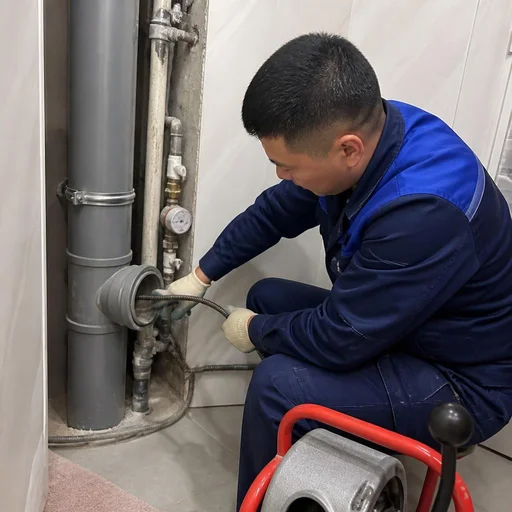
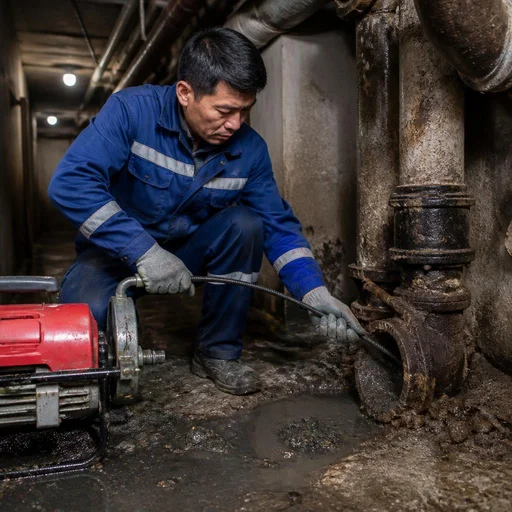
We clear risers and main drain lines in apartment buildings in Bishkek — these are clogs where water drains slowly in several apartments at once. A riser serves apartments vertically, a main drain line horizontally in the basement, where the outlets from several risers converge. If water won't drain for the neighbors above and below at the same time, the problem is in the riser, and access to it is coordinated with the neighbors in advance. The sign of a main drain line clog is different: in all apartments of the building entrance, water stands or rises in the basement, and clearing requires access to the inspection port on the technical floor. Bishkek accepts cleaning requests around the clock, because a shared clog won't wait until morning — water can end up on the floor of the neighbors below.
Table: clog points and what to do about them
| Clog point | Typical cause | Cleaning method |
|---|---|---|
| Sink | hair, soap scum | cable, electric machine |
| Bathtub, shower | hair, scum | cable, electric machine |
| Toilet | paper, foreign objects | cable, electric machine |
| Kitchen sink | grease deposits | hydrodynamic cleaning |
| Washing machine, dishwasher | scale, fibers | electric machine |
| Heated towel rail | scale, sludge | flushing |
| Riser | grease, sludge, deposits | hydrodynamic cleaning |
| Main drain line | sludge, sand, grease | hydrodynamic cleaning |
For upper points — sinks and bathtubs — a cable or electric machine is enough; for risers and main drain lines, hydrodynamic cleaning is needed: the method is chosen based on the clog point, not on the price of the call.
Causes of clogs in Bishkek: grease, hair, silt and old cast iron
To solve the problem once and for all, it is important to understand why it occurred. The causes vary — from grease in the kitchen to the old cast-iron housing stock in the city center.
Grease, hair and food waste: household causes
- Grease: cools on the pipe walls downstream and collects hair with food remnants into a dense plug.
- Hair: catches on rough spots and the layer of grease, forming the core of the plug in the sink and bathtub.
- Food waste: grains, coffee grounds and peelings settle at the bottom of the siphon and in horizontal sections.
- Soap scum: mixes with hair into a dense mass that cannot be washed away with a stream of water.
Silt, sand and old cast iron: Bishkek's local specifics
In the old housing stock, clogs occur more often because of cast-iron pipes: their walls become coated with silt and sand over time, and the bore narrows by a third. Cast iron is rough on the inside — silt clings to it more strongly than to smooth plastic, and in buildings of the old development along Chuy Avenue, Kievskaya and Toktogul streets, plugs recur every 3-6 months. Plastic pipes in new buildings of the Alamudun district and the Asanbay microdistricts accumulate deposits more slowly, but suffer from grease and hair. Clients often search for "clog removal Bishkek" — and end up here, because in Bishkek in old buildings, preventive hydro-jetting once every 1-2 years extends the life of the riser without replacing pipes, and this is cheaper and faster than a major overhaul of the communications.
How to distinguish a household clog from an emergency one
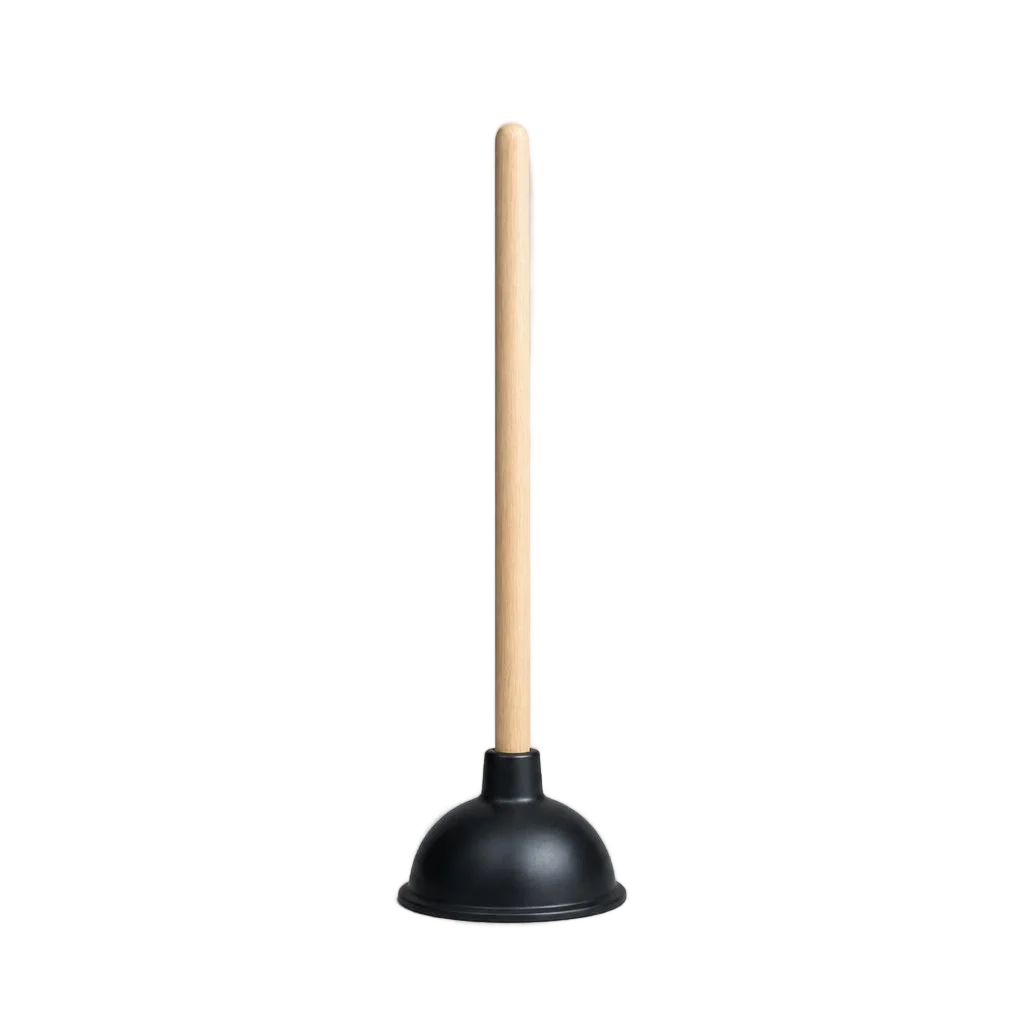
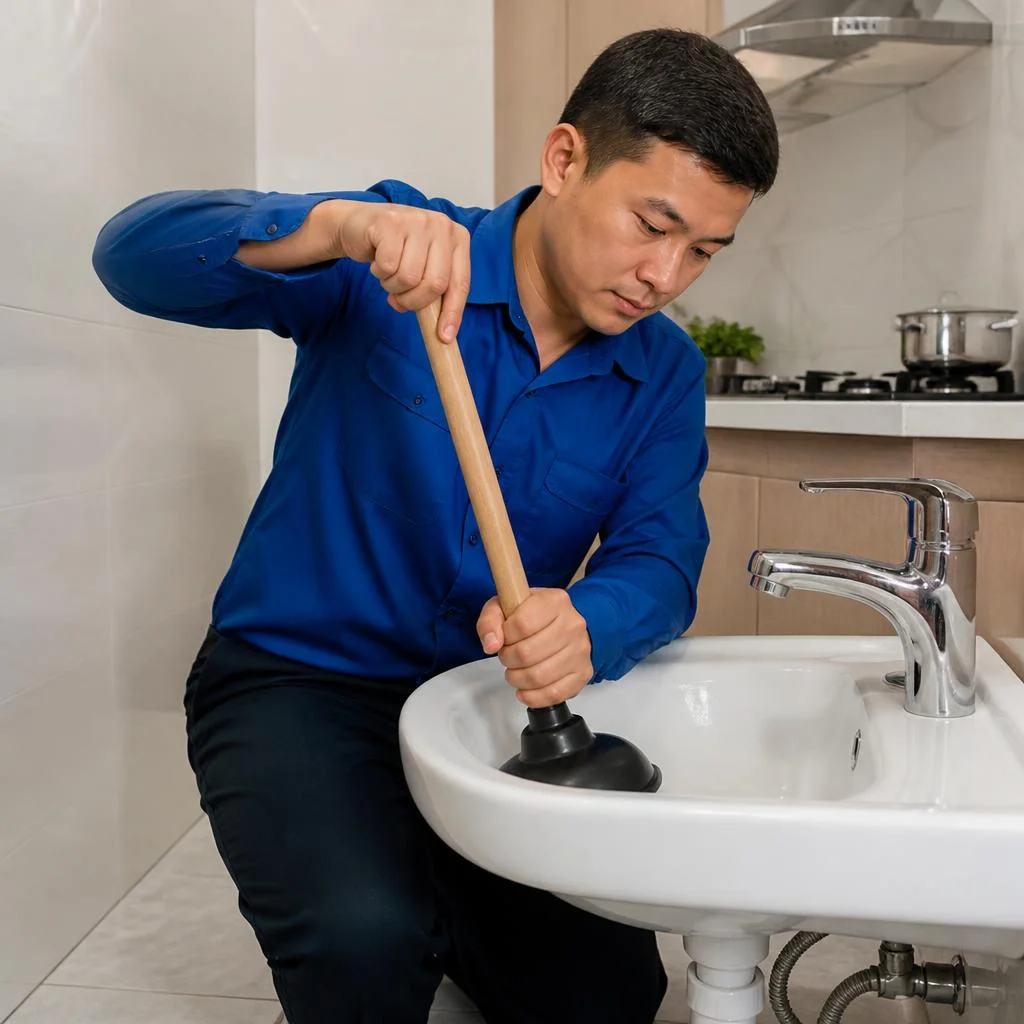
- Local clog: water does not drain at one point, the neighbors are fine — you can try a plunger.
- Backup in the riser: water drains slowly at all points in the apartment — a technician with a cable or an electric machine is needed.
- Emergency clog: water rises in the toilet and at the neighbors' — call a crew immediately.
- Recurrence: the plug repeats once every 1-2 months — the cause is deposits on the walls, flushing is needed.
- Water returning after the plunger: if the stream drains and comes back after a minute — this is a backup in the riser, not a plug, and forcing it through only drives the dirt deeper.
Cleaning technologies: cable, electric machine and hydrodynamics
The cleaning method is chosen based on the location of the clog and the pipe material. We break down how a cable differs from an electric machine and when hydrodynamics is needed.
Cable and electric machine cleaning: what they are suitable for
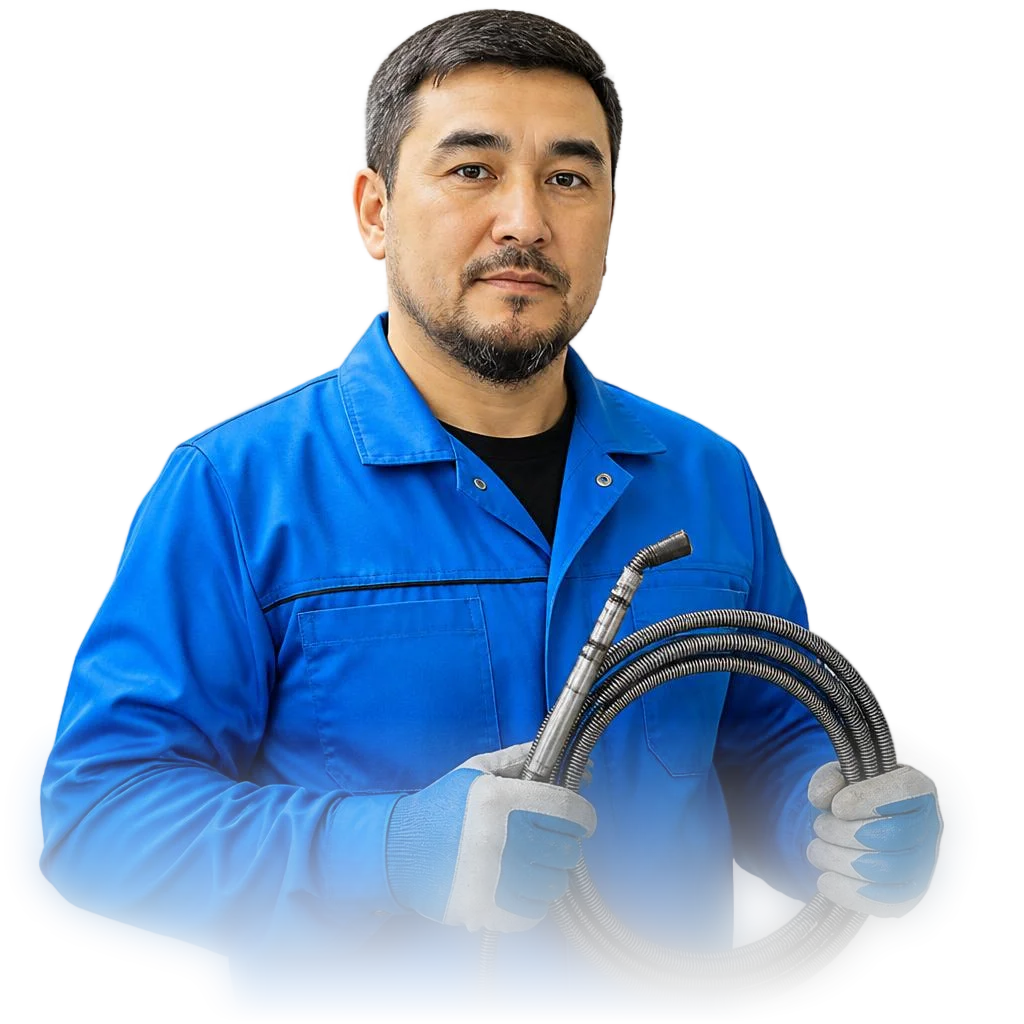
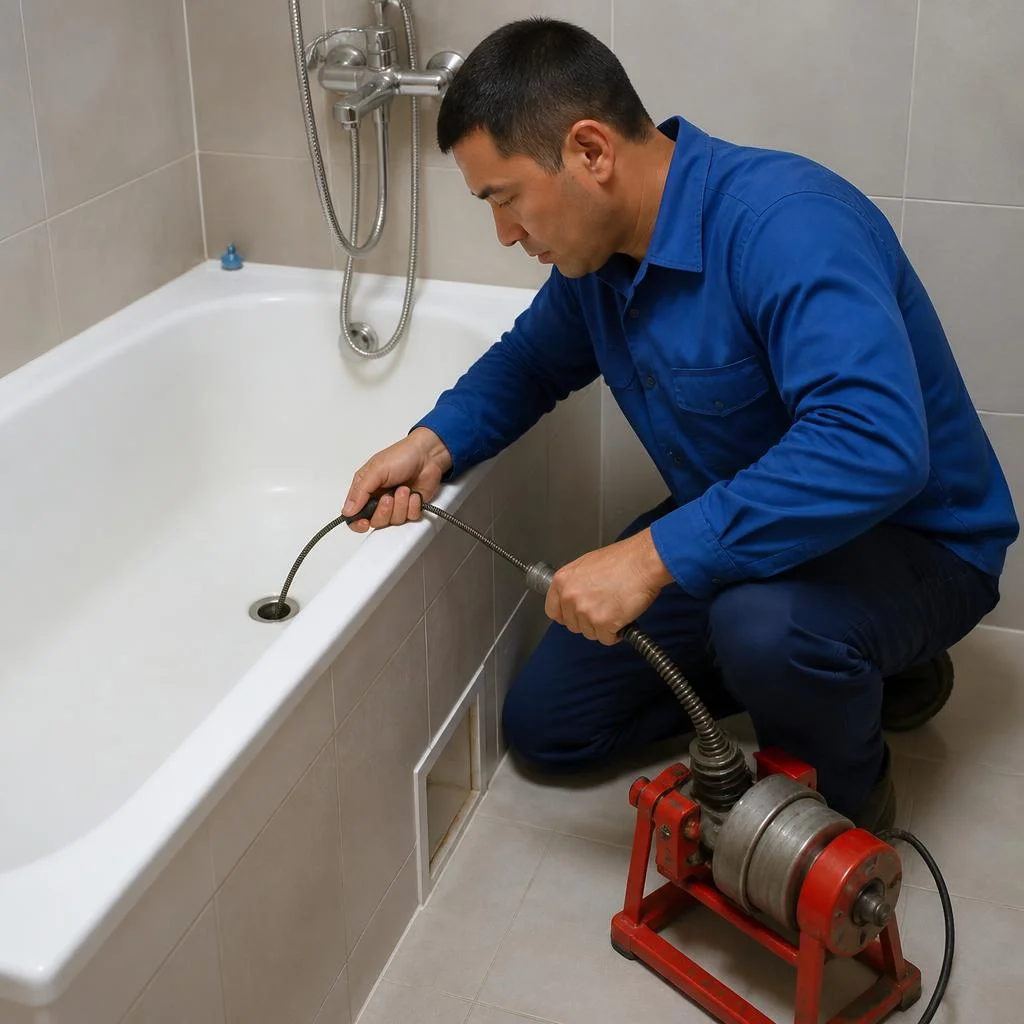
We clean pipes with a cable and an electric machine — these are methods for local clogs in the sink, bathtub and toilet. The mechanical cable is fed into the pipe by hand and breaks through the plug by rotating the tip: on cast-iron risers of old Bishkek series it passes turns of up to 90 degrees, while on plastic communications it requires caution — a rigid spiral scratches the smooth wall. The electric machine differs in its drive: rotation is set by a motor, the cable comes with a cutter attachment or spiral and removes part of the buildup around the circumference, not just in the center of the plug. The cable works through mechanics — it breaks through the plug but does not remove buildup from the walls; if the clog recurs, the cable gives a temporary result, while the electric machine with an attachment cleans the walls better. Clients often search for "clog removal cost" — and with such a query the technician immediately understands that a visit for a local plug is needed, not preventive maintenance of the riser.
Hydrodynamic flushing: when it is needed and how it works
We perform hydrodynamic flushing of pipes, sewage systems, risers and horizontal runs — this is a pressure method that removes grease and silt from the pipe walls. The machine supplies water under pressure through a hose with a reverse nozzle: the jet strikes forward and backward, washing away grease deposits on kitchen sinks and carrying silt out of basement horizontal runs. On risers of Khrushchyovka buildings, hydrodynamics passes through vertical sections where a cable gets stuck on bends, and on yard branches it removes sand and scale. Hydrodynamics works not by "punching through" but by washing away deposits around the entire circumference of the pipe — that is why after it the clog does not return for months, rather than weeks as after a cable. Hydrodynamic flushing is ordered for recurring clogs in Bishkek at the same point: if a cable was called back twice in a season, pressure flushing solves the cause, not the consequence.
Sewage cleaning in the yard and stormwater drainage
Eco-Service cleans sewage in the yard and stormwater drainage — these are outdoor sections that get clogged with silt, sand and leaves. Yard branches in Bishkek are often laid with a low slope, so sand settles at the joints of the bell sockets and gradually blocks the passage; on such sections an electric machine with a cutter or hydrodynamics with a long hose works. Storm drains along Chuy Avenue and Osh and Zhibek-Zholu streets get clogged more densely: in autumn leaves are washed in, in spring — sand and fine gravel after the snow melts. Storm drains get clogged seasonally — in autumn with leaves, in spring with sand after the snow melts; preventive cleaning twice a year is cheaper than dealing with a clog after the first rainstorm.
Table: cleaning method for the task
| Method | Where it is used | What it removes |
|---|---|---|
| Cable | sink, bathtub, toilet | a local plug |
| Electric machine | sink, bathtub, toilet, washing machines and dishwashers | the plug and part of the buildup around the circumference |
| Hydrodynamics | kitchen sink, riser, horizontal run, yard | grease, silt, sand from the walls |
| Video inspection | riser, horizontal run, yard | diagnostics without cleaning |
For the same point, different methods can be applied — the choice depends on whether you just need to break through the plug or remove deposits from the walls.
Diagnostics: video inspection and CCTV inspection of sewers
Sometimes a blockage comes back because the cause is deeper than it seems. Video inspection shows what is happening inside the pipe before work begins — without opening walls or dismantling plumbing fixtures.
Why pipe video inspection is needed
Eco-Service performs pipe video inspection — the camera shows cracks, collapses, roots and deposits inside the pipe without opening it up. A camera with lighting is mounted on the end of a flexible probe with a diameter of 40 mm or more; the operator guides it along the riser, the horizontal run or the kitchen sink branch and sees the picture on a monitor in real time. Diagnostics take from 20 to 60 minutes depending on the length of the section and the number of bends. Pipe video inspection is especially useful when a blockage recurs in the same section: the camera will show that the cause is not a plug but a deformation of the pipe or tree roots that have grown into a joint. Clients often phrase their request as clearing blockages in Bishkek — and from the address in such a request we immediately understand that diagnostics are needed, not another rodding with a cable. In our practice, in Bishkek Khrushchyovka buildings with cast-iron risers, the camera most often finds socket displacement of 5-15 mm — rodding with a cable does not fix that.
CCTV inspection of sewers: what it shows and when to order it
Eco-Service performs CCTV inspection of sewers — this is an inspection of extended sections of risers and horizontal runs with recording of the route. CCTV inspection differs from video inspection in scale: the camera travels not through a single branch but through the entire riser from the top floor to the outlet and the horizontal run to the manhole, and the recording is saved to a file with time codes and footage. The recording shows pinholes, reverse slope, gaps in joints, grease buildup 20-40 mm thick and foreign objects. CCTV inspection of sewers provides a recording that can be attached to a request to the management company or the homeowners' association — if the problem is in a shared building pipe, this is evidence for repairs at the building's expense. Request an inspection before signing the report with the management company, not after — otherwise the dispute over the area of responsibility will drag on.
What to do with the diagnostic result
- The pipe is intact, there are deposits: high-pressure hydrojetting is enough — it removes the grease layer from the walls.
- The pipe is deformed: section repair is needed; rodding will give a temporary effect for 2-4 weeks.
- Roots in the joint: mechanical rodding is required, followed by replacement of the damaged socket.
- Collapse or crack: rodding will not help, the pipe section needs to be replaced.
- Reverse slope: flushing is useless; the section is relaid with the correct height difference.
- A repeat blockage for the third time in a year: without diagnostics you are paying for the same thing over and over, and the cause remains.
How we work: on-site visits, timelines and what the service includes
From request to clearing takes one visit. We explain how requests are handled, what the service consists of, and what nuances arise when working on a stack pipe in an apartment building.
On-site visits and round-the-clock service
Eco-Service operates around the clock and makes on-site visits across Bishkek — the emergency crew takes requests on weekends and holidays alike. The master plumber arrives with a cable, an electric machine and hydrodynamic equipment, so in most cases the clog is cleared in a single visit without a repeat call. The dispatcher clarifies the address, floor and location of the clog in advance so the crew brings the right nozzle diameter — for a kitchen sink in a new building on Akhunbaeva and for a cast-iron horizontal run in a house on Zhibek-Zholu, the set of tools is different. Night call-out requests are most often related to a stack pipe or horizontal run: water won't drain in several apartments at once, and the technician needs access to the basement — it's best to start coordinating with neighbors before he arrives.
What the clog removal service includes
- Diagnostics: inspection of the clog location, checking the siphon and the nearby section of pipe, identifying the cause.
- Method selection: cable, electric machine or hydrodynamics — based on the type of pipe and the nature of the deposits.
- Clearing: eliminating the clog using the chosen method with pressure and water supply monitoring.
- Verification: running hot and cold water, checking the drainage rate at several points.
- Recommendations: what to do to keep the clog from returning in the coming months.
Coordinating with neighbors when working on a stack pipe
Working on a stack pipe requires coordination with neighbors: the technician needs entry into the apartment above or into the basement to reach the shared section of pipe. In old buildings in central Bishkek, the stack pipes are cast iron, with deep deposits, and clearing proceeds from top to bottom — the neighbor on the upper floor must open the door at the agreed time. If the clog is shared, water during clearing may flow into a neighbor's apartment, so warn the residents in advance to avoid flooding someone else's renovation. In new buildings with plastic stack pipes, access is often available through an inspection hatch on the floor, and coordination takes less time. Clients often ask the dispatcher, word for word: how much does clog removal cost — and get an answer after the inspection, because the scope of work depends on the depth of deposits and the number of access points. In our experience, in a house on Yuzhnaya Magistral, the technician needed only ten minutes to coordinate with three neighbors — they were all at home.
2-year warranty, payment and post-service support
After clearing, it's important to understand what happens if the problem returns. We explain the warranty terms, payment methods, request channels, and how to check the quality of work before calling a technician.
2-year warranty on clog removal
Eco-Service provides a 2-year warranty on clog clearing — if water stops draining again in the same section, the technician will return without additional charge. The warranty covers the specific point where the clearing was performed: sink, bathtub, shower stall, toilet, kitchen sink, washing machine or dishwasher, towel warmer, as well as the riser and horizontal pipe. A repeat call is arranged for the same address and the same clog point recorded in the report. Clients often search for "clog removal price" — and land on this page, so we explain the calculation procedure: the technician fixes the estimate before starting the clearing, and the final amount does not differ from the agreed sum. The warranty is valid if the technician's recommendations are followed: if after clearing fat is poured down the pipe again, construction debris or large amounts of hair are flushed, the recurrence is considered a new clog and is handled as a separate request. In our practice, most repeat warranty calls are related specifically to violations of these recommendations, not to the quality of the clearing. That's why after the work the technician leaves a maintenance guide specifically for your pipe.
Payment via MBANK and O!Деньги
Eco-Service accepts payment via MBANK and O!Деньги — by transfer to a phone number or by QR code after the work is completed. Payment is made after the work, not before: the technician first clears the clog, checks water flow, and only then issues the invoice. This procedure protects the client from the situation "paid, but water still won't drain." The cost is fixed in the estimate before the clearing begins, so the final amount does not differ from the agreed sum. For legal entities and management companies, cashless payment with closing documents is available. The technician issues a work completion report specifying the clog point, clearing method, and date — this document is needed for warranty claims. If the clog turns out to be more complex than it appeared from the photo, the technician will state a new estimate before continuing work.
Request via WhatsApp and Telegram
A request to Eco-Service can be submitted via WhatsApp or Telegram — send a photo of the clog point, and the technician will advise on the method before arriving. From a photo of a toilet, sink, or shower stall, they assess the type of clog and select the equipment: cable, electric machine, or hydro-jetting unit. A photo helps bring the right equipment right away — this saves one visit if the clog requires hydro-jetting rather than a cable. In the message, include the address, floor, and clog point, as well as whether there is access to the riser. The dispatcher confirms the arrival time and crew composition. For urgent cases, requests are accepted around the clock — the technician goes out at night too. If the clog is shared for the whole building entrance, note this in the request right away: then the technician will coordinate the time with the neighbors.
Reviews and before/after photos of work
Eco-Service publishes before and after photos of work and client reviews — they can be viewed on 2GIS and Google Maps. From the before/after photos you can see what type of clog the technician dealt with: fat in the kitchen, silt in the riser, or hair in the bathroom. This helps you understand whether the specialist has encountered your situation. The service profile lists the service areas, equipment composition, and average work times. Reviews on 2GIS and Google Maps are left by Bishkek residents after actual visits — ratings for timing and neatness are also visible there. Before calling, compare photos of similar clogs with your case: if the photos show work with your type of pipe — cast iron, plastic, or steel — the technician will handle it faster.
Conclusion
We've gathered the key things to keep in mind when clearing clogs — from choosing a method to prevention in the old housing stock of Bishkek and other cities.
Main takeaways
- Location of the clog: determines the method — a cable is enough for a sink and bathtub, while a stack and horizontal run require high-pressure hydrojetting.
- The cause matters more than the symptom: grease, hair, and silt bring the clog back if deposits aren't removed from the pipe walls.
- Diagnostics save money: a video inspection shows whether clearing or repairing the section is needed.
- Warranty: 2 years applies if the technician's recommendations are followed after the work.
- Prevention is cheaper than an emergency: flushing once every 1–2 years extends the life of the stack in old housing stock.
- Difficult cases can't be solved with household products: chemicals and a plunger work on fresh blockages but are powerless against compacted silt and roots.
- Neighbors are part of the solution: if the stack is clogged, warn them in advance so you can coordinate timing and avoid flooding other apartments during flushing.