








Why radiators in Bishkek clog and how to notice it before a breakdown
Bishkek's water is hard, and a significant portion of the housing stock has old cast-iron risers: two factors combine, and deposits inside the sections grow faster than the regional average. Let's break down how to recognize the problem before a breakdown.
Signs of a clogged radiator: 5 signals you can't ignore
- Uneven heating: the section is hot at the top and cold at the bottom — a classic sign that the bottom is clogged with sludge, not air.
- Only the first section heats: the coolant doesn't pass further through the unit, and the remaining sections stay barely warm even with a hot supply line.
- Noise when the heating starts: clicking, gurgling and humming in the pipes indicate an air lock or that the flow is hitting a narrowing in the channel.
- Slow heating after switching on: if the radiator reaches operating temperature many times slower than neighboring ones, the internal passage is already blocked by scale.
- Different temperatures along the riser: your place is warm, but the neighbors above are barely getting heat — meaning a blockage in the shared loop is distributing the flow unevenly.
Why radiators in Bishkek clog faster
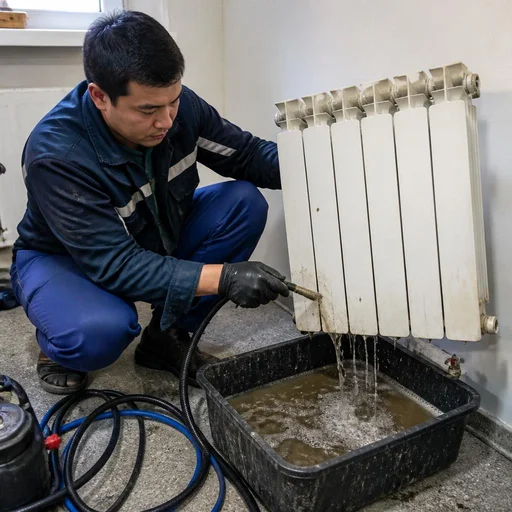
The water in Bishkek's heating system is hard — with a high content of calcium and magnesium salts, so scale forms on the inner walls of the sections in 2-3 seasons rather than 5-7. Deposits grow in layers: each heating season adds a new crust, and the internal passage of the channel narrows by about a third by the third winter. In the old housing stock with cast-iron risers, sludge is added to the scale — rust and mill scale from the pipes; cast iron is rough inside, and deposits cling to it more actively than to smooth bimetallic. In Khrushchyovkas and Brezhnevkas around the center, cast-iron units stand without replacement for decades, and the accumulated layer there is measured in millimeters. Clients often search for "radiator cleaning" — and land on this page because they're looking for a way to remove the layer without dismantling the entire riser. Cleaning the batteries in such buildings requires not just draining the water, but mechanically or chemically removing the layer — a regular flush under low pressure won't take it off. People also type "heating radiator cleaning" into the search bar — this query brings those who have already realized: deposits in the sections won't dissolve on their own.
Why a clogged radiator is dangerous if you do nothing
A clogged radiator loses up to 40% of its heat output, forces neighbors on the riser to freeze and raises pressure in the loop — a direct path to a section bursting in winter. Deposits act as a plug: the coolant doesn't pass through the unit, the volume of circulating fluid drops, and the inlet pressure rises. The most common breakdown is a rupture of a threaded connection during a water hammer: the weak point gives way first, and it's almost impossible to notice thread wear in advance. In our practice, most winter calls involving flooding come from exactly such cases — the unit had been heating at half strength for years, and it blew out in the first frosty week. Preventive heating maintenance in the fall, before the season starts, removes the risk in advance: there's time for diagnostics and replacing seals instead of emergency repairs.
When it's time to call a technician instead of waiting for spring
Servicing batteries and radiators is work that can't be put off until the frosts set in: at the first signs of a temperature drop on the unit, diagnostics are done in a single visit rather than in emergency mode. If the lower third of the sections stays cold with a hot riser, or bleeding with a Mayevsky valve has no effect — that's no longer an air lock, but sludge and scale on the inner walls. In such cases, only disassembling the loop or chemically dissolving the layer helps: the technician removes the unit, flushes the sections separately and checks the threaded connections for wear. Residents type "clean the radiator" into the search bar — and that's an accurate description of the task the technician solves on site. In my opinion, dragging this out until January is pointless — the cost of an emergency call-out and repairs after a flood is incomparable to scheduled maintenance in the fall.
Which radiators we clean: cast iron, bimetallic, aluminum, steel
The cleaning method is determined not by the power of the equipment, but by the material of the sections and the wall thickness. Below is a correspondence table and a breakdown: what cast iron can withstand, and what must absolutely never be done with thin-walled aluminum.
Table: radiator type, cleaning method and what is included in the work
| Radiator type | Cleaning method | Disassembly | What is included in the work |
|---|---|---|---|
| Cast iron | Chemicals and hydrodynamics | Without removal | Flushing of cast iron radiators, pressure cleaning of cast iron batteries |
| Steel panel | Chemicals, gentle pressure | Without removal | Flushing of the circuit, washing out sludge between the plates |
| Aluminum | Citric acid, ultrasound | Removal of sections | Cleaning of convective channels, flushing of aluminum radiator |
| Bimetallic | Citric acid, ultrasound | Removal of sections | Flushing of bimetallic radiators, cleaning of fins |
| Register, convector | Hydrodynamics | Partial | Flushing of pipes, cleaning of convector |
The method for aluminum and bimetallic is the same in composition, but differs in regime: for bimetallic we control the exposure time so that the acid does not reach the steel core through microcracks in the fins. For aluminum sections at Eco-Service, we use ultrasound only after removal — when assembled, vibration loosens the nipple connections.
Cast iron and steel radiators: why they can be washed aggressively
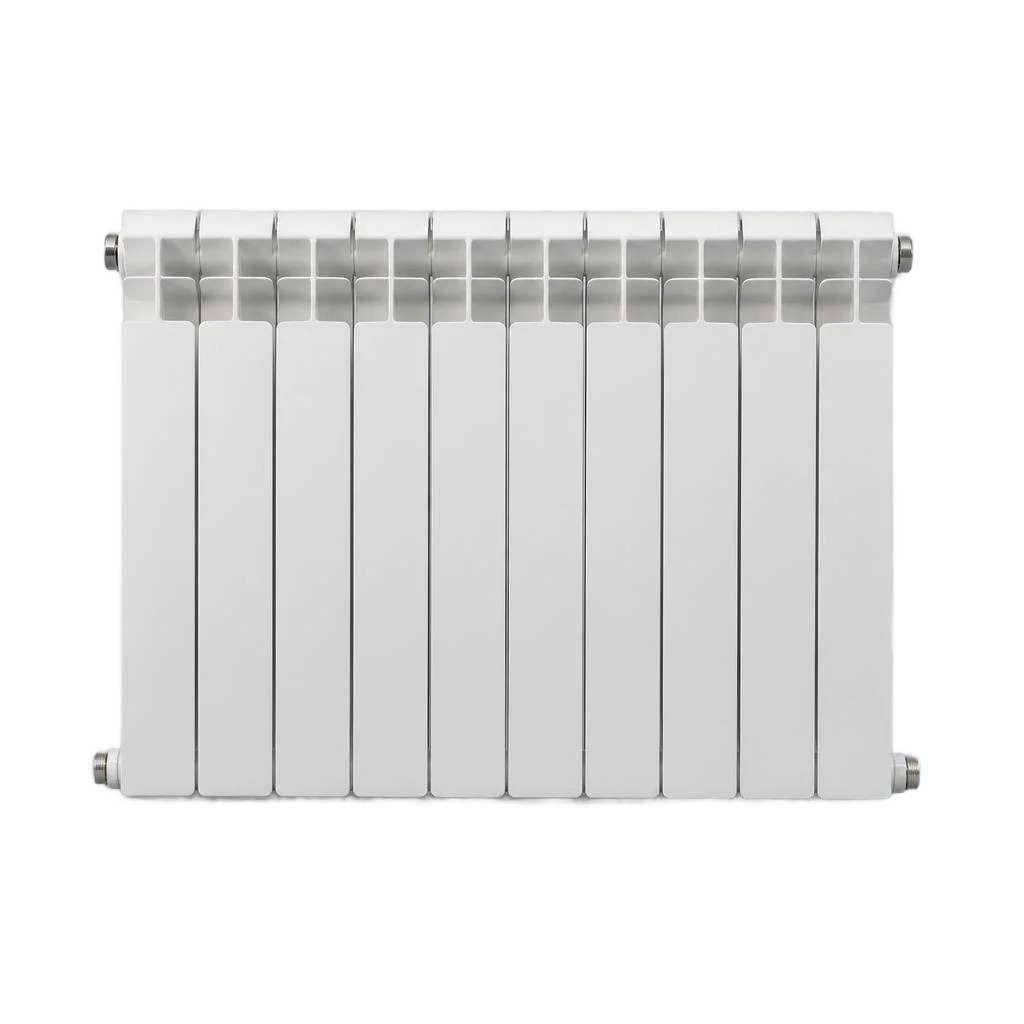
A cast iron radiator withstands aggressive chemicals and pressure up to 30 bar — the walls of the sections are cast with a margin of 4-5 mm, so treatment of cast iron batteries proceeds without risk of rupturing the circuit. A steel panel radiator is thinner (wall 1.2-1.5 mm), but thanks to solid welding it easily accepts hydrodynamic flushing with pressure up to 12 bar and alkaline compounds against sludge. Cast iron batteries of Soviet series (MS-140, MS-90) over 30-40 years accumulate up to 2-3 mm of scale in the lower manifold — that is exactly where hardness salts settle, and aggressive flushing knocks them out in a single cycle. Steel panels more often suffer not from scale, but from magnetite, which is washed away by the reverse flow. Cast iron must not be treated with ultrasound when assembled — vibration loosens the threaded nipples between sections, so we apply ultrasound only to removed and disassembled sections.
Aluminum and bimetallic: gentle flushing without corroding the walls
Flushing of an aluminum radiator is done with citric acid at a concentration of 3-5% — it removes carbonate scale, but does not corrode a wall 1-1.2 mm thick and does not strip the oxide film. Treating an aluminum radiator with a strong mineral acid eats through the wall to a pinhole leak in 2-3 hours, so we do not let such a compound anywhere near thin-walled sections. Bimetallic is more complex: inside there is a steel core, outside aluminum fins, and with aggressive chemicals it is the outer part that suffers, while the core remains intact — externally this looks like corrosion spots that later leak along the seams. In Bishkek the water is hard, with a high calcium content, so treating bimetallic radiators with citric acid gives results after just the first cycle: heat output returns to the rated value. Clients often search for "cleaning of bimetallic radiators" — and land on this page, where it is explained exactly why the regime for thin-walled sections is gentle. Flushing of bimetallic radiators with ultrasound on removed sections removes scale even from narrow channels that the liquid flow cannot reach.
How we determine the radiator type before work
Cleaning batteries/radiators begins with an inspection: the technician removes the decorative panel, checks the material of the sections with a magnet, and assesses the wall thickness based on the model. The magnet sticks to a steel panel radiator and to bimetallic ones (the core is steel), and does not stick to aluminum or cast iron — this is how in a minute we separate thin-walled models from durable ones. Next, we check the markings: for cast iron these are MS-140, MS-90, for bimetallic — Rifar, Global Style, for aluminum — Royal Thermo, Fondital. The choice of compound and inlet pressure depends on the brand. Work at Bishkek addresses requires taking local water into account: hardness salts settle more densely than in soft regions, so we perform diagnostics before starting work. Clients often search for "radiator cleaning Bishkek" — and land on this page, where it is explained why the method is selected based on the material of the sections, and not on the power of the equipment. If you are unsure about the model — the treatment of a cast-iron battery and any other type begins with a free on-site assessment, and only after that does the technician name the method.
What is included in standard cleaning and what we do not do
- Diagnostics: inspection of the sections, checking the material with a magnet, measuring the supply and return temperatures before starting work.
- Flushing the circuit: running the compound through the radiator with pressure and holding-time control for the specific material.
- Flushing cast-iron radiators: a harsh regime with chemicals and hydrodynamics, knocking scale out of the lower manifold.
- Treatment of cast-iron radiators: removing sections only in cases of severe fouling, when flushing while assembled does not produce results.
- Post-treatment control: checking heat output, pressure-testing the connections, installing a Mayevsky valve if necessary.
- What we do not do: we do not apply mineral acids to aluminum, we do not clean cast iron with ultrasound while assembled, we do not flush bimetallic with the same chemicals as cast iron.
Why the type of radiator changes the cost and timelines
Flushing bimetallic radiators and aluminum sections takes more time due to disassembly and the gentle regime — usually 40-60 minutes longer than working with cast iron while assembled. Treatment of bimetallic radiators requires disassembling the fins, and flushing an aluminum radiator requires monitoring the acid concentration at every stage. Cast-iron batteries are washed faster: there is no need to remove the sections if the fouling is moderate. Steel panel radiators are the fastest option: a one-piece circuit, flushing in a single run. The final cost depends on the type, the degree of fouling, and the number of sections — the technician gives the exact figure after diagnostics. If the radiator cannot be removed without risking damage to the piping, the work is done on site with partial disassembly.
Flushing methods: chemicals, citric acid, hydrodynamics, ultrasound
The four methods we use in our work, and the logic for choosing between them: everything is decided by the degree of blockage, the material of the sections, and access to the system.
Chemical radiator flushing: when it is the only option
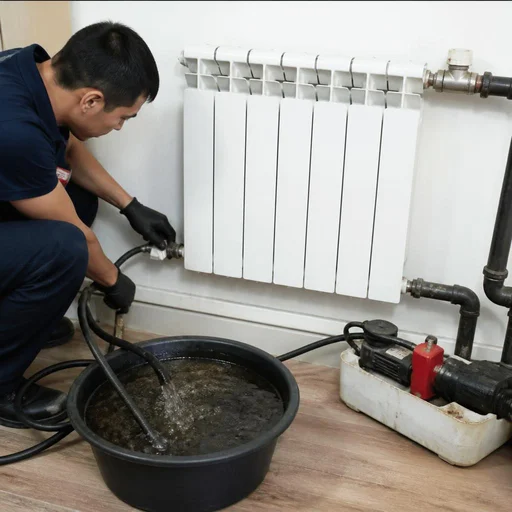
We use chemical flushing for dense scale and old sludge, when mechanical cleaning of the radiator and pressurized water no longer remove the deposits. This scenario is typical for cast-iron sections on a central riser that have not been opened for 15-20 years: a layer of carbonates several millimeters thick forms inside, and it holds tighter than loose sediment. The reagent is selected based on the material of the sections and the degree of blockage — there is no universal formula; before pouring it in, we test the reaction on a sample section so as not to damage the internal coating. On aluminum and bimetallic, we work only with alkaline or neutral compounds; on cast iron, we allow acidic ones. Radiator flushing in Bishkek is most often required for cast-iron batteries of Soviet installation — in our practice, they account for more than half of all orders. Clients search for "cast-iron radiator cleaning" — and land on this page, although the problem is not solved by chemicals alone. If after the chemicals the water still comes out with sediment, the scale layer is deeper than the diagnostics showed, and a repeat treatment with a different concentration is needed.
Citric acid flushing: a gentle method for aluminum and cast iron
Citric acid dissolves carbonate scale more gently than industrial reagents and is suitable for aluminum, bimetallic, and cast-iron sections, where harsh chemicals are risky. Aluminum does not tolerate strong acids: the wall is thin, the protective oxide film is removed within minutes, so a classic acid compound here will leave pinholes within a season. We keep the concentration and temperature of the solution within a narrow range: overheating or overexposure produces the opposite effect — the acid begins to eat away the metal rather than the deposits. The working cycle takes 2-3 hours with intermediate neutralization, after which we run water through the system under pressure. Treating batteries with citric acid does not remove silicate and biological deposits — if, besides scale, there is silty sludge inside, we first remove it mechanically. Clients search for "aluminum radiator cleaning" — and land on this page, although the method is also suitable for thin-walled bimetallic sections. For home aluminum batteries, this is the most predictable option in terms of the risk-to-result ratio.
Hydrodynamics and ultrasound: pressure flushing and cleaning of removed sections
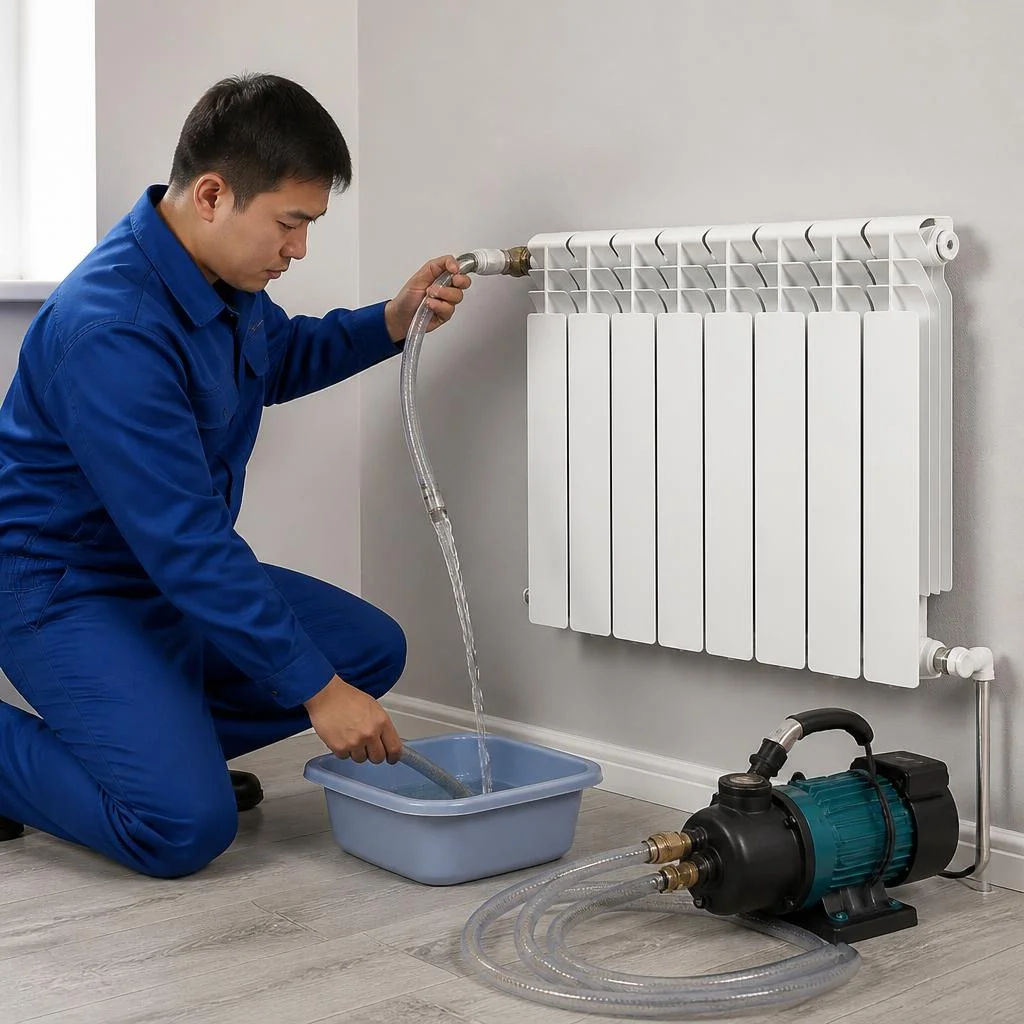
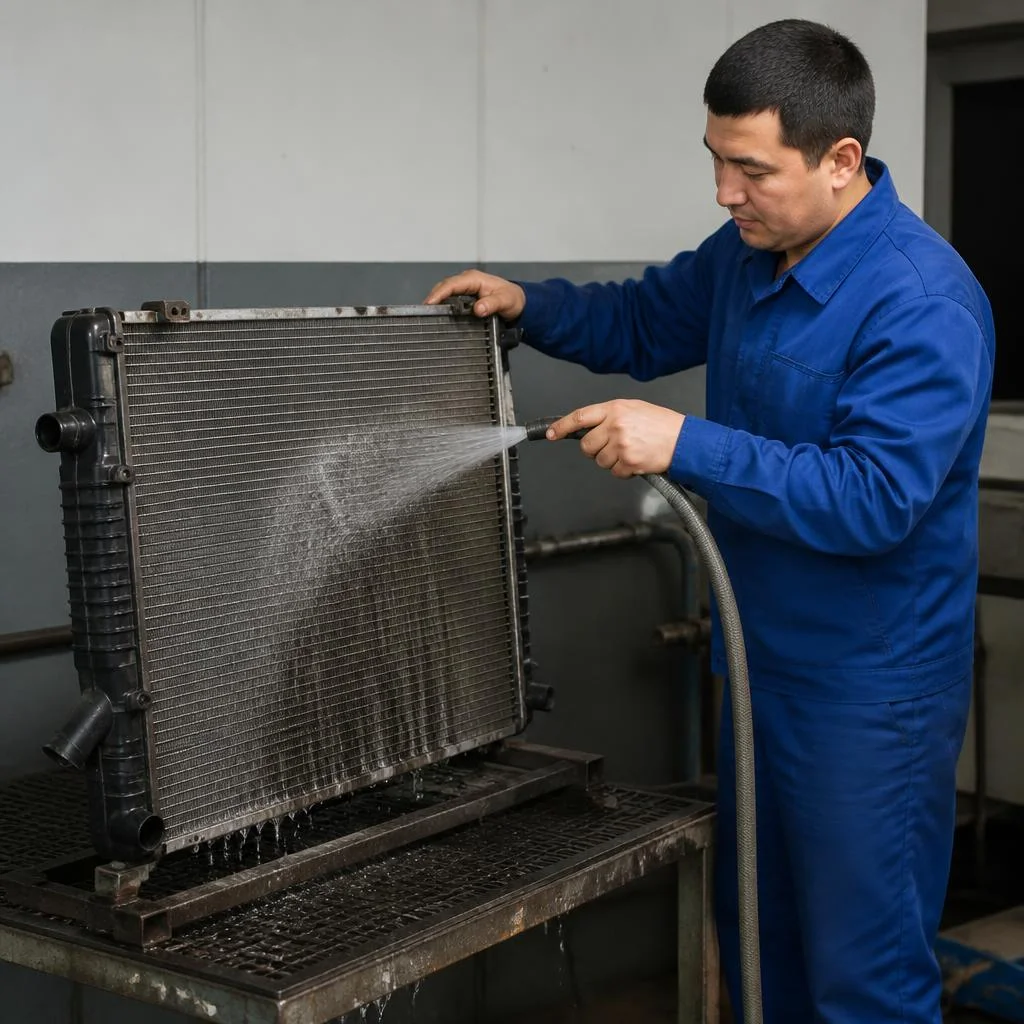
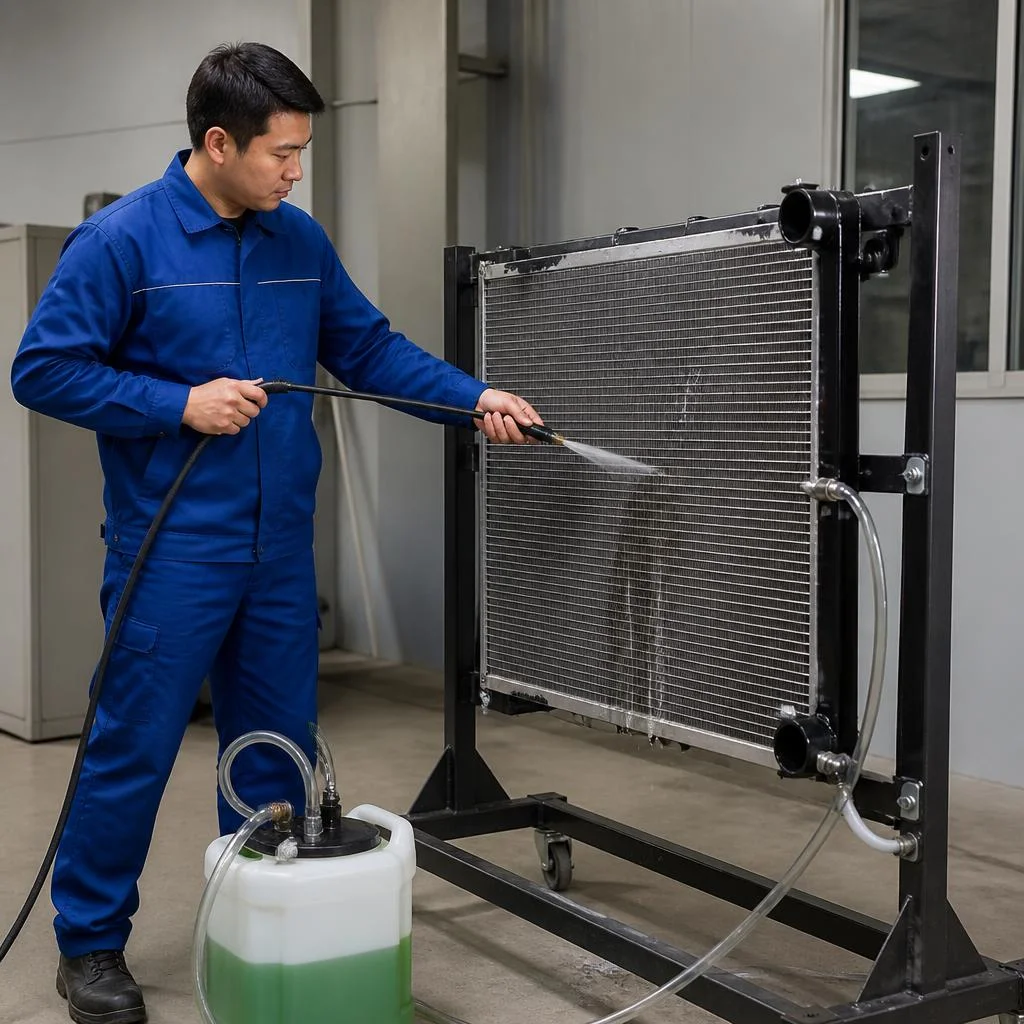
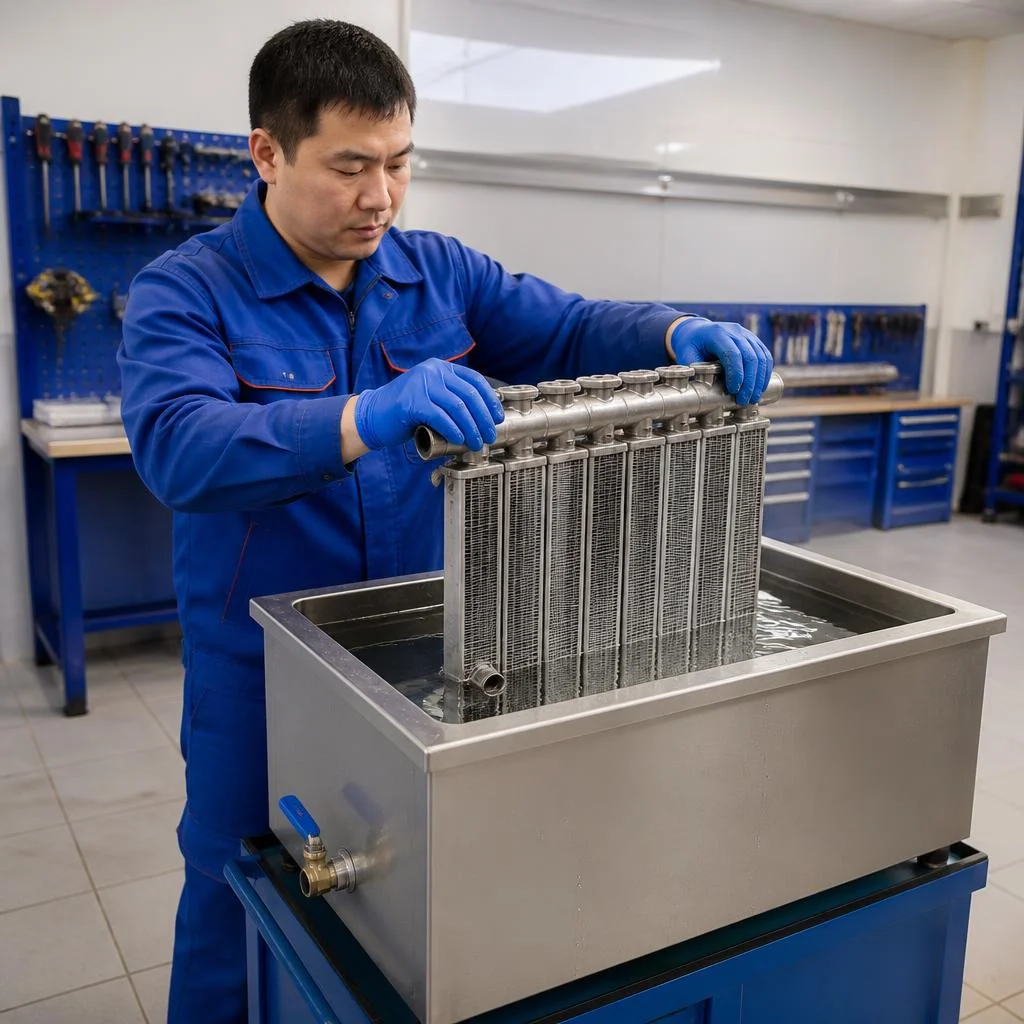
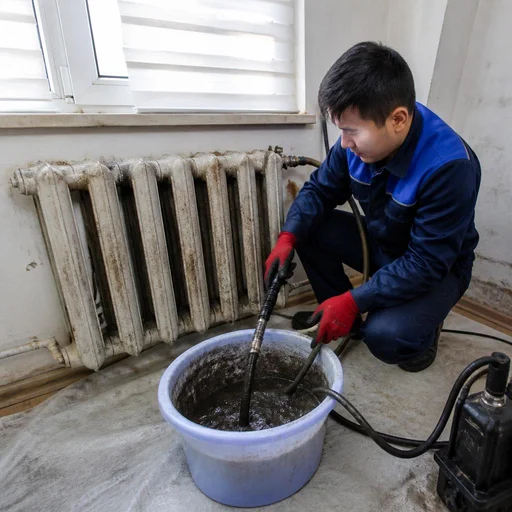
We perform hydrodynamic flushing under pressure without dismantling the radiator, and we use ultrasound on removed sections — these are two different tools for different tasks. A high-pressure unit drives water in a jet of up to 150-200 bar through the circuit, knocking out loose sludge, sand, and corrosion products. An ultrasonic bath works differently: the removed section is immersed in a solution, and cavitation bubbles remove scale in channels the jet cannot reach, including corners and joints between sections. To flush a radiator in an apartment on the top floor, we carry out hydrodynamics with allowance for the pressure in the riser — check the shutdown schedule with the management company, otherwise the jet will go into neighboring apartments. Ultrasound is justified when the radiator has already been removed for repair or replacement of fittings: disassembling the system for the sake of one bath is not worthwhile. Hydrodynamics does not remove dense scale, and ultrasound requires disassembly — that is why the methods are often combined in a single procedure.
How radiator cleaning is carried out in an apartment and a private house
Work in an apartment on a central riser and in a private house with an autonomous system differs in approach: in some cases we shut off one riser, in others we flush the entire circuit. We break down both scenarios and, separately, winter flushing.
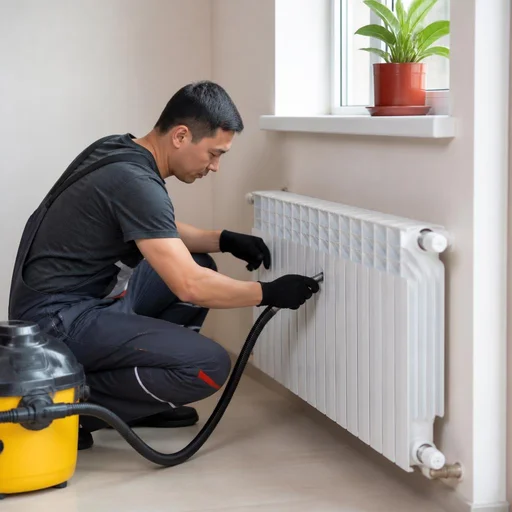
Radiator cleaning in an apartment: working on a central riser
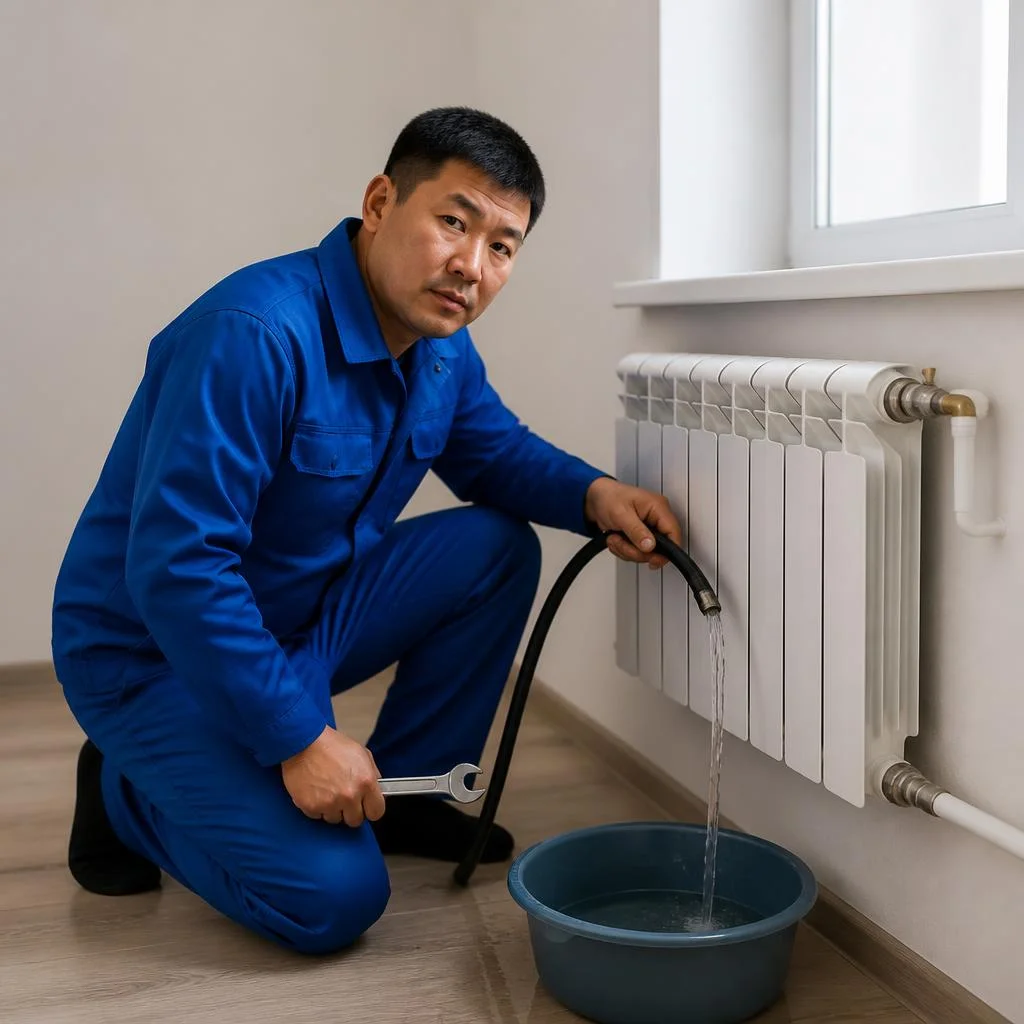
In an apartment on a central riser, flushing is carried out without shutting down the whole building — we shut off the specific riser, remove the sections or flush them in place, and return the system to operation the same day. Clients often phrase the request as radiator cleaning Bishkek — and the technician immediately understands what is meant. Another common way the service is searched for is Battery/radiator cleaning, and we also respond to that request. In multi-story buildings the riser is usually fed from an elevator unit in the basement, so first we shut off the valve on the pair, then drain the remaining coolant into a bucket. Removing and reinstalling the unit takes 30-40 minutes, hydrodynamic flushing of the sections takes about another hour. Coordination with the management company or homeowners association is needed if a shared building riser is shut off: the Eco-Service service advises how to file the request so as not to be left without heating longer than necessary. For panel nine-story buildings in Vostok-5 and Asanbay, the paperwork takes up to a day — factor this into the work plan.
Battery cleaning in a private house: autonomous system and preventive maintenance
In a private house with an autonomous system, flushing is not limited to the sections — here the clog accumulates in the boiler, pipes and registers, so we flush the entire circuit. Battery servicing in a house near Bishkek in the Kok-Zhar, Mayevka and Orok areas includes three stages: draining the coolant, chemical flushing of the radiators and heating registers, then flushing the boiler heat exchanger. Clients often search for this as battery flushing in an apartment, although for an autonomous circuit the approach is broader — it affects the boiler and the piping. Usually a house with an area of up to 120 square meters takes 4-6 hours. In an autonomous system, the water can be prepared in advance — a softener or regular replacement of the coolant reduces the rate of scale formation severalfold; this is cheaper than seasonal flushing.
Winter flushing without shutting off the heating: how it is possible
In winter, radiator cleaning Bishkek is carried out without draining the entire system — we work section by section or through a flushing unit so as not to leave the house without heat during the procedure. The approach is as follows: we shut off the supply and return valves on the specific unit, release the pressure in the unit's circuit, connect the flushing station and run the reagent through a closed loop for 40-60 minutes. The rest of the system continues to operate normally during this time. Winter flushing is more complex and more costly in labor, but postponing it until spring is risky: a clogged radiator during frosts is a risk of freezing and an accident on the riser. If the unit is no longer heating and it is below zero outside, radiator servicing Bishkek in winter mode remains the only way to restore heat without stopping the heating.
Riser, register, convector, towel warmer: what else is included in the service
Besides radiator sections, debris and scale accumulate in registers, convectors and towel warmers. Let's break down which heating system components we service, what we replace during the work and how we check the result.
Registers, convectors and towel warmers: where else scale accumulates
- Heating register: a welded structure made of smooth pipes, inside which scale is deposited in a thick layer — flushing follows the same principle as for radiators, but requires a larger volume of reagent.
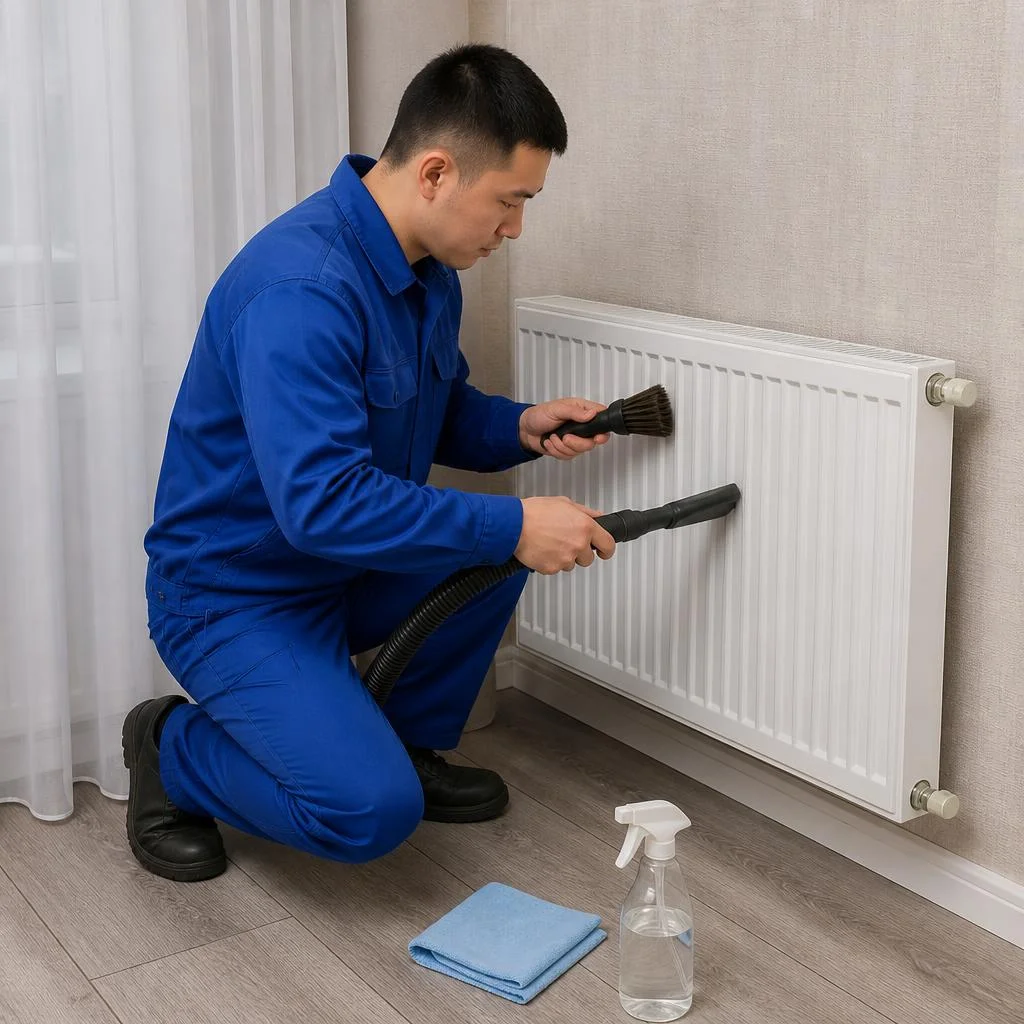
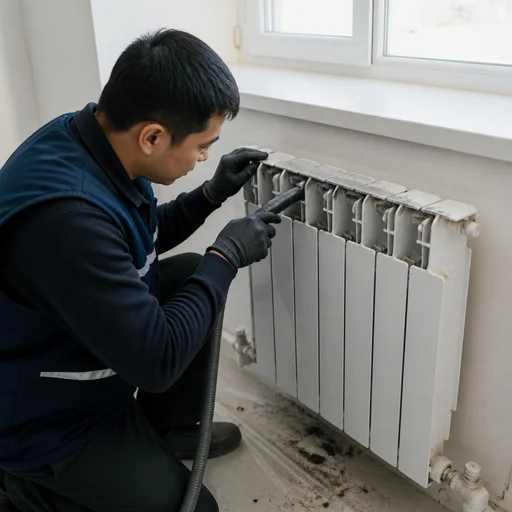
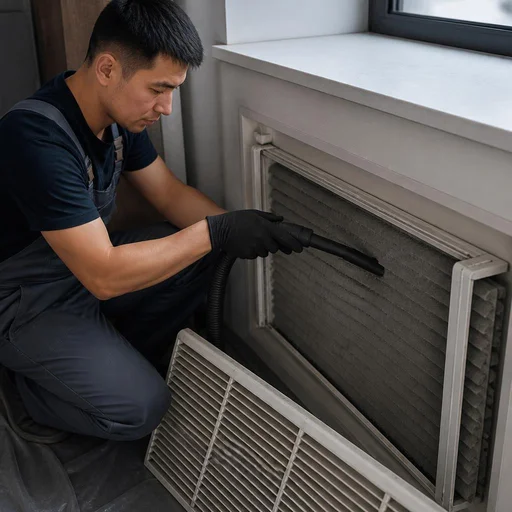
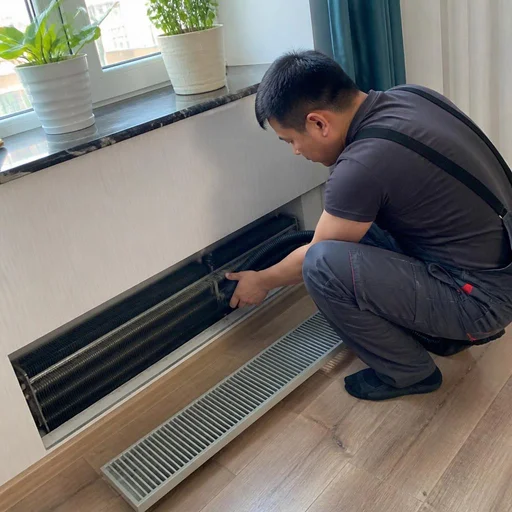
- Convector: it's not so much the internal channel that gets clogged as the fins — dust and lint reduce heat output by almost a third, so the convector needs separate treatment.
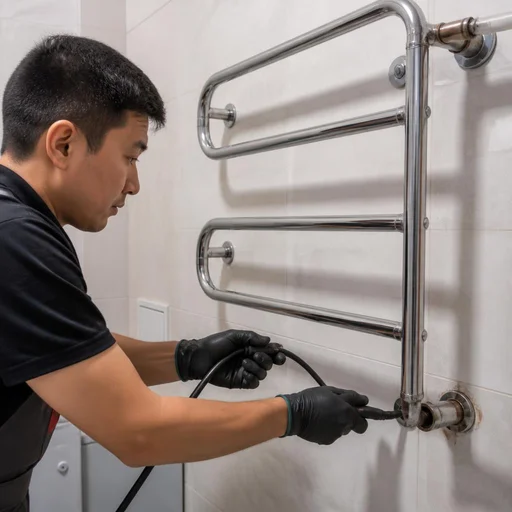
- Towel warmer: it's more often connected to the hot water supply circuit rather than the heating circuit, and gets clogged with corrosion products — towel warmer servicing follows a different procedure.
- Eco-Service: services registers, convectors and towel warmers on the same visit as radiators — no separate visit is needed for this.
Mayevsky valve, shut-off valves, seals: what we replace during servicing
During servicing we replace shut-off valves, seals and gaskets, and if necessary install a Mayevsky valve — without this, flushing doesn't give a lasting result. Old cast-iron valves often start leaking after the first flush: their service life is exhausted, and the threaded connection doesn't hold pressure after the sludge is drained. Replacing the valves with ball valves eliminates this problem for years to come, and the Mayevsky valve lets you bleed air from each section without calling a plumber — air pockets collect more often on the upper floors of Bishkek. We replace seals with paronite or silicone ones: they withstand heating up to 110 degrees and don't harden in a single season. In requests, clients often write briefly — radiator cleaning, and the technician already understands that a full cycle is needed: checking the valves on the supply line, replacing the valves if the stem is loose or there are traces of salt on the body, and only then flushing. And requests also contain the wording cast-iron battery cleaning — from that the technician immediately sees that the unit is old and the valves on the supply line will most likely have to be replaced during the same visit.
Pressure testing and balancing: we check the system after flushing
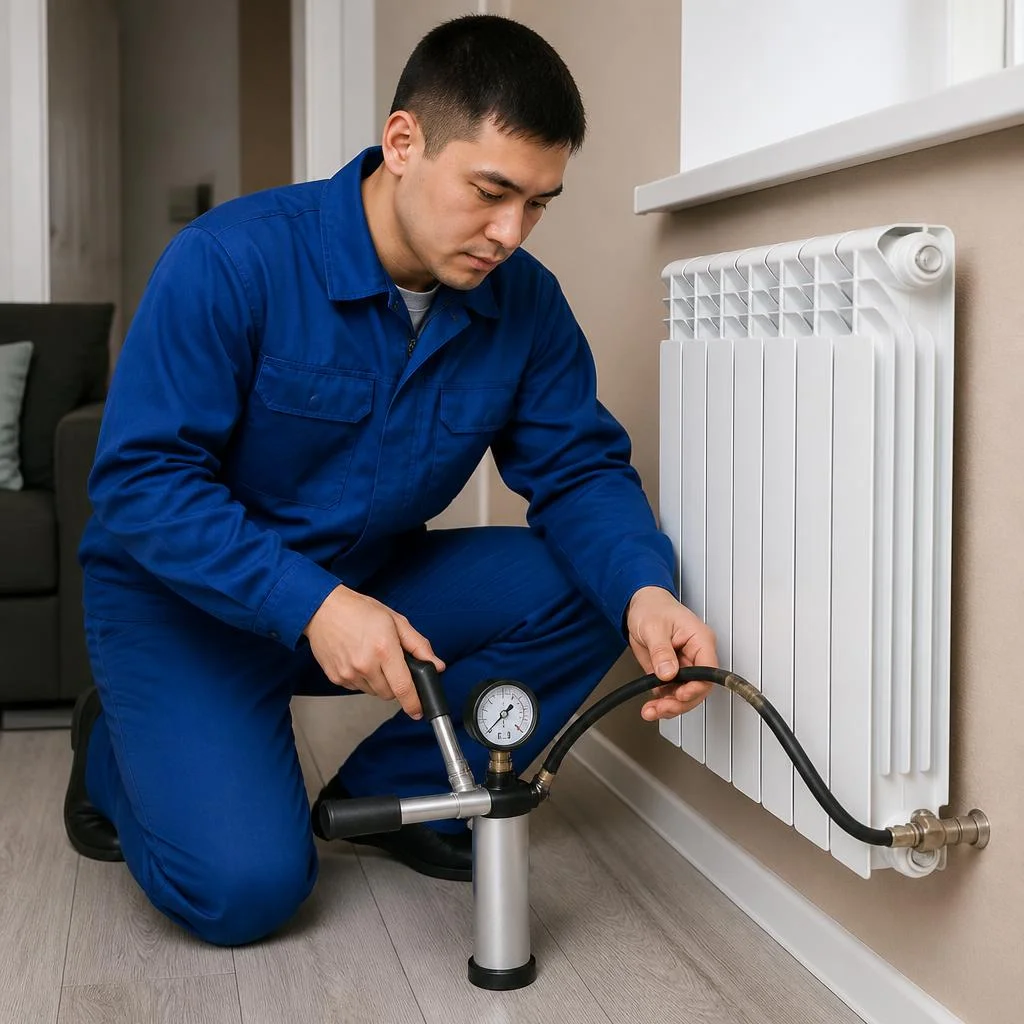
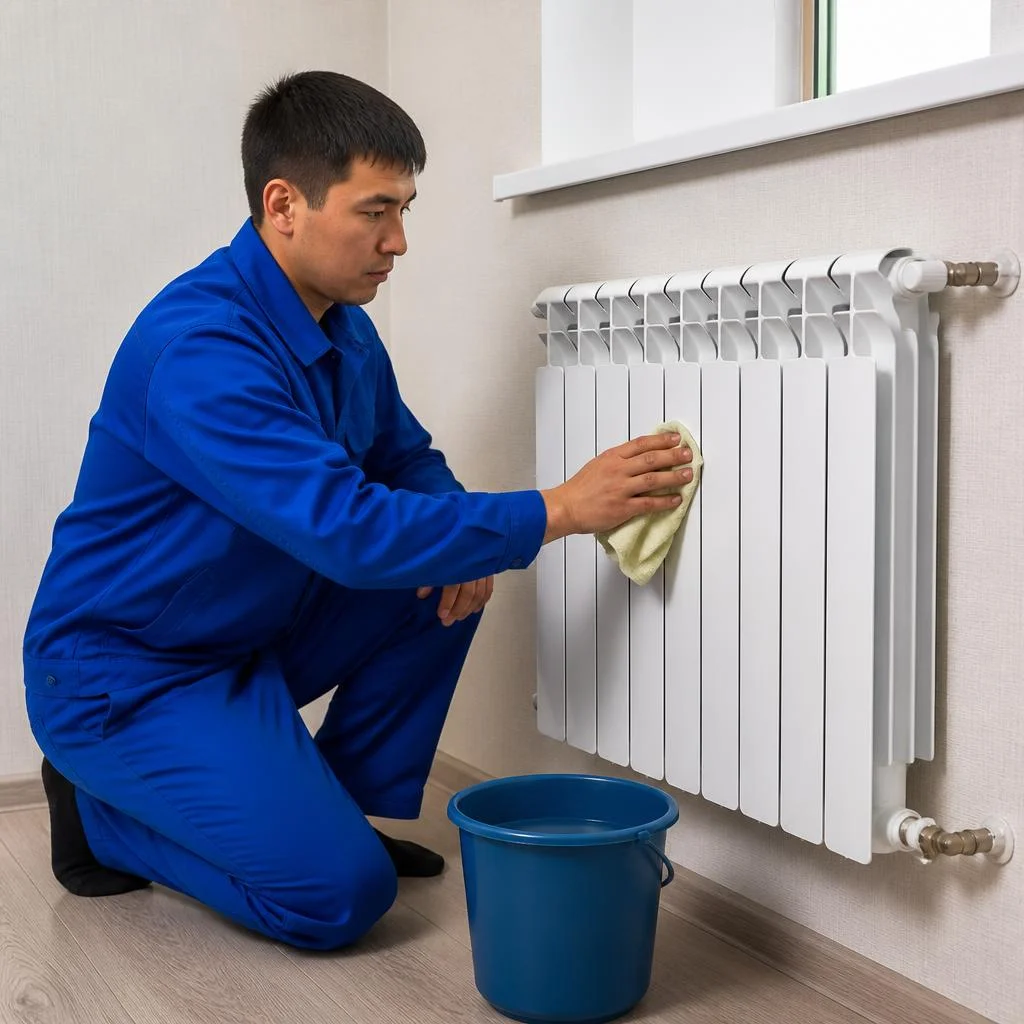
After flushing we perform pressure testing of the heating system and balancing — we check tightness under pressure and adjust even heating of all radiators. Pressure testing is carried out at one and a half times the working pressure: for panel buildings this is 6-9 atmospheres, for private systems with a pump — according to the boiler's data sheet. Balancing is especially important in apartments with several units on one riser: without it, the one closest to the riser heats more than the far one, and flushing doesn't give the expected effect. We adjust using a thermometer — the temperature difference between the inlet and outlet of each unit should not exceed 10-15 degrees. If after the work one of the radiators remains cold, we come back and rework the assembly — this happens in buildings with narrowed piping. The work is completed by cleaning the radiator of external dust: we blow out the removed casing and fins so that dust doesn't go back into the warm air flow.
2-year warranty, timelines, and what to do after flushing
What the warranty covers, how requests are handled, and why working directly changes the terms of cooperation — we break it down below. We also explain separately what you should do after flushing so the result lasts longer.
2-year warranty on flushing and related work
We provide a 2-year warranty on all radiator flushing work — if within that period the radiator starts heating unevenly again, we will come back and sort it out free of charge. The same period applies to related operations: replacing seals and gaskets, installing a Mayevsky valve, and balancing the heating system. Clients ask the question "how much does radiator cleaning cost" even before the technician arrives — we answer it after an inspection, because the scope of work for a cast-iron section and a steel panel unit differs by several times. People often search for "Battery/radiator cleaning" — and end up here, because for old sectional units we have a separate procedure: first softening the deposits, then pressure flushing. The warranty does not cover cases where the cause was not a blockage but a boiler or piping fault; that is why before work we run diagnostics and honestly say whether flushing will help.
Our own service center in Bishkek and a direct provider with no middlemen
Eco-Service is a direct provider of services: our own service center operates in Bishkek, with in-person intake and on-site visits, without dispatcher middlemen or markups. We accept requests via Telegram and WhatsApp, and we provide consultations based on a photo of the radiator before the visit — that way the client understands whether they need chemical flushing or dry treatment is enough. The query "radiator flushing price" most often comes in at exactly this stage: a person photographs the battery, describes the symptoms, and wants to understand the scope of work. A direct provider is responsible for the result itself — if something goes wrong, you call the same technician who did the work, not a call center that switches you between contractors.
What to do after flushing: prevention and frequency
- Inspection after 2-3 seasons: check that the sections heat evenly along the entire height of the unit — a cold bottom signals a new batch of scale.
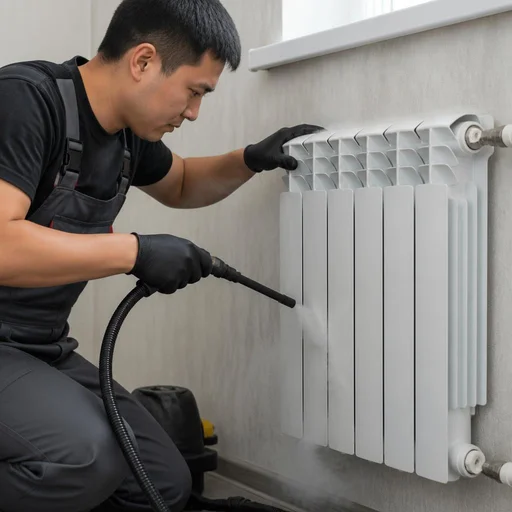
- Annual dry dust treatment: dust on the fins reduces heat output by up to 15%, and the procedure takes less time than flushing.
- Pressure control in an autonomous system: for a private home, keep the operating pressure within the boiler's specification — surges accelerate deposits on the walls.
- Record the date of the work: note down when the flushing was done — this makes it easier to track the frequency and not miss preventive maintenance.
- Check the shut-off valves: once a year, turn the valves through their full range so the stem does not seize up from standing water.
Timelines and what to clarify before the technician's visit
A standard flush of one radiator takes 1.5-2 hours, and the full procedure with system pressure testing takes up to 4 hours; the time depends on the degree of blockage and the type of unit. The queries "radiator flushing price" and "radiator cleaning price" are more conveniently handled by photo: the client sends a picture of the sections and describes the symptoms, and the technician states the scope of work and approximate timelines. For cast-iron registers in Bishkek's old housing stock, the time increases — the scale in the wide channels is loose, but there is a lot of it. Before the visit, clarify whether the riser will be shut off during the work: during the heating season this is coordinated with the management company in advance, otherwise the technician will arrive for nothing.
Conclusion
Flushing batteries and radiators is routine work: it is cheaper to do it on schedule than to deal with a clog in the middle of the heating season. Below are brief takeaways to keep in mind before contacting a technician.
Key takeaways
- Prevention is cheaper than repair: flushing once every 3-5 years on an autonomous system and once every 2-3 years on a central riser prevents scale and extends the service life of the sections.
- Signs cannot be ignored: cold lower sections, humming in the pipes, rusty water and pressure drops are a signal that sediment has already accumulated inside.
- The method is chosen based on the metal: cast iron and steel can handle harsh chemicals and hydrodynamic cleaning, while aluminum and bimetallic require gentle citric acid.
- A 2-year warranty covers flushing and related work — if the frequency is observed, the system operates without repeated clogs.
- Prevention after flushing: install a coarse filter and check the Mayevsky valve once a season — this delays the next cleaning.