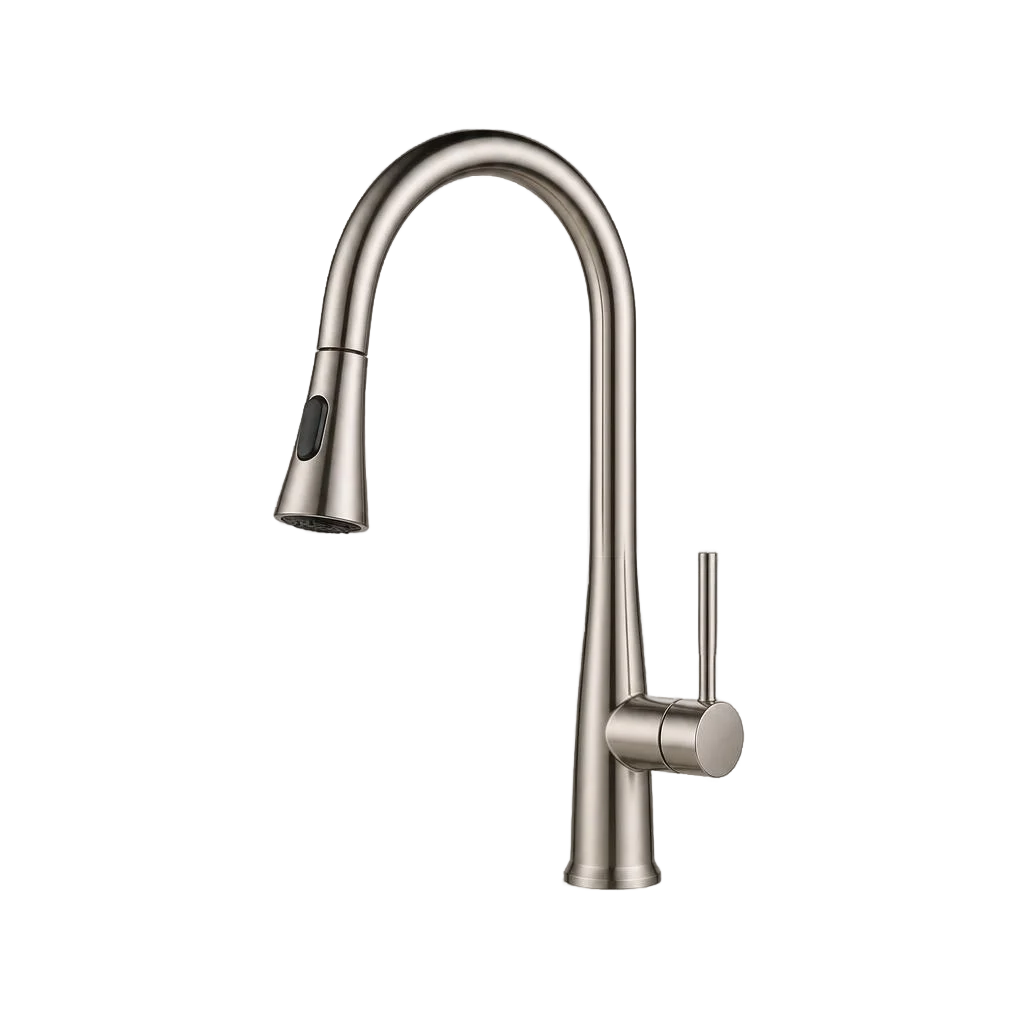


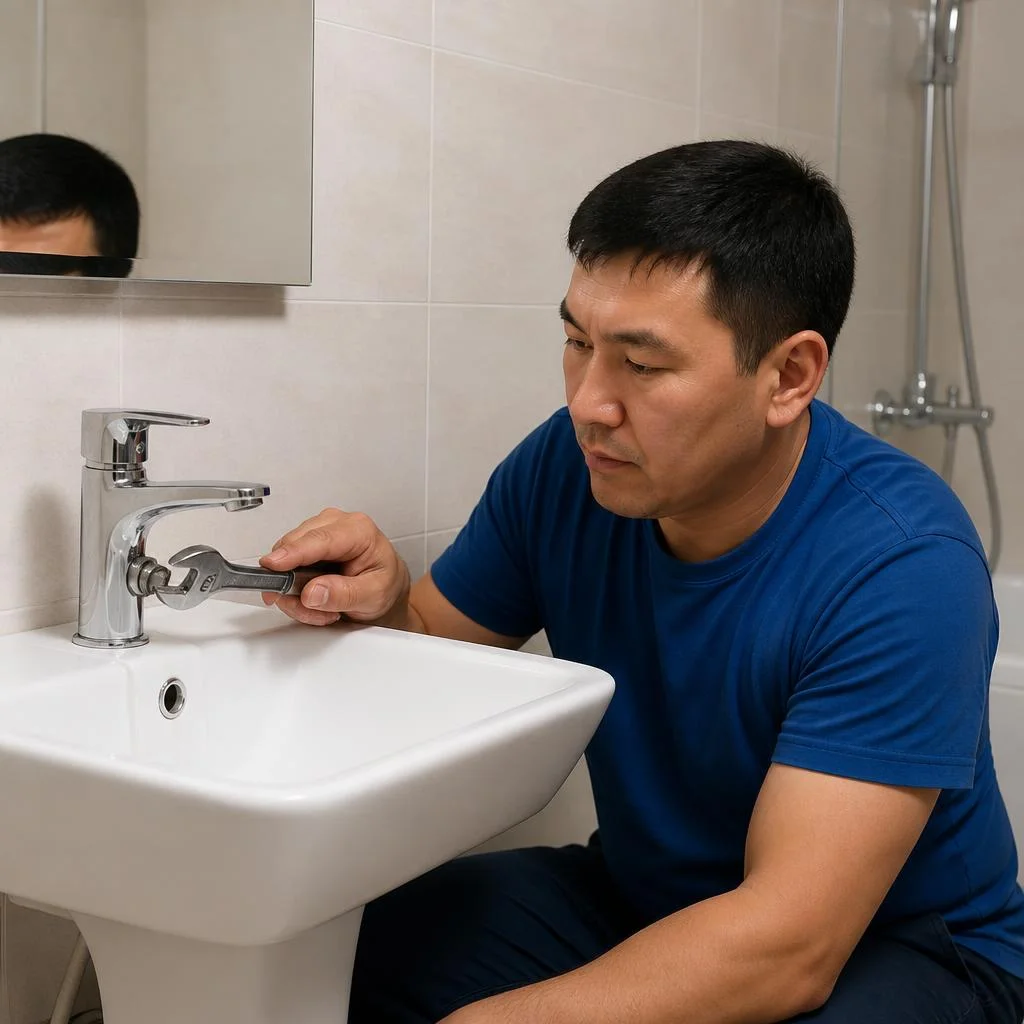
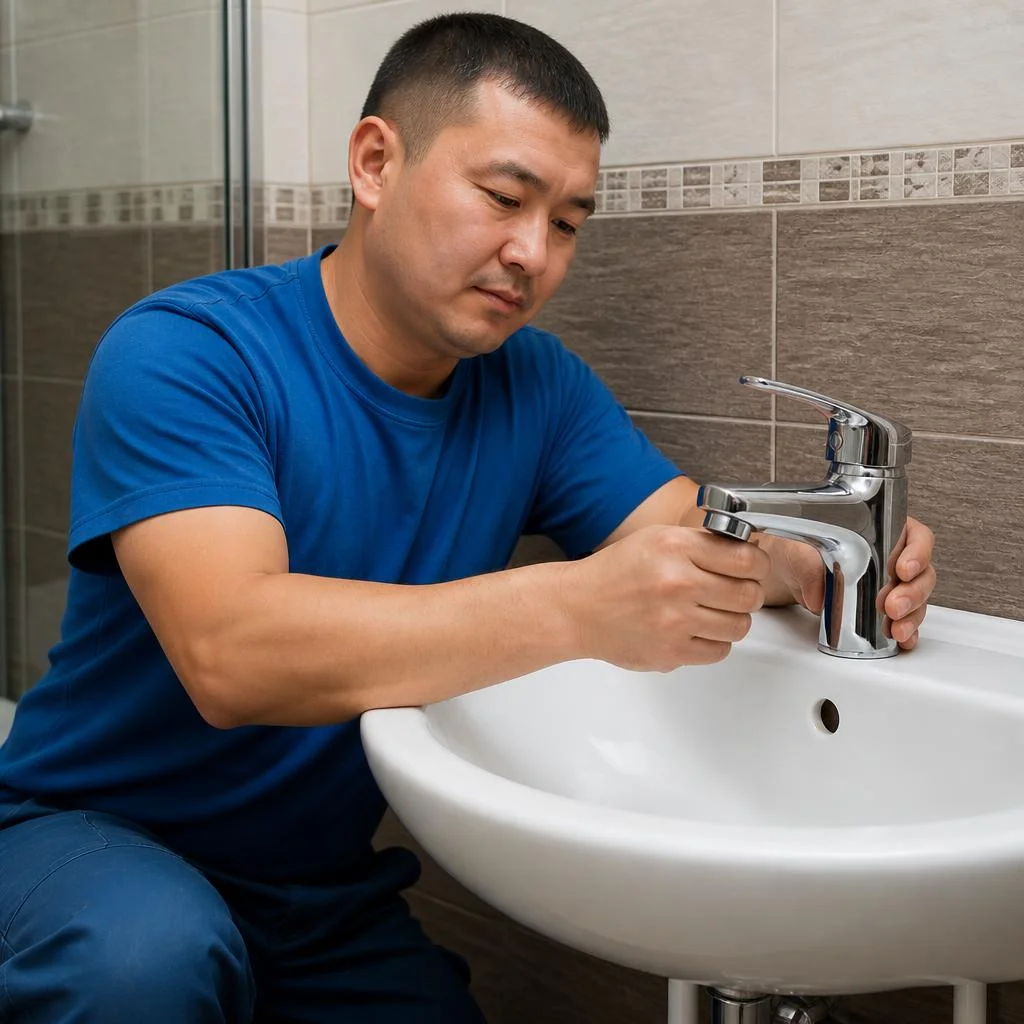

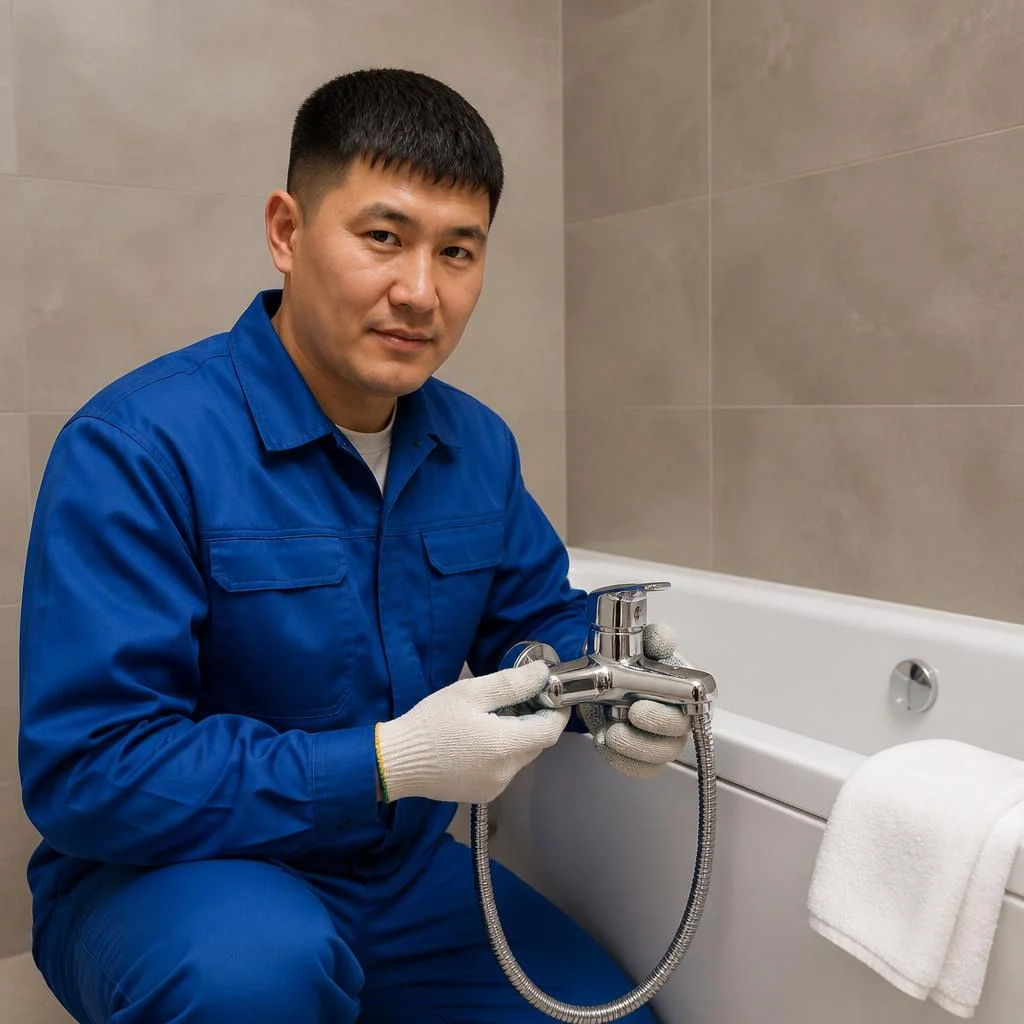
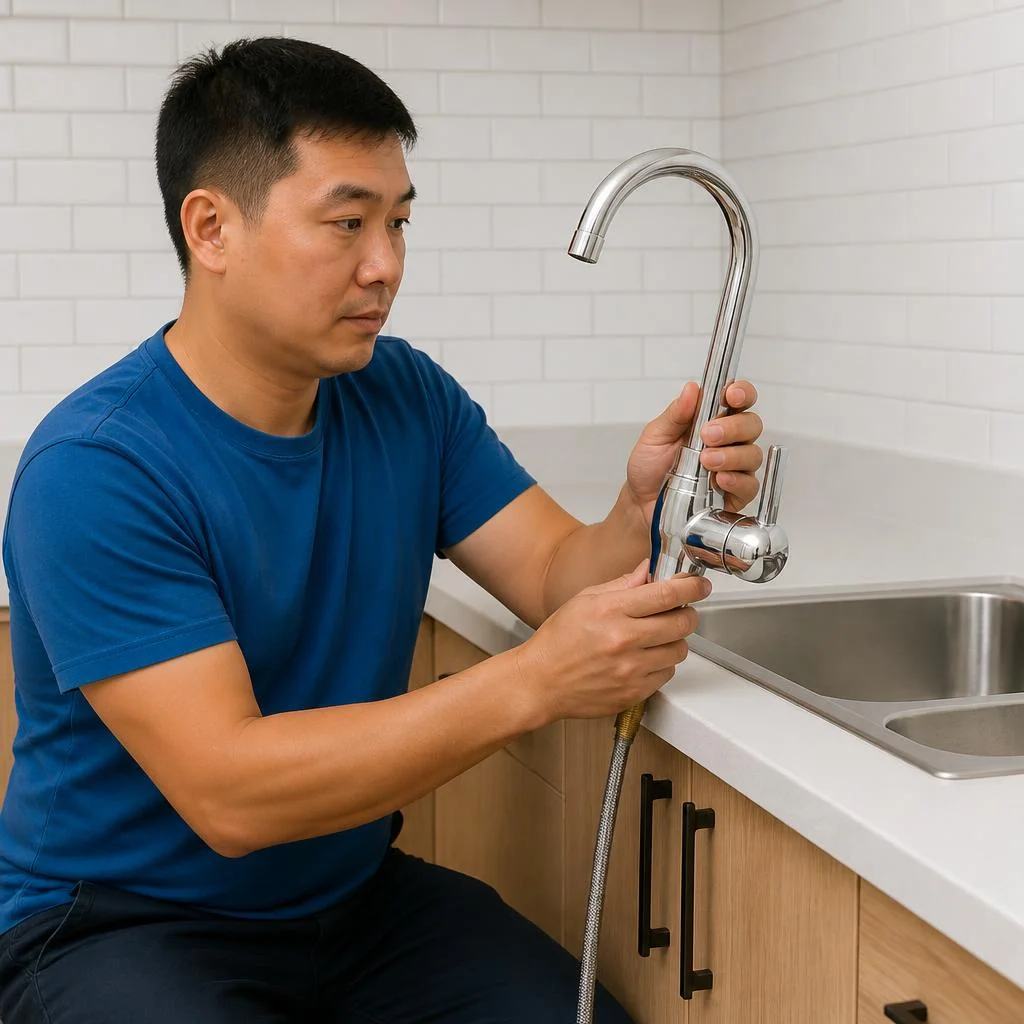
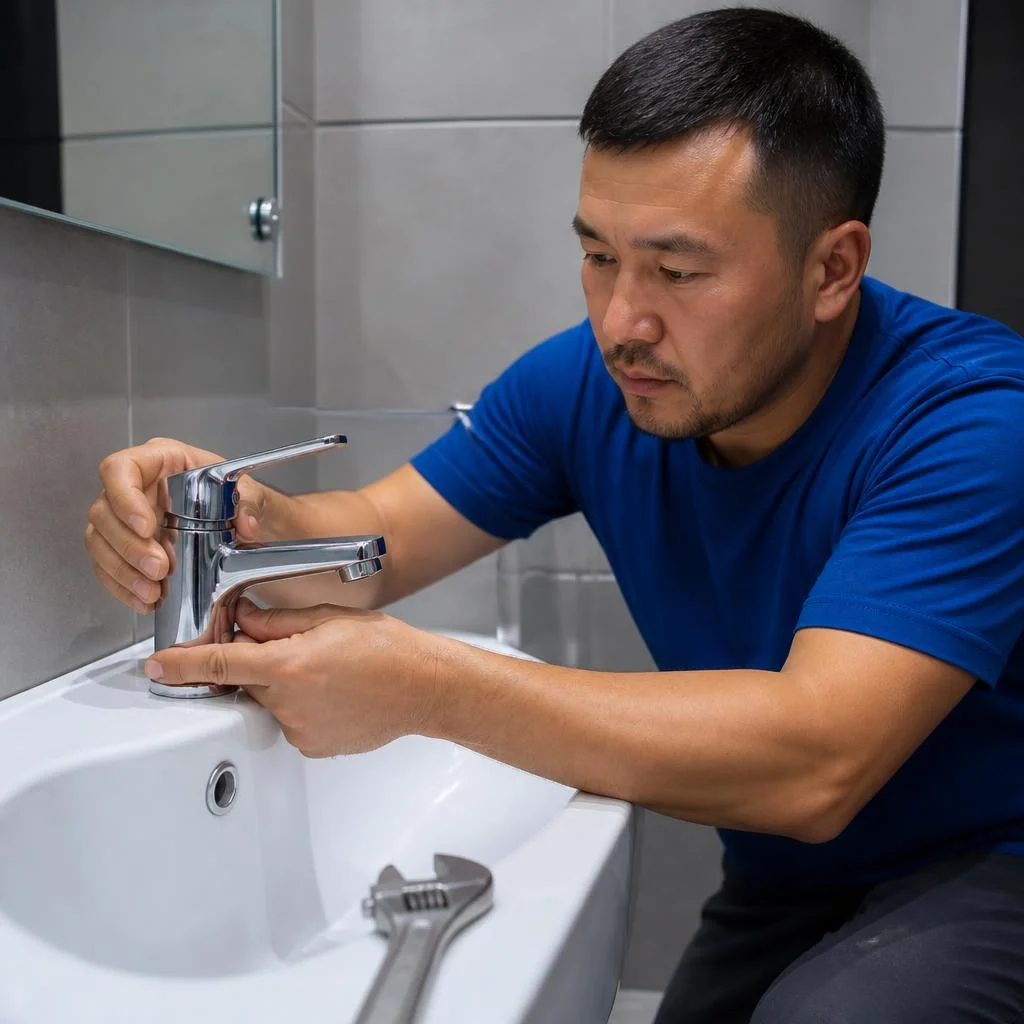
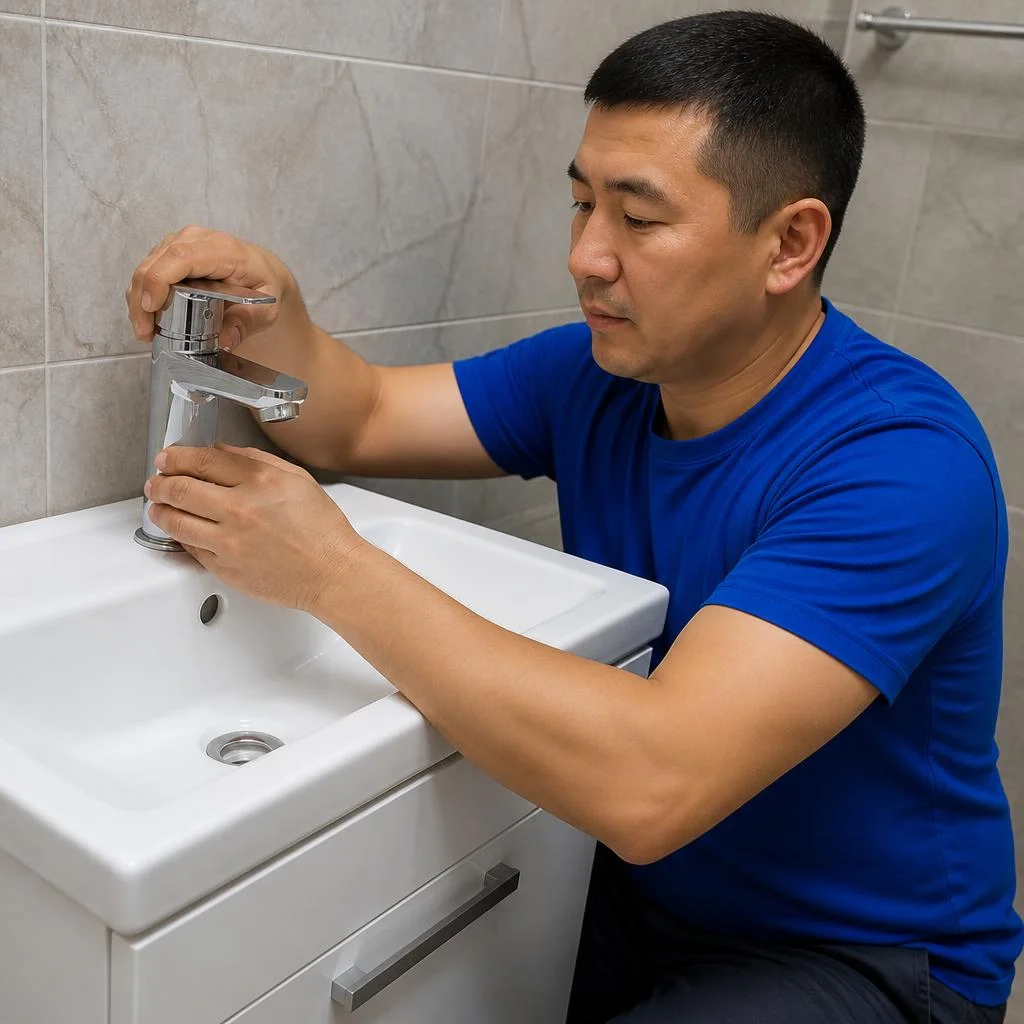
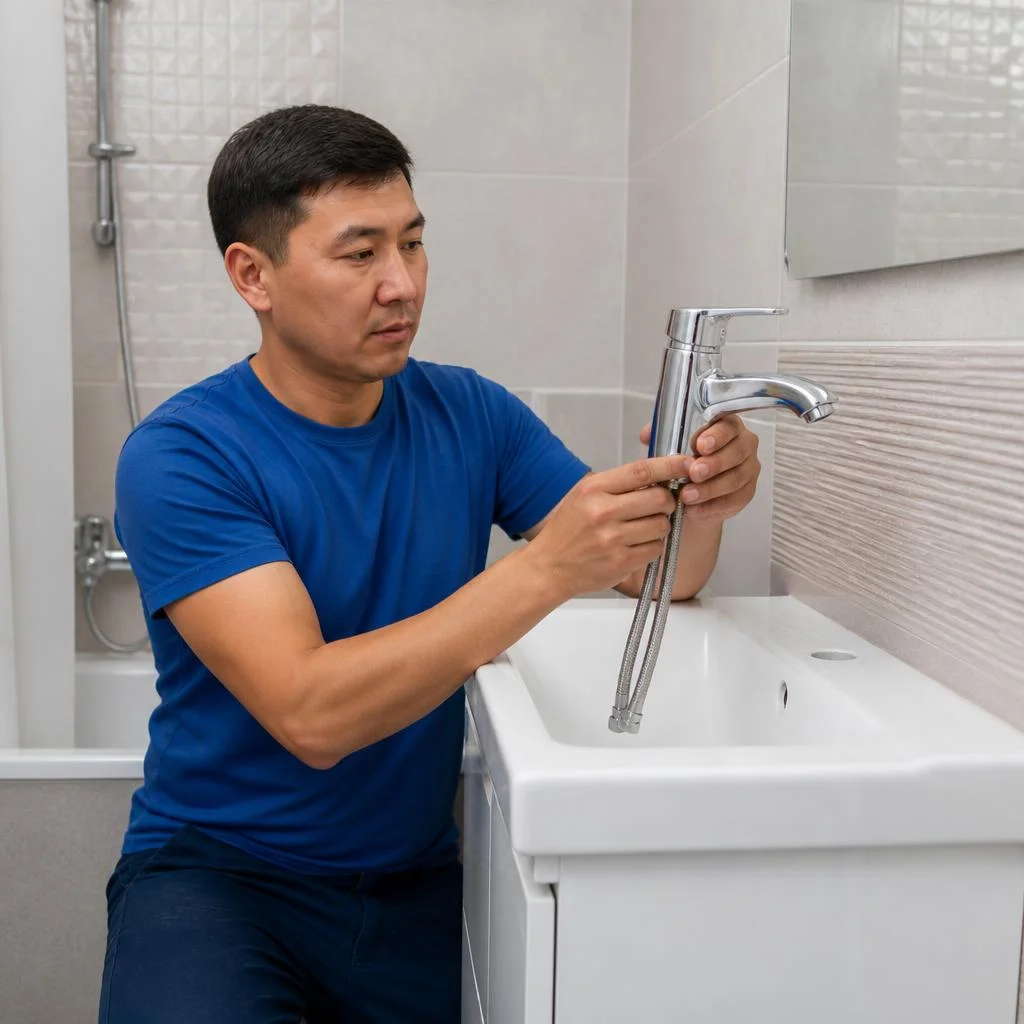








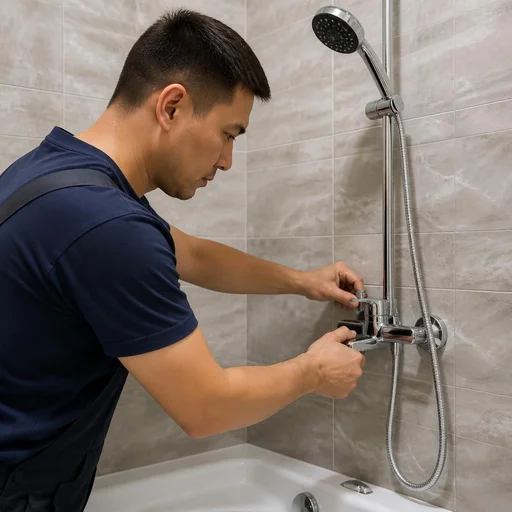
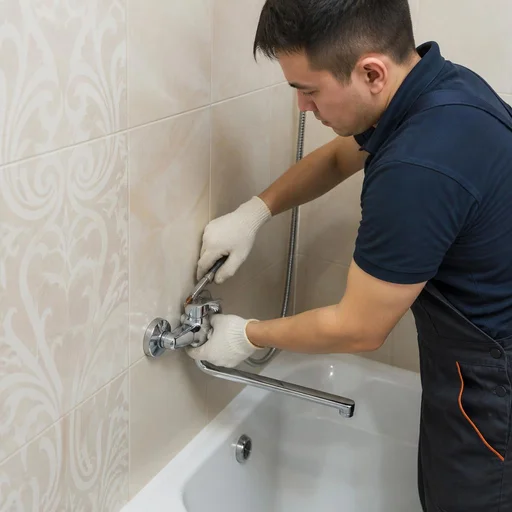
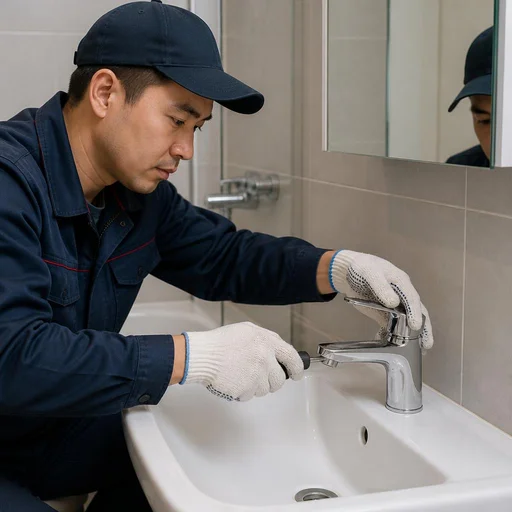
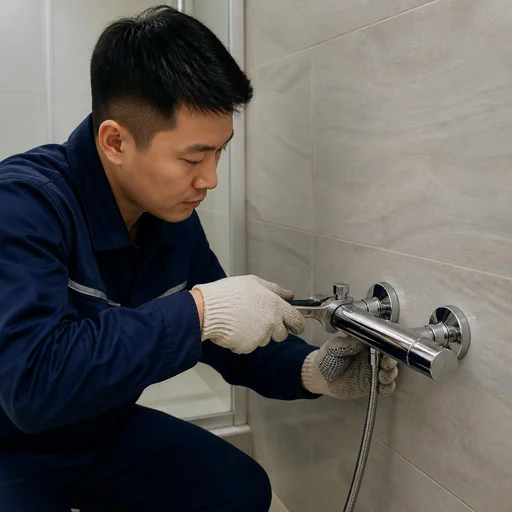
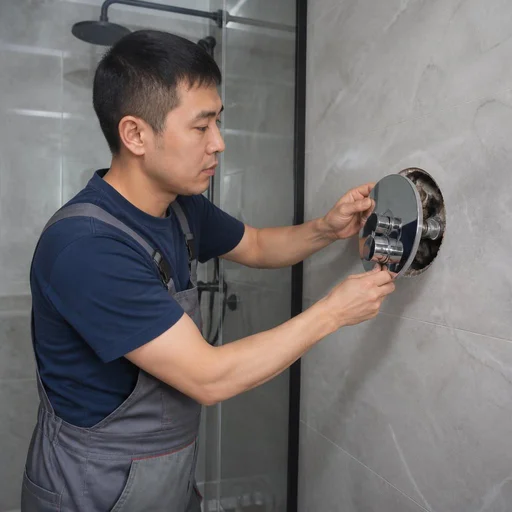
When it's time to replace the faucet: signs of wear and Bishkek specifics
A faucet is a wear part: the cartridge, seals and aerator wear out, and Bishkek's water and old housing stock speed up this process. Let's break down when repair no longer makes sense and a full replacement is required.
Signs that the faucet needs replacing, not repairing
- Dripping when the valve is closed: water seeps from the spout — the valve head or ceramic cartridge is worn, and the O-rings have lost their elasticity.
- Stiff lever movement: the handle moves with effort or jams — limescale has built up inside the cartridge and the lubricant has washed out.
- Reduced pressure: the stream has weakened with the valve open — the aerator is clogged or the internal channel of the body is scaling up.
- Metallic squeak and hum: a squeak is heard when turning the lever — the ceramic pair is breaking down or the stem has come loose.
- Rusty streaks at the base: brown marks appear on the body — corrosion of the casting or a worn flexible supply line.
- Leak along the body, not the spout: a crack in the casting — repairing the cartridge won't help, a full replacement of the unit is needed.
Why faucets wear out faster in Bishkek
Hard water in Bishkek leaves limescale on the cartridge and aerator, and worn-out utilities in old housing stock cause pressure surges — both factors speed up faucet wear by 1.5-2 times. In older buildings, where risers haven't been replaced for decades, water hammer when the water is shut off hits the seals and the ceramic pair: in a month, such a surge can crack a cartridge that would have lasted years under stable pressure. Scale from hard water narrows the aerator opening, causing pressure to drop even with a working cartridge, and the salt layer on the stem accelerates seal wear. In new buildings with plastic pipes and inlet filters, the faucet's lifespan is longer, but even there, without maintenance, the aerator clogs within a season. Prevention — every 6-12 months, remove and soak the aerator in citric acid: this extends the cartridge's service life and preserves pressure.
What a turnkey faucet replacement includes
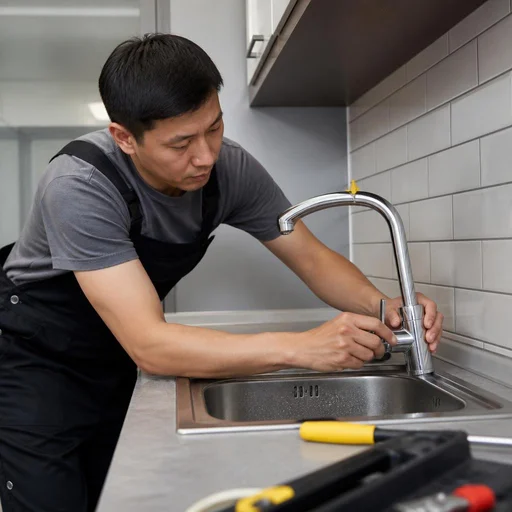
- Removal of the old faucet: we shut off the water, disconnect the supply line and remove the body without damaging the sink's mounting surface.
- Installation of the new unit: mounting in the standard place with leveling and connection to the supply points.
- Sealing of connections: treatment of threaded joints and the body's seating to prevent leaks.
- Connection of the flexible supply line: checking the length, ensuring no kinks or tension, replacing if worn.
- Leak check: turning on the water, monitoring all connections under working pressure, testing the lever in both positions.
- Inspection of related components: the technician shows the condition of the angle valves and supply line before starting work — faucet replacement in Bishkek through Eco-Service includes all six stages, and the question "how much does faucet replacement cost" is resolved after inspection: the estimate depends on the unit's design and the condition of the utilities.
What mixers we replace: by purpose and by design
Mixers differ by purpose and by design — this determines both the installation technology and the set of related works. We break down both lines so you understand exactly what you are ordering.
Mixers by purpose: kitchen, bathroom, washbasin, sink, with shower
| Purpose | Where it is installed | What to consider when replacing |
|---|---|---|
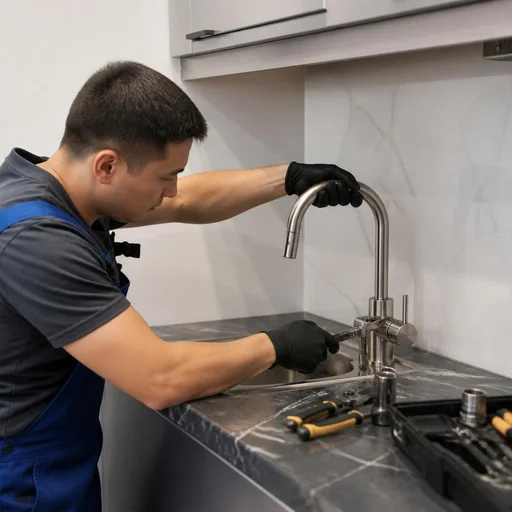
| Kitchen | Kitchen work area | High spout, space for a filter |
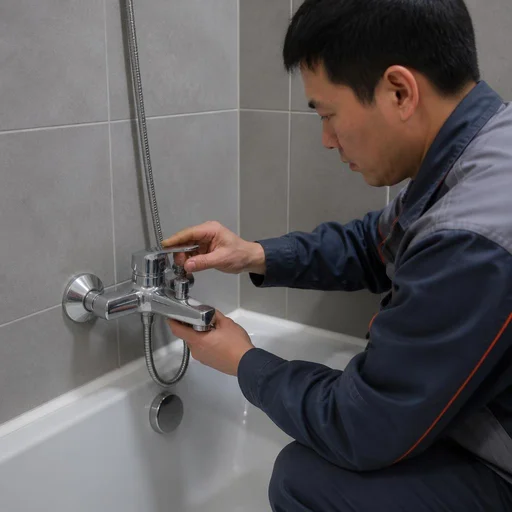
| For the bathroom | Above the bathtub, on the rim or wall | Spout length, mounting to the rim |
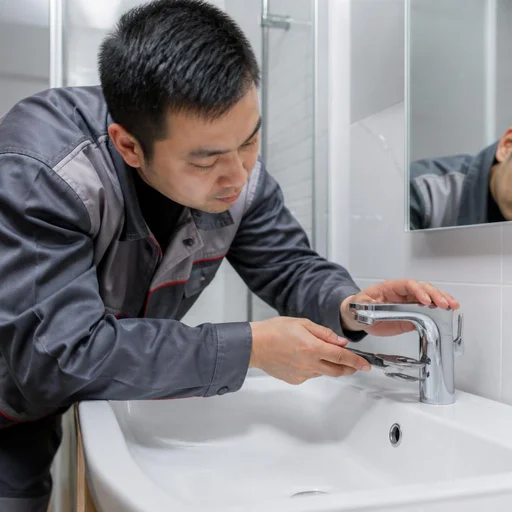
| For the washbasin | Washbasin in the bathroom | Mounting hole, lever height |
| For the sink | Kitchen sink | Countertop diameter, access from below |
| With shower | Bathroom, shower cabin | Standard supply line to the new point |
At the sink and in the bathroom, a mixer with a shower and a long spout is more common — when upgrading, it is important to check whether the standard supply line is long enough to reach the new connection point. Mixer installation in Bishkek covers all five purposes, and through Eco-Service you can order a replacement for a specific unit configuration.
Mixers by design: ball, lever, thermostatic, concealed installation
| Design | Installation feature | What we most often replace together |
|---|---|---|
| Ball | Simple body, single handle | Flexible supply line, gaskets |
| Lever | Single-lever cartridge | Cartridge, angle valves |
| Thermostatic | Thermo element, temperature setting | Filters, seals |
| Concealed installation | Body in the wall, inspection hatch | Internal unit, shut-off valves |
Concealed installation requires access to the internal part through an inspection hatch or by opening up the tiles — this should be clarified before the technician's visit so that he brings the right tool. By design, we work with all four types, and the prices for which depend on the complexity of the unit require a different set of works: for thermostatic and concealed installation it is broader than for ball.
Compatibility: will a new mixer fit in place of the old one
A new mixer fits in place of the old one if the center-to-center distance of the supply lines, the thread diameter and the mounting hole match — for Grohe, Hansgrohe, Kludi and local brands these parameters are standardized. Mixer replacement more often hinges not on the brand but on the geometry of the unit: on models with a long spout or a wide base, the lever may hit the sink rim. A flexible supply line 40-60 cm long covers most discrepancies in depth, and adapters for ½ inch thread solve diameter mismatches. If the new mixer is wider than the old one, there may not be enough space for the lever at the sink or washbasin — measure the mounting space before buying, not after. Clients often phrase the request as mixer installation in Bishkek — and with such a wording the technician immediately understands the task: to select a model for the existing unit, not to redo the plumbing layout.
How a faucet replacement is done: the technician's work stages
Installation takes from 40 minutes to 2 hours depending on the design and condition of the plumbing. Let's break down the stages, related work, and complex cases we encounter on service calls.
Work stages: from dismantling to leak testing
- Shutting off the water and dismantling: the technician closes the angle valves, releases the pressure, and removes the old faucet, placing a container under the remaining water in the supply line.
- Cleaning the mounting surface: old sealant is removed from the mounting surface, limescale and rust are cleared away, and the integrity of the threads on the studs is checked.
- Installing the new faucet: the body is secured onto the studs through gaskets, and the connections are sealed with PTFE tape or flax with paste depending on the thread type.
- Connecting the supply lines: the flexible supply lines are screwed onto the angle valves and the body; tightening is done without misalignment so as not to strip the threads.
- Pressure testing: water is supplied gradually, and the system is held for 10-15 minutes under working pressure — a small drip along the threads doesn't appear instantly, so there's no point rushing the acceptance.
Related work: supply lines, valves, siphon, drain
- Flexible supply lines: during installation we also replace the supply lines — the rubber gaskets inside age within 3-5 years and leak along the threads before the body itself wears out.
- Angle valves: a corroded valve that doesn't shut off the water is the main reason work drags on: it is replaced before installation begins, otherwise the work would have to be done on the riser.
- Siphon: the plastic siphon is removed and replaced with a new one, because after dismantling the old one almost always leaks at the joints.
- Clearing the drain: we also clear the drain opening and check the slope — a clog under the sink makes itself known right after the new faucet is installed.
- Sealing the connections: all joints are treated with silicone grease or tape to prevent seepage during pressure surges in the system.
Complex cases: relocating the connection point and re-soldering pipes
If the new faucet doesn't match the previous connection point, we relocate the point or extend the supply line; if the pipes are worn, we re-solder the section. In kitchens, switching from a two-handle faucet to a single-lever one often requires relocation: their center-to-center distances differ, and the old holes don't match the new body. In bathrooms, concealed installation adds complexity — there, relocating the connection point involves opening up the tiles and subsequently patching them. Re-soldering pipes is needed when the metal near the faucet has thinned and no longer holds the thread: installation on such sections without replacing the pipe ends in a leak within 2-3 months. In search, clients often type faucet replacement Bishkek — and land on our page, because relocating the connection point and re-soldering pipes occur in older buildings more often than it seems: the plumbing there has long exhausted its service life. Working with re-soldering a section takes longer than a standard installation, but it saves you from having to call the technician again.
Installation of a faucet with connection to a filter and hose
A separate category of work — faucets with an additional connection: to a drinking water filter or to a shower hose. We break down the nuances of installation and typical mistakes.
Installation of a faucet with connection to a drinking water filter
Installing a faucet with a connection to a filter requires a separate outlet to a third line — Eco-Service connects the filter to the faucet and checks the tightness of both circuits. In practice, this is a tee on the cold line, a separate angle valve and a flexible supply line to the filter housing: without a valve at the inlet, replacing the cartridge will require shutting off all the water in the apartment, not just the kitchen unit. We install storage and flow-through models under the sink — with and without a separate drinking water tap — and measure the inlet pressure with a pressure gauge: if the reading is above the working pressure, the housing leaks at the threads within 2-3 months. Before installation, clarify the cartridge type and service life — this determines whether a pressure reducer is needed.
Installation of a faucet with hose installation
Installing a faucet with hose installation means connecting the shower hose to the spout and mounting the showerhead on the holder; the technician checks the pressure and the absence of leaks at both ends. The hose included in the kit is often shorter than needed — if the showerhead is mounted far from the faucet, the length is clarified before installation so it doesn't have to be redone. Standard lengths are 1.5 and 2 meters, less often 2.5; for a faucet with a shower in a Bishkek bathroom, 1.5 m is usually enough, but when mounting the holder on the opposite wall, 2 m is used. We seal threaded connections with FUM tape or flax with paste — on the hose and on the spout separately. If the hose is braided, we check its integrity: a damaged braid bursts under pressure within a couple of weeks. In search, clients type it briefly — faucet installation in Bishkek — and the technician already understands that a visit with a hose and sealant is needed.
What to clarify before the technician's visit
- Connection type: filter, hose, or both units at once — this determines the set of tees, valves and supply lines.
- Hose length: measure the distance from the spout to the showerhead holder with a margin of 20-30 cm for bending.
- Supply line diameter: imported faucets sometimes have non-standard threads, and the adapter is sourced before the visit.
- Condition of the angle valves: if they don't shut off the water, they are replaced during the same visit, otherwise the connection cannot be tested.
- Compatibility with the filter: faucet installation in Bishkek with a connection to a filter requires a tee for the specific diameter of the inlet fitting.
Warranty, timelines and terms of Eco-Service work
Warranty, timelines and working hours — that's what distinguishes a service center from a private handyman from a classifieds board. We explain what the two-year warranty covers, how long a visit takes and how to pay for the work.
2-year warranty on completed work
Eco-Service provides a 2-year warranty on completed work — if a leak occurs through our fault during this period, the technician will come and fix it free of charge. The warranty covers flexible supply line connections, sealing of joints, mounting a mixer tap on a kitchen sink or washbasin, connection to a filter and angle valves. A claim is filed using the receipt and the work completion certificate: the document states the type of work, the date and the technician's surname, so there are no disputed situations. The warranty does not cover wear of the mixer tap itself or manufacturing defects — in that case we will help you file a claim with the seller or manufacturer.
Timelines: how long installation takes and when the technician will arrive
A standard mixer tap installation takes 40-60 minutes, complex cases with concealed mounting or pipe re-soldering — up to 2 hours; the technician arrives within the agreed time window, including weekends. For a kitchen lever mixer tap with a flexible supply line, one visit is enough: removal, installation, checking the pressure and drainage. A thermostatic model or a version connected to a drinking water filter requires an additional 15-20 minutes for adjustment and flushing the circuit. If the mixer tap is concealed-mounted, it's better to book the time window with a margin: access to the internal part sometimes requires breaking open tiles, and the work takes longer. Mixer tap installation in Bishkek is a job the technician completes in a single visit in most apartments and new buildings.
How to pay: MBANK, O!Dengi, cash
- Cash to the technician: payment on site immediately after acceptance of the work, change available from any amount.
- Transfer via MBANK: the technician shows the payment details on the screen, confirmation arrives in the app.
- Via O!Dengi: suitable if it's more convenient to pay from your wallet, the receipt is generated automatically.
- Document on request: we issue a receipt or check immediately after completion of the work.
- Payment after acceptance: first you check the pressure, the absence of leaks and the operation of the lever — then you pay.
Why choose Eco-Service: a service center, not a private handyman
In the Bishkek market, the service is offered by private handymen, aggregators, and service centers. We break down how working with a direct provider differs: who is responsible for the result, where the price comes from, and what the reviews show.
Direct service provider: our own service center in Bishkek
Eco-Service is a direct service provider, not an aggregator that passes the request on to third-party handymen: we have our own service center in Bishkek, and faucet installation is performed by our staff plumber. He works according to the company's regulations: removal of the old body, preparation of the mounting seat, installation of the new faucet, pressure testing of the connections, and a leak test within 15 minutes after the water is turned on. The technician arrives with his own tools — adjustable wrenches, hex keys, flax and sealing tape — so you don't need to look for anything around the house. With a direct provider, the contractor is responsible for the work to the company, not to an intermediary — which is why the warranty and repeat visits don't depend on whether a specific technician is available at the time of the request.
Fixed price list by type of work
We work with a fixed price list: the cost of replacing a faucet in the kitchen, in the bathroom, on the sink, and other items is known before the technician's visit and does not change during the work. The price list has 20 separate line items — from a basic replacement to complex scenarios like soldering pipes or relocating the connection point — and each item is tied to a specific type of work, not to an "average" hourly rate. Clients often search for faucet replacement prices — and land on our price list page, where they see the rates for each item. If during removal it turns out that the supply line or angle valves need replacing, the technician quotes the cost of the additional item from the price list before starting work — the total doesn't "drift" in the process. Faucet installation with connection to a filter or with hose installation is calculated by the same logic: the client sees what they are paying for before the technician has even taken out his tools.
Customer reviews and repeat requests
Eco-Service customer reviews can be viewed on 2GIS and Google Maps — most repeat requests come from recommendations after the first order. On 2GIS, the service center has a listing with photos of the work, reviews, and responses to comments; on Google Maps, you can see ratings and comments from clients in various districts of Bishkek — from the center to the residential areas. A private handyman usually doesn't keep a public order history: his reputation rests on acquaintances and word of mouth, not on an open feed of reviews. When choosing a contractor, look not at the average rating, but at recent reviews from the last 2-3 months: they show how the service works now, not a year ago.
Conclusion
We've gathered practical takeaways on faucet replacement in one place: when repairs no longer help, how to extend service life, and what to consider before the technician's visit.
Key takeaways
- Leak from the body: faucet replacement in Bishkek is required for a leak from the body, a stiff lever, or a drop in water pressure — cartridge repair doesn't help in these cases.
- Hard water: aerator maintenance once every 6-12 months extends the service life of a faucet in Bishkek apartments noticeably longer.
- Related work: replacing the supply line, angle valves, and siphon together with the faucet is cheaper than a repeat technician visit a month later.
- Complex cases: concealed installation and relocating the connection point require extra time — clarify this before the technician's visit.
- Service benchmark: faucet replacement price depends on the type of work and the design of the assembly, so a fixed price list and a 2-year warranty are markers of a service center, not a private handyman from a classifieds board.