







What sewer video inspection shows and when it is called for
The method gives you "eyes inside the pipe": the operator sees the walls, joints and flow on screen without taking up the floor or breaking into concrete at random. Let's look at exactly what ends up in the frame and in which situations calling us pays off.
What pipe TV inspection is and what is visible on screen
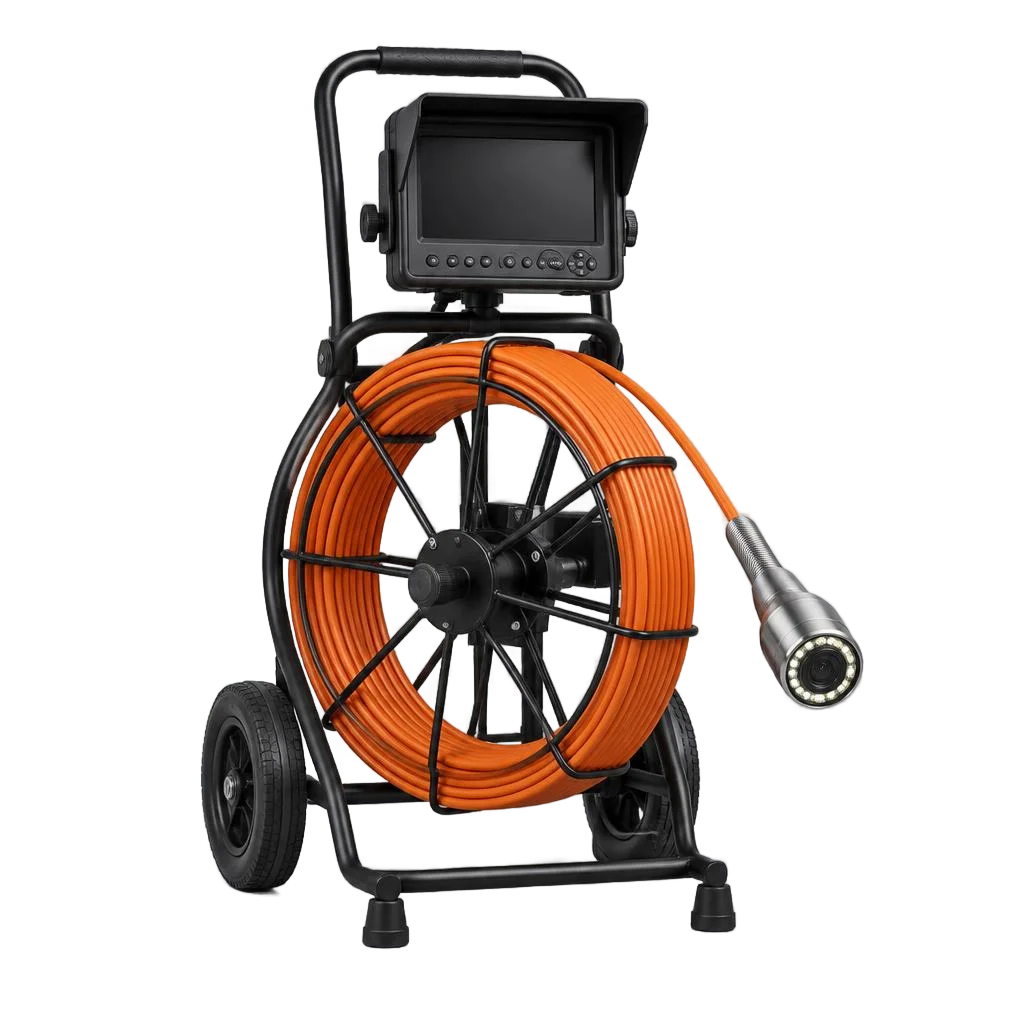
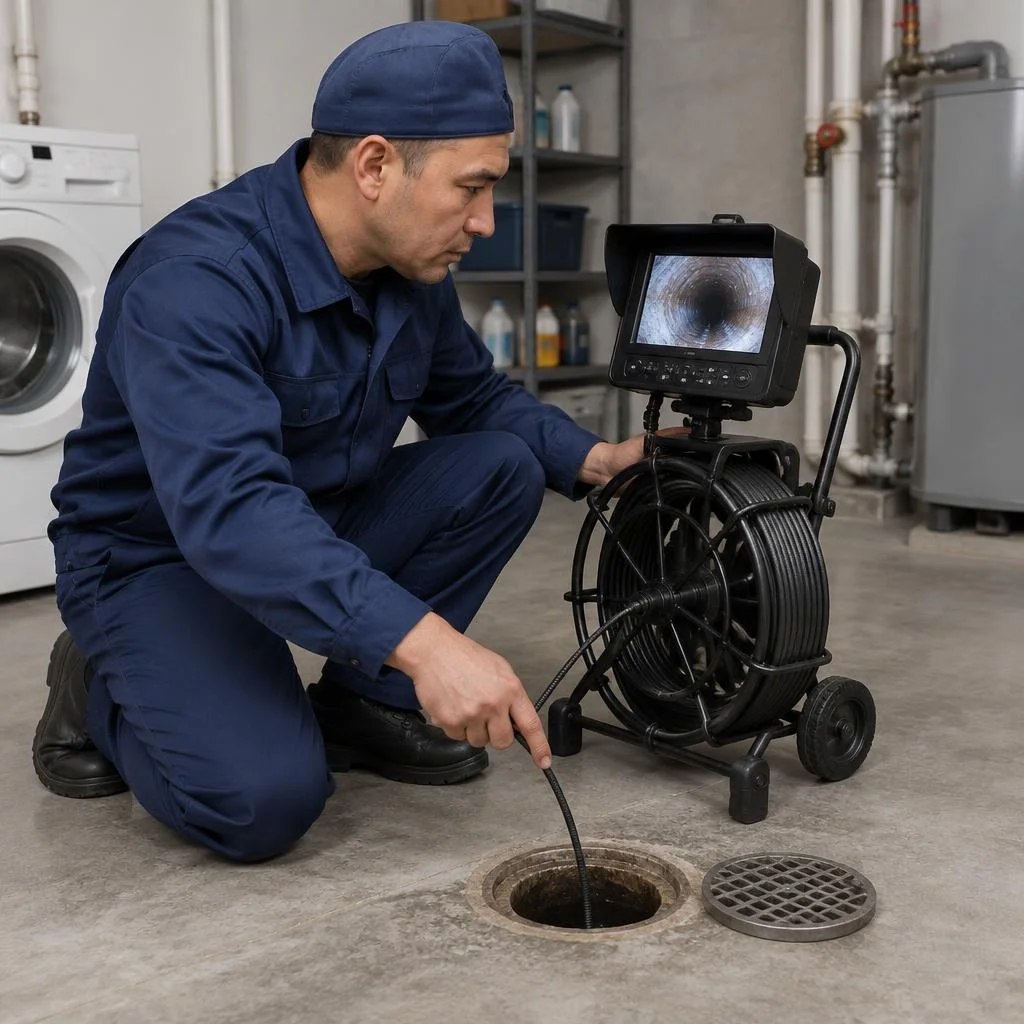
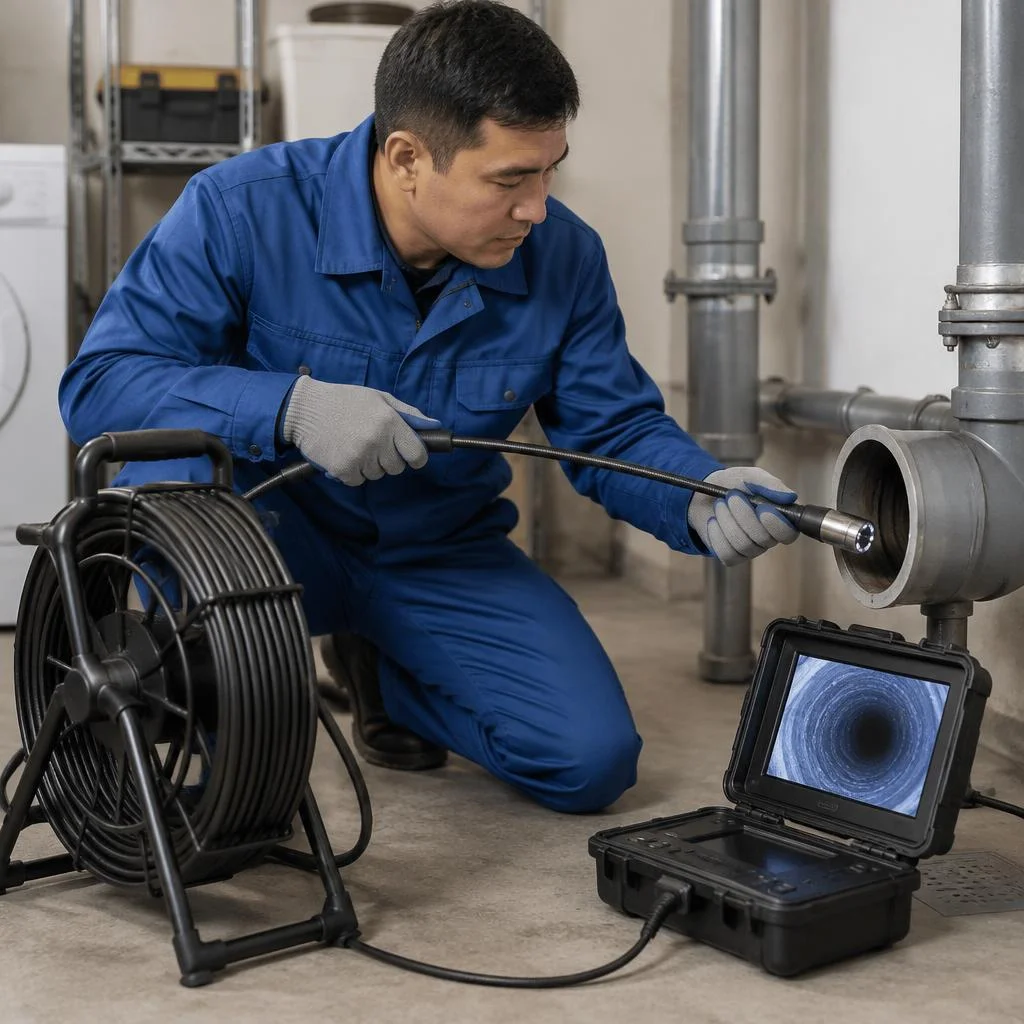
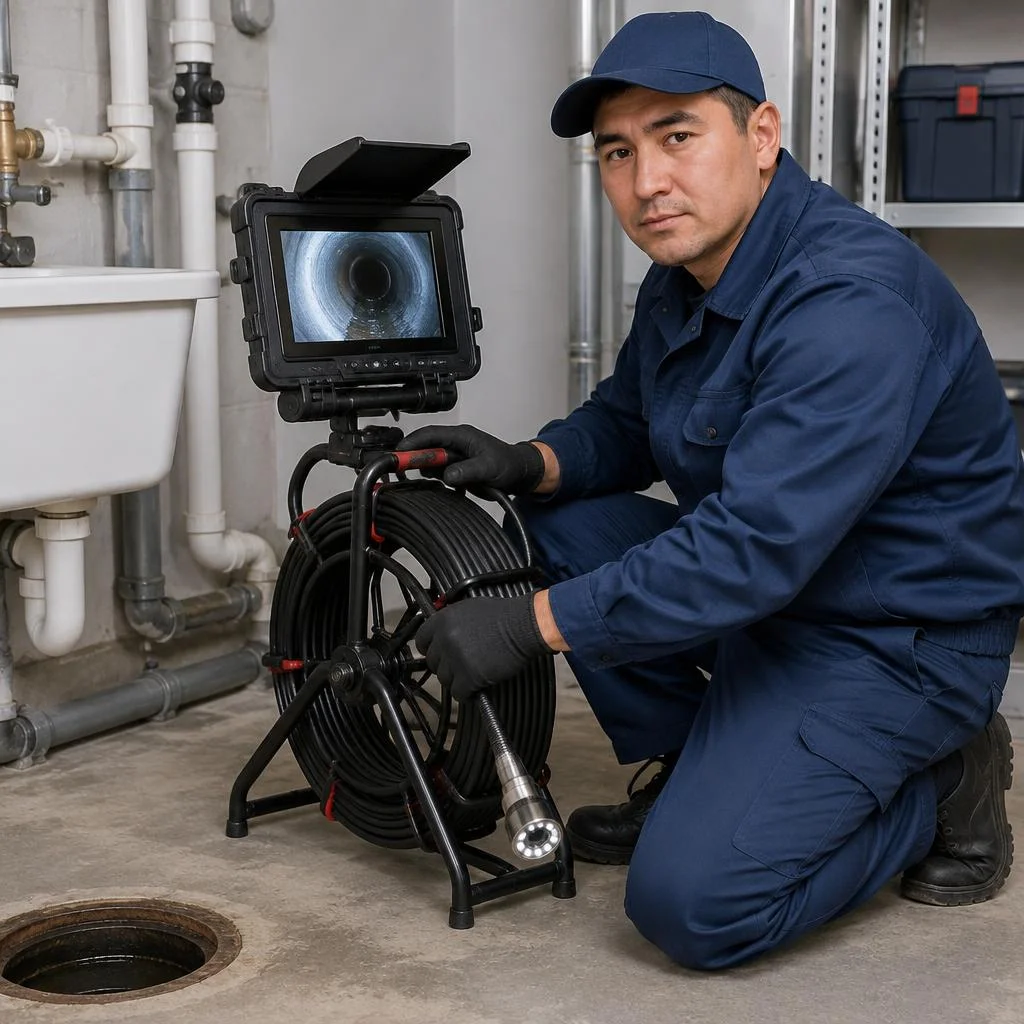
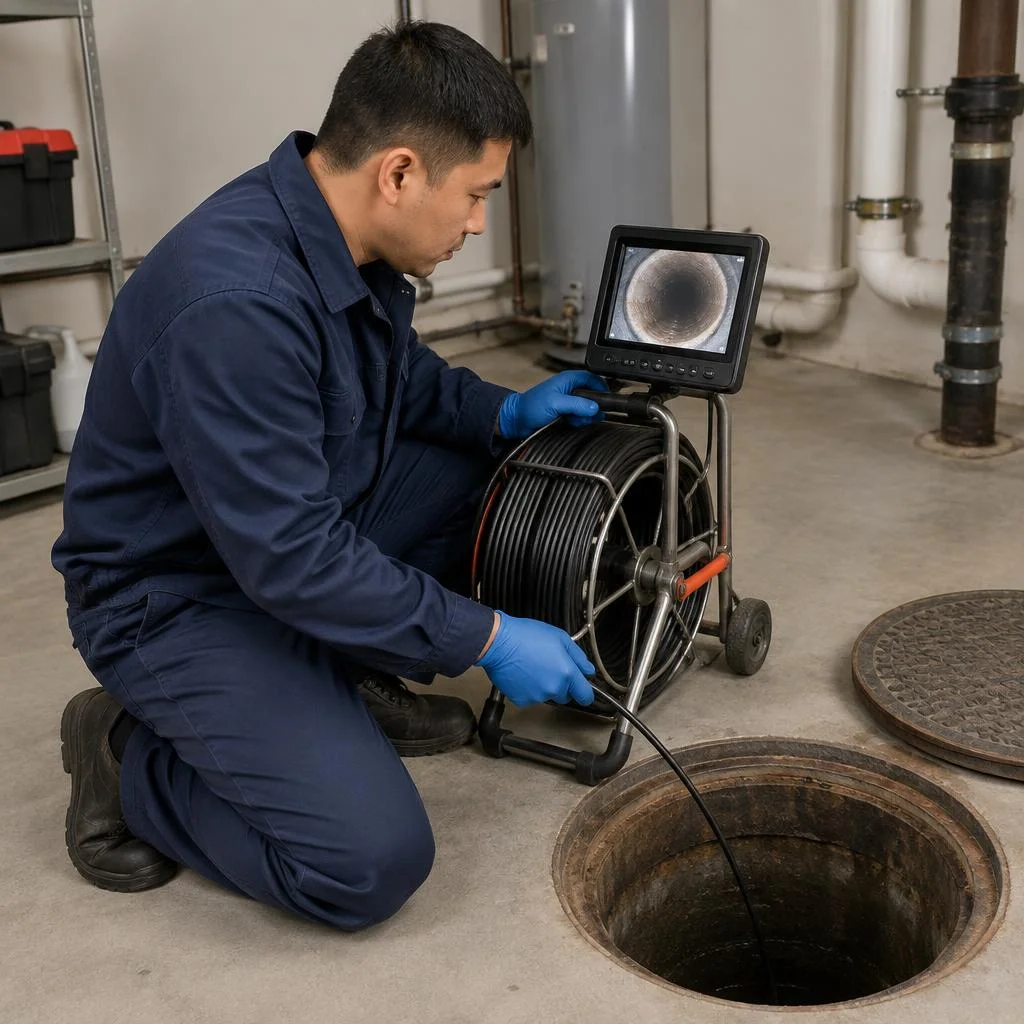
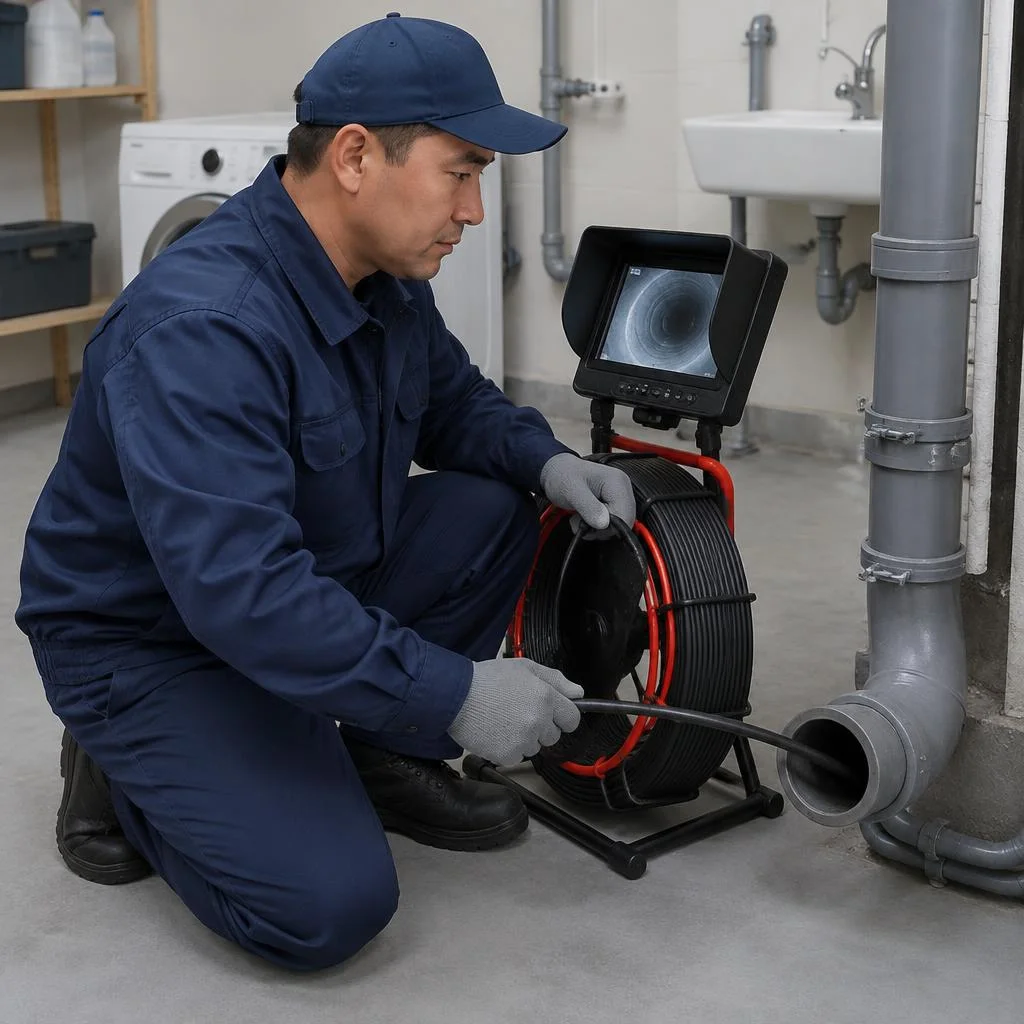
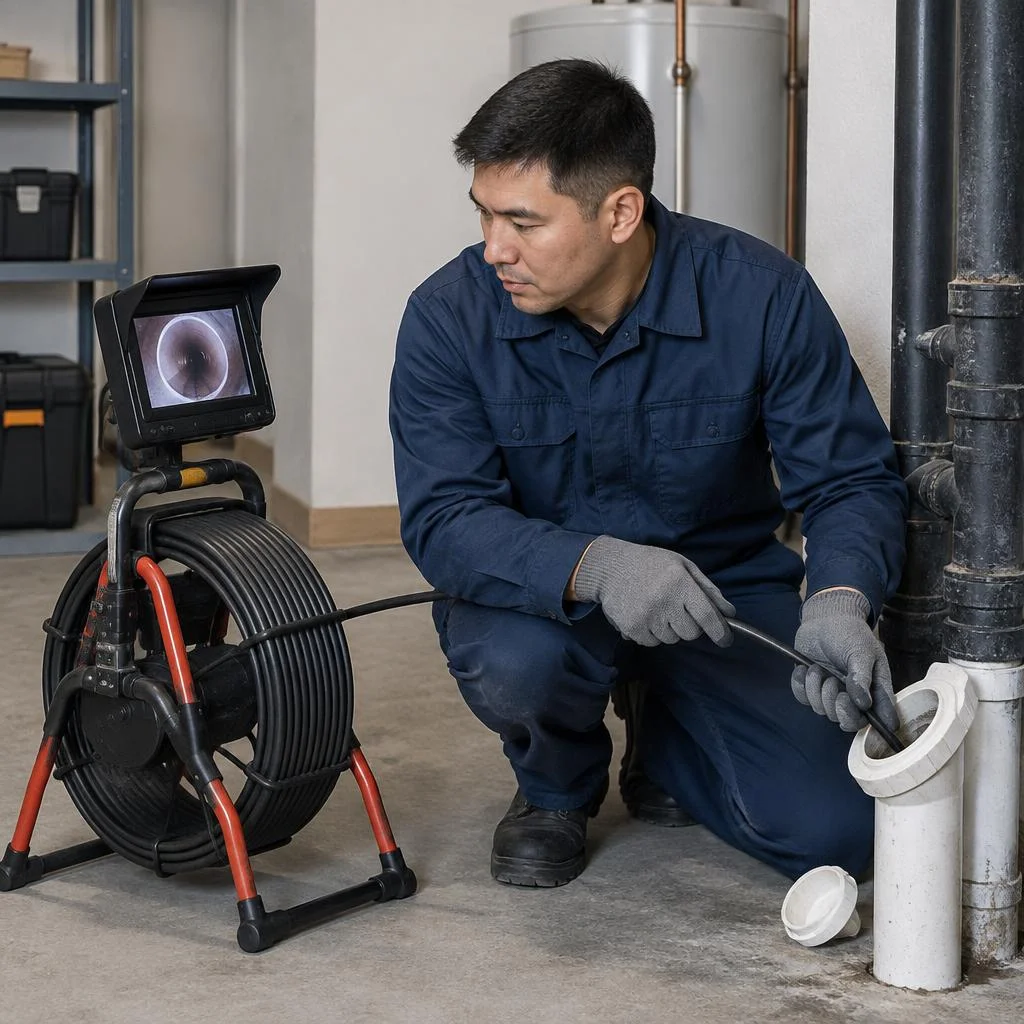
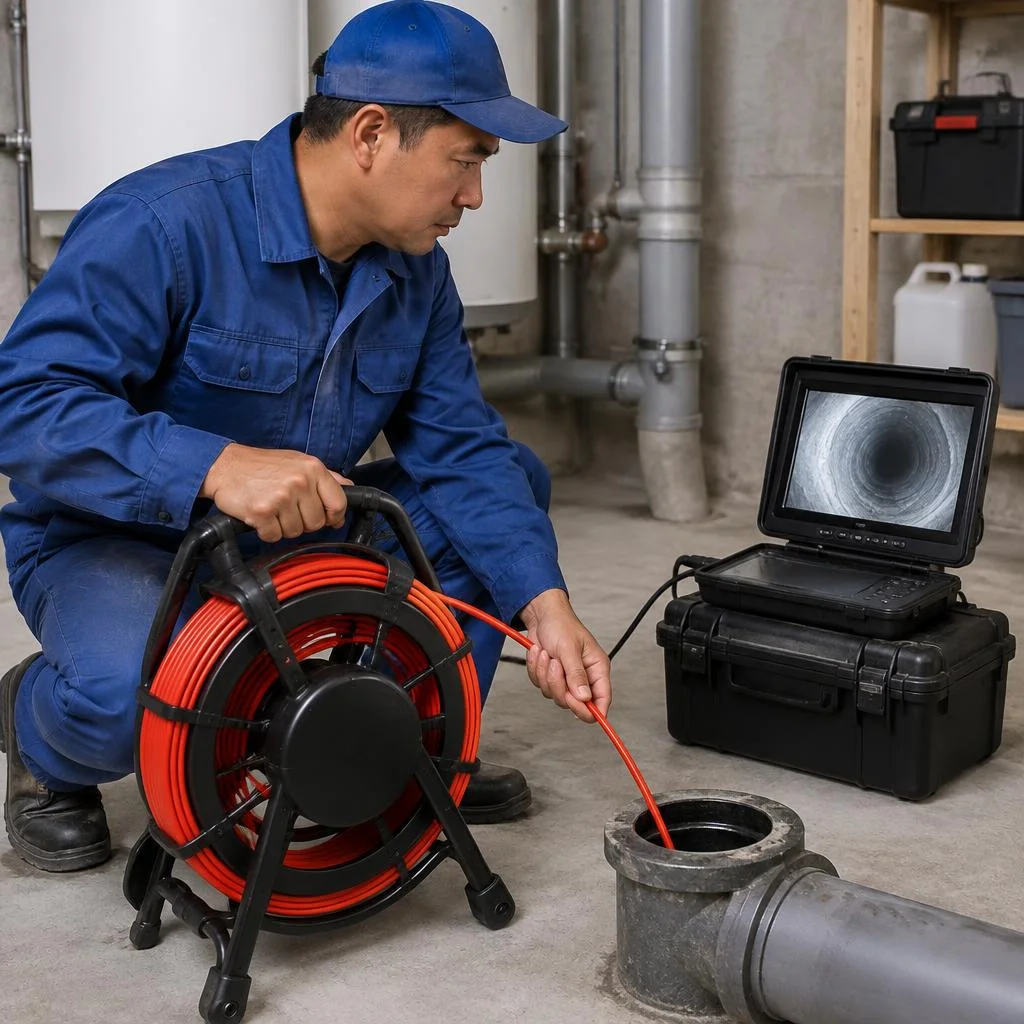
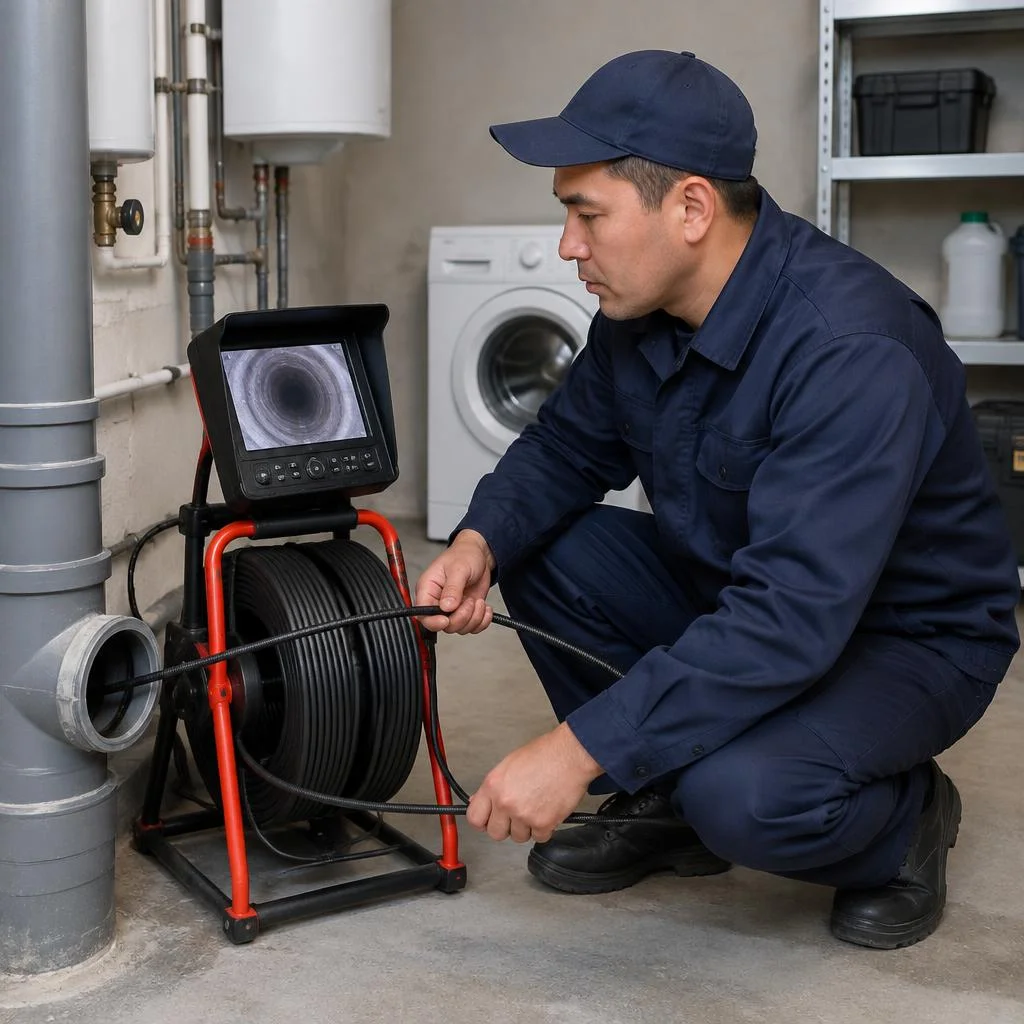
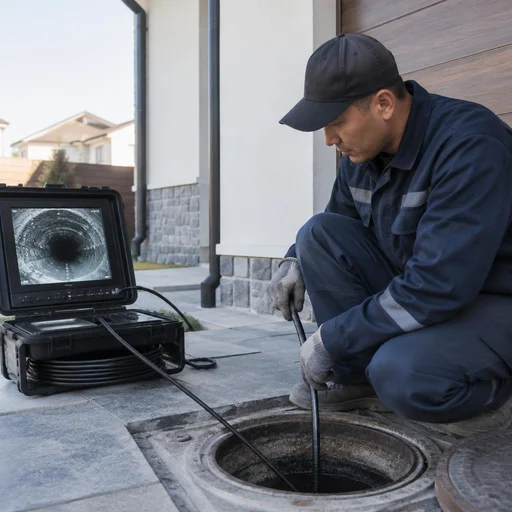
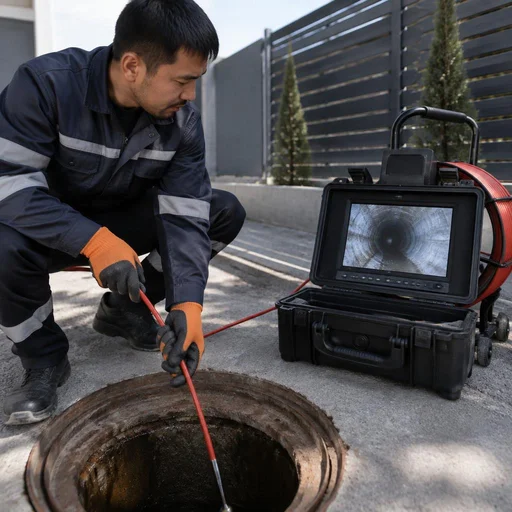
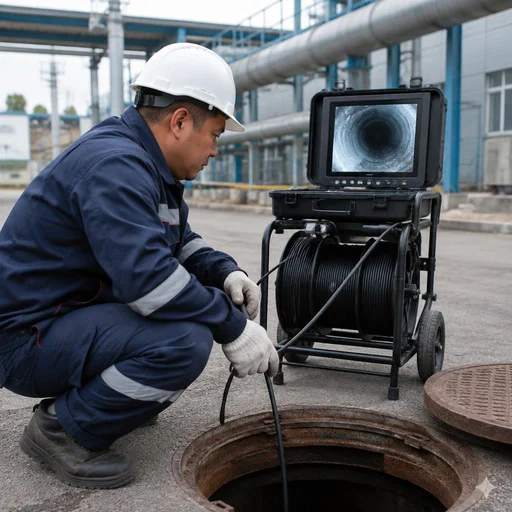
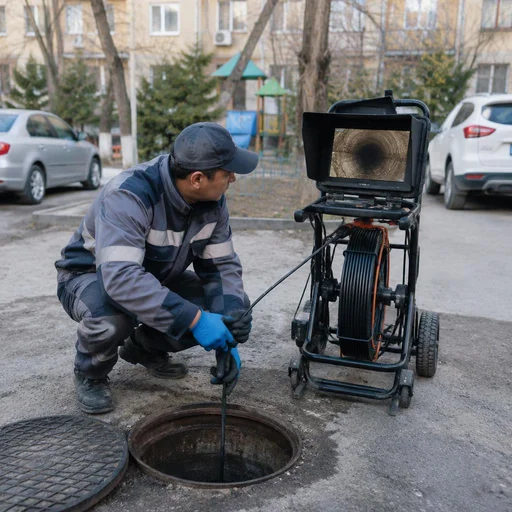
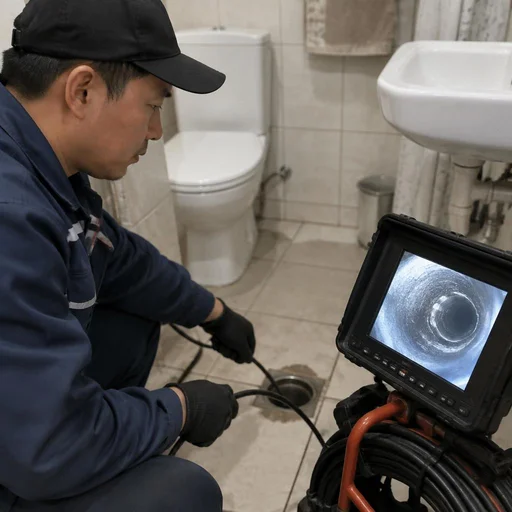
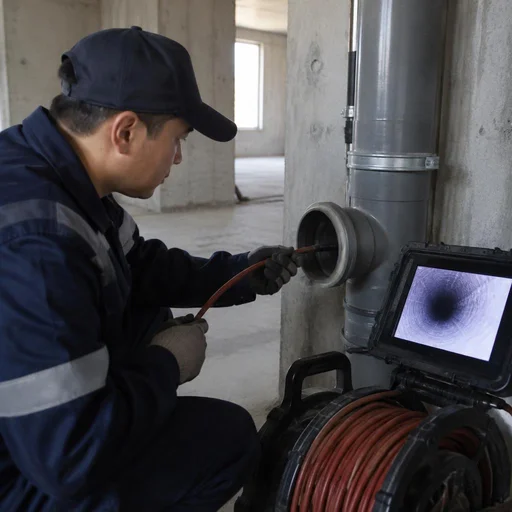
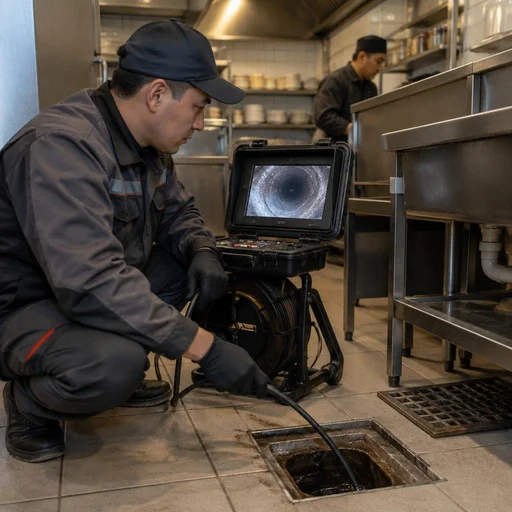
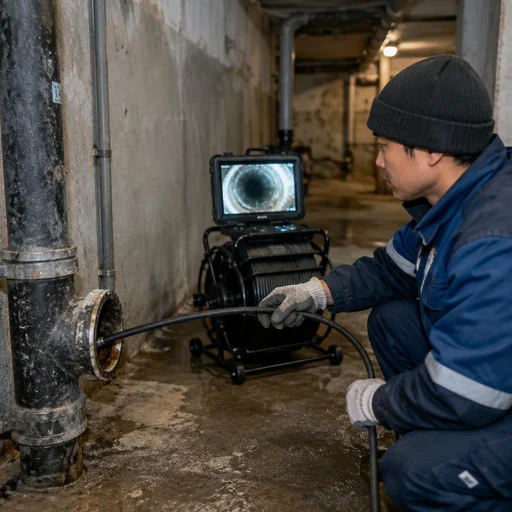
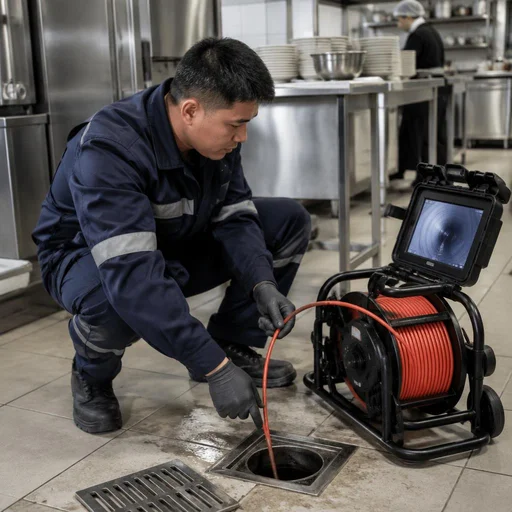
Inspection of a pipeline with a TV inspection camera on a flexible cable: the operator guides the endoscope through the pipe and sees the walls, joints and flow from the inside in real time. The camera covers sections from 50 to 1200 mm, and the lighting and rotating head provide an angled view — you can see not only the blockage itself but also the condition of the metal or plastic around it. Eco-Service performs such inspections on stacks, horizontal runs and outlets in Bishkek: the signal travels along a cable up to 60 metres long, and the picture is recorded straight into a video report. The recording captures not only the blockage but also a reverse slope, which will lead to stagnation again a year later — that is why the inspection is done before cleaning, not after.
When to call: 6 situations in which diagnostics save you from digging
- Water drains slowly: a sink or toilet fills and holds its level — the camera will show exactly where the narrowing is and what is clogging it.
- Smell from the stack: a constant smell in the bathroom indicates a broken joint or a crack that cannot be seen from outside.
- Repeated blockage in the same section: the same spot clogs twice in a season — this is a sign of a pipe defect, not household waste.
- After flooding: the water is gone, but the soil may have shifted the pipe — the inspection will show subsidence and cracks.
- Before buying a house: the condition of the yard network is checked before the deal, so you don't pay for someone else's repairs after moving in.
- Before pipe repairs: if you are planning to replace a section, the report gives the exact footage and scope of work.
What you receive: a video report and a defect report
After the inspection, the customer receives a video report with time codes and a defect report — a list of the defects found, tied to the pipe footage. The report states the type of damage (crack, displacement, reverse slope, build-up), the point in metres from the well or outlet, and a recommendation: cleaning, section replacement, lining or spot repair. The video report is kept by the client and serves as evidence in a dispute with the management company or contractor. In our practice, the report has more than once saved us from unnecessary excavation: the camera showed that the blockage was in one place and the pipe around it was intact — and instead of replacing ten metres, cleaning one was enough. The report is not needed "for the paperwork": with it, the repair contractor quotes the exact scope of work rather than saying "we'll open it up and see".
How the inspection works: stages, equipment and diameters
We break down the path from request to finished report and explain what determines whether the camera can pass through a specific pipe. Below are the stages, the equipment and the diameter limitations.
Stages: from request to report in a single visit
- Preparing the section: we shut off the water, remove the sewer plugs, and provide access to the inspection points and the manhole.
- Flushing before the pass: we break down the grease film and loose deposits, otherwise the optics rest against the film on the wall and the crack is not visible.
- Camera pass: the CCTV inspection camera travels along the section from the outlet to the manhole, and the operator records every irregularity at the specified footage.
- Identifying defects: we mark cracks, joint displacements, reverse slope, roots and foreign objects with reference to a coordinate.
- On-site report: we issue a video report and a defect list with repair recommendations — no excavation was required.
Equipment: CCTV inspection camera, endoscope and thermal imager
On site, a plumber works with an endoscope on a flexible cable, and to locate hidden leaks and leaks through walls the team uses a plumber with a thermal imager. The endoscope provides an image of the inner surface of the pipe to a depth of several tens of meters, while the thermal imager records the temperature difference along the route and shows the places where moisture escapes into the ground or wall. To inspect the sewer system in an apartment, an endoscope with lighting is sufficient, while on the yard network a camera with a self-propelled crawler and a locator is connected to reference the defect to a point on the surface. A thermal imager does not replace a camera: it shows where the pipe loses heat, but does not show what is inside, — that is why thermal imaging and CCTV inspection are used as a pair.
Diameters and materials: where the camera passes and where it does not
| Pipe material | Camera passability | What is visible | What we recommend |
|---|---|---|---|
| Plastic (PVC, PP) | Full, from 50 mm | Cracks, displacements, reverse slope | Flushing or section replacement |
| Cast iron | Full, from 100 mm | Corrosion layer, narrowing of the bore | Mechanical cleaning, in case of wear — lining |
| Steel | Limited, from 80 mm | Welded seams, pinholes, overgrowth | High-pressure cleaning |
| Asbestos cement | Full, from 150 mm | Chips, wall delamination | Section replacement |
In cast iron pipes, a corrosion layer gradually builds up over time, narrowing the bore, — the camera will show this narrowing before the pipe becomes completely clogged. Pipes under pressure are inspected in a separate mode with pressure-drop monitoring to distinguish a clog from a loss of joint sealing.
Sewer diagnostics by facility type: apartment, private house, manhole
Inspecting an apartment riser, a private house's yard network, and a sewer manhole differ in the camera's entry point, the route length, and the set of defects the operator looks for. Let's break down each facility type separately.
Apartment and multi-story building: riser, horizontal run, outlet
In a multi-story building, Eco-Service inspects the riser, the horizontal run, and the outlet — the camera travels from the cleanout to the exit from the building and shows which section has the blockage. The riser diameter in Bishkek nine-story buildings is usually 110 mm, the horizontal run in the basement is 160 mm, and the outlet to the first manhole is the same 160 mm, so a single camera covers the entire line without changing the attachment. We enter through the cleanout on the first or top floor, and if necessary through the tee in the basement, so as not to break open the tiles in the bathroom. Such an inspection in this configuration takes from 40 minutes and covers up to 60 meters of the line. If the horizontal run is clogged rather than the riser, cleaning only the riser won't help — water will back up to the lower floors, which is why diagnostics are done along the entire line, not just one section.
Private house and yard network: where pipes most often rupture
In Bishkek's private sector, we most often find displacement at joints and soil subsidence on the yard line — the camera shows this without excavating the entire yard. The yard network in houses in Alamudun, Kok-Zhar, and the tracts along Abdrakhmanov is assembled from asbestos cement and gray cast iron, less often from orange PVC; joints on such pipes come apart during seasonal soil movement, and mulberry and poplar roots grow into the gaps within 1-2 seasons. Clients often search for "video inspection of sewer" — and end up here, although the matter concerns specifically the yard line of a private house, not a riser in a multi-story building. Eco-Service identifies cracks, displacements, and pipe defects from the inside and marks them on a diagram with reference to the footage from the outlet, so that excavation work is targeted. Soil subsidence after winter shifts the pipe by 1-2 cm, and that's enough for a rag to catch and cause a plug — inspection after a flood and thaw is done preventively, before the first emergency with yard flooding.
Inspection of sewer manholes and pressurized pipes
- Channel and branch connections: in the manhole, the condition of the channel section, side branch connections, and drops are visible, which cannot be seen from a camera inside the pipe.
- Rings and joints: we check for displacement of rings, weeping joints, and root growth along the walls — a typical cause of leaks into the soil.
- Pressurized pipes: pressurized sections are inspected by a separate method — a gravity-flow camera there doesn't give a complete picture of tightness.
- Comprehensive route: the manhole and the line are examined together, otherwise a defect at the "manhole — pipe" junction remains unnoticed in the report.
- One visit: inspection of sewer manholes and pressurized pipes at Eco-Service is carried out by one crew, so as not to split the picture between two contractors.
What to do after diagnostics: cleaning, repair and restoration of pipes
Based on the results of the inspection, one of three strategies is chosen: cleaning, local repair of the damaged section, or restoration of the pipe without full excavation. Let's look at what guides the choice.
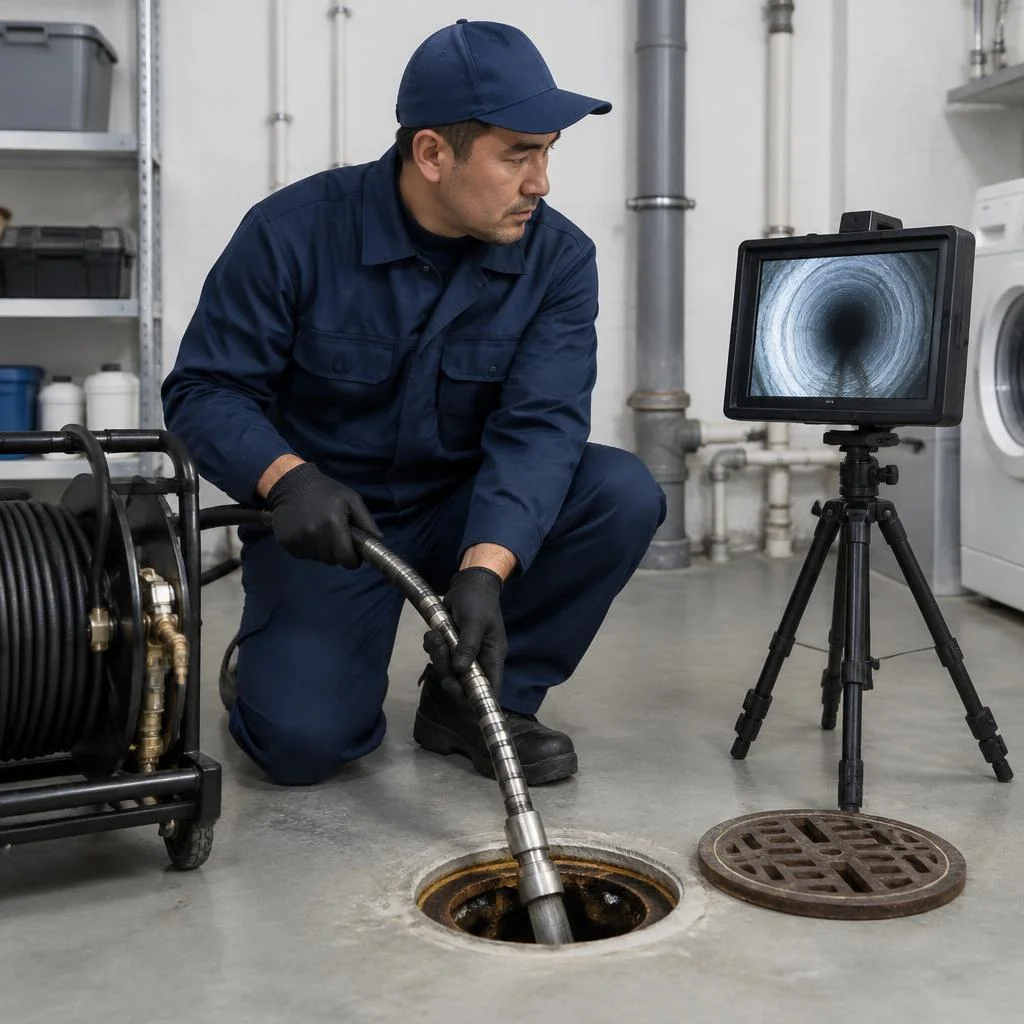
Cleaning: hydro-jetting machine, mechanical method, high pressure
| Method | When we use it | What it removes | Limitation |
|---|---|---|---|
| Hydro-jetting machine | Grease, silt, sand in the pipe | Deposits on the walls | Not allowed on dilapidated cast iron |
| Mechanical tool | Dense blockage, roots | Solid inclusions | Risk of damaging joints |
| High-pressure equipment | Long lines, risers | Sand-and-grease layer | Access to the inspection point is required |
The choice of method relies on the data from CCTV pipe inspection: hydro-jetting is not used on dilapidated cast-iron pipes — the pressurized jet finishes off the wall. First the camera shows the condition, then the crew takes the necessary equipment.
Repair: section replacement, crack elimination, outlet repair
- Replacement of a section of sewer pipe: the damaged segment is cut out and a new one is installed — used for a rupture or severe deformation of the wall.
- Elimination of cracks in the pipe: local damage is sealed without replacing the entire run, if the wall has retained its load-bearing capacity.
- Repair of the sewer outlet: the assembly at the exit from the building is restored, where moisture most often accumulates and fistulas form.
- Defect report: in the Eco-Service service it is drawn up based on the results of the inspection — the document specifies the footage, diameter and nature of each defect.
Restoration without excavation: lining and related works
Restoring a pipe using the lining method makes it possible to avoid full excavation: a polymer shell is inserted inside the old pipe, which takes on the load. The method is suitable for worn lines with a diameter of 50 to 300 mm, where the wall has lost its smoothness but the geometry is preserved. If the pipe is displaced at a joint or has sagged, the shell will not pass through the bend, so before choosing the method, CCTV inspection of the pipeline is mandatory. When excavation is still needed, trenching and breaking open the concrete surface are added, and after laying — backfilling. Practice shows: on sections shorter than 10 meters, lining pays off due to the absence of earthworks; on long lines with several turns, spot replacement is cheaper.
Why choose Eco-Service: direct provider, equipment and 2-year warranty
The difference between a direct contractor and an aggregator shows up not at the moment of request, but when reviewing the result. Let's break down who is responsible for quality, how the warranty is issued, and what to check before the crew arrives.
Direct provider, not an aggregator: our own crew and our own equipment
Eco-Service performs video inspection of sewer lines in Bishkek as a direct provider: a staff crew arrives at the site with its own CCTV inspection equipment, not an outside technician found through a intermediary platform. Our fleet includes cameras on spring and cable push rods for pipes from 50 to 1200 mm, an endoscope for narrow branches, and a locator for tying the defect to the location. An aggregator works differently: the platform takes the request, passes it to an available contractor, and a subcontractor you didn't choose may arrive at the site. Responsibility in this case is blurred between the service and the technician, and a quality claim turns into a back-and-forth of messages. With a direct provider, the claim is made to one company — the one that signed the act. Clients look for a contractor with its own equipment — and end up here, with the direct provider of the service. In our practice, there was a case where a client, after a "diagnosis" from a platform contractor, received a conclusion without video — it had to be redone from scratch.
2-year warranty and service center in Bishkek
Eco-Service gives a 2-year warranty on completed work, and the service center in Bishkek accepts warranty inquiries in person — without forwarding or waiting for a response from an out-of-town platform. The warranty covers the crew's work: quality of cleaning, tightness of connections after lining, correct installation of the pipe section. The service center works with individuals and legal entities, accepts requests by phone and via Telegram, and the visit is documented with an act listing the operations performed. The warranty covers the crew's work, so it's important to keep the video report and the defect sheet — they show exactly what was done and on which section. If six months later the same riser clogs again, the recording will show whether it was a new clog or an oversight on the old section.
Reviews and how to check a contractor before the visit
- Reviews: you can see our work in 2GIS and Google Maps — ratings are visible for specific addresses and types of properties.
- Equipment: before the visit, we show the camera, endoscope and locator, explain what will be included in the inspection and which diameters they cover.
- Contract and act: the contractor states the scope of work and prepares the documents before starting, not after.
- Camera recording: a reliable sign is readiness to show the video before payment; if "the recording wasn't saved," it means there was no actual diagnosis.
- Timelines: clarify whether the conclusion is given in one visit or a second visit is required — this affects the overall work schedule.
Thermal imager and endoscope: how the inspection methods differ
We compare two tools that are often confused: the thermal imager and the endoscope. Each has its own area of tasks, and understanding the difference helps you choose the right inspection method in advance.
What a thermal imager shows, and what an endoscope shows
| Method | What it shows | Where we use it | Limitation |
|---|---|---|---|
| Thermal imager | Thermal anomalies: hidden leaks, freezing, damp walls | Areas filled with hot water or heated areas | Not very informative on cold gravity-flow sewage lines |
| Endoscope | The condition of the pipe from the inside: blockages, cracks, displaced joints | Video inspection of pipes of any diameter from 50 mm | Requires access through an inspection port or manhole |
| Thermal imager plus endoscope | The location of the leak and the cause of the blockage at a single site | Comprehensive inspection of risers and horizontal runs | Requires a crew to visit with two devices |
A thermal imaging inspection shows thermal anomalies — hidden leaks and freezing — while an endoscope shows the condition of the pipe from the inside: blockages, cracks, joints. At Eco-Service, the thermal imager and endoscope are used according to the task: the first locates the zone of the anomaly, the second confirms the defect at a specific meter. The thermal imager works only on areas filled with hot water or heated areas — on cold gravity-flow sewage lines it is not very informative, and there it is specifically the camera that is needed.
When the methods are used together
We combine thermal imaging inspection and pipe teleinspection when we need to find both the location of the leak and the cause of the blockage at a single site. Pairing the two methods saves a second visit: the thermal imager narrows the search zone, and the camera confirms the defect precisely at the meter of pipe. In our practice, at Bishkek sites with heated risers, the thermal imager outlined the damp area within 15-20 minutes, after which the endoscope through the nearest inspection port showed a crack or a displaced joint. This order saves breaking into concrete in neighboring areas and reduces the volume of excavation work. If there are no heated areas at the site, we start immediately with the camera — in that case the thermal imager will not provide a useful picture.
Conclusion
We have gathered the main things worth keeping in mind before calling a specialist: how to read the inspection result, at what point to order the work, and which documents to demand in hand.
Main takeaways
- What the inspection provides: a video inspection of the sewage line shows the condition of the pipe from the inside and finds a blockage, crack, or displacement without breaking open the floor.
- Order of actions: first diagnostics, then cleaning — the method is chosen based on what is visible in the recording, not at random.
- Documents in hand: a video report and a defect list with each defect tied to the pipe footage.
- Different devices — different tasks: the thermal imager looks for leaks and freezing by temperature, the endoscope shows the surface from the inside; in complex areas they are used together.
- Warranty and paperwork: check the terms of warranty obligations and the full set of documents for the work before it begins, not after.