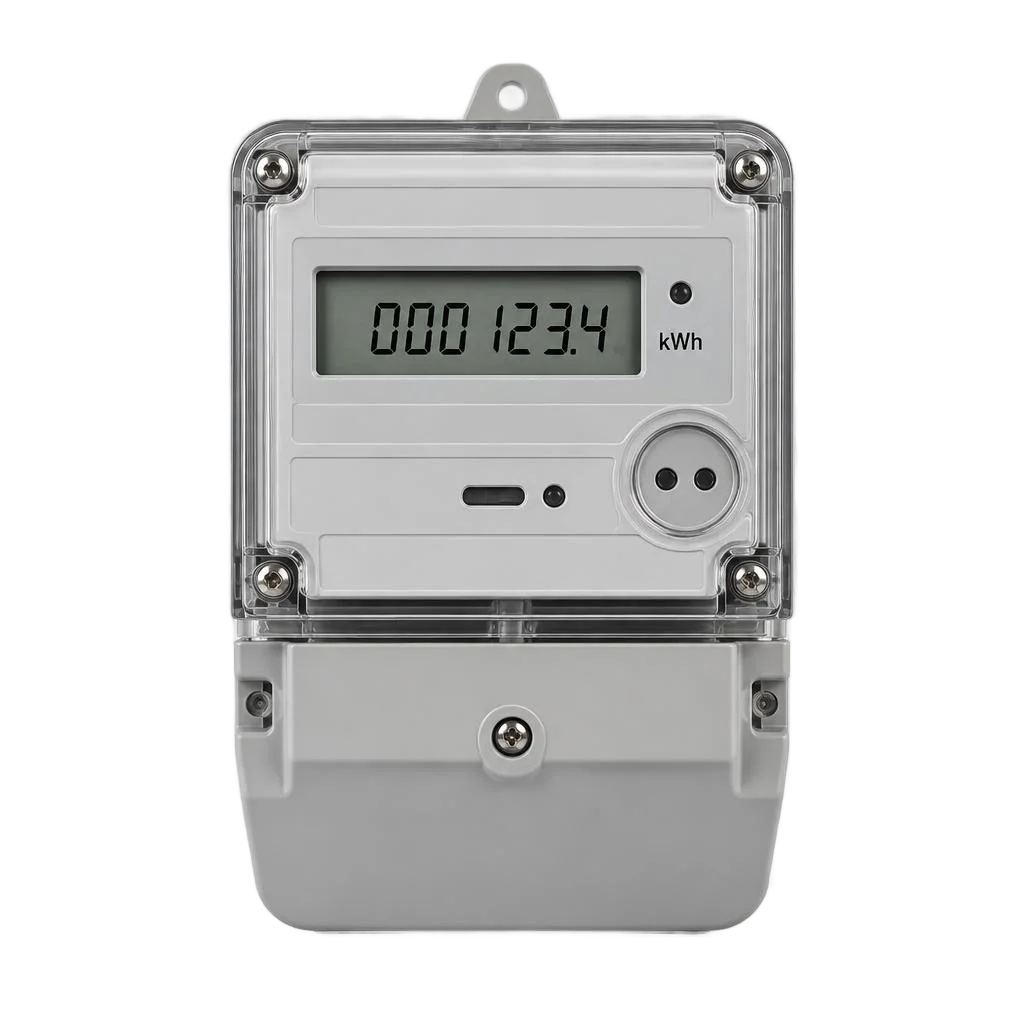
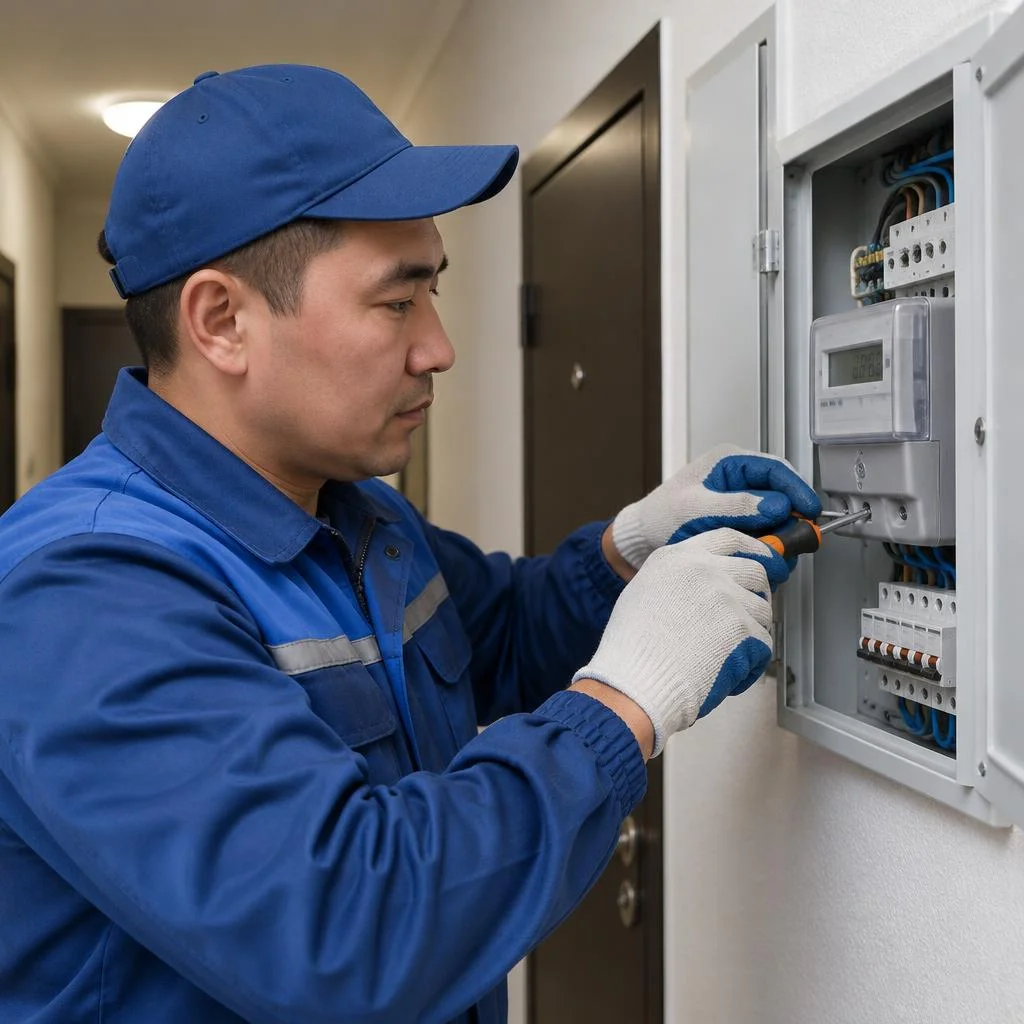
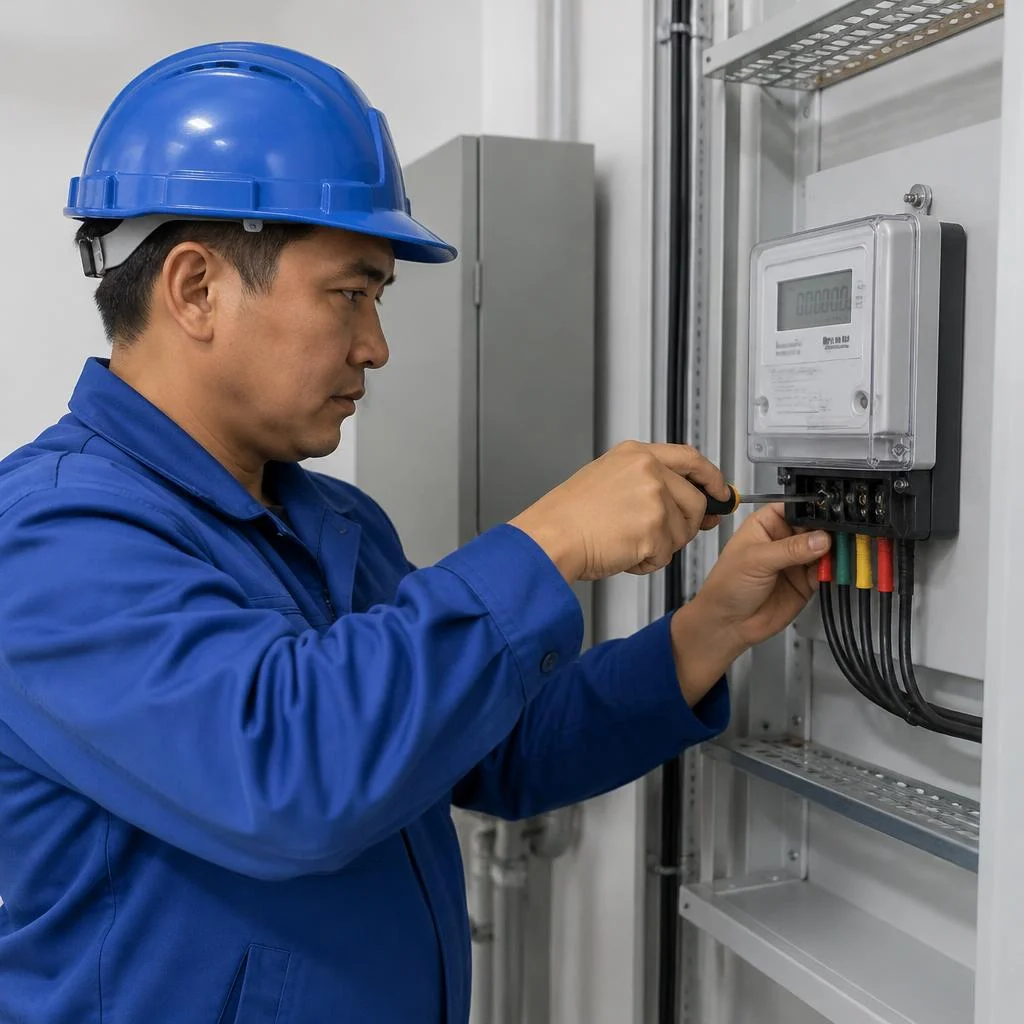








When an electricity meter needs to be replaced and who pays for it
Replacing a metering device is not always the owner's wish: there are legislative triggers and a clear division of responsibility between the consumer and the energy company. Let's break down when the owner is obliged to replace it, and when it's up to Severelectro.
When a metering device must be replaced: 6 legal grounds
- The verification interval has expired: for single-phase models it is usually 16 years, for three-phase models 8-12 years, after which the readings are officially invalid.
- Mechanical damage: cracked glass, broken housing, broken drum mechanism, burnt terminals — the device is removed from the register.
- Signs of tampering: a broken energy company seal, a scratched casing, attached magnets, re-soldered wires inside the housing.
- Systematic under-metering: the device lags behind the reference value by more than 2.5% — the inspector records this in a report.
- An accident in the grid: a voltage surge, short circuit or lightning strike can damage the electronics and the counting mechanism.
- No commissioning certificate: the device is installed but not sealed and not registered on the balance sheet — it is considered unmetered.
Who pays for the replacement: the consumer or Severelectro
According to the Resolution of the Government of the Kyrgyz Republic, metering devices at the boundary of balance sheet ownership are replaced by the energy company at its own expense, while in-building and in-apartment devices are replaced by the owner. OJSC Severelectro serves Bishkek and Chuy Region, and NESK regulates the procedure through tariff policy: at the balance boundary the costs are borne by the supplying organization, inside the property — by the owner. The question "how much does it cost to replace an electricity meter" is the one clients ask us most often — and the answer depends on which side of the boundary the device is on. In a multi-storey building, the meter on the stairwell landing is often already on Severelectro's balance sheet — in that case replacement is free for residents, while in the private sector the device on the facade belongs to the consumer's zone. The boundary of balance sheet ownership is specified in your contract with Severelectro — it is this clause, and not the location of the panel, that determines who pays.
How replacement differs in an apartment, a private house and on a stairwell landing
| Site | Installation specifics | What to coordinate |
|---|---|---|
| Apartment | Panel inside, single-phase line | Access to the riser with the management company |
| Private house | Service entry from the street, often three-phase | Diagram with Severelectro |
| Stairwell landing | Shared panel, management company seal | Coordination with the management company |
| Garage | Separate line, DIN rail | Permit from the cooperative |
| Shop | Three-phase entry, current transformer | Design and permit from the energy inspection |
Single-phase or three-phase: how to choose a device for your load
The type of metering device is determined not by the owner's wishes, but by the incoming cable and the nature of the load. We break down when a single-phase solution is sufficient and when a three-phase one is necessary, and which options provide real savings.
Single-phase or three-phase meter: selection criteria
| Parameter | Single-phase | Three-phase |
|---|---|---|
| Voltage | 220 V | 380 V |
| Number of input wires | 2 (phase + neutral) | 4 (three phases + neutral) |
| Typical load | up to 7 kW | from 7 to 15 kW |
| Facilities | apartment, garage, country house | house with a boiler, shop, workshop |
| Electric stove | with allocated power | with 380 V input |
| Metering type | basic | advanced |
If the input to the house is three-phase but a single-phase device is installed, during installation the circuit cannot be "simplified" to single-phase: "Sevelektro" will not accept such a certificate, and the facility will remain without sealed metering. We select the device type based on the incoming cable and the actual load — this eliminates the need for rework a month later.
Multi-tariff and Smart Meter: when the option pays off
Multi-tariff mode pays off only with a pronounced nighttime load — a boiler, underfloor heating, an electric boiler, EV charging. For a standard apartment with a refrigerator and a TV, the difference in the bill is almost unnoticeable, while the overpayment for the device itself is significant. We configure multi-tariff meters for "day/night" zones and install models with remote data transmission when the facility meets "Sevelektro" requirements. A Smart Meter takes readings by itself — the inspector does not need to get into the apartment, and the owner sees consumption in their personal account. Clients often phrase the request as replacing an electricity meter in Bishkek — and receive a payback calculation for their consumption profile. With a uniform around-the-clock load without a nighttime peak, the two-tariff option never pays off, so before choosing, calculate the actual monthly consumption by hour.
Accuracy class and what the inspector actually checks
For household consumers in Kyrgyzstan, an accuracy class of 1.0 or 2.0 is sufficient; for commercial metering, 0.5S is required — this is checked by the inspector during acceptance. The class is indicated on the front panel of the device next to the serial number and year of manufacture; the inspector verifies it against the Electrical Installation Code and the power supply contract. For shops, workshops, and facilities with a current transformer, the threshold is stricter: a class 1.0 device will not be accepted here; 0.5S will be required. Verification of the metering device is mandatory if the meter has been in service longer than the verification interval or if the marking on the panel is unreadable. If the accuracy class figure is erased or covered over, the inspector has the right to send the device for verification instead of acceptance, and the facility will remain without a seal until the metrologist's conclusion. Installing electricity meters with an accuracy class lower than required will result in a repeat visit by the inspector.
How electricity meter replacement works: stages and timelines
Installing a new metering device is not just about removing the old one and hanging a new one. We break down the full cycle: from the request and dismantling to sealing and submitting the act to Severelectro.
Stages of work: from the request to the energy company's seal
- Request and coordination: the owner submits a request, the technician clarifies the device type, number of phases and installation point.
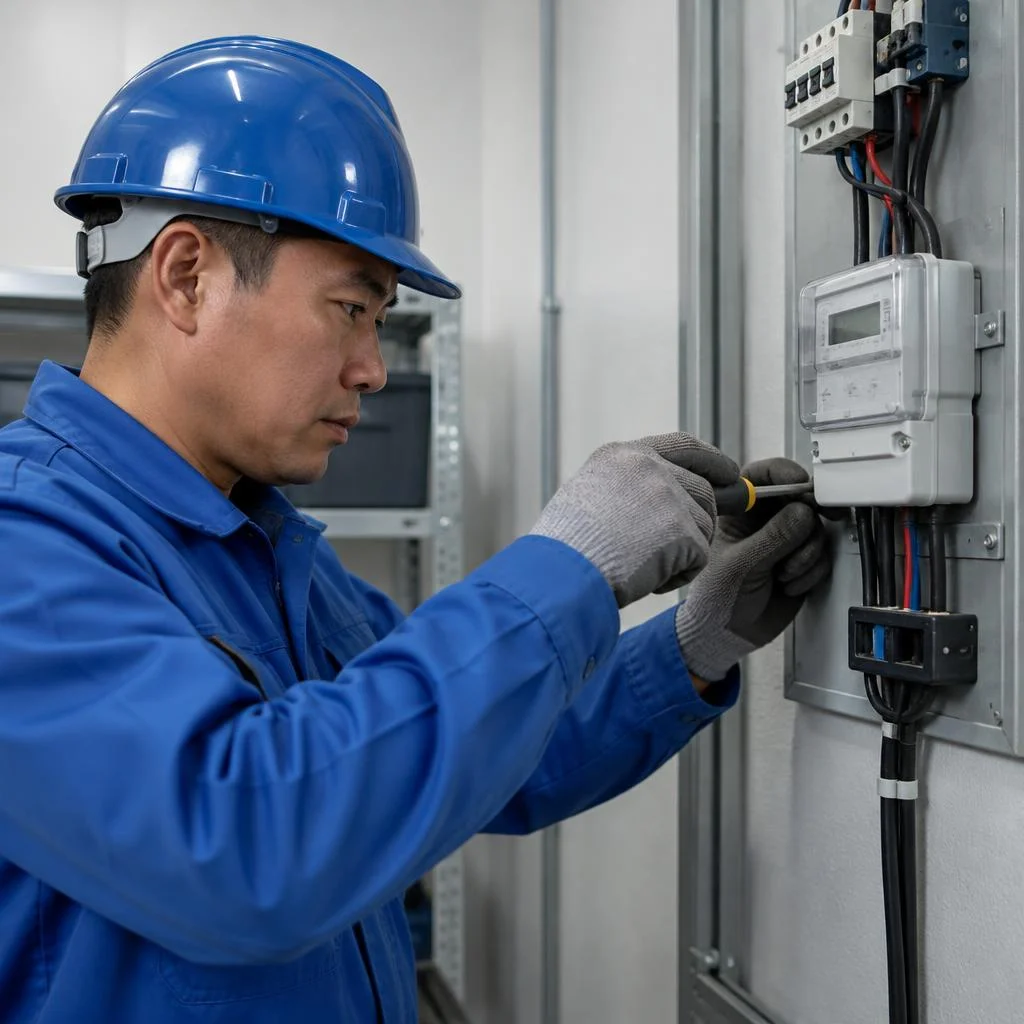
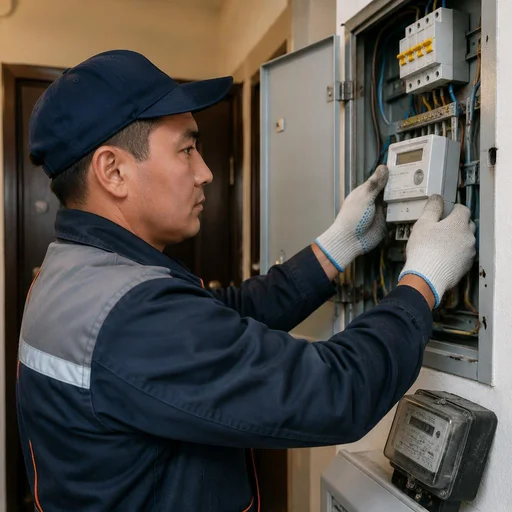
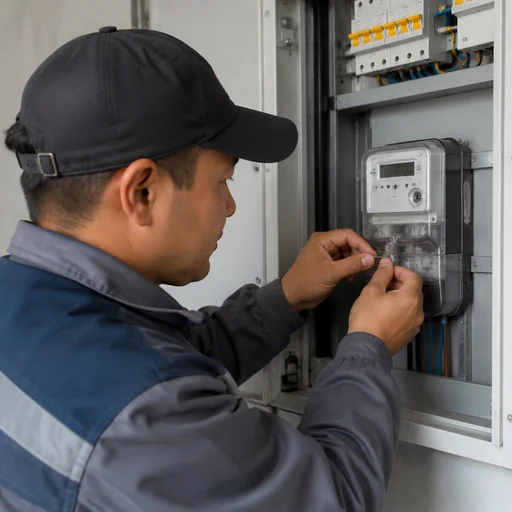
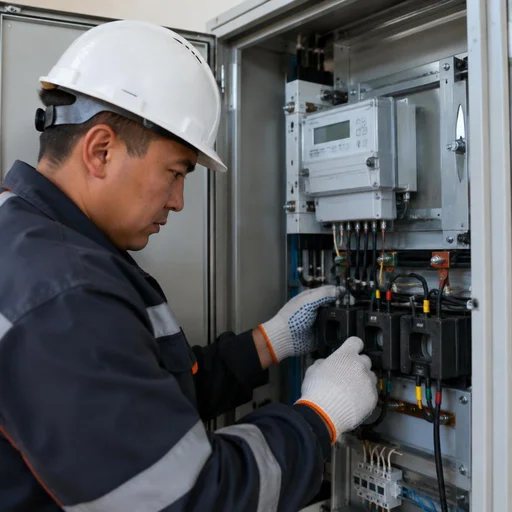
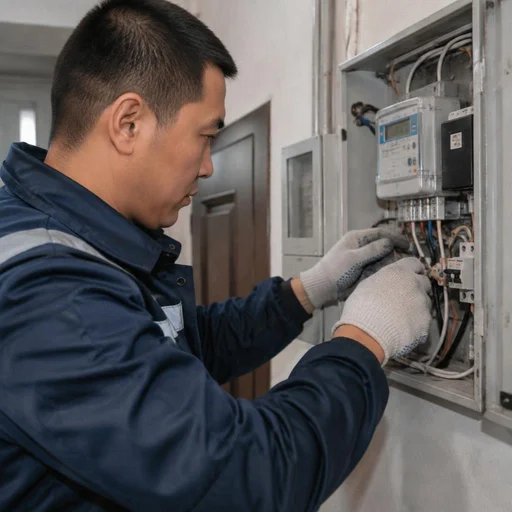
- Dismantling the old meter: we remove the device, record the control readings, check the condition of the wire up to the meter and the input circuit breakers.
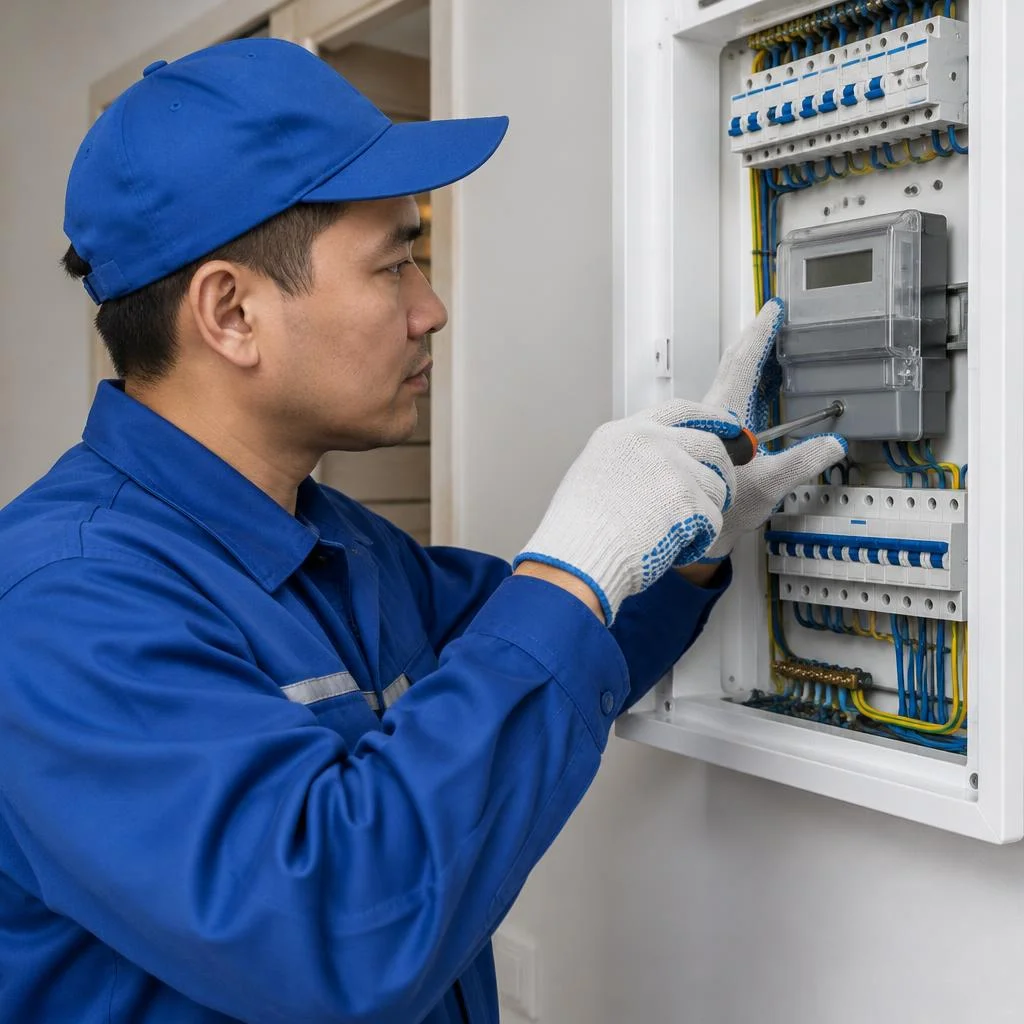
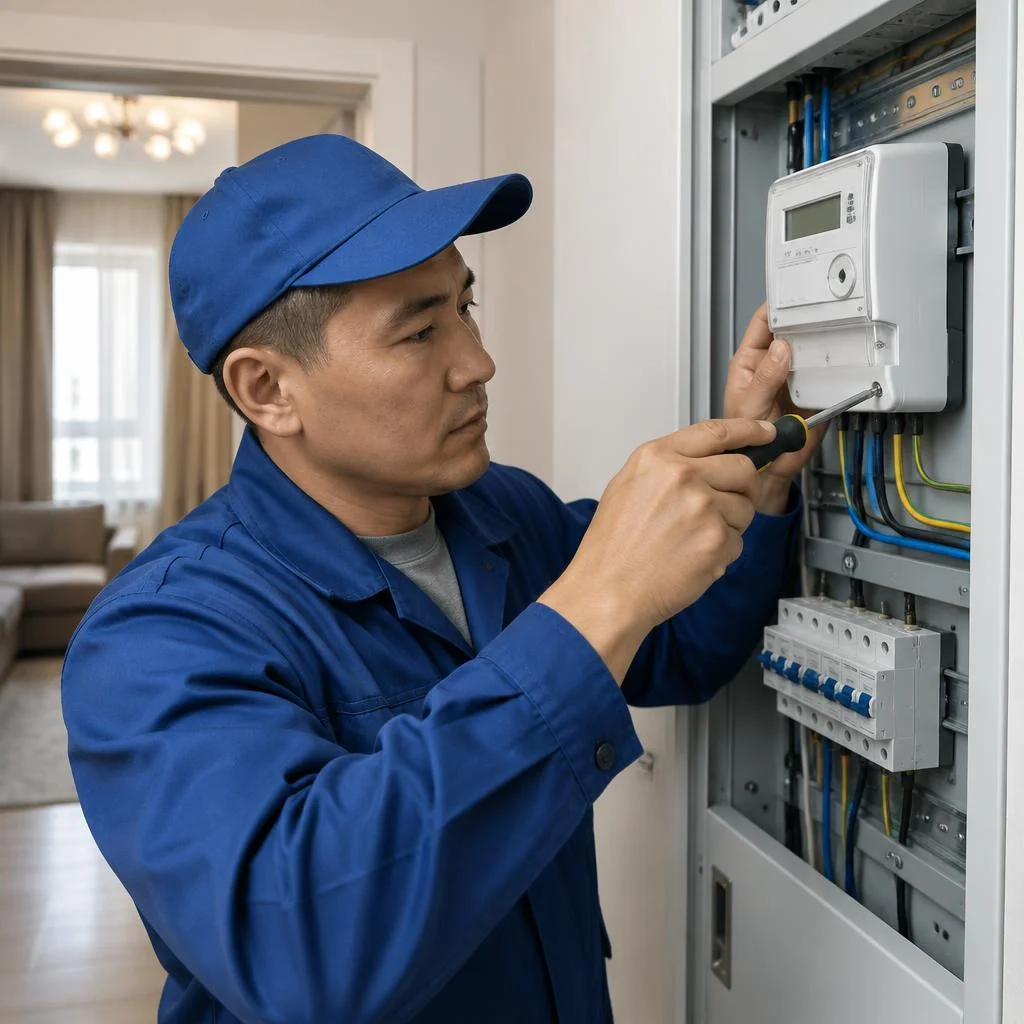
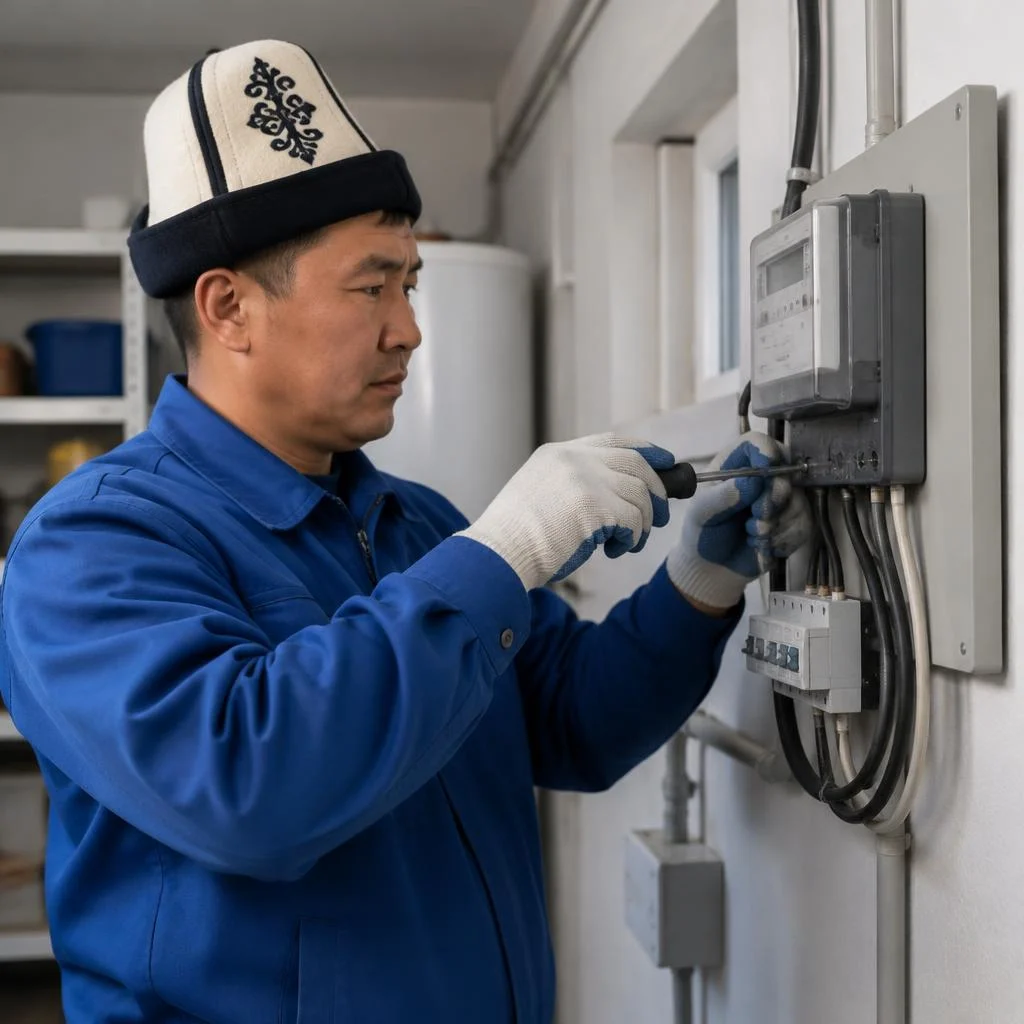
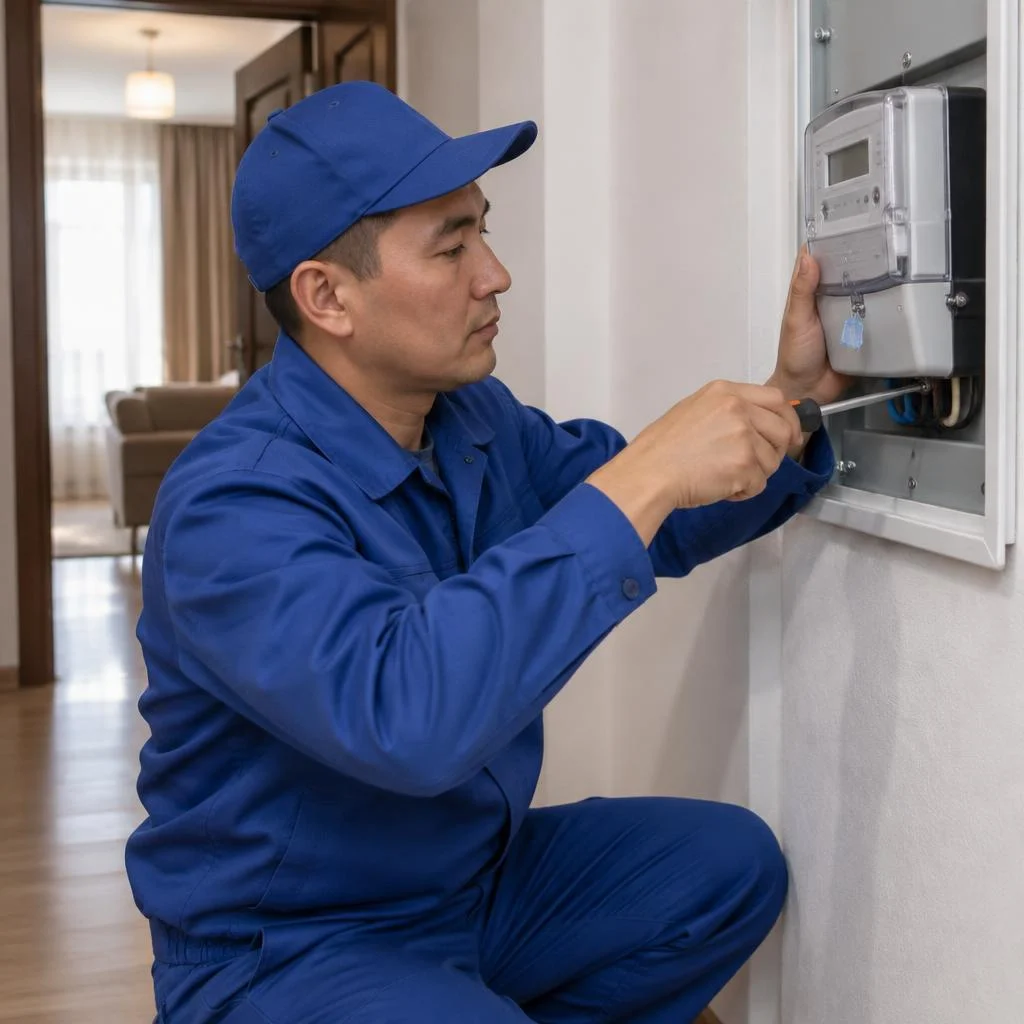
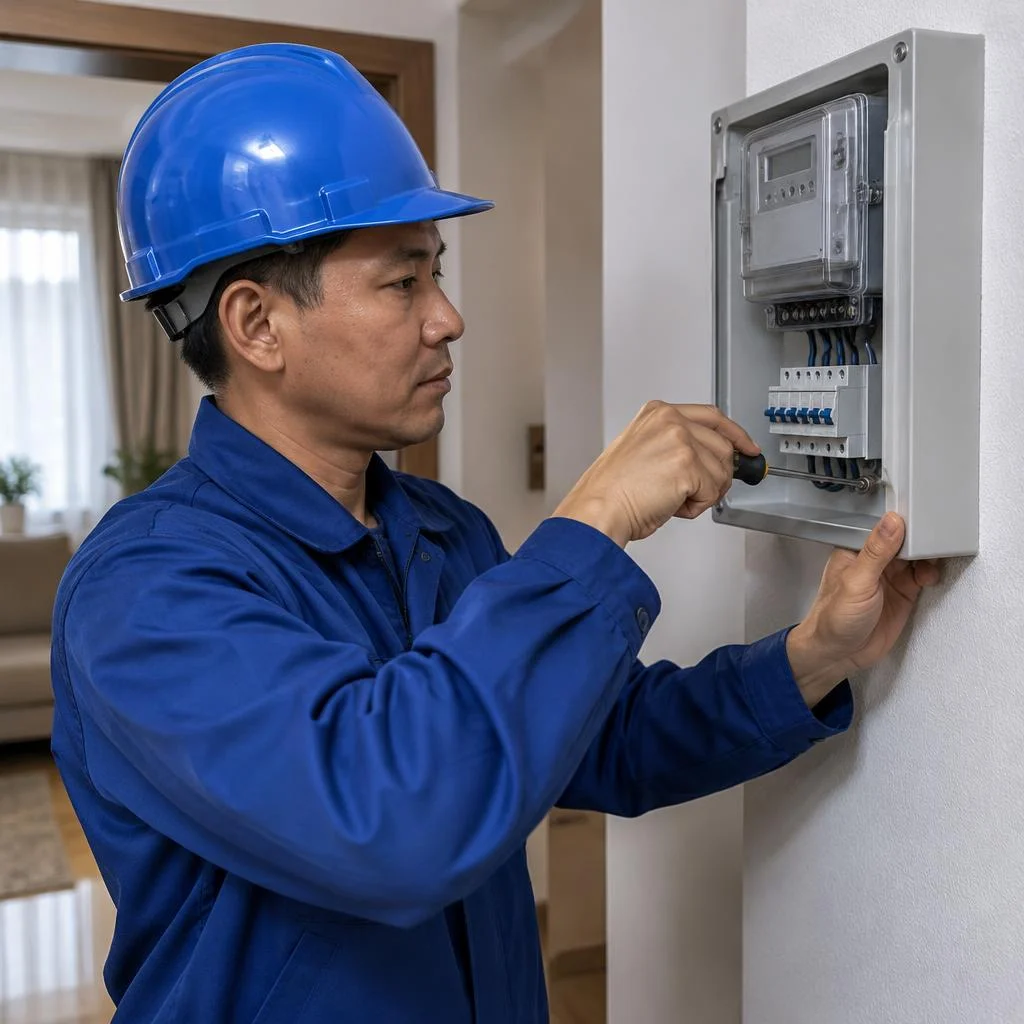
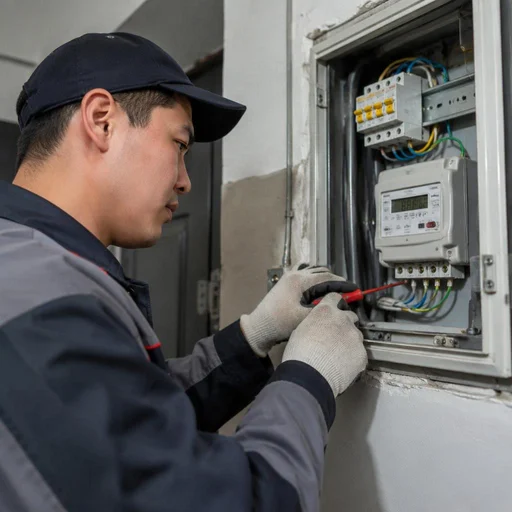
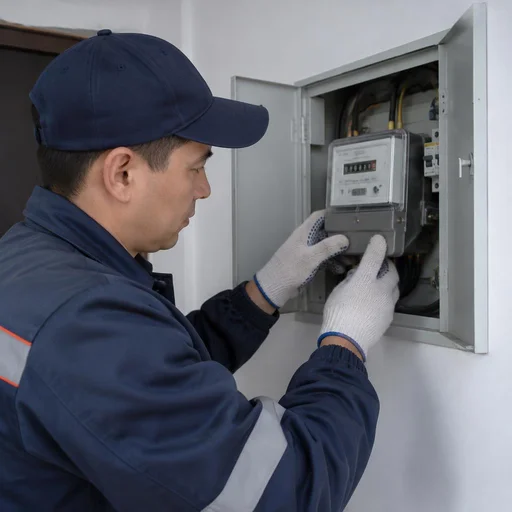
- Installing the new device: mounting the meter on a DIN rail in the panel, if necessary — installing a panel for the meter and replacing the wire up to the meter.
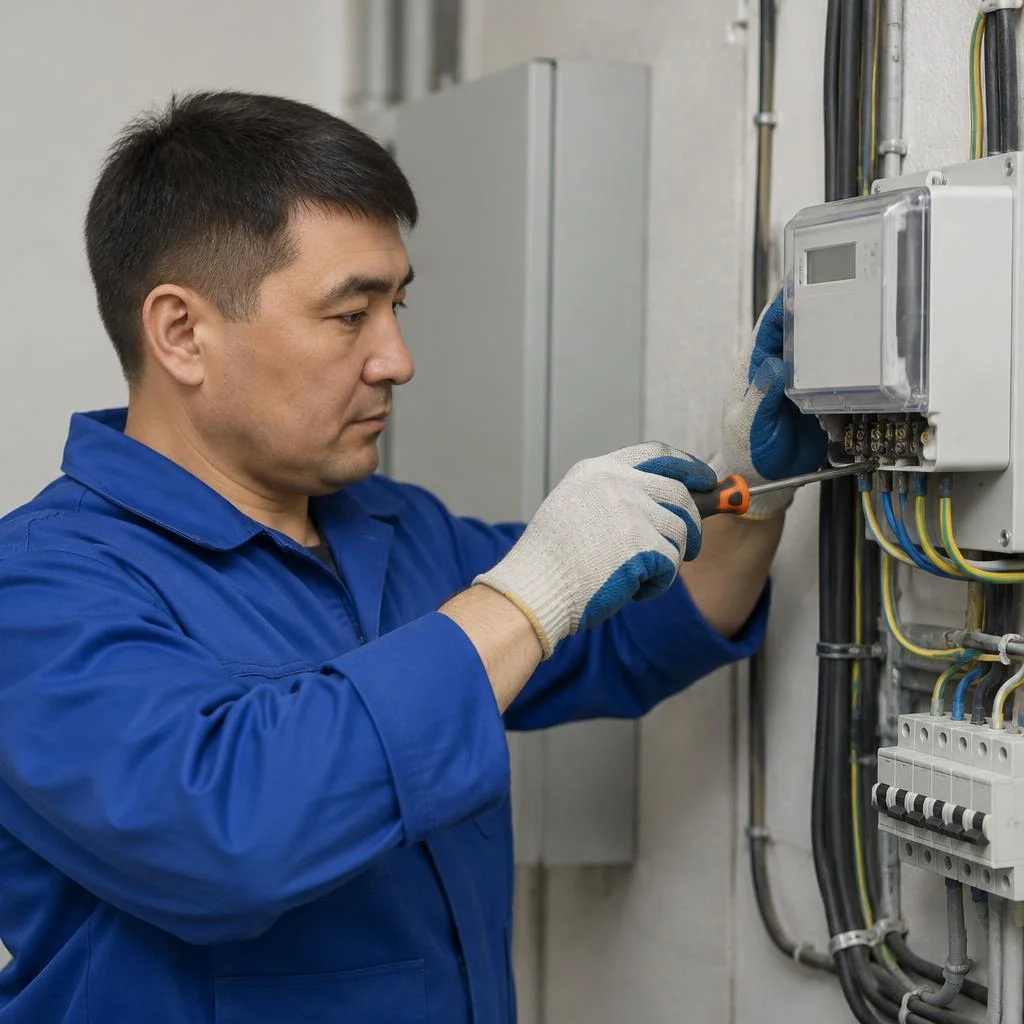
- Connecting the meter to the grid: phase, neutral and grounding are connected according to the diagram, then the metering circuit is checked under load.
- Preparation for sealing: the technician closes the terminal cover, marks the connection points and hands the site over to the energy company's inspector.
How long the replacement takes and what the timelines depend on
A standard installation of a single-phase meter at Eco-Service takes 1-2 hours on site, a three-phase one — up to 3 hours, while installing a device with a current transformer at a shop or small production facility stretches to 4-5 hours due to the installation of the measuring wiring. An urgent call-out for sparking or melted terminals is carried out on the day of the request if the request is received before 15:00. The deadline for acceptance of documents by Severelectro depends on the inspector's schedule: in Bishkek they arrive for sealing within 3-7 working days, in Osh and Jalal-Abad the wait can be up to two weeks. If the device is sparking or melted — do not wait for the scheduled acceptance: call the emergency crew, and arrange the act retroactively through the service center.
What documents are drawn up and what is needed for Severelectro
- Work completion act: confirms the list of operations — dismantling, installation, connection and checking of the metering circuit.
- Connection diagram: a single-line diagram indicating the ratings of the circuit breakers, wire cross-section and connection point.
- Device passport: the factory document with the number, accuracy class and date of manufacture — it is attached to the commissioning act.
- Owner's application: submitted to Severelectro together with the package for registering the device.
- Copy of the payment receipt: confirms that payments for the site are settled at the time of acceptance.
- In a new building, the developer submits the application for sealing immediately after the building is commissioned.
- In the request, indicate the number of phases and the presence of a current transformer — the scope of work depends on this.
Electricity meter replacement in Bishkek: properties and special cases
We work not only with apartments: private houses, garages, shops and facilities with current transformers. We explain the nuances of each scenario.
Meter in an apartment and a private house: what's the difference
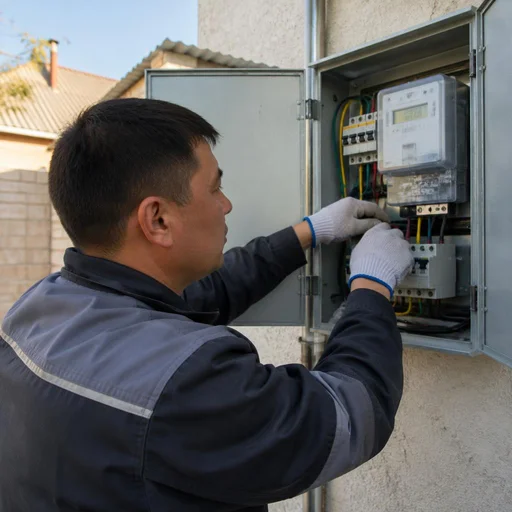
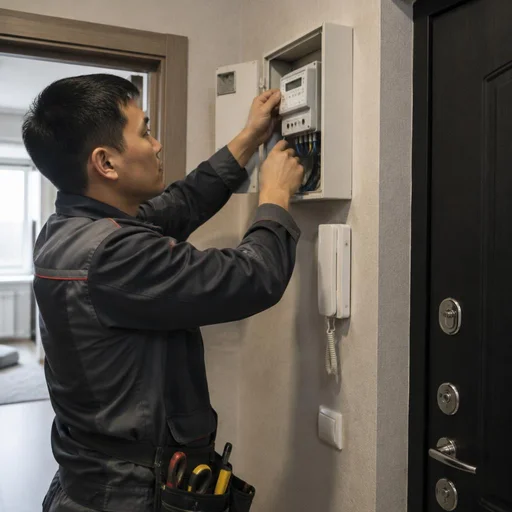
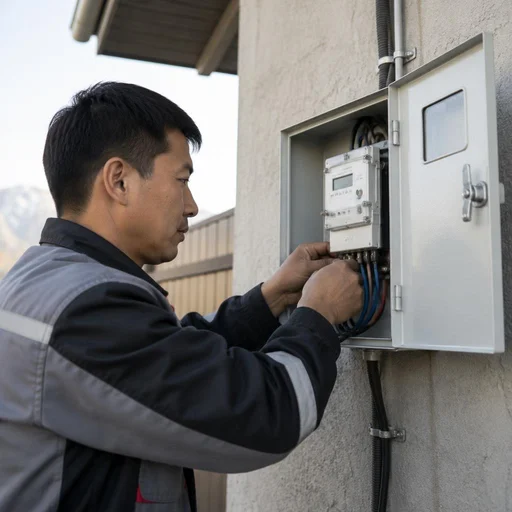
Eco-Service performs installation of the device in an apartment and in a private house: in an apartment it is usually located on the stairwell or in the panel, in a house — at the service entrance with the option of relocating it to a heated room. In multi-story buildings on Toktogul, Kievskaya, Zhibek-Zholu streets, the device is more often mounted on a DIN rail in the common floor panel, and access to it is coordinated with the management company. In the private sector — the Kok-Zhar, Ak-Orgo, Kara-Zhygach areas — the meter hangs on the facade or on a pole, and the wire to it runs through the air and suffers from wind and precipitation. In an apartment, installation of a single-phase device takes about an hour, in a house — from an hour and a half, if relocation inside and installation of a panel are required. In a private house, relocate the device indoors before the start of the heating season — in winter the plastic housing outside cracks from temperature changes.
Meter with a current transformer: for shops and production facilities
Eco-Service replaces meters with current transformers at facilities with a load above 100 A — shops, service stations, small production facilities where direct metering through the device is impossible. In commercial metering, the current from the power line passes through a current transformer, which steps it down to a measurable value, and the device itself is located away from the power cables. In shops in the areas of the Osh market, Dordoy, the East bus station, three-phase assemblies with two or three transformers are more common, and before work we check the metering scheme as a whole: markings, polarity, integrity of the seals on the terminal blocks. The work takes up to three hours, because the assembly is completely de-energized, and the price of replacing an electricity meter in such an assembly depends on the number of transformers and the condition of the secondary circuits. Current transformers require separate verification — if you are replacing the device, check the verification period of the transformers, otherwise the inspector will reject the entire metering assembly.
Emergency replacement: what to do if the meter is sparking or burned out
- Turn off the main circuit breaker: de-energize the line before the technician arrives — leaving a melted device under voltage is dangerous even with the appliances in the house turned off.
- Do not touch the terminals and seals: re-soldering the wires yourself or breaking the seal of the energy supply organization will result in a fine and recalculation.
- Photograph the condition: capture the housing, traces of burning, the readings and the seals — the photos will be useful when drawing up the report and in conversations with "Severelectro".
- Call and request a technician: in case of sparking, smell of burning or melting of the housing, an urgent visit is arranged on the day of the request.
- Prepare the documents: passport, technical passport for the property and the latest payment receipt — this will speed up the processing of the work.
2-year warranty, service center and acceptance of work
The installed meter must withstand an inspector's check and years of operation. We break down what the 2-year warranty covers, how the service center works, and by what signs to choose a reputable contractor.
What the 2-year warranty on meter replacement covers
- Covered — installation and connection: the 2-year warranty covers the installation of the device, the connection diagram, the tightening of the terminal block and the mounting on the DIN rail.
- Covered — connection defect: if after a month or a year the contact loosens or the terminal melts due to an installation error, the technician will come and fix the fault free of charge.
- Covered — relocation and wire replacement: work on relocating the device and replacing the wire leading to it is also included in the warranty period.
- Not covered — voltage surge: failure of the device itself due to an accident in the grid or a lightning impulse is not a warranty case for the installer.
- Not covered — mechanical damage: a broken glass, a torn seal or traces of unauthorized tampering void the warranty.
- What to keep: the device's passport and the certificate of completed work — they are used to process a warranty case and a claim to the manufacturer.
Own service center in Bishkek: in-person intake and diagnostics
In Bishkek, there is an own service center Eco-Service with in-person intake, where you can bring the device for diagnostics or verification. Meters are accepted on weekdays, the technician inspects the device on the day of contact and states the cause of the fault before work begins. The in-person format is convenient when the device has already been removed: bring the meter with its passport — a specialist will check the accuracy class, the condition of the terminals and give a conclusion before installing the new one. If the technician travels to the site, on-site diagnostics takes 15-20 minutes, after which the scope of work is stated. In search, clients often type "electric meter replacement Bishkek" — and land right here, so the in-person intake also covers this scenario: first bring the removed device to the center, get a conclusion the same day and immediately select a model for your load. Electric meter replacement is a query entered both by those who have already removed the device and by those who are only planning the work: at the center they will tell you which accuracy class is needed for your load and how the sealing will proceed.
How to check a contractor before ordering: 5 signs of a reliable technician
- States the type of device before the visit: clarifies whether the meter is single-phase or three-phase, the presence of a current transformer and the model — without this, no calculation is possible.
- Draws up a certificate of completed work: a document listing the operations, the date and a signature — the basis for the warranty and claims.
- Works with sealing through "Severelectro": knows the procedure for submitting a request for a seal and does not offer to "sort things out" bypassing the power supply organization.
- Gives a warranty on installation: states a specific period for the work, rather than getting off with the phrase "everything will be fine".
- Has a physical address and reviews: the service center or workshop can be visited, and the reviews can be checked in 2GIS and Google Maps.
How to order an electricity meter replacement in Bishkek from Eco-Service
Requests for meter replacement are accepted through the service center, by phone, and via messengers. We explain how the service call is arranged and what payment methods are available to the client.
How to submit a request: service center, phone, messengers
- Eco-Service service center: in-person reception — here they will agree on the visit date and determine which device is needed for your incoming line.
- Phone: the dispatcher clarifies the address, type of incoming line, and number of phases, then assigns a technician to a specific time, not "sometime during the day."
- Telegram and Instagram: convenient for sending a photo of the panel and the old meter — from the image, a specialist can determine in advance whether relocation or wire replacement is needed.
- Lalafo: some listings are posted by private technicians — you can see reviews there, but confirm timelines and warranty separately.
Payment methods: cash, MBANK, O!Dengi
Payment for meter replacement is accepted in cash at the site, by transfer via MBANK or O!Dengi — the receipt and work completion certificate are issued immediately after the work. Cash is used when the technician has already installed and sealed the device on site. A transfer via MBANK takes a couple of minutes: the client scans a QR code or enters a number, and confirmation arrives in the app. O!Dengi is more often used for urgent visits when the site is far from the center. In search, clients often type a short query — and land on our page, where it's immediately clear how to arrange a call and which payment method is more convenient. No terminal is brought for direct card payment — this is worth keeping in mind if you were planning to pay by card. Keep the payment receipt together with the certificate: for a warranty claim after 1-2 years, it is the receipt that confirms the date and the fact that the work was performed.
Conclusion
We've gathered the main things to keep in mind before contacting a technician: when a device is subject to mandatory replacement, how to choose the type, and why acceptance is a separate stage.
Key takeaways
- Verification deadlines: electricity meter replacement is mandatory when the verification interval expires, the casing is mechanically damaged, or the seal is broken — delay risks being charged by the standard rate rather than by actual consumption.
- Device type: a single-phase meter is suitable for a standard apartment with a 220 V incoming cable; a three-phase meter is for a house or facility with a heavy load and a 380 V incoming line.
- Two stages: installation and sealing are separate — the seal is applied only by an inspector from the energy supply organization after inspecting and checking the metering scheme.
- Documents: the work completion certificate and the device passport are mandatory for registering the meter; without them, readings will not be accepted for billing.
- Warranty and paperwork: the warranty period for installation is at least 2 years, and the contractor must handle the paperwork rather than limit themselves to verbal assurances.