
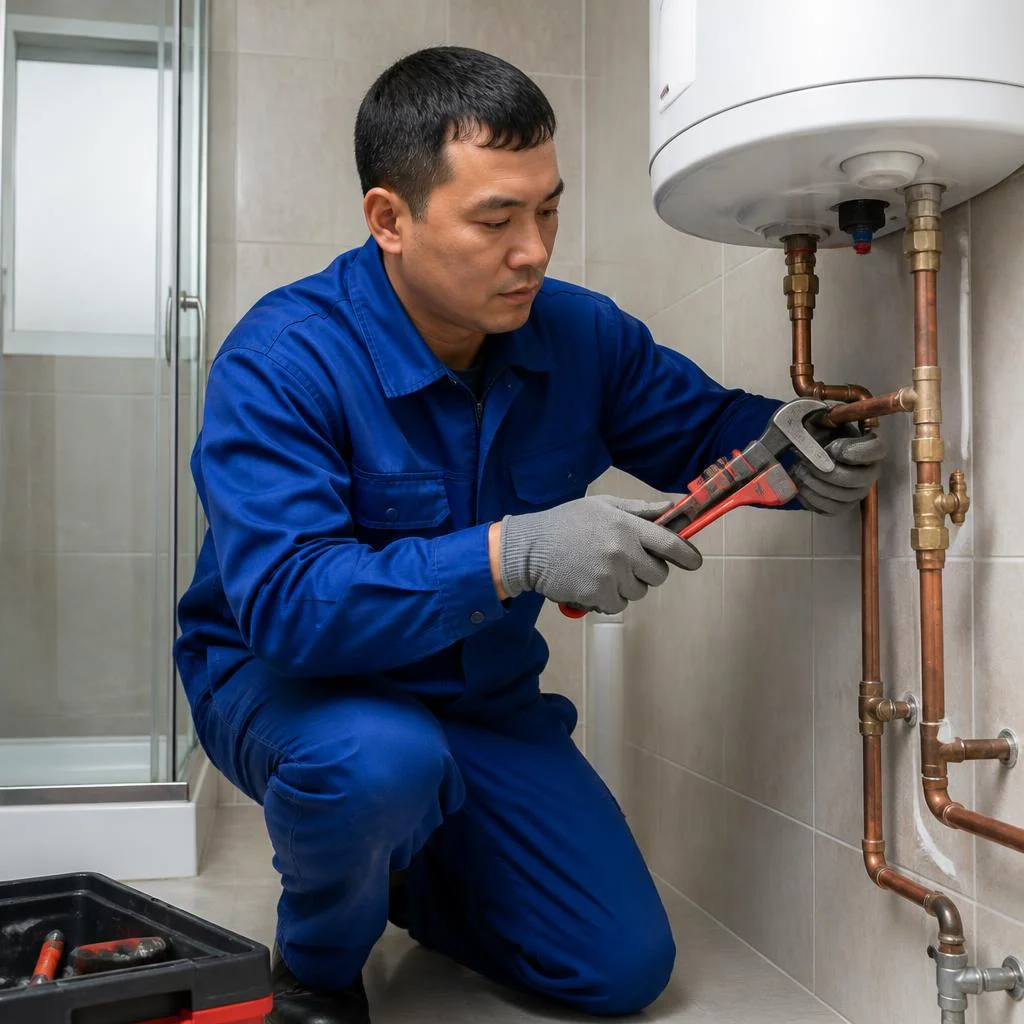
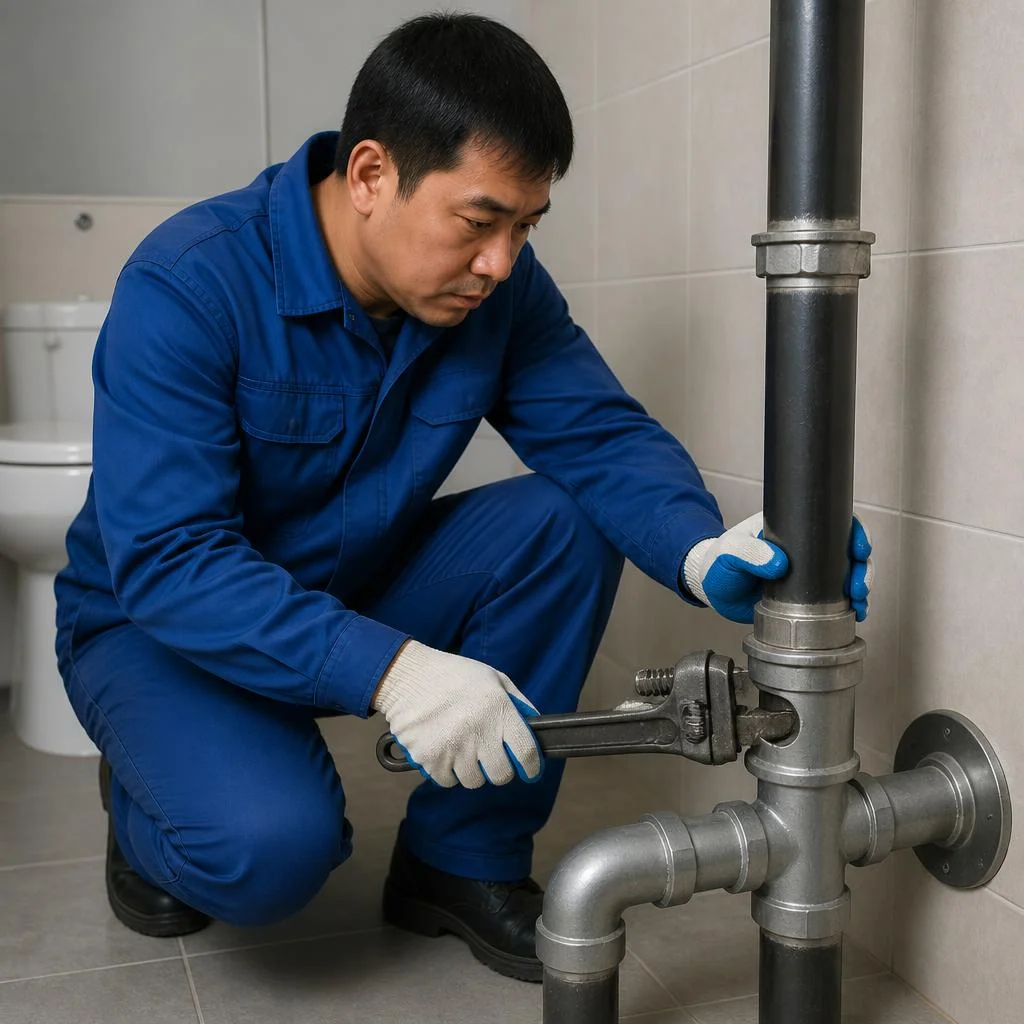
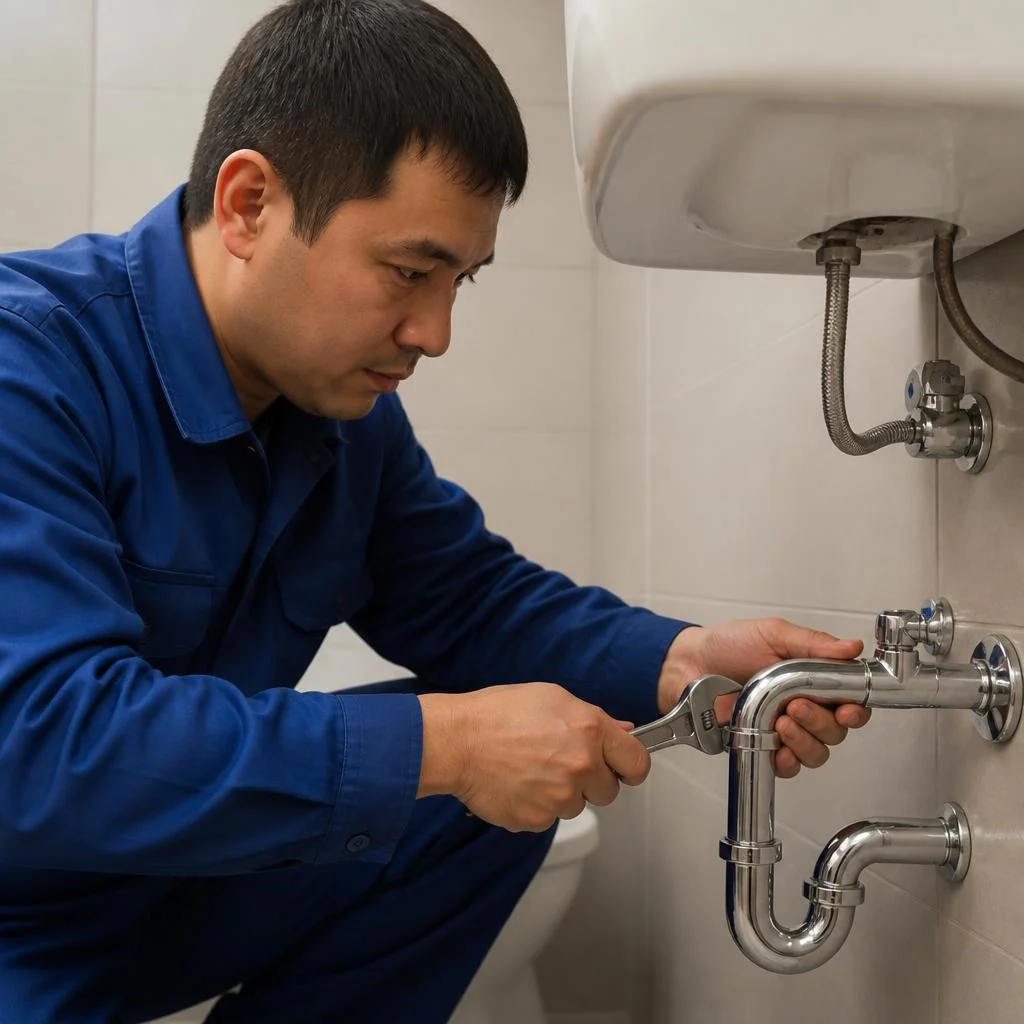
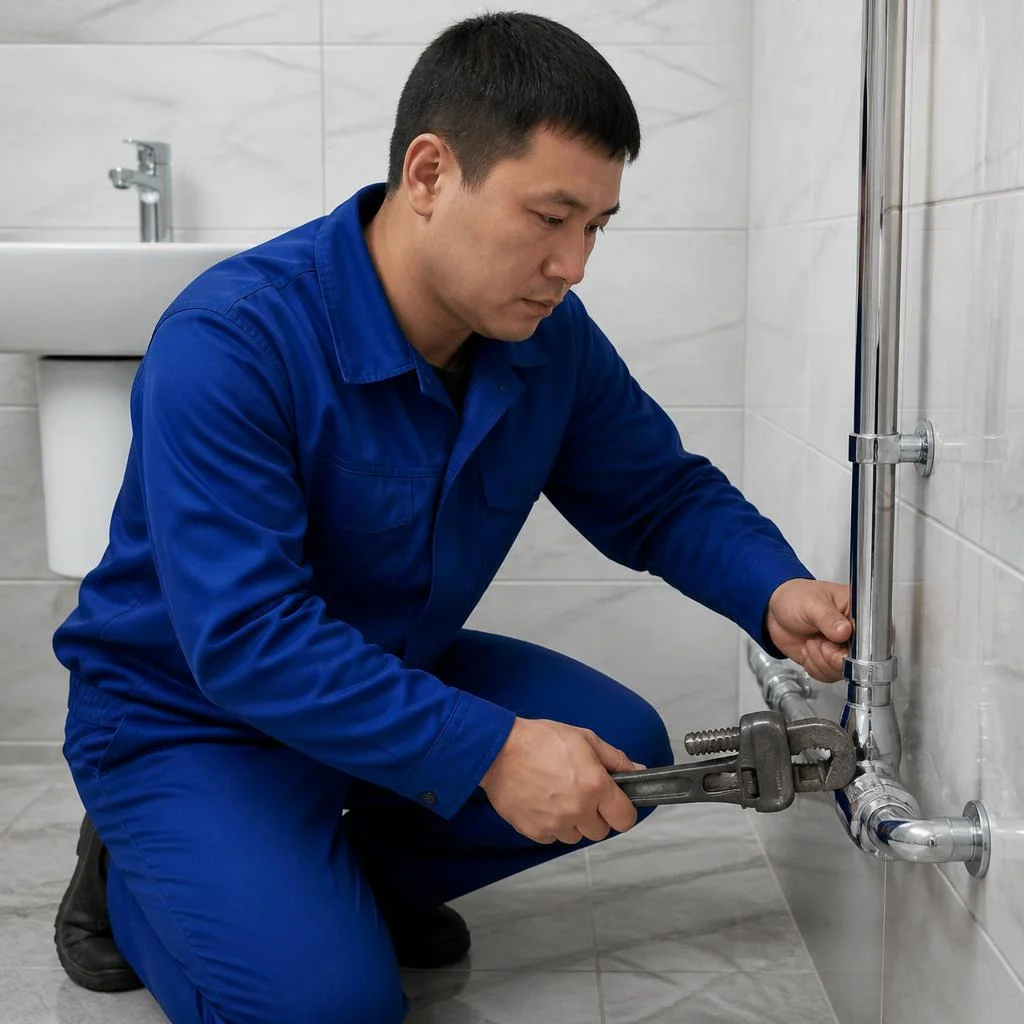








When it's time to replace pipes: signs of wear and features of Bishkek's old housing stock
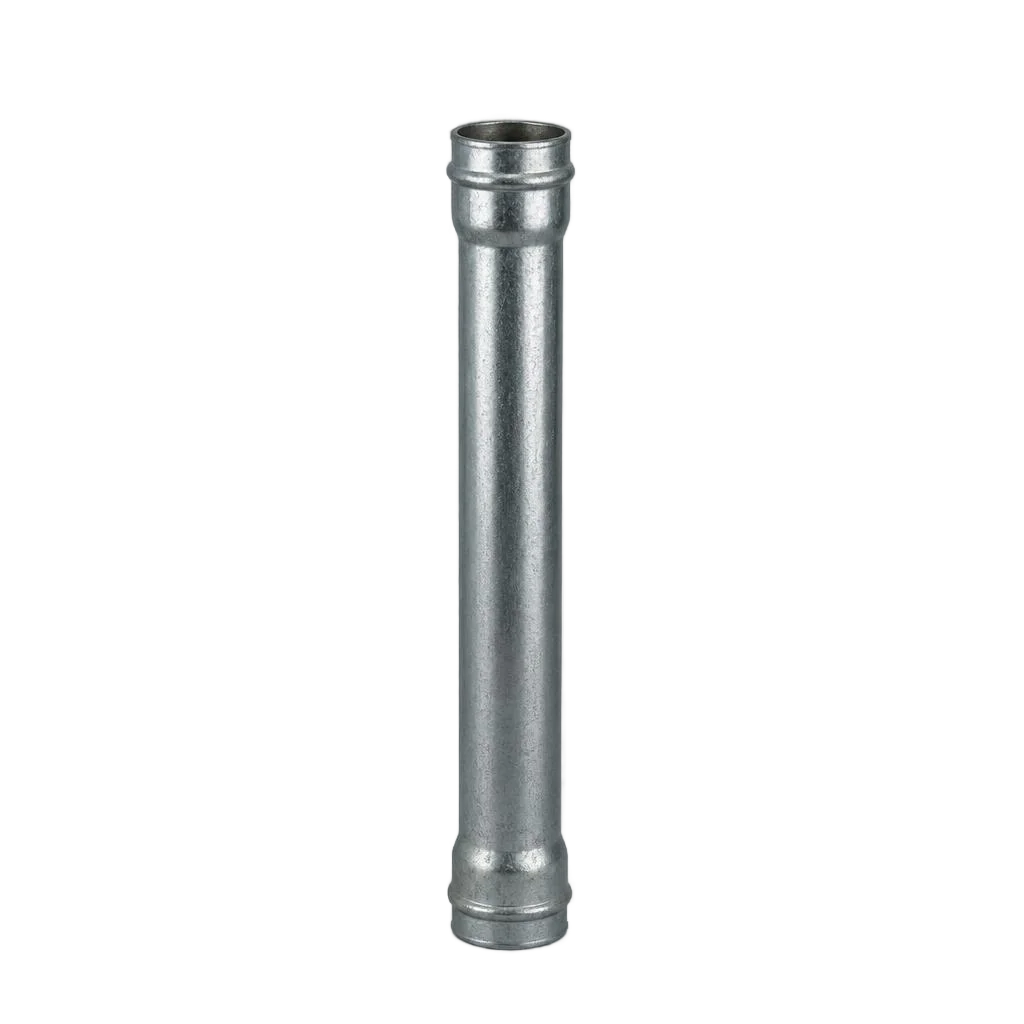
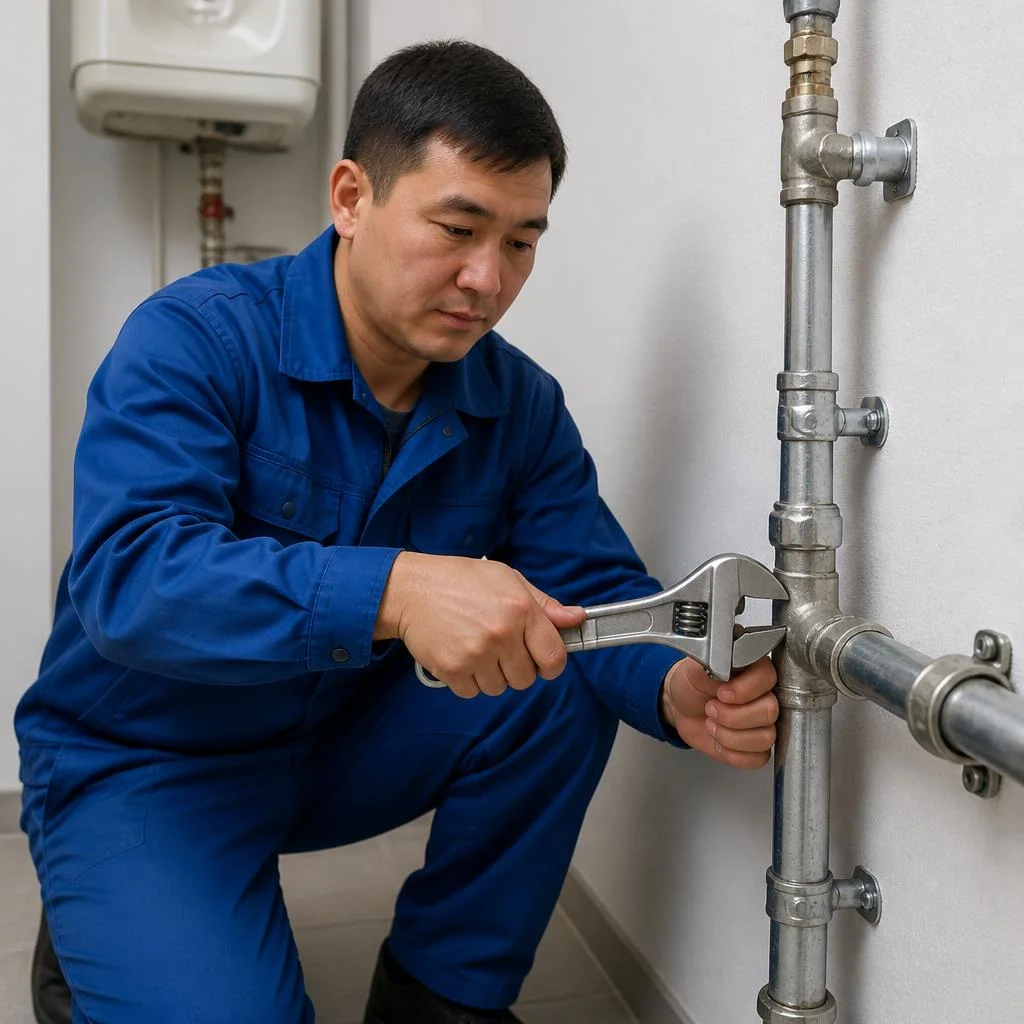
Steel risers in buildings in the central part of Bishkek last longer than their rated service life only on paper. Below are the signals that it's time to plan a replacement, and why the local water brings that moment closer.
Signs that pipes need replacing, not repairing
- Constant leaks at joints: if welded seams and threaded connections leak repeatedly, spot wrapping only works for a matter of weeks.
- Rusty water in the morning: a brownish tint from the hot tap after standing overnight indicates internal corrosion of the metal — flushing won't help here.
- Drop in pressure: a weak flow on the second or third floor with normal mains pressure points to the bore becoming overgrown from the inside.
- Blistering paint on the wall: bulging around the riser is a sign of a hidden leak that only becomes visible once the section is opened up.
- Pinholes and clamps: every new clamp on the same run is a signal that replacing the pipe section is cheaper than another emergency call-out.
How water quality affects pipe service life
Hard water with a high salt content accelerates the internal overgrowth of steel pipes — the bore narrows within 8-12 years of active use. Bishkek's water from open sources carries suspended solids and carbonates that settle on the walls, and together with oxygen they set off corrosion: the welded joints suffer first, then the thin sections after bends. The old housing stock in the square "Zhibek-Zholu — Chuy — Abdrakhmanova" (Stalin-era buildings, khrushchyovkas, buildings from the first mass series) often still has cast-iron runs and steel risers that haven't been replaced since they were commissioned. In residents' requests this is most often put briefly — pipe replacement, and the technician already understands that it's about the riser, not cosmetic wrapping. At the first serious repair, it's worth checking the entire riser, not just your own apartment: a single pipe replacement against the backdrop of worn neighbouring ones leads to a leak at the neighbours one floor up within the very first season. Work on the riser is agreed with the building management and neighbours in advance — otherwise it gets stopped at the tie-in stage.
How often to replace pipes in an apartment
| Material | Service life | Specifics in Bishkek |
|---|---|---|
| Steel | 15-20 years | Becomes overgrown within 8-12 years due to hard water |
| Polypropylene | up to 30 years | Withstands pressure in khrushchyovka risers |
| Metal-plastic | 20-25 years | Requires a protective sleeve in the screed |
| Copper | 50+ years | Justified with correct welding and pressure testing |
The real service life is set not by the product's data sheet but by the pressure in the system and the water quality: in Bishkek the interval between repairs for steel is often cut by a third compared with the standard. If you're planning a major bathroom renovation, include replacing the pipework in the same stage — opening up the tiles a second time costs more than doing everything in one go.
Which pipes to choose: comparison of materials for water supply and heating
The material is selected for a specific task: pressurized water, heating, or gravity sewerage. Below is a comparison of polypropylene, metal-plastic, copper, and PVC by service life, installation, and behavior in Bishkek conditions.
Polypropylene, metal-plastic, or copper: what suits an apartment
| Material | Where we use it | Service life | Feature |
|---|---|---|---|
| Polypropylene | Cold and hot water supply, risers | 25-30 years | Welded joints, non-detachable |
| Metal-plastic | Heating, underfloor heating | 20-25 years | Flexible, requires press fittings |
| Copper | Hot water supply, autonomous heating | 40-50 years | Does not connect directly with galvanized steel |
| Cross-linked polyethylene | Heating, radiators | 30-40 years | Withstands high temperature and pressure |
Eco-Service most often installs polypropylene for water supply and metal-plastic for heating — this is a balance of price, service life, and repairability for Bishkek apartments. Copper is chosen where durability matters and there is no aggressive water, but it cannot be connected directly with galvanized steel — a dielectric insert is needed.
Which pipes are better for water supply in Bishkek
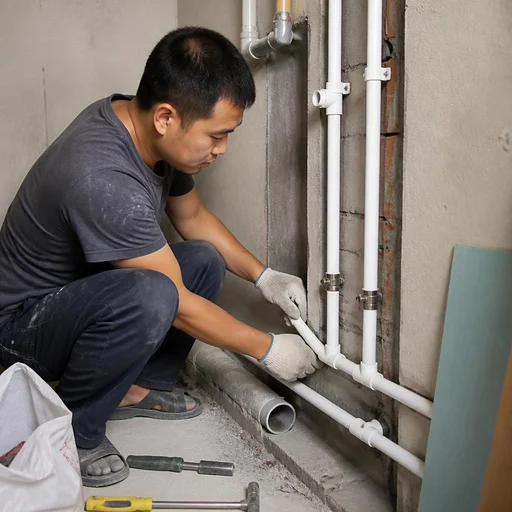
For cold and hot water supply, we recommend reinforced polypropylene — it is not afraid of hard water and withstands pressure in multi-story buildings. In new buildings on the upper floors, the pressure drops more noticeably during the evening peak than in the center, so the wall thickness is taken no less than 3.4 mm, and on risers — with external reinforcement. Metal-plastic for hot water supply lasts less due to delamination of the layers during frequent temperature fluctuations, and copper in old housing stock conflicts with galvanized sections. Fiberglass reinforcement reduces linear expansion when heated — the pipe does not "warp" and does not sag between fastenings. Clients often formulate the request briefly — pipe replacement in Bishkek — and behind this lies diagnostics of the riser: whether it is possible to get by with distribution inside the apartment depends on its condition.
What to choose for heating and sewerage
- Heating — metal-plastic or cross-linked polyethylene: both withstand 90-95 °C, but PEX is more reliable in systems with frequent water hammer and high pressure.
- Sewerage — PVC and polypropylene: socket connections are installed faster than welded ones, and rubber seals compensate for thermal expansion.
- Diameter is more important than material: narrowing by 10 mm creates a noticeable risk of blockage at turns, especially in old buildings with cast-iron horizontal runs.
- Replacement of the sewerage horizontal run: in panel series, cast iron is replaced with PVC Ø110 mm with a slope of 2 cm per linear meter.
- Replacement of heating pipes: for distribution in an apartment, PEX in corrugation is more often used, so it can be hidden in the screed without joints under the floor.
Pipe replacement in an apartment: by rooms and zones
The bathroom, toilet, kitchen and riser differ in the scope of work and the risks to the finishes: in some places the pipe is run exposed, in others the tiles have to be opened up, and in the riser coordination with neighbors is added.
Work in the bathroom and toilet: what to consider
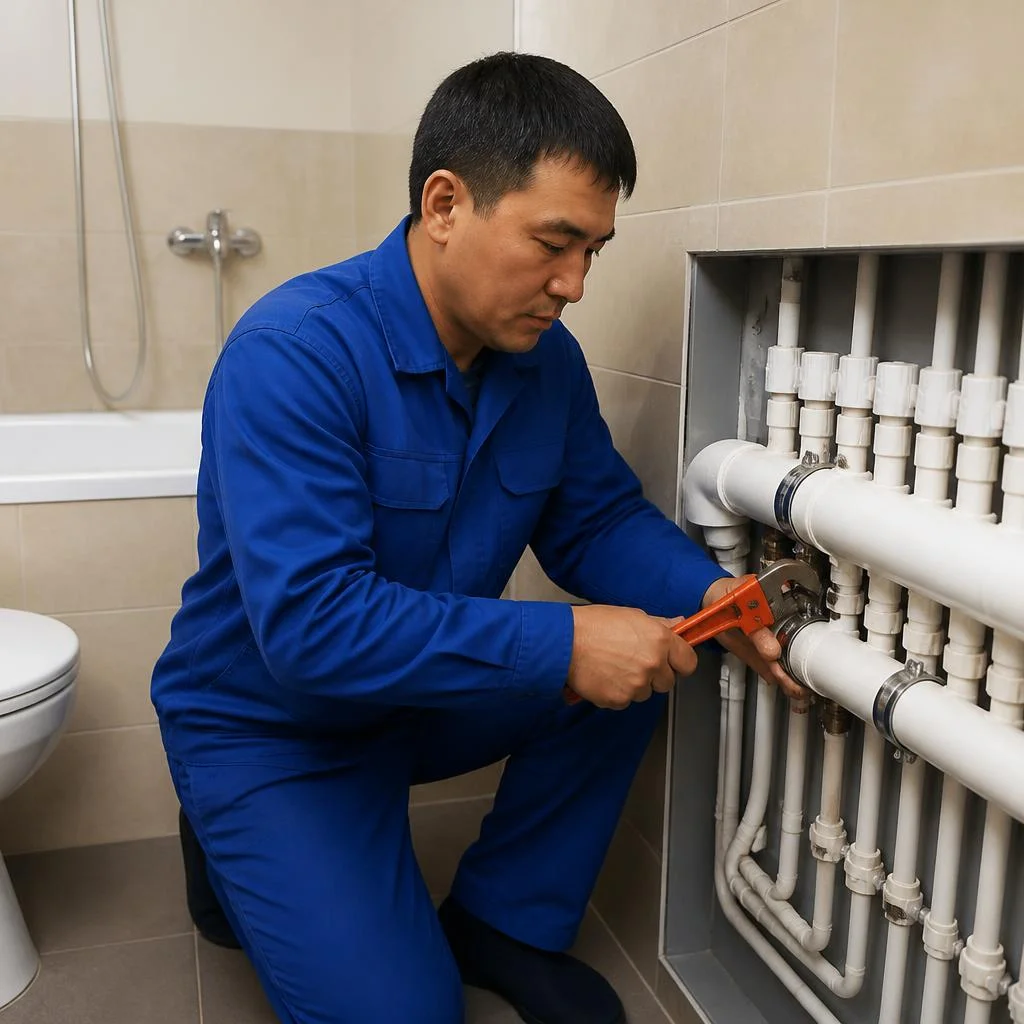
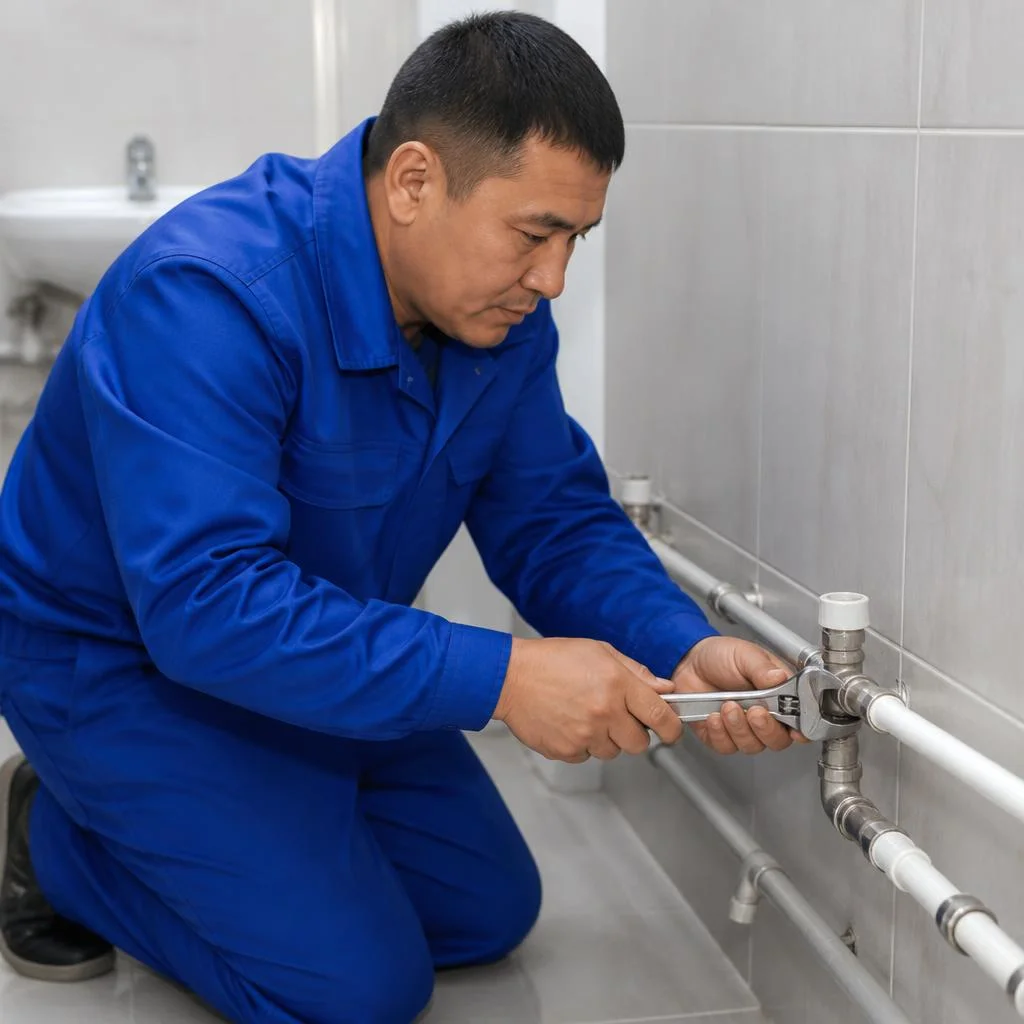
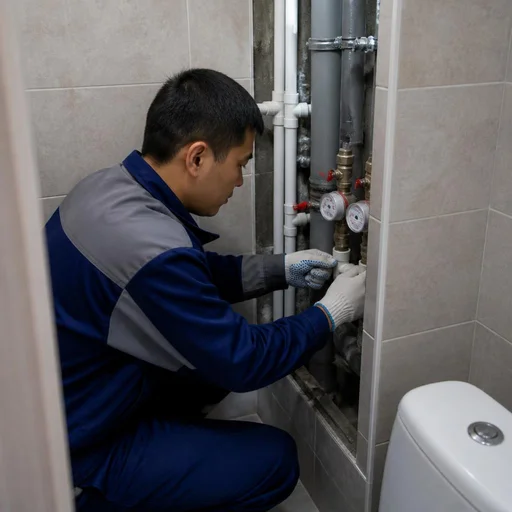
The cost and outcome for the bathroom depend on whether we preserve the tiles or open up the walls — and in most apartments Eco-Service runs pipes exposed in a box or along the wall, without chasing load-bearing walls. Exposed routing takes up 15-20 cm along the perimeter, but it doesn't touch the tiles and doesn't require dismantling the box with an inspection hatch. If the old pipes are walled into a chase under the tiles, we open up only the vertical section from the riser to the distribution, not the entire wall: this preserves 70-80% of the finishes. Clients often find us with the query "pipe replacement in an apartment price Bishkek" — and from it it's immediately clear that the person needs both the scope of work and the calculation procedure. Another frequent query is bathroom pipe replacement cost: this is how those who have already decided on the room and want to understand the order of figures search. We calculate the cost of work in the bathroom after an inspection — it is affected by the number of connection points (mixer, washing machine, towel warmer) and the wall material. If the tiles are nevertheless dismantled, check the waterproofing of the shower tray right away — opening up the floor exposes weak spots that are more expensive to redo later.
Work in the kitchen and connections to appliances
- Riser branches and distribution: in most Bishkek apartments they run along the wall behind the kitchen units, and opening up the cabinets is not required.
- Flexible connections: the rubber braid to the mixer, dishwasher and washing machine is the most frequent leak point in an apartment.
- Shut-off valve: the ball valve at the kitchen inlet is replaced together with the connection so as not to return to the same point six months later.
- Checking connections: after assembly, the kitchen unit is held under pressure and all threaded joints are checked for dryness.
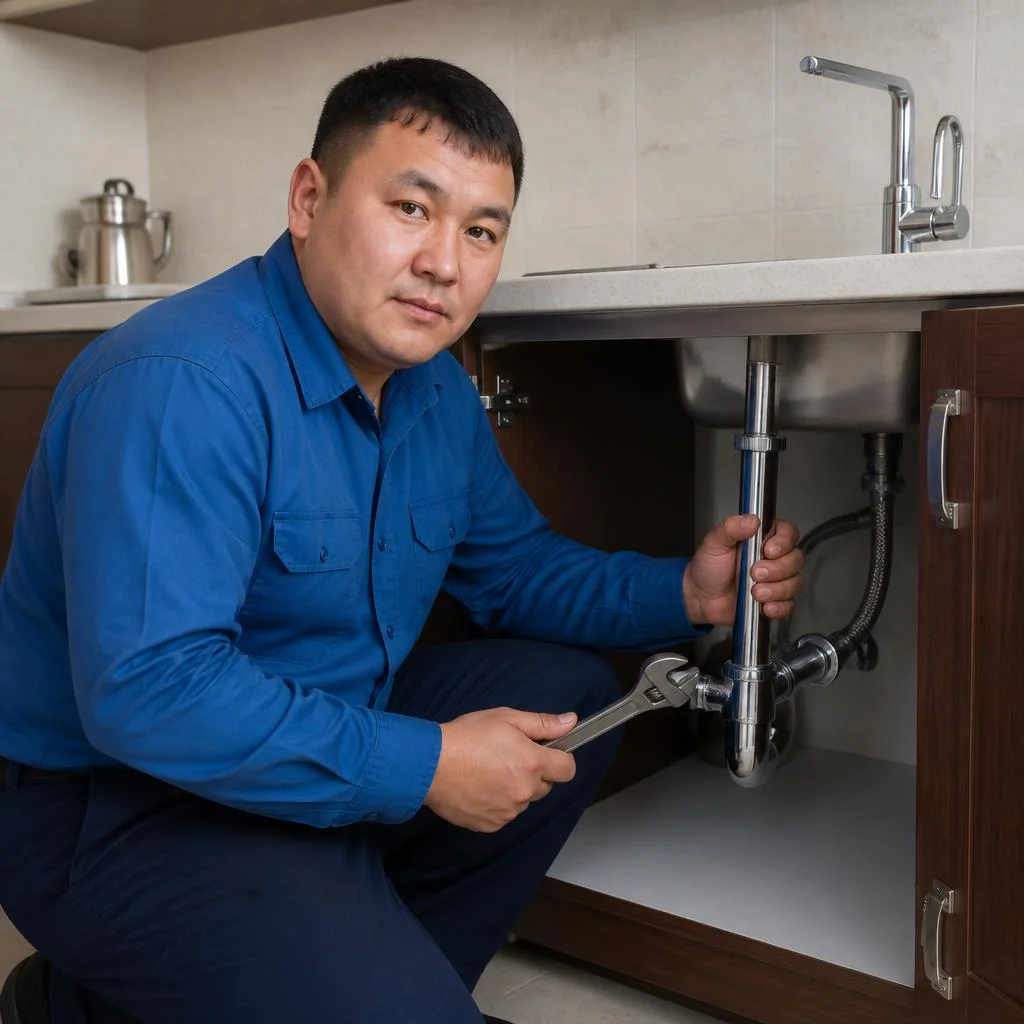
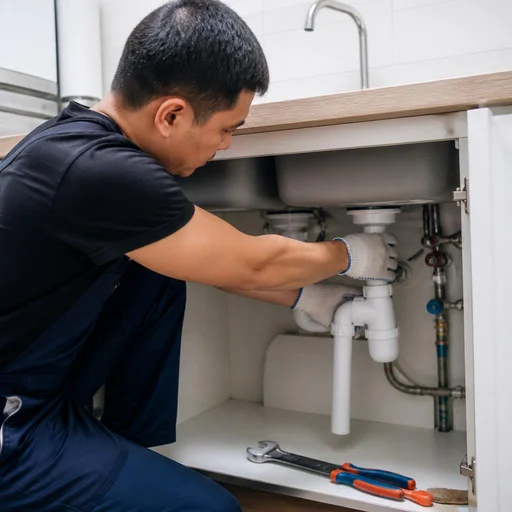
- Siphon inspection: the siphon and sink drain are checked at the same time — an old gasket causes a leak that is easy to mistake for the pipe.
Work in the riser: coordination and specifics
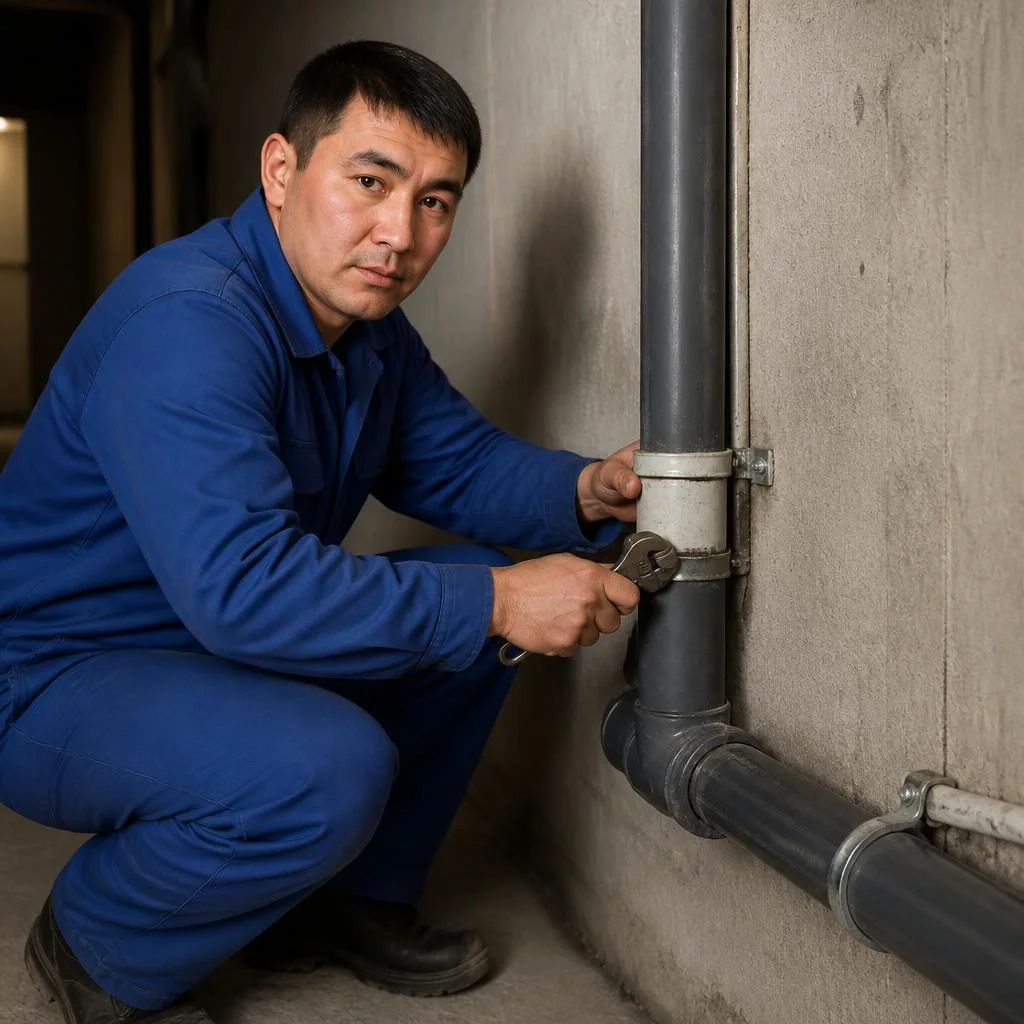
The price and timelines in an apartment building depend on coordination: the work affects the neighbors above and below, so notification and a water shut-off window are needed. Eco-Service helps with notifying residents and coordinating with the HOA or management company — usually this takes 2-4 days, while the installation itself along the riser is done in one go. In search, such work is most often found with the wording "riser pipe replacement price" — it accurately describes that the person needs a calculation for the vertical, not for a single room. The riser is replaced entirely from the top to the bottom floor: partial replacement in one apartment creates weak joints at the boundaries and provokes new leaks at the neighbors'. In Bishkek, cast-iron risers are most often replaced in buildings of series 1-464 and 1-335 — there the service life of cast iron expired long ago. The price for the riser is higher than for local distribution, but with partial replacement the total is still less than a repeat repair after a leak.
Replacing Heating and Water Supply Pipes: Seasonality and Preparation
Heating risers are more conveniently replaced in the off-season, when the system has cooled down, while water supply is overhauled year-round. Let's look at how the season affects the work schedule and why pressure testing is no less important than the installation itself.
Can pipes be replaced in winter
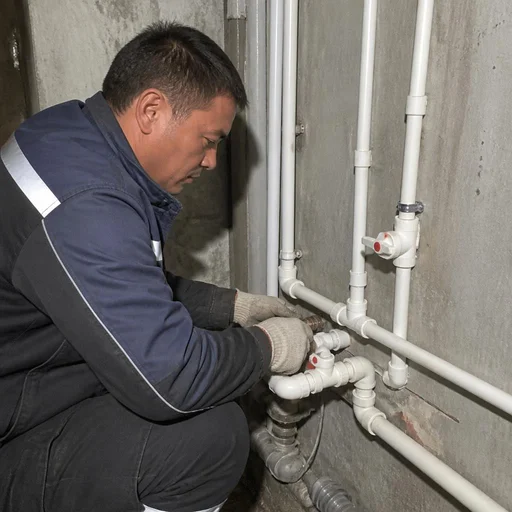
Heating installation in an apartment, the price of which depends on the material and scope, is performed in winter only with the riser shut off, and we plan such work through the HOA, notifying neighbors in advance. In Bishkek, the heating season starts at the end of October and lasts until April, so during the peak of cold weather the riser is shut off only for a short window — usually 3-4 hours per building entrance, so as not to leave the entire building without heat. Water supply is overhauled year-round: cold water is shut off per riser for 2-3 hours, while hot water requires draining from the upper floors. Winter installation on polypropylene is possible when the room is heated to above-zero temperature — at zero and below, the joints do not set. When searching, clients often type "replacing heating pipes in an apartment price" — and land on our page, where the cost is calculated after an inspection. Schedule heating for May or September: in the off-season the system is empty, there is no need to drain it, and the risk of freezing for neighbors above is zero.
Pressure testing and system check after installation
- Preparation: we shut off the inlet, drain the circuit and disconnect the riser, coordinating the window with the HOA and notifying residents on the floor above.
- Pressure testing: we pump in water at a pressure 1.5 times higher than the working pressure and hold it for 15-30 minutes — the gauge must not show a drop.
- Visual inspection: we go around every joint, tee and valve, checking welded seams and threaded connections for drips.
- Recording the result: we draw up a report stating the pressure, holding time and absence of leaks — this document will be useful when handing over the project.
- Accessibility of components: we leave inspection hatches at hidden connections so that during a repeat check through Eco-Service the tiles don't have to be opened up again.
Replacing pipes in a private house and basement: what's different
The private sector and basement utilities differ from an apartment not in material, but in scale and access points: here the inlet from the source, main sections and horizontal runs are replaced, not just the distribution inside the walls.
Pipes in a private house: distribution and inlet
In a private house, Eco-Service replaces both the internal distribution and the inlet from the well or borehole — taking into account the soil freezing depth in Bishkek. Work begins with an inspection of the inlet: in areas with a high groundwater level in the suburbs (Kok-Zhar, Mayevka, Lebedinovka), the pipe is laid in a casing and brought out through a sleeve in the foundation, so that soil settlement doesn't rupture the connection. Water supply installation in a house with a central well requires an overhaul of the inlet unit: the gate valve, coarse filter, pressure gauge — all of this is replaced together with the section, otherwise the new pipe inherits the old pressure problems. Thermal insulation of pipes in the attic and in an unheated subfloor is mandatory: without it, condensation forms on the cold pipe in summer and freezing occurs in winter. The inlet into the house is insulated and routed below the freezing depth — otherwise the very first frosty winter causes a pipe rupture at the approach to the foundation. Clients often phrase the request as the cost of replacing pipes in the bathroom — and for such a request we immediately calculate the footage of the distribution, the number of points and the scope of wall opening, not just the diameter.
Pipes in the basement and sewer horizontal runs
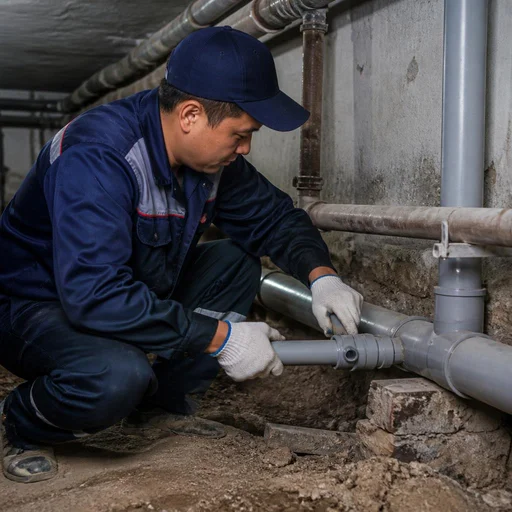
- Replacing a sewer pipe: a cast-iron horizontal run is replaced with a polypropylene or PVC one, 110 mm in diameter, with adapters for cast-iron outlets.
- Replacing sewer pipes: horizontal sections are assembled with rubber seals, and joints are checked for tightness by flushing.
- Replacing sewer pipes in an apartment price depends on the footage of the horizontal run and the number of inspection points, not on the floor.
- Fastening: clamps are placed every 50-60 cm so that the pipe doesn't sag under its own weight on long sections.
- Slope: the horizontal run is laid strictly according to the standard — deviation causes stagnation and odor in the building entrance within just a few months.
How we work: stages, 2-year warranty and Eco-Service service
The work cycle is structured from request and diagnostics to installation and warranty support. Below is how the process is organized, what the warranty covers, and how a direct contract differs from ordering through an intermediary.
Stages of work: from request to acceptance
- Request and diagnostics: Eco-Service arrives for an inspection on the day of contact, the technician records the condition of the riser, supply lines and shut-off valves.
- Estimate and materials: after the inspection we agree on the scope — replacement of a pipe section, distribution throughout the apartment, or complete replacement of water supply pipes.
- Dismantling: we remove steel or metal-plastic pipes; when chasing walls we work with dust extraction and protection of furniture.
- Installation: polypropylene soldering, system pressure testing, installation of shut-off valve and flexible supply lines to appliances.
- Acceptance: we check the joints under pressure, show the result and hand over the warranty card with a list of works.
2-year warranty and what it covers
Eco-Service provides a 2-year warranty on all types of work — it covers the tightness of joints, the quality of installation and the operation of the installed shut-off valves. The obligations extend to soldered polypropylene connections, threaded metal-plastic assemblies and replacement of the shut-off valve on the pipe. The warranty card is issued after acceptance and contains a list of completed works and materials used, so when contacted, the technician checks the section against the distribution diagram. The warranty remains valid only in the absence of third-party intervention in the system — if the pipes were touched by another technician after us, the obligations for that section are removed. Therefore, before any repair where the distribution is planned to be disassembled, keep the card and record exactly which section was affected. If the riser or supply line was replaced completely, the replacement of plumbing pipes is listed as a separate line in the card — this way, in a warranty case it is easier to prove that the work was performed by our technician and not by a third-party crew.
Why a direct provider is more advantageous than an intermediary
Eco-Service is a direct provider of the service: the work is performed by our own plumbers, without transferring the order to contractors and without intermediary markups. The service center in Bishkek accepts requests directly, the technician arrives for diagnostics on the day of contact and manages the site from dismantling to acceptance — without switching between a dispatcher and a third-party crew. With a direct contract, responsibility for the result lies with one company — there is no dispute between the dispatcher and the technician over who is to blame for a leak. The practical consequence for the customer: there is one address and phone number for warranty claims, not two or three intermediaries in the chain. Clients often formulate the request as plumber services pipe replacement — and from such a formulation it is immediately clear that installation is needed, not a one-time cleaning. Plumber services for pipe installation in this format include dismantling, removal of old pipes, and final pressure testing.
Conclusion
We have gathered practical conclusions on pipe replacement in an apartment, house and riser — briefly about what influences the decision and the result.
Main conclusions
- Time to replace: repeated leaks, pressure drop and rusty water color are a signal for complete replacement of the section; spot repairs give only a temporary effect.
- Material for the task: reinforced polypropylene — for water supply, metal-plastic — for heating, PVC — for sewerage.
- Risers as a whole: the entire riser is replaced with coordination; partial replacement in one apartment provokes new leaks at neighbors'.
- Seasonality: heating is more convenient to replace in the off-season, water supply — year-round without restrictions.
- Check before finishing: perform pressure testing before closing boxes and laying tiles, and record the 2-year warranty in the contract.
- Documents: keep the acceptance act and receipt — they are used to process a warranty case for the completed works.