







Why a pumping station stops working: symptoms and causes
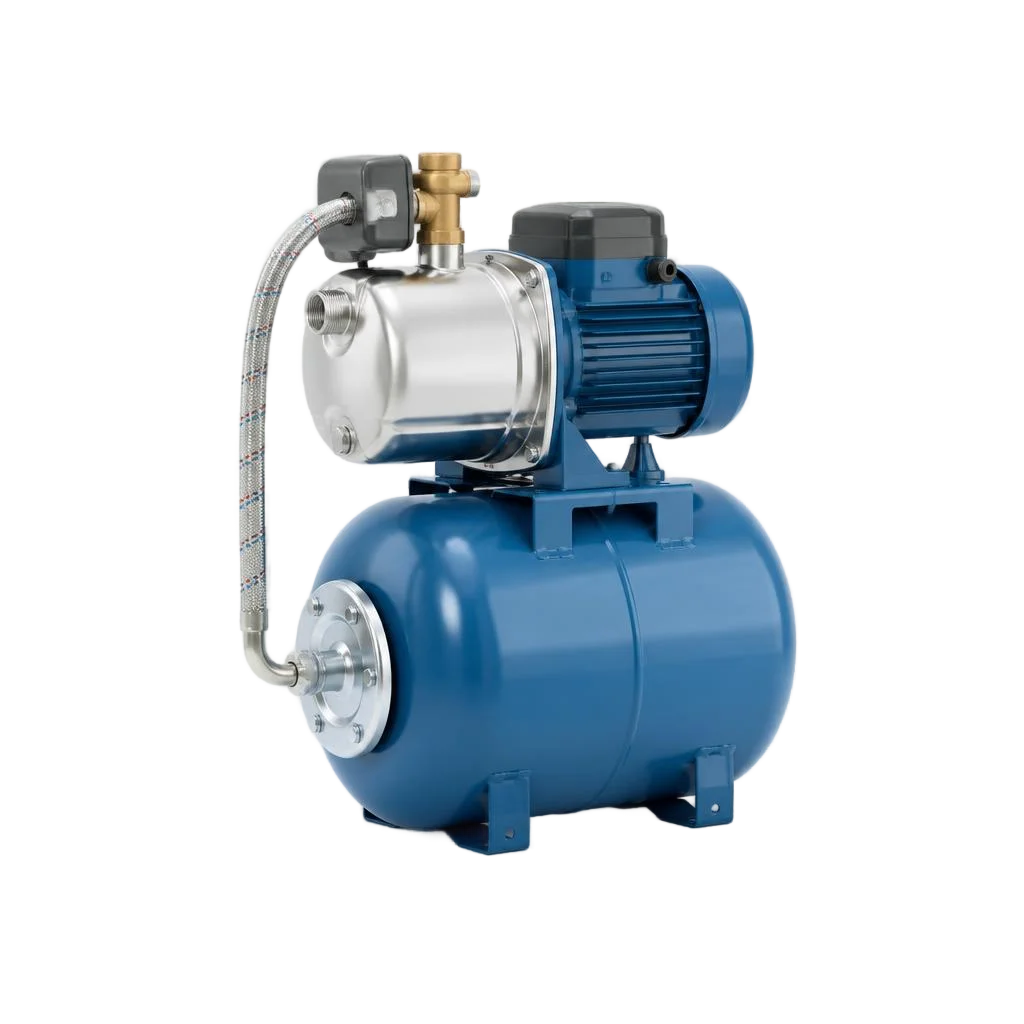
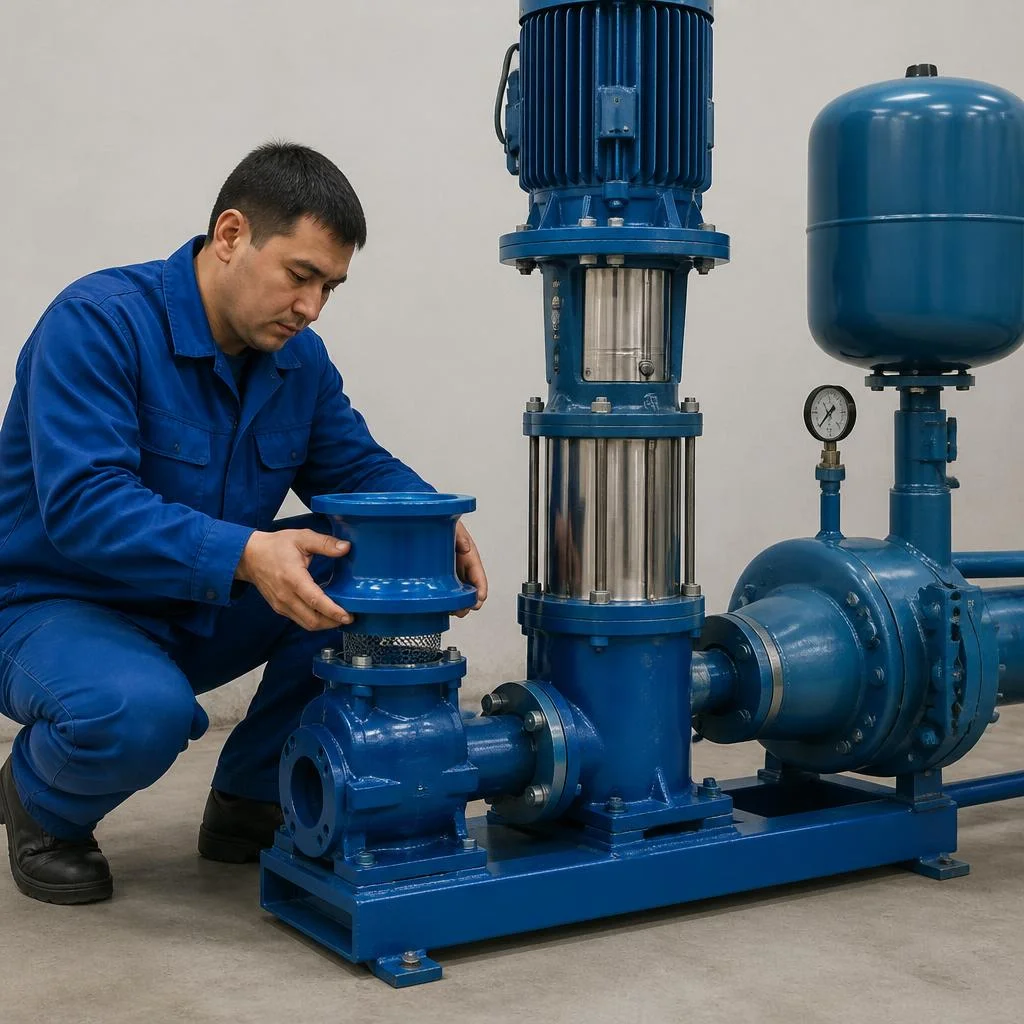
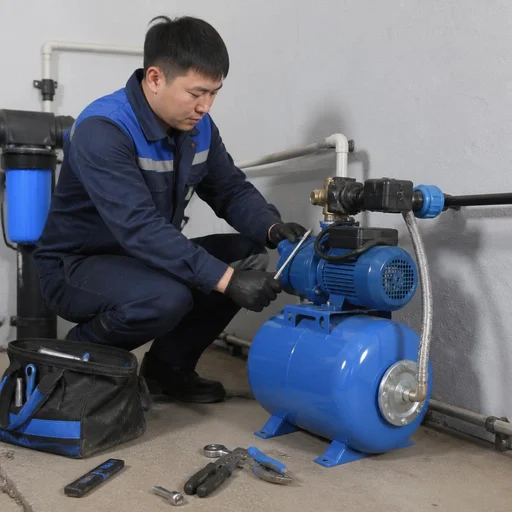
A pumping station is a combination of a pump, a hydraulic accumulator and automation. A failure of any component manifests as a specific symptom, and by the symptom the technician determines what to replace: the membrane, the relay, the bearings or the impeller.
Pressure drop and frequent switching on: what it means
In most cases, a pressure drop and frequent switching on of the station indicate wear of the hydraulic accumulator membrane or a failure of the pressure switch — we confirm this during diagnostics. We check three parameters: the air pressure in the tank with a pressure gauge, the relay actuation thresholds (upper and lower), and the tightness of the nipple. In a 24-litre bladder, if it ruptures, water escapes into the air chamber — the pump starts switching on every 20-40 seconds instead of the standard 3-5 minutes. If, after pumping air into the tank, the pressure holds for a day and then drops again, the membrane needs replacing, not the relay; the opposite picture (pressure is normal, but the station "judders") is a sign of a stuck relay, where the contacts have burnt and no longer open cleanly. Clients often phrase the request as water station repair — and with such a symptom the technician immediately understands that the starting point should be a revision of the hydraulic tank and relay, not disassembling the pump.
Noise, vibration and cavitation: when it's time to take the pump apart
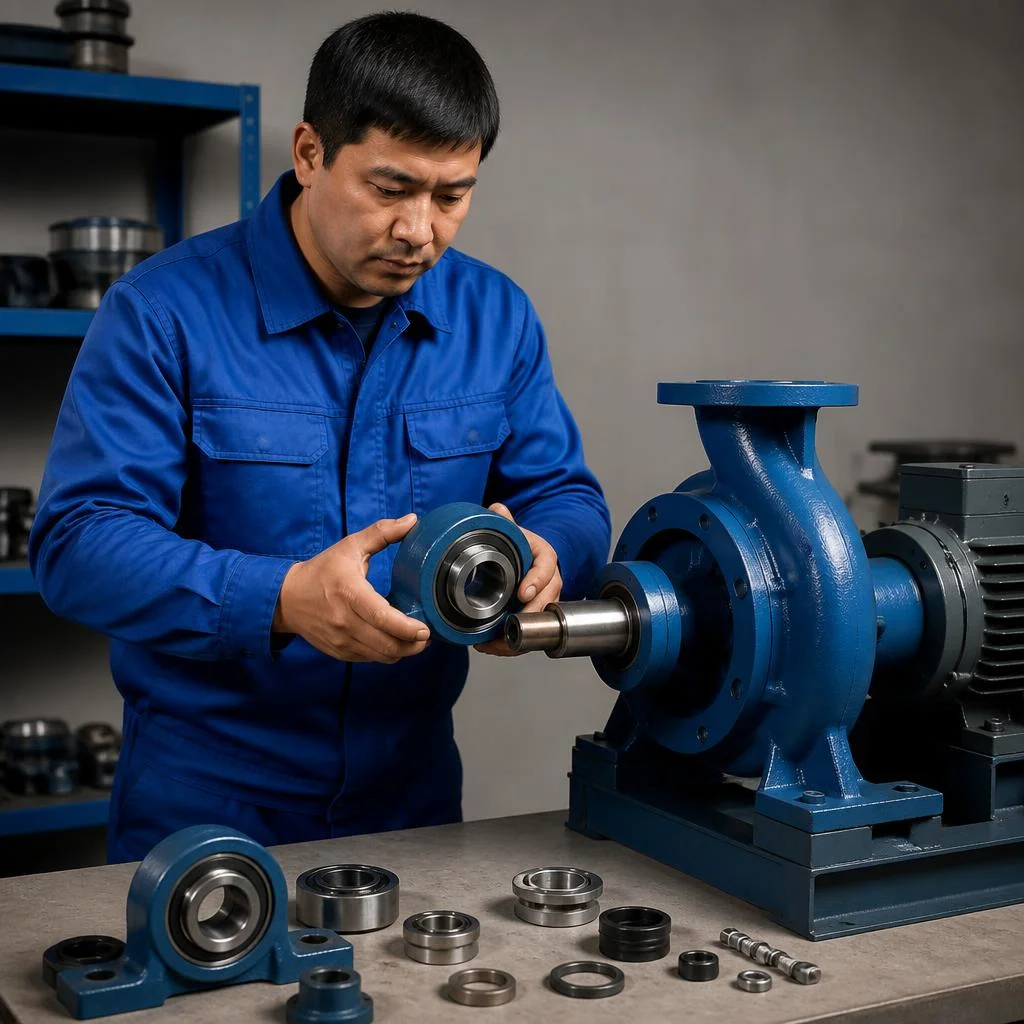
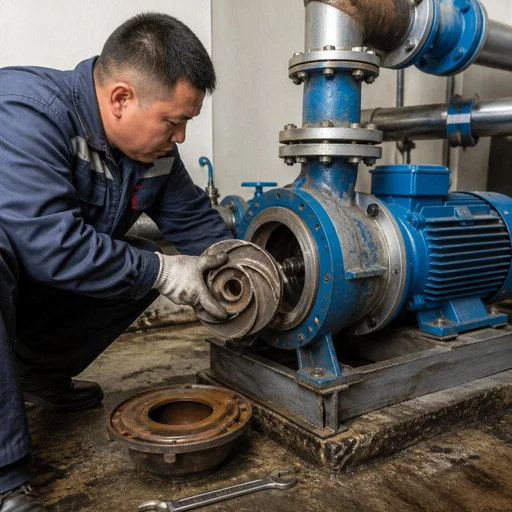
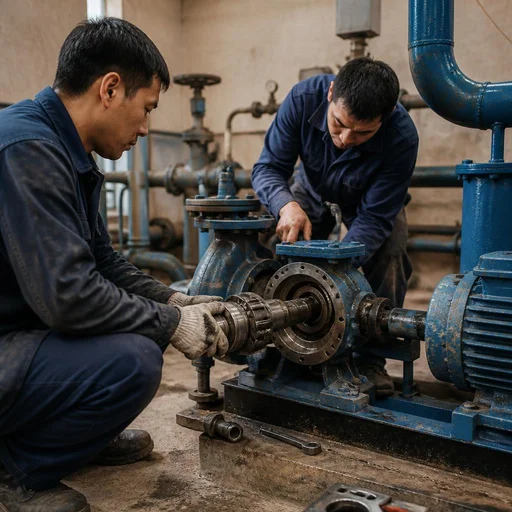
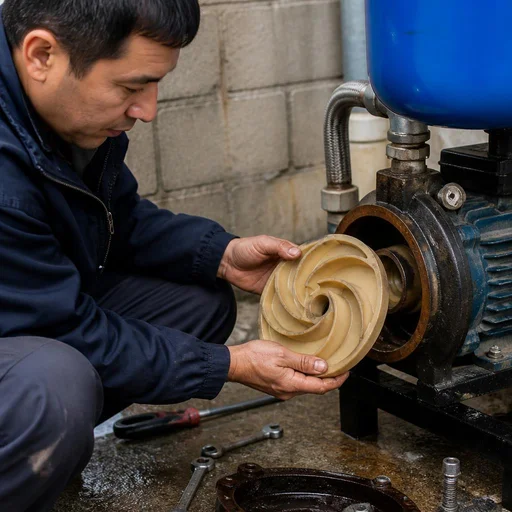
Humming, vibration and metallic knocking during operation are signs of bearing wear or cavitation, which destroys the impeller and the pump casing. Bearings on centrifugal models (Pedrollo, Grundfos, Wilo) last 5-7 years, after which a shaft play of 0.3-0.5 mm appears, and the rotor begins to strike the race. Cavitation manifests differently: a hissing sound in the suction area, a drop in head at unchanged speed, erosion of the impeller blades. A common cause in Bishkek is an excessive suction height or a clogged coarse filter, which cause the water to boil before entering the pump. Cavitation is often mistaken for the "normal noise" of an old pump; if you delay, the destruction of the casing turns the work from replacing bearings into replacing the casing and impeller — the scope grows several times over.
Symptom → component: quick diagnostic table
| Symptom | Probable component | What we check |
|---|---|---|
| Does not build up pressure | Hydraulic accumulator membrane | Membrane integrity, air pressure |
| Frequent switching on | Pressure switch | Threshold settings, contacts |
| Humming and vibration | Bearings | Shaft play, race wear |
| Metallic knocking | Impeller | Cavitation, scoring |
| Station does not switch on | Dry-run relay | Presence of water, setting |
| Leak on the casing | Mechanical seal | Seal wear, shaft |
The table is a guide, not a diagnosis: the final decision is made by the technician after disassembly, because a single symptom can be caused by two or three components at once. Work on a pumping station begins precisely with such a comparison, while pump servicing without disassembly comes down to topping up air and cleaning the filter — real component wear cannot be identified that way.
Repair of pumping stations: which components we replace
Restoration means replacing a specific component, not "fixing the pump in general." Below we break down exactly what we replace, by what sign a part goes in for replacement, and where the line runs between restoration and a new spare part.
Pump section: impeller, shaft, bearings, seals
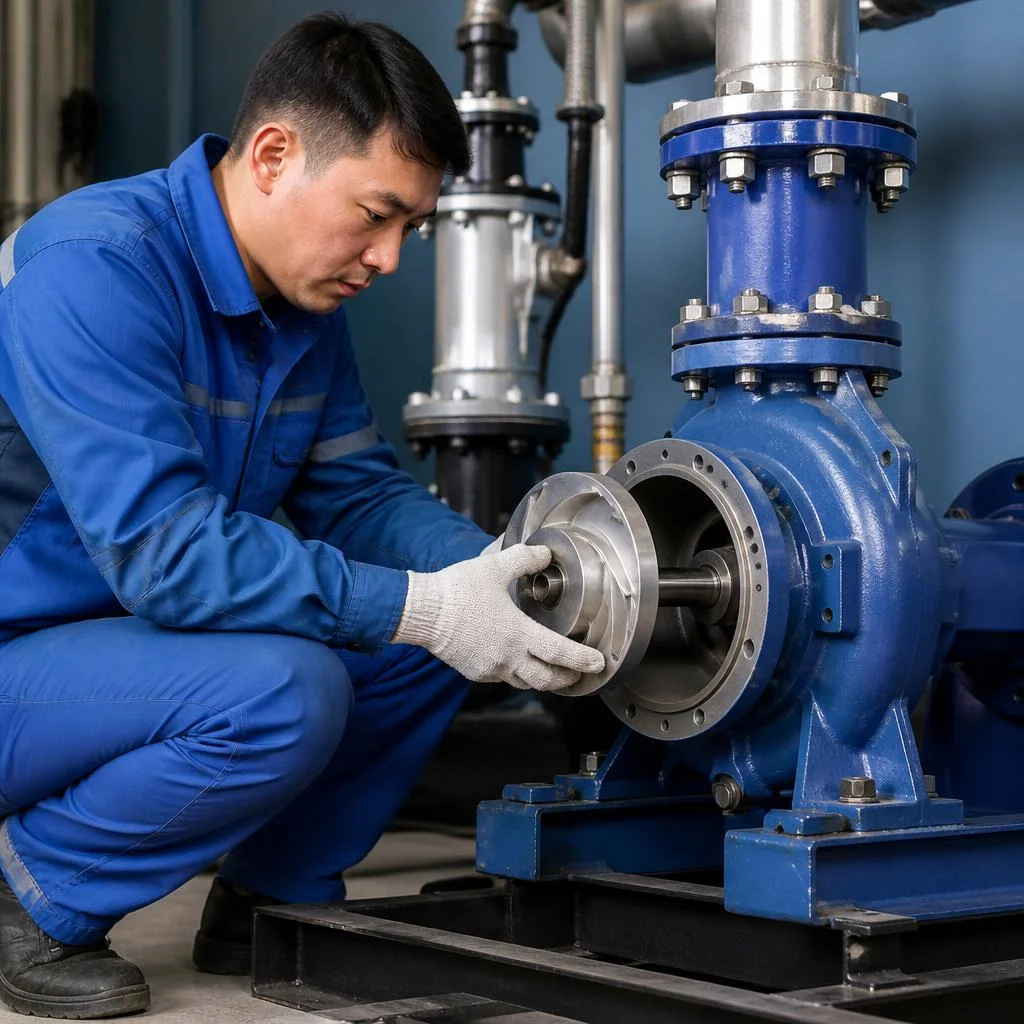
- Impeller: we replace it when the blades are worn, scored, or head is lost — the impeller stops building pressure even on a working motor.
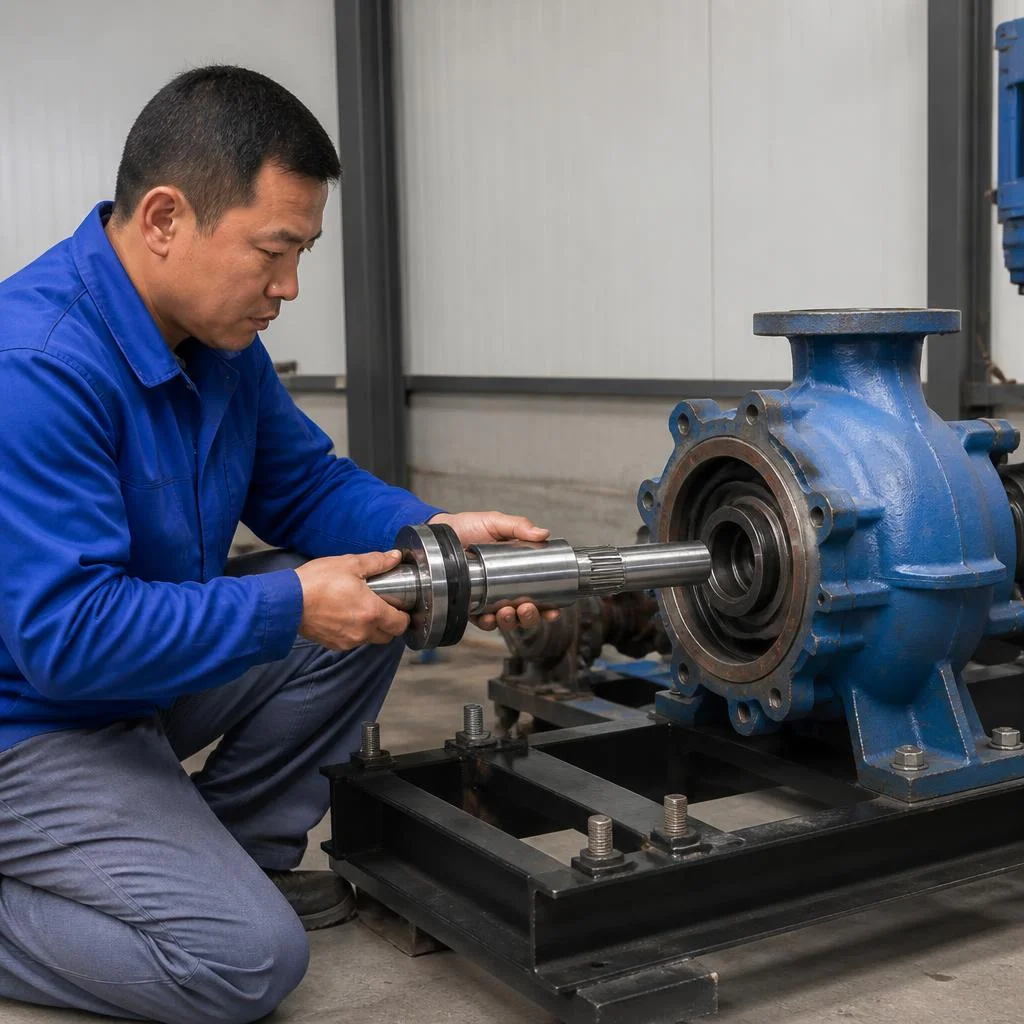
- Pump shaft: it goes in for replacement when it is bent, worn under the bearings, or the rotor runout shows up as vibration on the housing.
- Bearings: we replace them as a pair when there is humming, play, and heating of the assembly — replacing just one leaves misalignment and finishes off the second bearing.
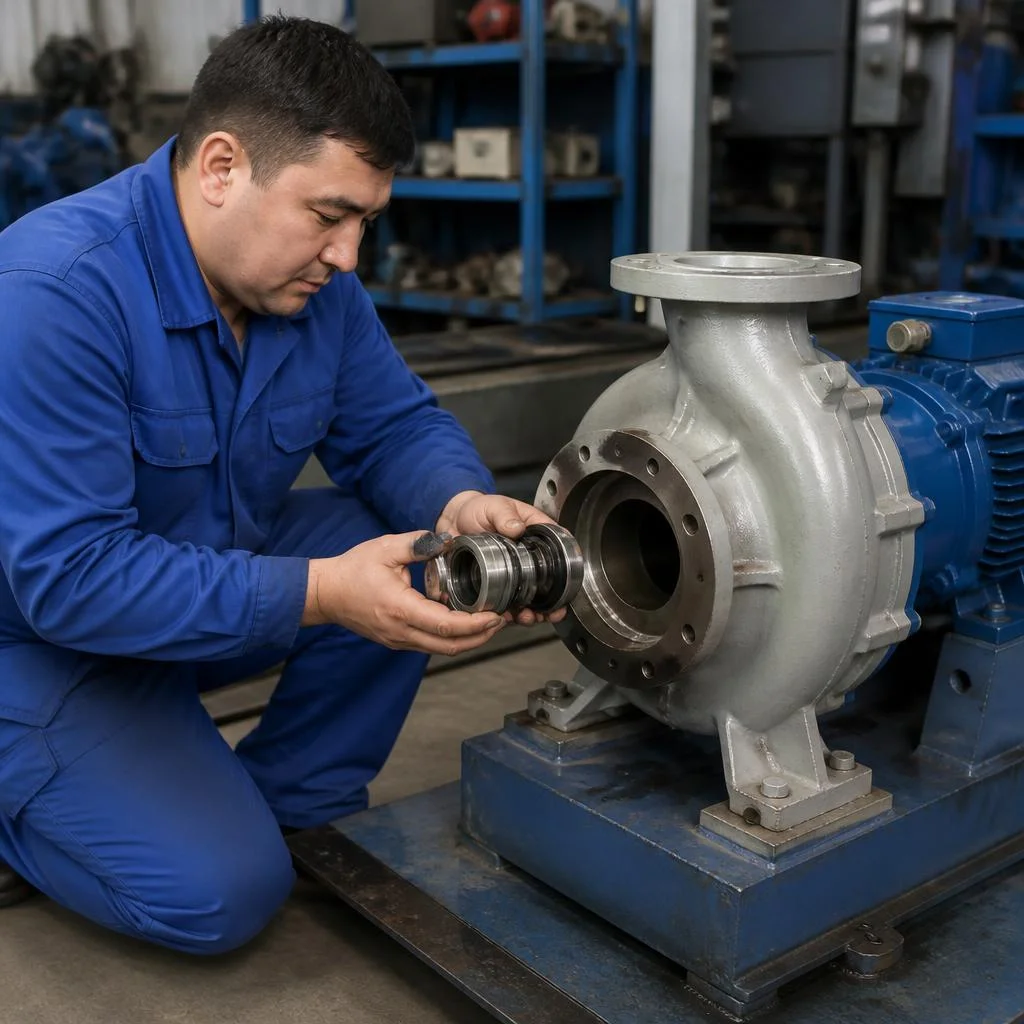
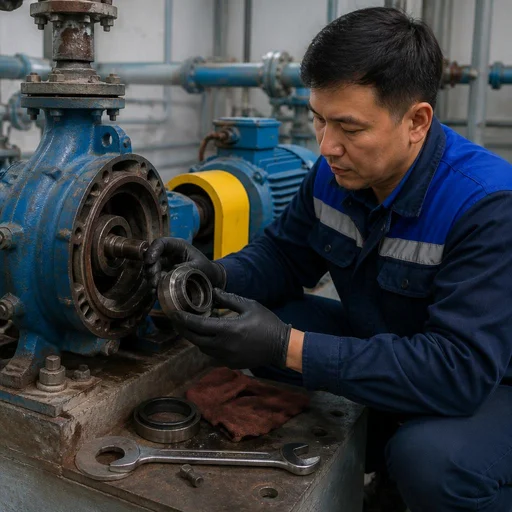
- Mechanical seal: we install it when there is dripping leakage along the shaft and loss of chamber tightness — the part works without adjustment for its entire service life.
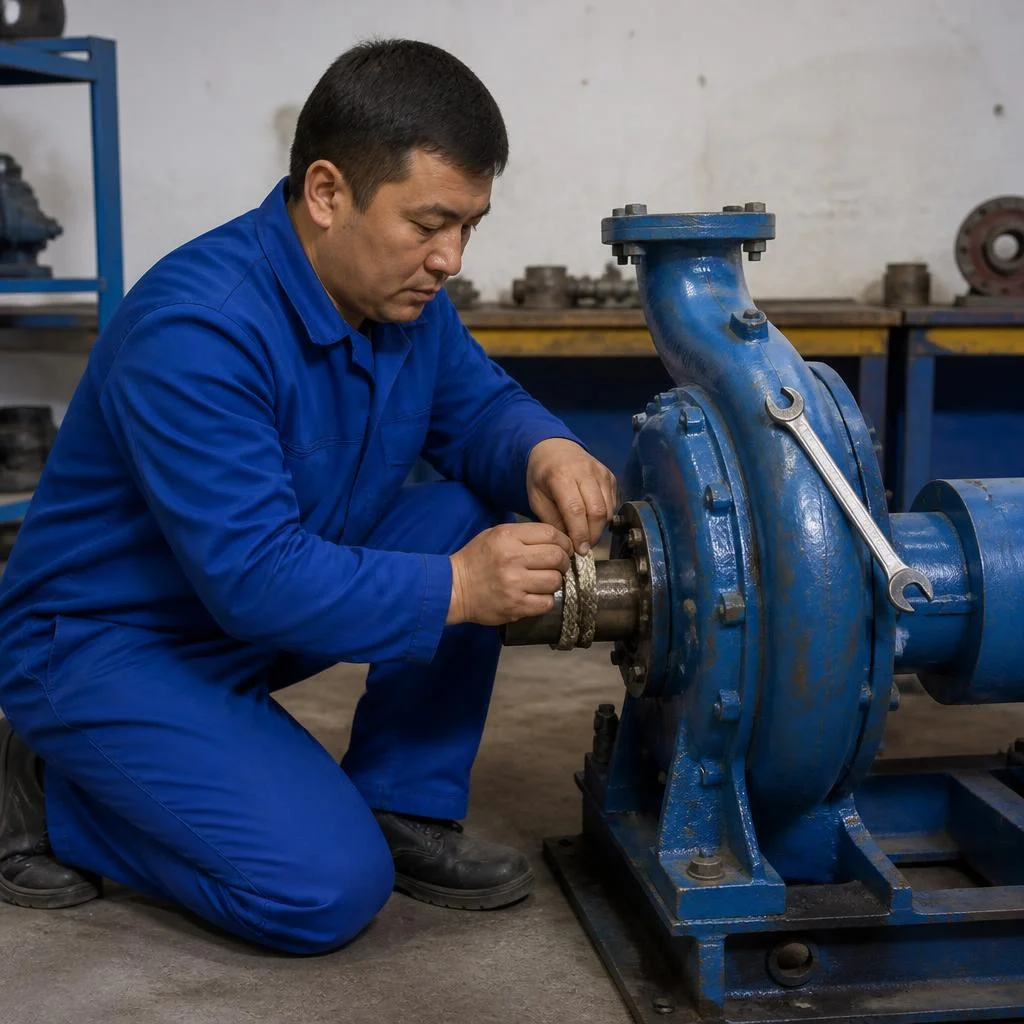
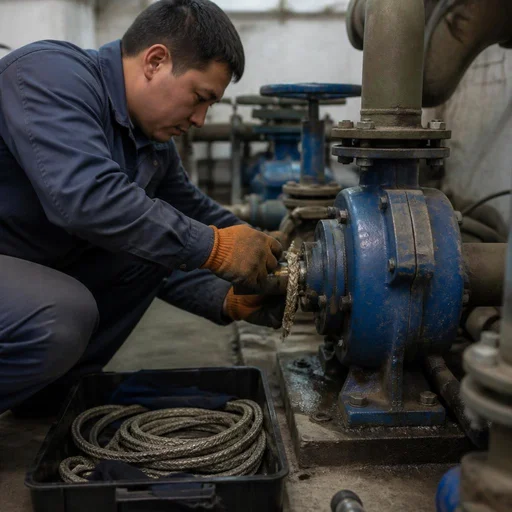
- Gland packing: we replace it on budget models where the assembly requires periodic tightening and added grease.
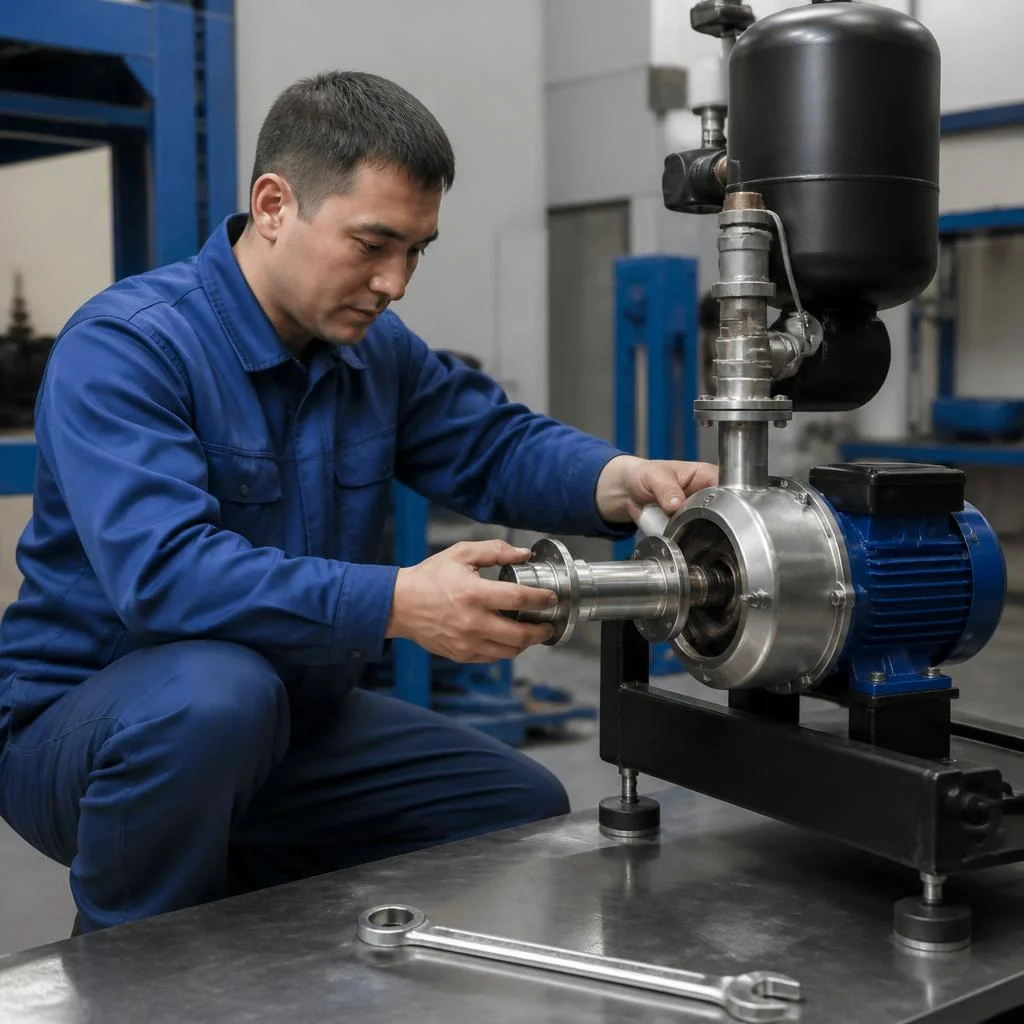
Well pump repair begins precisely with an inspection of this assembly: leakage along the shaft washes out the seat within a month, and the shaft has to be replaced together with the seal. We replace pump section components after disassembly and measurement of rotor runout.
Housing, diffuser, and ejector: when we replace rather than repair
The pump housing is replaced when there are cracks and cavitation damage, the diffuser when the guide vanes are worn, and the ejector when self-priming is lost. A crack in the cast iron is found after disassembly: from the outside it looks like a rust streak at the flange, while inside it spreads along the seating band. The diffuser gives itself away by a drop in head at normal speed — the guide channels are washed out by sand and fine abrasive from the well. The ejector is removed when the station stops lifting water from depth and runs only on back pressure. It is useless to seal a housing crack: under pressure it opens up, the station loses head again — replacing the housing is cheaper than repeat call-outs. Restoring a water pumping station with a destroyed diffuser without replacing the part produces a head drop within a month. Service requests often come in short — water pump repair — and from that request the technician immediately understands: this is about replacing the housing, diffuser, or ejector, not about tightening the gland.
Valve group and float automation
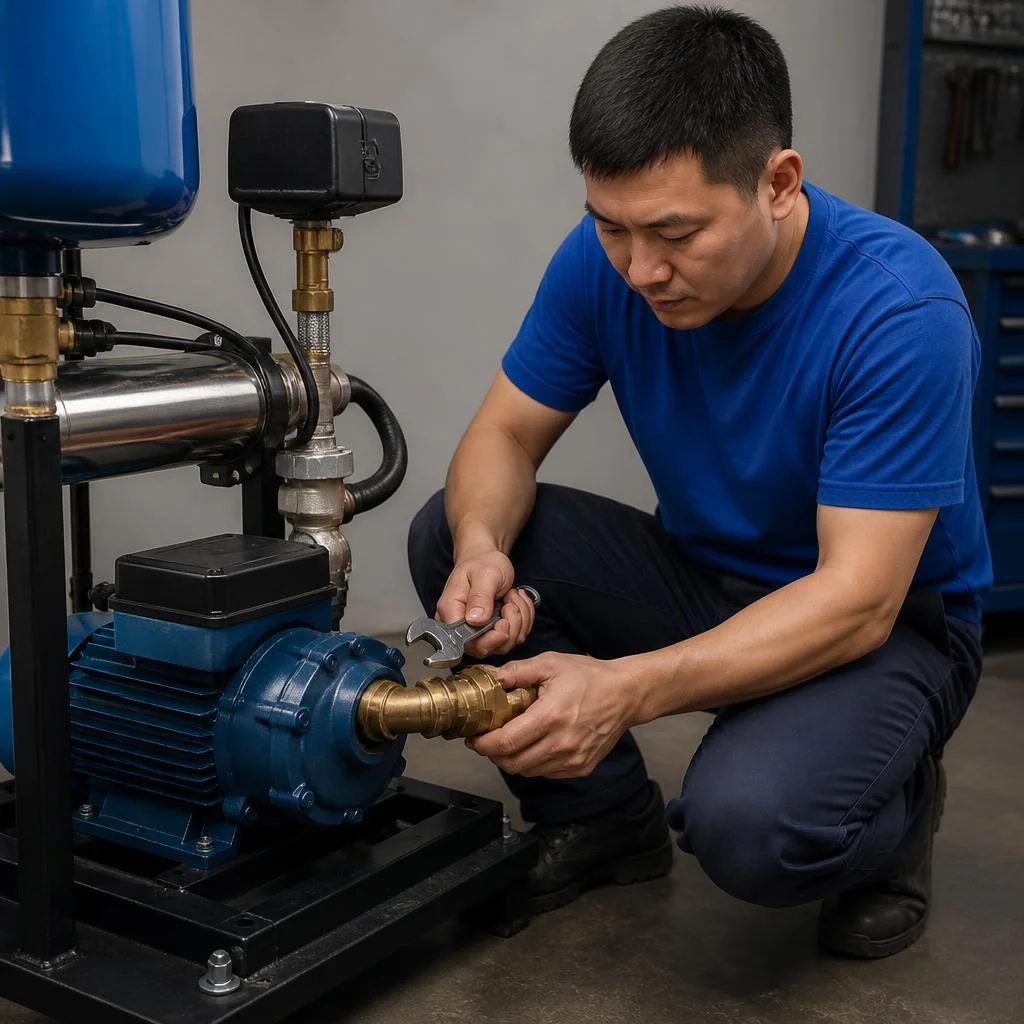
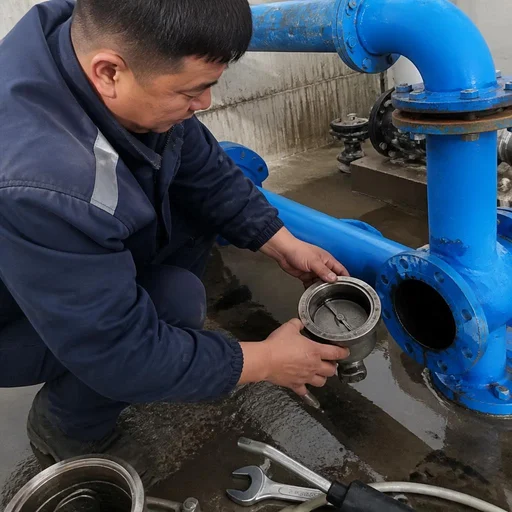
- Check valve: holds pressure in the system — we replace it when it sticks and water flows back into the well.
- Suction valve: protects against loss of suction — it goes in for replacement when there is air ingress and dry running.
- Float switch: controls the water level in the storage tank — we replace it when the contacts stick and the pump fails to shut off.
- Seat inspection: we check the valve seat and sealing rings at every disassembly of the suction line.
A stuck check valve masquerades as a weak pump: the station runs, but water flows back into the well, so the valve must be checked before drawing conclusions about replacing the pump. Restoration of a water pump in such cases begins with the valve group: the seat and sealing rings are replaced together with the valve itself, otherwise air ingress returns after the very first start.
Hydraulic accumulator and electrics: membrane, relay, motor
Half of station failures are not in the pump, but in the hydraulic accumulator and automation. We break down what we replace in the tank and in the electrical part, and how to distinguish a worn-out unit from a false sensor alarm.
Membrane, flange and fitting of the hydraulic accumulator
- Hydraulic accumulator membrane: separates the water and air chambers; if it ruptures, the tank stops holding pressure, and the station turns on at every tap.
- Hydraulic accumulator flange: secures the membrane to the housing; rust along the edge leads to leaks and stripped threads during disassembly.
- Hydraulic accumulator fitting: connects the tank to the pipeline; a clogged fitting causes a false pressure drop that is easily confused with impeller wear.
- Restoring a water station in this part comes down to replacing units: the membrane, flange and fitting are replaced as a set if the tank has been opened again.
- Check before replacement: pump up the air chamber with a pressure gauge — if the pressure drops within a day, the membrane is already leaking.
Electric motor: replacement or rewinding
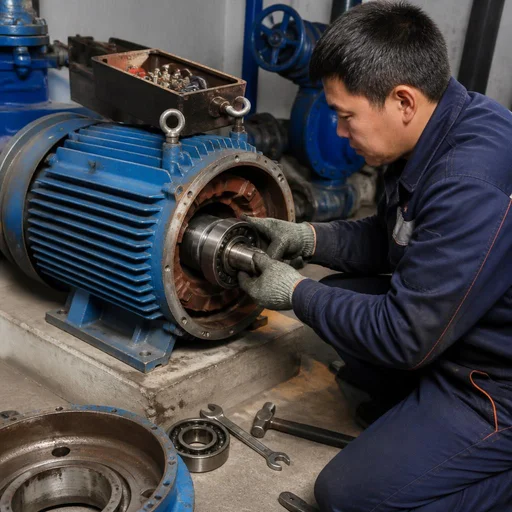
If the winding is burnt out, we offer electric motor rewinding; for mechanical destruction of the shaft or bearing shields — replacement of the motor as a whole. Electric motor rewinding is in demand on stations with 0.75–2.2 kW motors: the winding is restored on a machine with class F inter-turn insulation, and after drying the motor is checked for no-load current and vibration. Voltage surges are the main cause of inter-turn short circuits: in homes without a stabilizer, the motor fails 3–4 times more often than on a protected line. Replacement is done when the shaft is bent, the bearing seats are worn out, or the housing has warped from overheating. Rewinding is justified if the housing and shaft are intact; if the motor has seized due to pump jamming, rewinding without eliminating the cause will burn out again. This is exactly how people often write to the service: water pump station repair — and the technician immediately understands that an inspection of the motor and pump part is needed. Before taking a borehole pump in for service, check whether the shaft turns freely by hand — a jammed impeller will kill even a new winding.
Pressure, dry-run and flow switches: adjustment and replacement
- Pressure sensor: sets the cut-in and cut-out thresholds; after replacement we set a differential of 1.2–1.5 bar for the specific lift height.
- Dry-run switch: protects the pump from running without water; with a full tank and a serviceable suction line, it should not trip.
- Flow switch: responds to water movement in the pipe; a stuck paddle causes the station to chatter — frequent starts of 2–3 seconds.
- Capacitor: the starting element of a single-phase motor; a swollen housing and loss of capacitance manifest as humming without starting.
- Adjusting the switch after servicing: a mandatory step — without calibrating the thresholds, the station either does not build up pressure or does not shut off.
- False tripping: the dry-run switch is often blamed unfairly — if it trips when there is plenty of water, look for air being drawn into the suction line rather than replacing the sensor.
How pump station repair works at Eco-Service
Restoring a pump station proceeds in stages — from diagnostics to post-assembly adjustment. We show what happens at each step and why we don't start by disassembling the pump.
Pump station diagnostics: what we check first
Diagnostics begins with measuring the pressure in the hydraulic accumulator, checking the relay and listening to the pump section — this rules out half of the false theories. Then the technician takes manometer readings before and after the filter, checks the air in the air chamber of the hydraulic accumulator, tests the pressure switch and the dry-run relay, and inspects the mechanical seal for leaks. Separately, he listens to the suction line: whistling and hissing indicate air being drawn in or a clogged filter, not impeller wear. We carry out diagnostics before disassembly: if you disassemble the pump right away, you can replace working components and still not find the real cause — for example, a clogged suction line or lost pressure in the hydraulic accumulator membrane.
Pump station repair at home and at the service center
We perform pump station restoration on-site throughout Bishkek, while complex work — motor rewinding, housing replacement — is done at our own service center with in-person equipment intake. A technician's on-site visit covers most requests: replacement of the pressure switch, hydraulic accumulator membrane, check valve and suction valve, and gland packing is done on the spot in a single visit. Rewinding the electric motor and replacing the pump housing cannot be done on-site — we take the equipment to the center, so the technician immediately tells you on site what scope of work is possible at your home and what will require the test bench. For a private house or a country home in the suburbs, this saves a second trip: the client doesn't wait for the technician again but gets a timeframe for returning the station to service.
What pump station maintenance includes
- Pressure check: measuring the air in the hydraulic accumulator and pumping it up to the factory value so the pump doesn't turn on too often.
- Relay adjustment: setting the switch-on and switch-off thresholds for your water supply system and lift height.
- Seal inspection: checking the mechanical seal and gland packing for leaks and wear, with replacement if necessary.
- Valve group: inspection of the check valve and suction valve, cleaning off scale and sand — a stuck valve disrupts the entire operation of the station.
- Suction line: checking the tightness of connections and cleaning the filter so the pump doesn't run dry.
- Scheduled pump station maintenance: a planned visit once a year is cheaper than an emergency call-out, and an adjusted relay and tightened seal extend the life of the motor.
Repair or replacement of the station: how to choose
Sometimes repairing components loses its meaning, and it is easier to replace the station entirely. We break down the "repair or replace" fork based on the condition of the housing, shaft and motor — with guidelines on work timelines.
When repair is justified, and when it is not
Repair is justified when one or two components are worn, and the pump housing and electric motor are intact; replacing the station — when the housing, shaft and winding are destroyed simultaneously. At Bishkek sites, most often people come with a worn impeller and mechanical seal, less often — with scoring on the shaft after running "dry". Service requests are often brief: pump repair for a well — and the technician immediately understands that the unit is at depth and lifting is already included in the estimate. The cost is calculated individually based on the composition of components. We disassemble the pump section, check shaft runout with a dial indicator, test the winding for continuity and assess the housing wall thickness: these three parameters show whether it makes sense to repair the unit. The final cost is made up of the set of components — when replacing two or three parts, repair remains a rational solution. Consider not the cost of work, but the remaining service life: if the station is more than 10 years old and the third component is being replaced in a year — the investment does not pay off.
Comparison of options by components and timelines
| Work | Where it is performed | Time guideline |
|---|---|---|
| Pressure switch replacement | On site | Same day |
| Hydraulic accumulator membrane replacement | On site | Same day |
| Check valve replacement | On site | Same day |
| Bearing replacement | Service center | 1-2 days |
| Electric motor rewinding | Service center | 2-3 days |
| Pump housing replacement | Service center | 1-2 days |
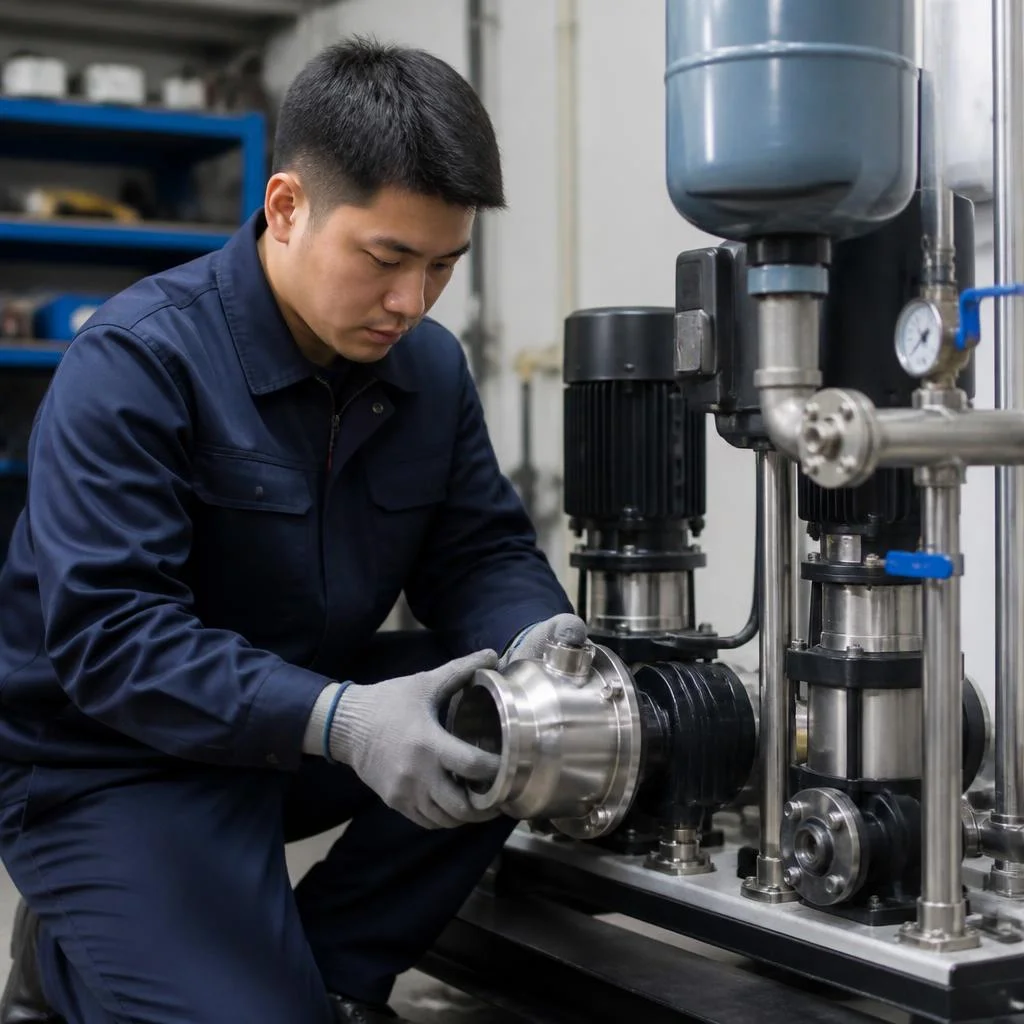
Pump station repair requires different equipment: the valve group, switch and membrane are handled by the technician on site, while bearings, housing and rewinding are performed on a bench with rotor balancing. We distribute work by location: the mobile team handles quick operations, while heavy components go to our own service center. The timelines in the table are a guideline for planning: if water is needed the same day, choose work that the technician completes on site.
Warranty, technicians, and why people trust Eco-Service with repairs
Repairing a pumping station means access to the house, working with live electricals under pressure, and replacing components that can't be checked "by eye." Let's break down who does the work, what you get afterward, and how to verify quality.
2-year warranty on pumping station repairs
Eco-Service provides a 2-year warranty on replaced components and completed work. This covers the impeller, shaft with bearings, mechanical seal, hydraulic accumulator diaphragm, and automation setup: if a component fails due to our fault, we redo it at our own expense. The warranty is only valid with proper operation: if the station runs without a filter and operates "dry," component failure is not a warranty case, so during acceptance we check the installation conditions. We also separately check whether a dry-run relay is installed and the condition of the suction valve — without them, the pump sucks in sand and abrasive, and the bearings and impeller wear out in a season instead of lasting several years. Check these two elements before signing the acceptance report — their absence is most often what becomes the reason for denying a warranty claim.
Pumping station repair technician: who will come
Our technician from the Eco-Service service center comes to you — with their own diagnostic tools and standard spare parts for common models. A technician's home visit resolves 8 out of 10 requests: measuring inlet and outlet pressure, checking motor current with clamp meters, assessing vibration and cavitation by sound, opening the hydraulic accumulator to check the diaphragm. On-site pumping station diagnostics takes 40-60 minutes, after which the technician names the component to be replaced and the scope of work; if the repair requires a lathe or rotor balancing, the equipment is taken to the workshop. Ask the technician not "how much will it cost," but "which component needs replacing and why" — a clear answer based on the symptom distinguishes a diagnostician from a parts-swapper.
Reviews and in-person equipment intake in Bishkek
Equipment can be brought to our own service center in Bishkek — in-person intake, disassembly, and fault inspection in your presence. Pumping station servicing with in-person fault inspection is convenient for disputed cases: the client sees the worn component before replacement rather than receiving a verbal conclusion — this eliminates most questions about the scope of work. Customer reviews on 2GIS and Google Maps for the service center can be read before your visit: look for mentions of specific work — mechanical seal replacement, motor rewinding, pressure switch adjustment — rather than general ratings. Intake is available on weekdays and Saturdays; equipment is accepted with a report listing the components. Take the old parts with you after the repair — having them confirms that the replacement was actually performed.
Conclusion
We've gathered the key things to keep in mind when a pumping station breaks down: from reading symptoms to deciding on restoration or replacement. Below are brief takeaways that save time on diagnostics and help you avoid overpaying for unnecessary work.
Key takeaways
- The symptom points to the component: pressure drop — diaphragm or switch, noise — bearings, knocking — impeller and cavitation.
- Restoration means replacing a specific part, not "fixing the pump": impeller, shaft, bearings, seals, valves, switches, motor.
- The hydraulic accumulator and automation account for half of all failures, so diagnostics start with pressure and the switch, not with disassembling the pump section.
- Some work is done on-site, while electric motor rewinding and housing replacement are done only at the service center.
- Restoration is justified when one or two components are worn; when the housing, shaft, and winding are destroyed simultaneously, replacing the station is cheaper.