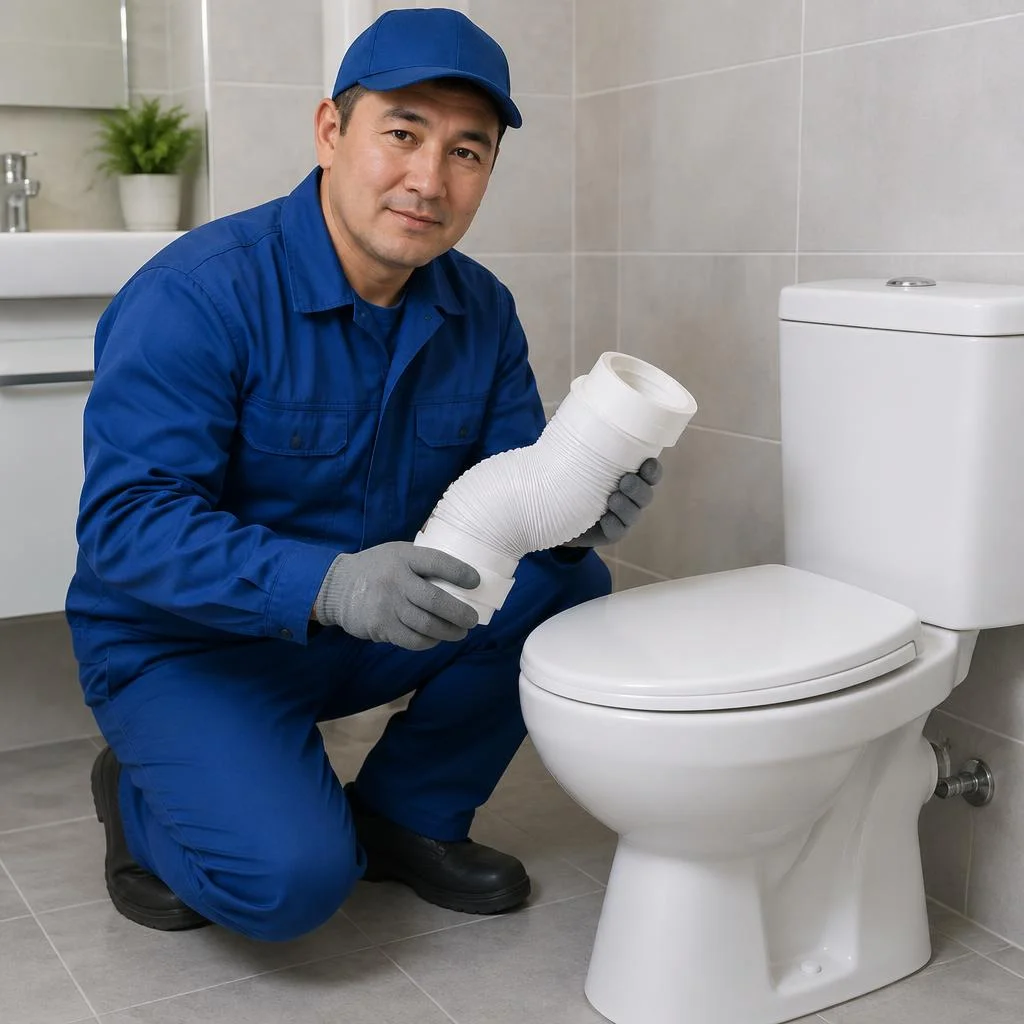
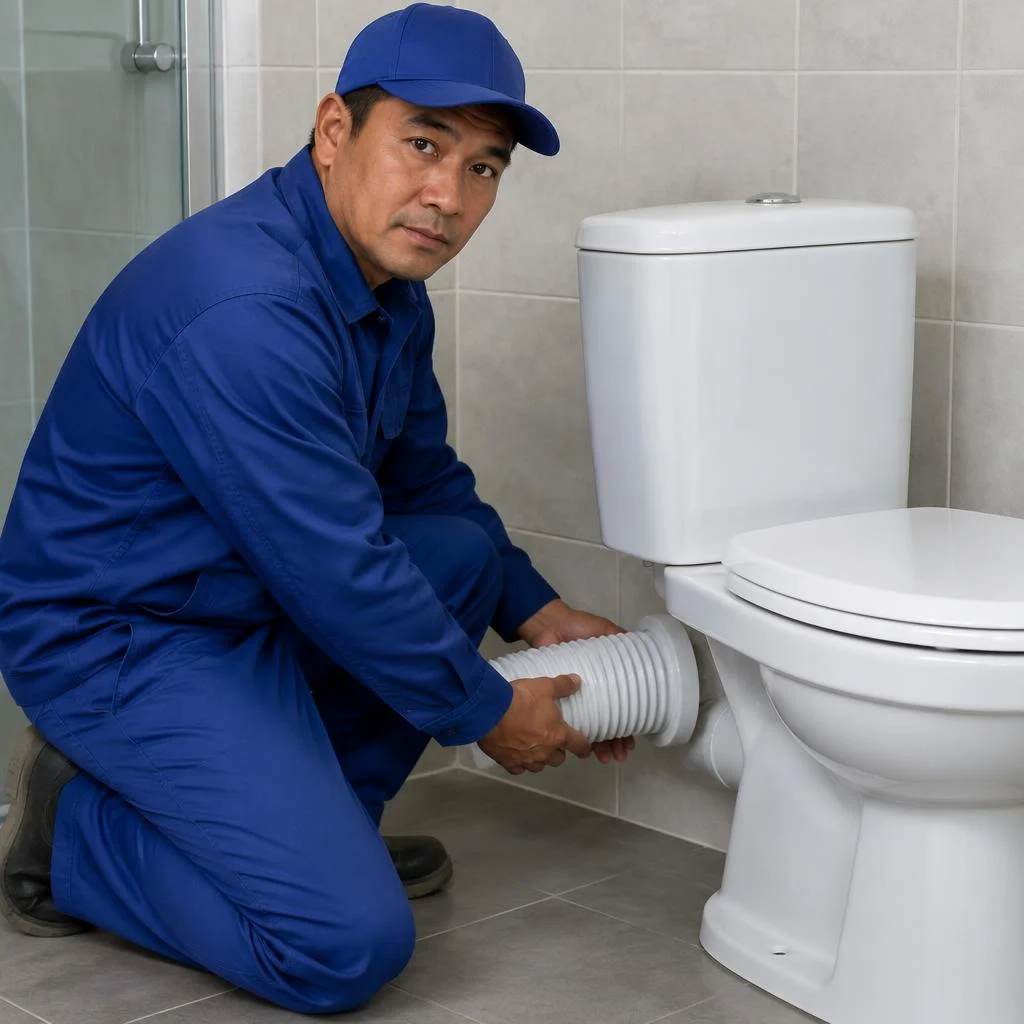
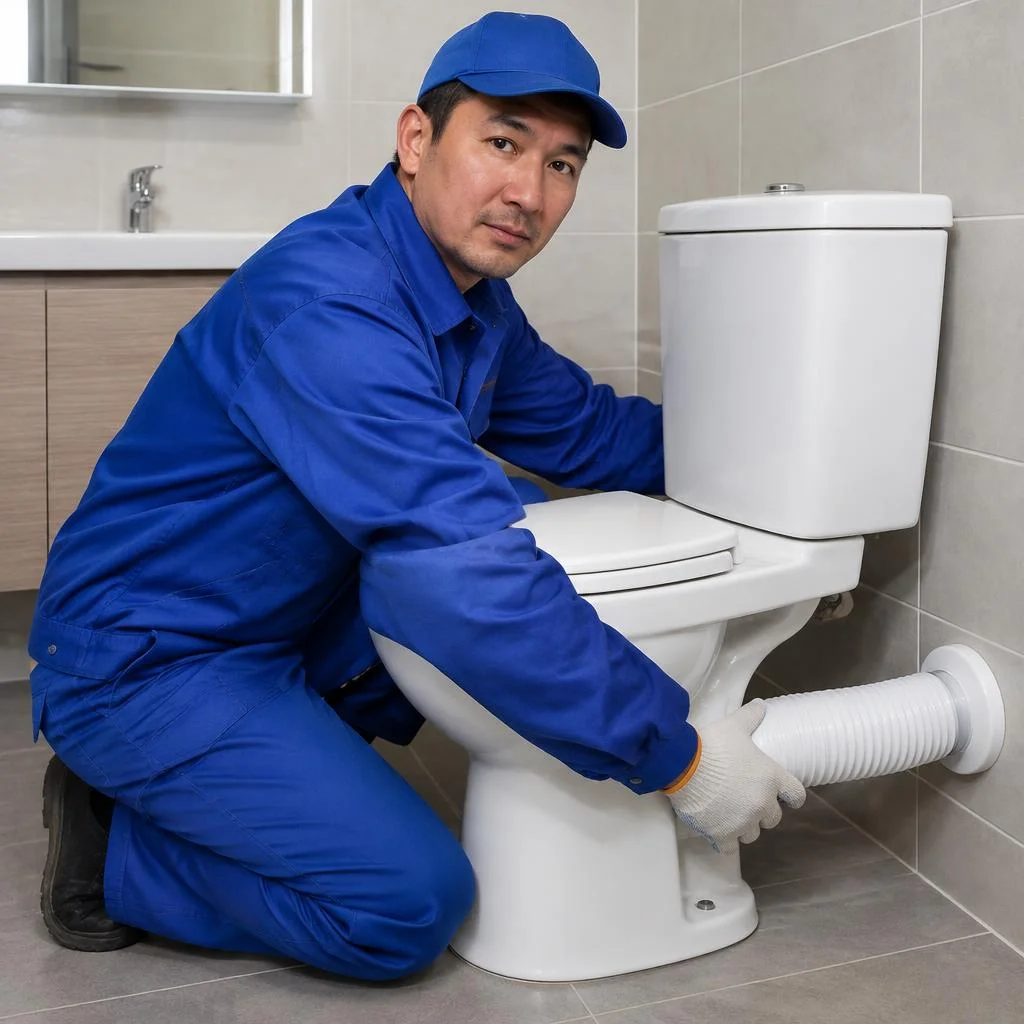








When it's time to replace the corrugated pipe: signs of wear and diagnostics
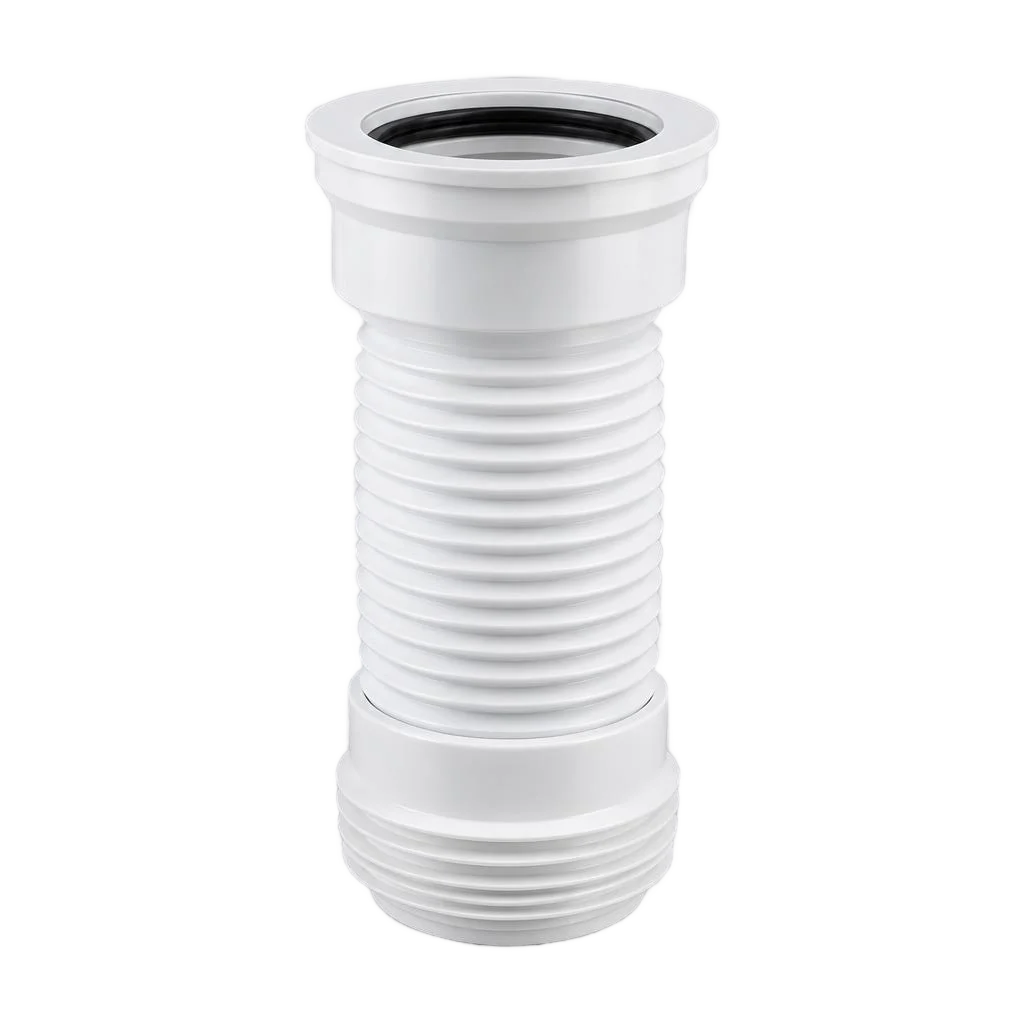
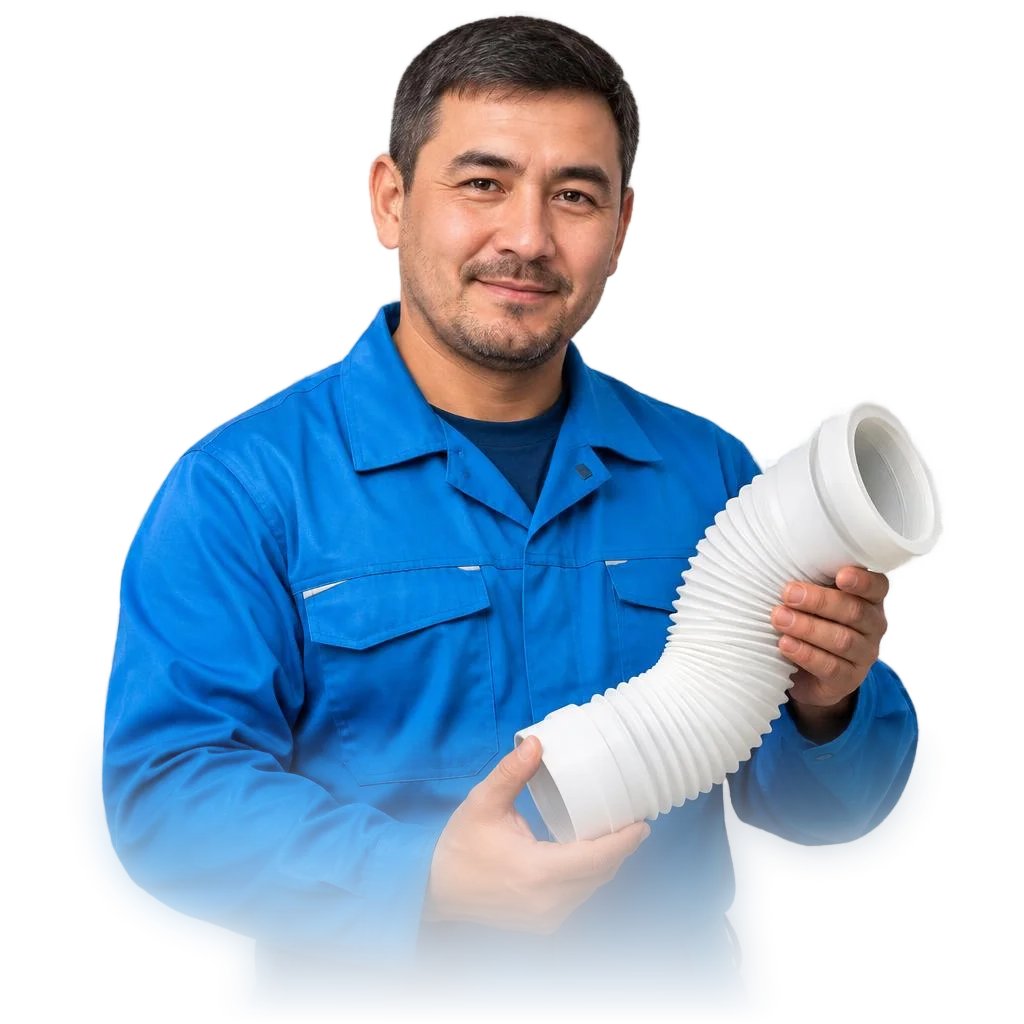
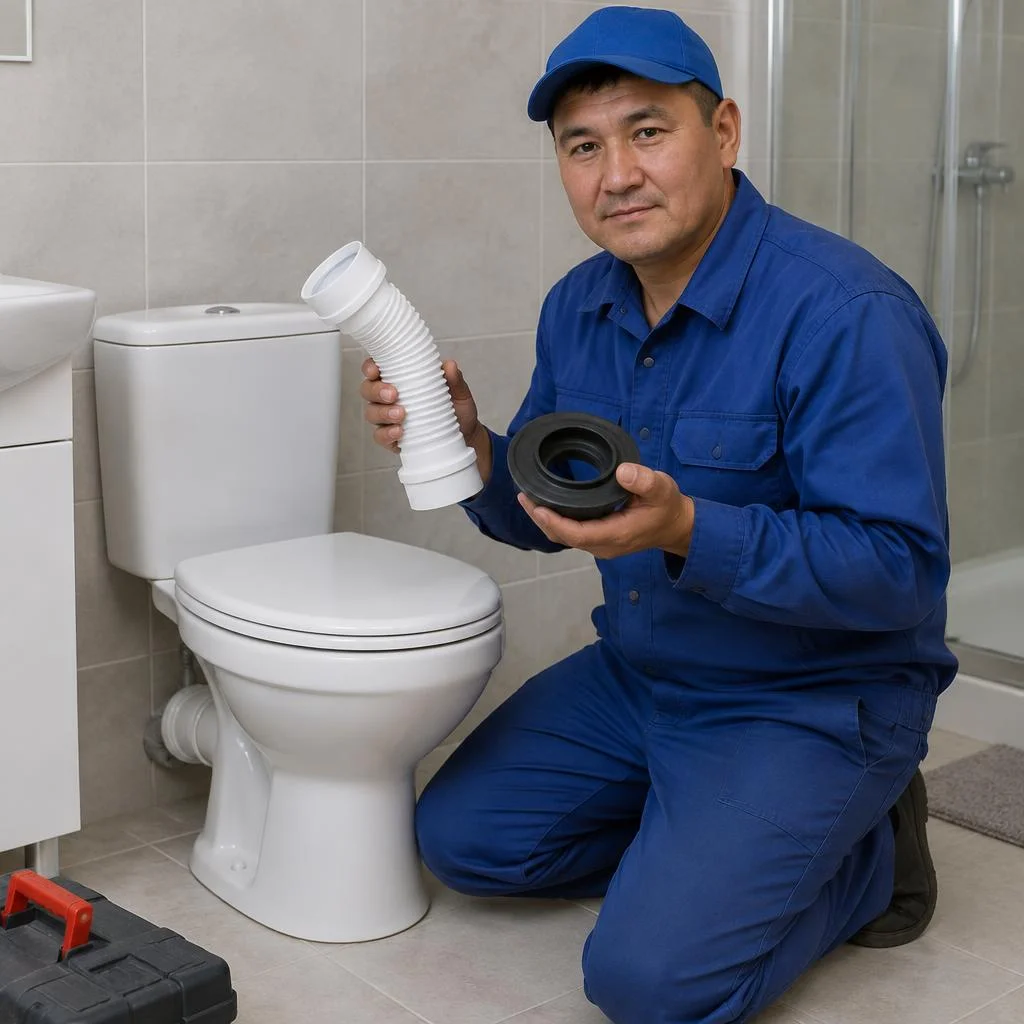
The corrugated pipe is a consumable with a service life of 3–5 years. Most complaints about leaks from under the toilet and odors start with this very component, not with the bowl or the stack, so let's go over the signs of wear and how to distinguish it from other faults.
Signs that the toilet corrugated pipe is worn out
- Service life: a rubber or plastic corrugated pipe lasts 3–5 years, after which it loses its elasticity and the material starts letting water through.
- Leak from under the toilet: moisture or a puddle at the base of the bowl after each flush is the first signal that the joint has lost its seal.
- Odor from the toilet: with an intact pipe and a working water seal there should be no odor; its appearance indicates a rupture or crack.
- Appearance: the part feels stiff to the touch, is covered with a network of microcracks, and shows kinks and scuffs at the bends.
- Marks on the floor: dark stains, swelling of the laminate or tiles around the toilet — water seeps under the covering slowly but constantly.
- Clamps: rusty or loose clamps don't hold the gasket, even if the corrugated pipe itself is still intact.
Leak and odor: how to distinguish a corrugated pipe problem from other faults
If water appears at the joint where the corrugated pipe meets the bowl or the outlet, the problem is in the connection; if there's an odor with an intact corrugated pipe, the culprit is the water seal or the stack ventilation. A leak along the body of the bowl rather than at its base points to a crack in the ceramic itself or a faulty tank valve. An odor with a dry joint is most often caused by a dried-out water seal: the siphon loses its water plug, and gases from the stack go directly into the room. Another source is an unsealed outlet gasket: it lets air through but not water, so there's no puddle, but there is an odor. Stack ventilation also produces a characteristic sign: the odor intensifies when the exhaust fan or ventilator in the bathroom is running. Before calling a technician, check whether the water seal has dried out: if the toilet hasn't been used for a week, the odor may be due to exactly that and not the corrugated pipe — just flush a couple of liters of water and assess the result.
Toilet wobbling and worn fasteners
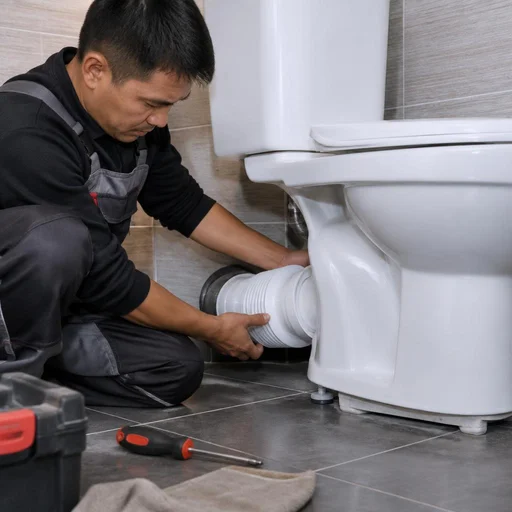
When replacing a corrugated pipe, we always check the toilet's fasteners: if the bowl wobbles, the new corrugated pipe will quickly lose its seal due to the movement of the joint. Play appears because of floor settling, loosened bolts, or corrosion of the mounting studs — with each flush the bowl shifts by 1–2 mm, and the gasket works loose. Working without securing the bowl gives only a temporary result: after a few weeks the joint starts leaking again. In such cases the fasteners are replaced together with the corrugated pipe, so as not to disassemble the assembly twice and not to pay for a repeat visit. A wobbling bowl is a common cause of recurring leaks 2–3 months after replacing the corrugated pipe; at Eco-Service the fasteners are checked and tightened as part of the same job, which saves the owner time and money.
Types of corrugated pipes and components: what suits your toilet
The choice of corrugated pipe depends on the type of outlet, the distance to the riser and the budget. Below is a comparison of the options we install in Bishkek, and the components that are replaced together with the corrugated pipe.
Plastic, PVC or reinforced: comparison of options
| Type of corrugated pipe | Material | Feature | When to choose |
|---|---|---|---|
| Plastic | PP | Flexible, budget-friendly | Standard outlet, even joint |
| PVC | PVC | Rigid, smooth inside | Frequent flushing, long service life |
| Reinforced | PP + reinforcement | Holds its shape, does not crush | Movable joint, offset outlet |
| Corrugated pipe 110 mm | PP / PVC | Standard diameter for the outlet | Typical connection to the sewer |
| Via Eco-Service | PP, PVC, reinforced | Selection according to the type of outlet | Replacement with on-site fitting |
A reinforced corrugated pipe is not "better" in itself — its point is resistance to deformation, so it is justified where the joint is movable or the outlet is offset. On an even standard connection, a plastic one is sufficient: it is cheaper and can be replaced in a single visit.
Corrugated pipe with an extension and with a bend: when they are needed
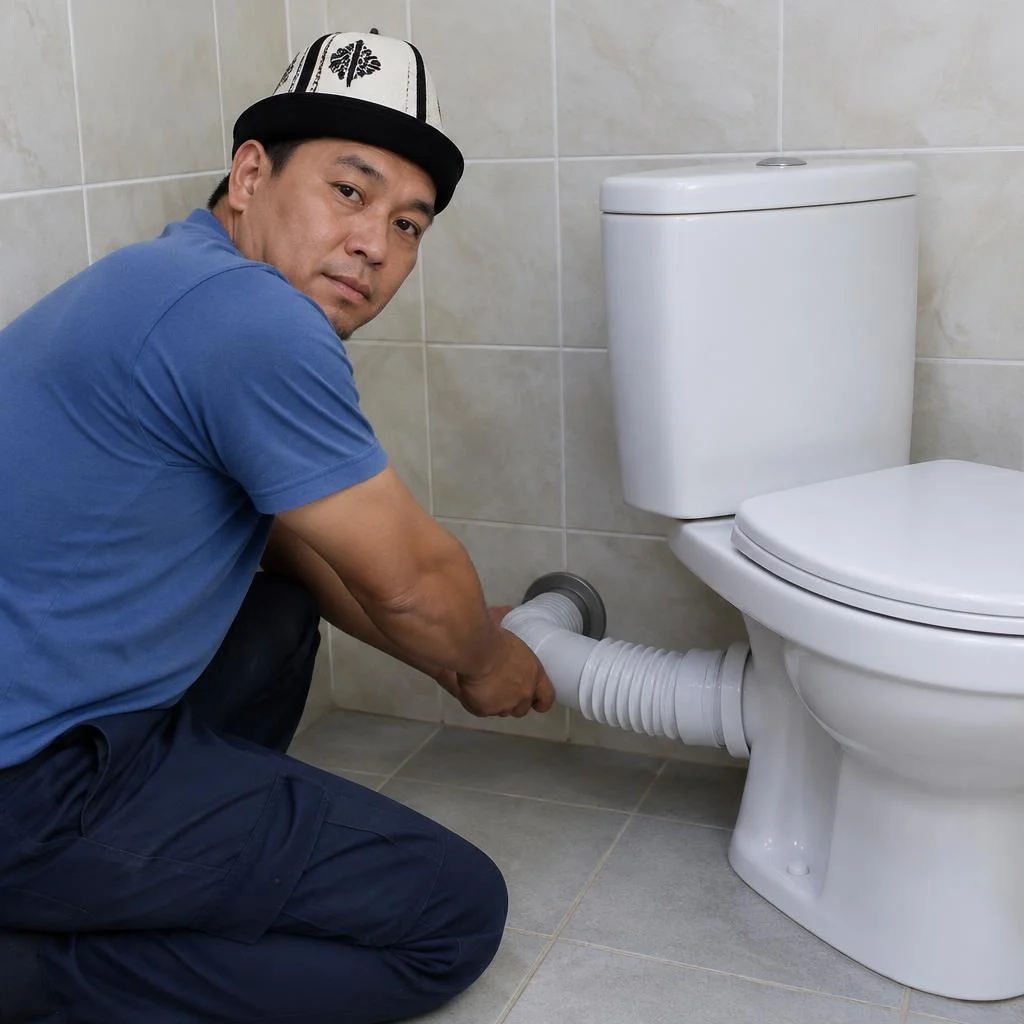
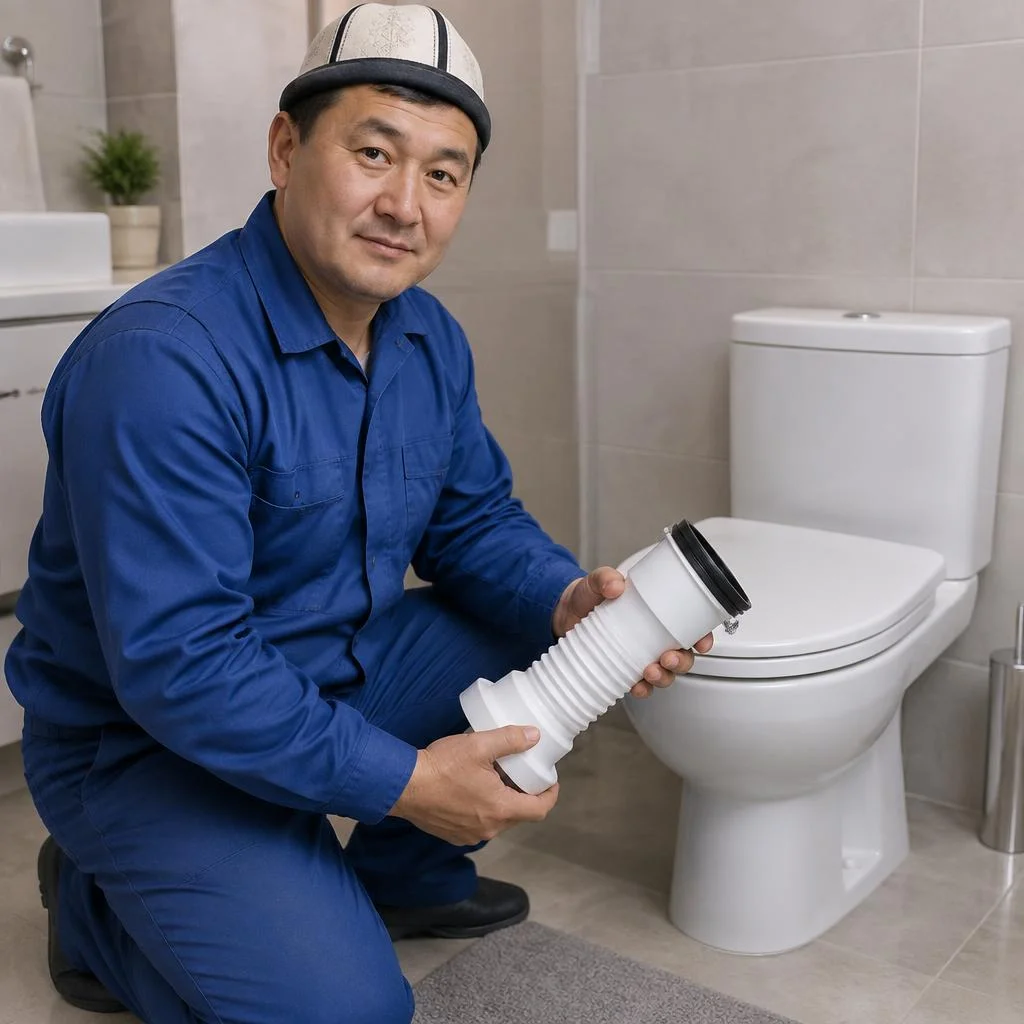
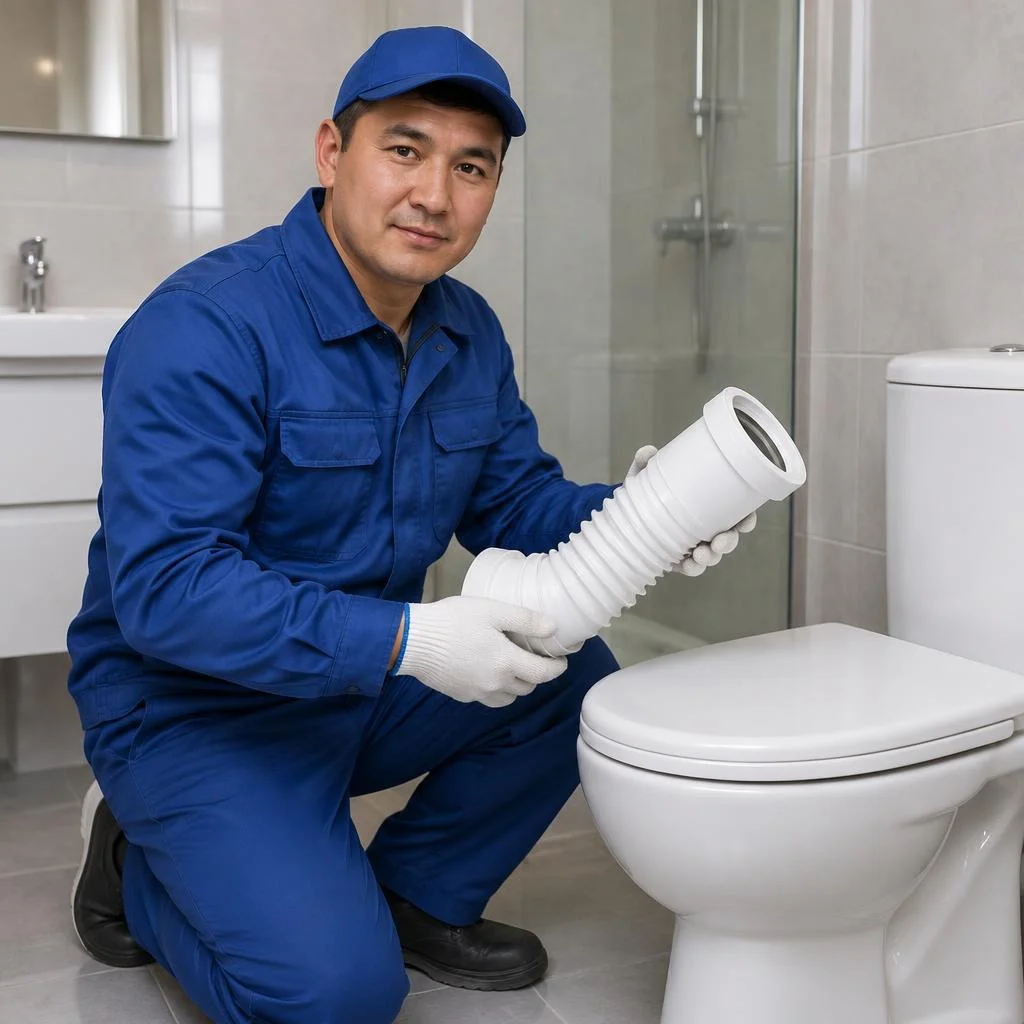
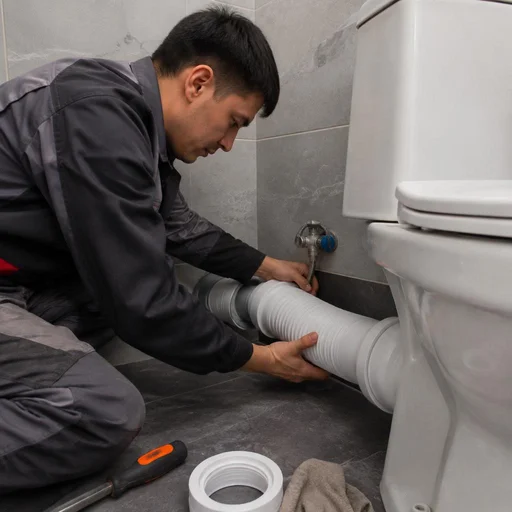
A corrugated pipe with an extension is needed when the toilet outlet is far from the riser, and with a bend — when the axes of the bowl and the sewer are offset to the side. In Bishkek apartments of the old housing stock, the distance from the outlet to the riser often exceeds the standard 300 mm — then we order an extended corrugated pipe, and when the axes are offset we add a bend. On-site fitting takes 15-20 minutes: the technician cuts the corrugated pipe to the actual length and sets the angle so that the water drains without stagnation. An extension and a bend are not a universal solution: each extra bend adds resistance to the drain, so we select the minimum necessary geometry, not the maximum.
Seal, clamp and outlet: what is replaced together with the corrugated pipe
- Outlet seal: we install it together with the corrugated pipe if the old one has lost its elasticity and no longer compresses the outlet.
- Clamp: we always install a new one — the old one loses its tension and leaks within 1-2 months.
- Toilet outlet: we check for cracks and chips; if damaged, we replace it together with the corrugated pipe.
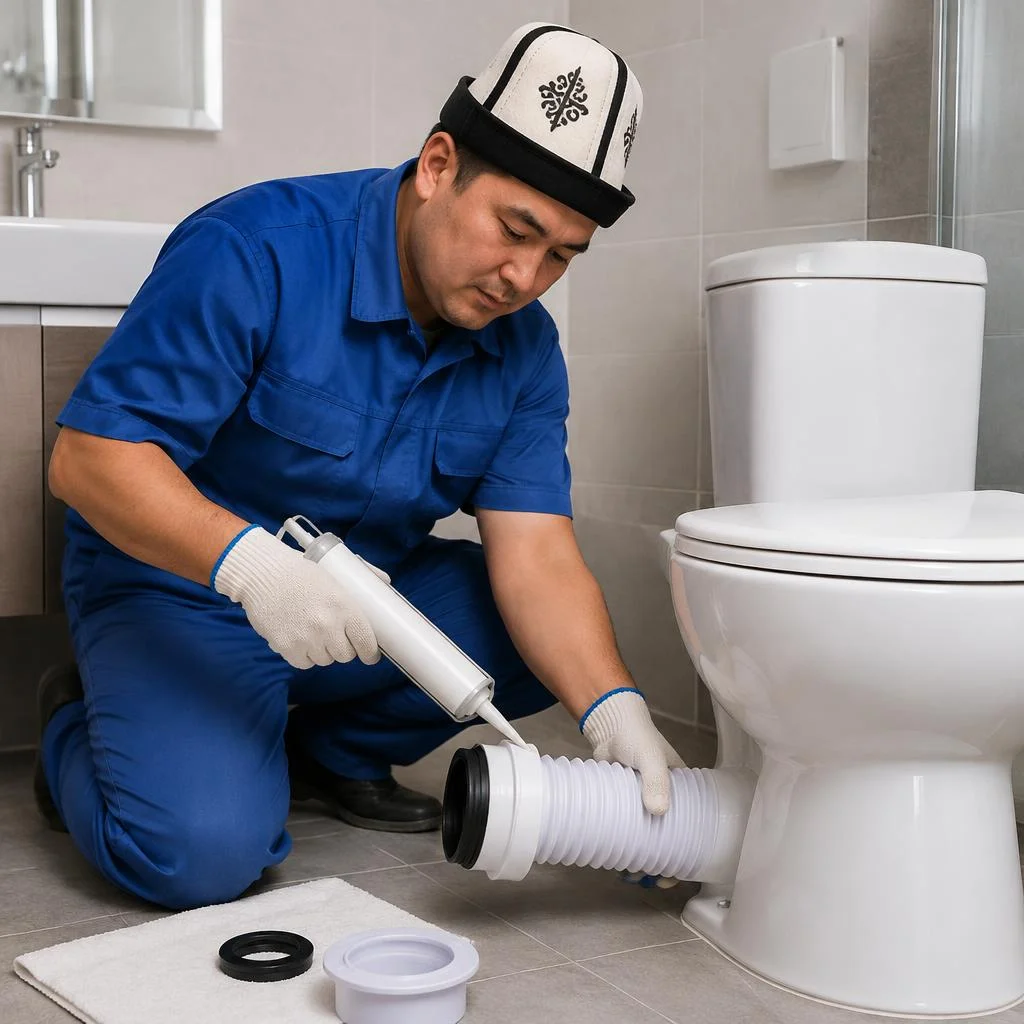
- Sealant: we apply it to the joint of the bowl and the outlet in a thin layer, without excess inside the pipe.
- FUM tape: we use it on threaded connections if the outlet is threaded rather than socket-type.
How toilet corrugation replacement works at Eco-Service
At the address, the work takes the technician 40-60 minutes. Below are the stages that go from diagnostics to the final check, with specific operations at each step.
Removing the old corrugation and preparing the joint
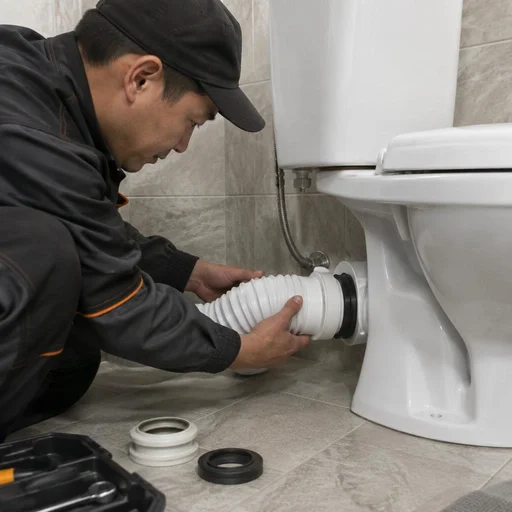
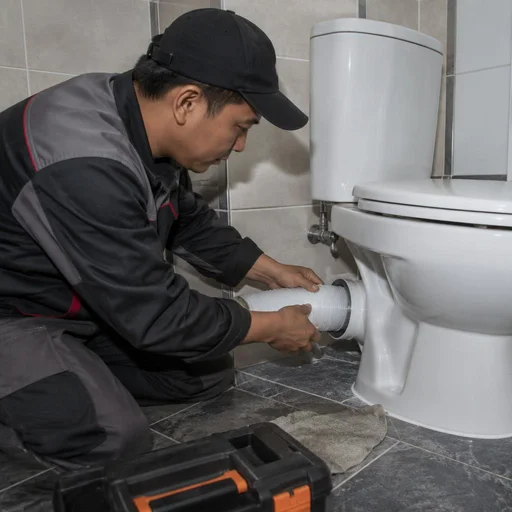
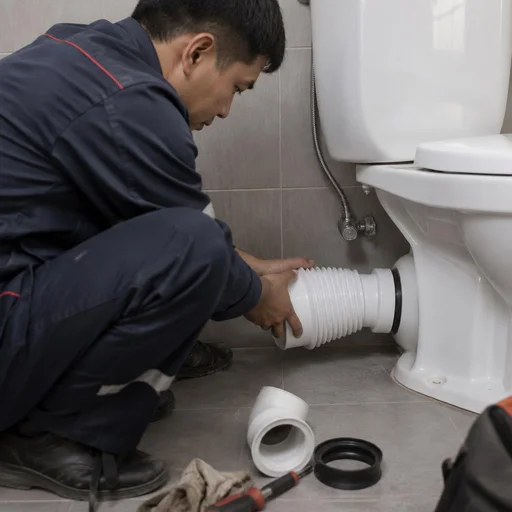
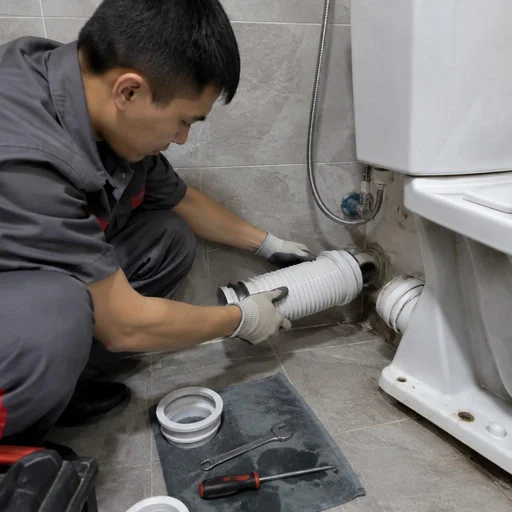
First, we remove the old part, clean the outlet and the bowl of dried sealant, deposits and rust, and check the condition of the gasket and fasteners before installing the new one. Removal begins with shutting off the water and disconnecting the tank: if this is not done, when the corrugation is removed, the remaining water from the bowl will spill onto the floor. Next, we inspect the toilet outlet — on cast-iron and plastic branches in Bishkek's khrushchyovkas and stalinkas, a mineral layer often accumulates, narrowing the passage to half its diameter. In neglected cases, such work requires preliminary cleaning of the outlet: using a snake or a plumbing snake with an attachment, we remove the deposits, wash the joint, and only after that fit the new part in place. If the outlet is clogged, installing a new corrugation will not solve the drainage problem — water will drain slowly even with the new part.
Installing the new corrugation and sealing the joint
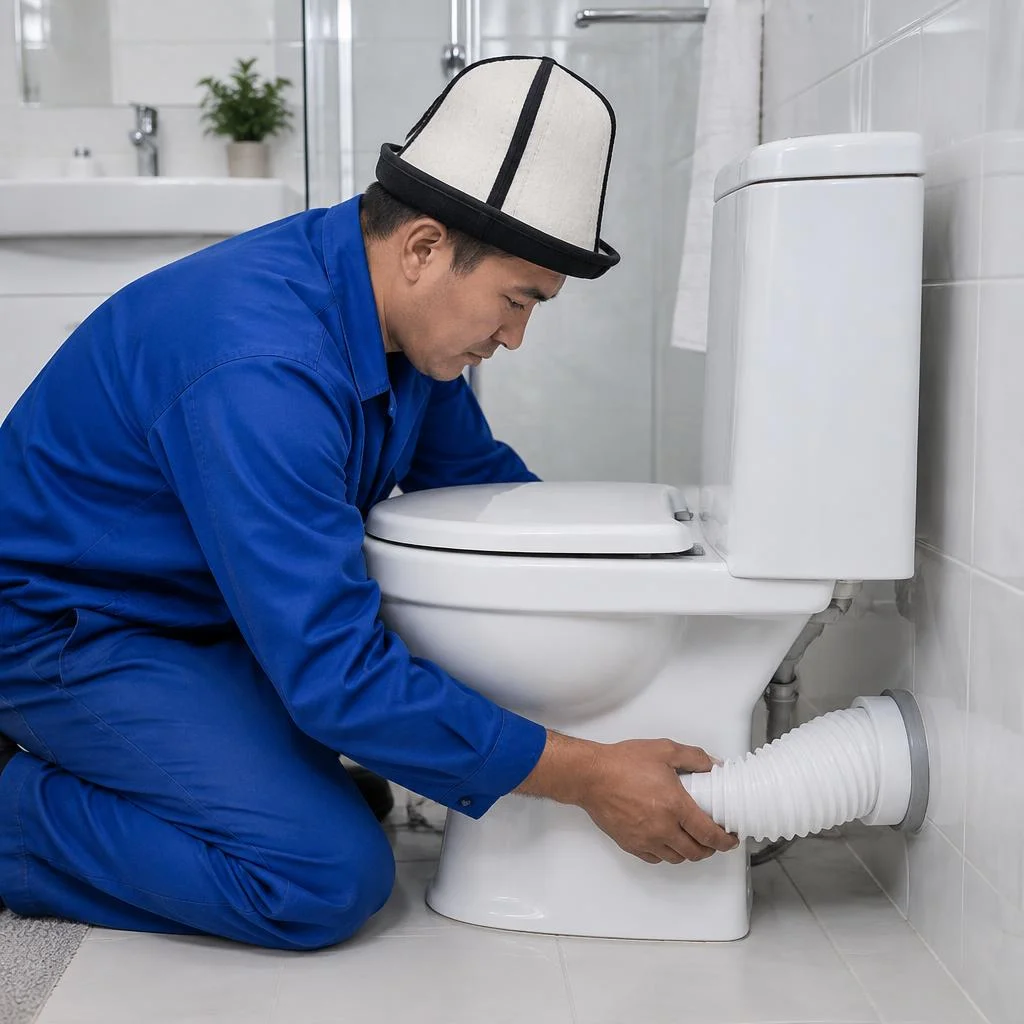
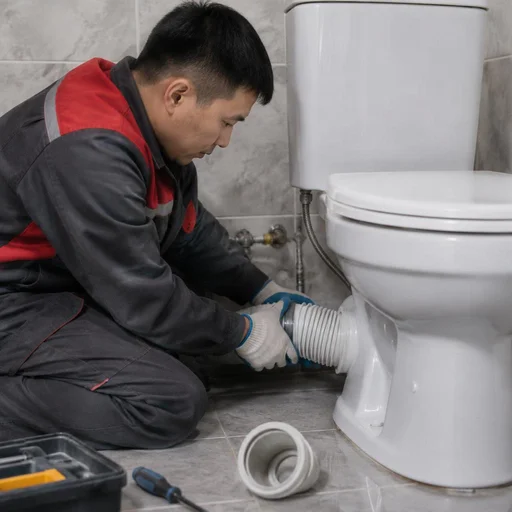
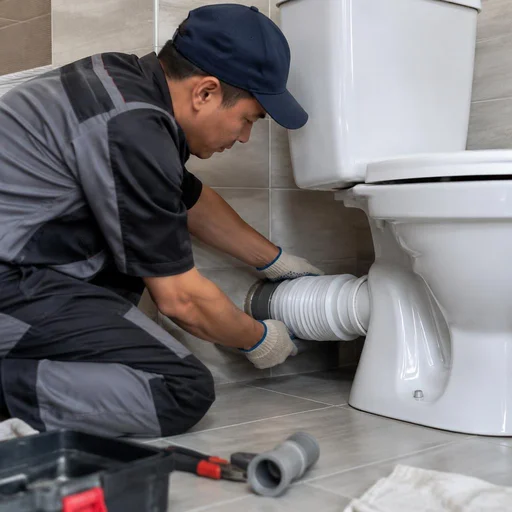
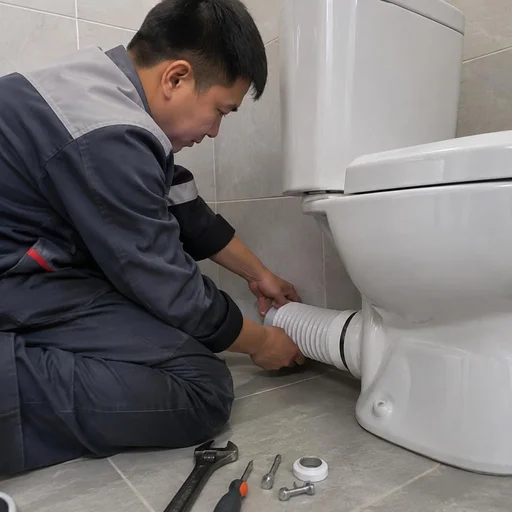
We install the new corrugation, crimp the clamp and seal the joint between the bowl and the outlet — this protects against leaks and odor from the toilet. We select the corrugation by the outlet diameter: for standard 110 mm we take a plastic or reinforced one, for non-standard branches — with an extension or a bend. The outlet gasket is seated on sealant around the perimeter, and the clamp is tightened evenly on both sides so as not to skew the rubber. On an angled outlet, we add an angled adapter so that the corrugation does not bend at an acute angle and does not get pinched. We apply the sealant in a thin layer only on the joint: the excess is squeezed inward and creates an unevenness that causes the connection to start leaking.
Leak test and handover of the work
- Test flushes: we do 2-3 flushes in a row, checking the bowl-to-outlet joint for dryness each time.
- Inspection of the riser: we check where the corrugation enters the riser — that is where a leak most often appears that is not visible immediately after installation.
- Odor check: 10-15 minutes after flushing, we smell at the base — if it smells of sewage, then somewhere the clamp is not tightened enough or the gasket is damaged.
- Fastener check: we check whether the bowl is wobbling, and tighten the bolts if necessary.
- Dry connection: the work is considered complete only after all connection points remain dry during repeated flushes.
- 2-year warranty: we issue a warranty card for the work performed; if a leak occurs within this period, the technician's return visit is free of charge.
Difficult cases: extension, rotation, relocating the outlet
A standard toilet corrugated pipe replacement is not always suitable. With an angled or horizontal outlet, misalignment of the bowl and sewer axes, or a low bowl installation, a different approach is needed — let's break down when and what exactly.
Angled and horizontal outlet: what's the difference
With an angled outlet, the corrugated pipe runs at an angle to the riser; with a horizontal one, it runs parallel to the floor; the length and type of product we select depends on this. An angled outlet is found in most Bishkek multi-story buildings of Soviet construction: the bowl sits at a 30-45 degree angle to the wall, and the branch pipe exits at a downward slant. The horizontal variant is found in new buildings and after redevelopment, where the riser is routed strictly sideways; here a 110 mm corrugated pipe with a straight run without bending is needed, otherwise the corrugation stretches and sags. For an angled outlet, Eco-Service selects a product with a length reserve and on-site fitting so as not to pull the joint. An angled outlet is often confused with a horizontal one during DIY installation — if the wrong corrugated pipe is installed, the connection will be under stress and will crack within the first weeks.
Relocating the outlet and raising the bowl: when the standard approach doesn't work
If the axes of the bowl and the sewer don't coincide, we relocate the outlet or raise the bowl — otherwise the corrugated pipe will be installed with a kink and will quickly leak.
- Relocating the outlet: shifting the bowl's branch pipe toward the riser when the axes don't coincide after redevelopment or a toilet replacement.
- Raising the bowl: installing on a pedestal when the bowl sits below the level of the sewer outlet and the waste doesn't drain by gravity.
- Corrugated pipe with a bend: used when the offset is small and a flexible elbow is sufficient instead of re-soldering the outlet.
- On-site fitting: trimming the corrugated pipe and cuff to the actual dimensions of the joint without tension or sagging.
- Slope check: after relocation, we check the drain angle — with a reverse slope, water stands in the corrugated pipe and an odor appears.
Replacing the outlet and riser: when major repairs are required
We replace the outlet or riser if the old elements are damaged: a new corrugated pipe on a destroyed outlet won't maintain a seal. The toilet outlet is the branch pipe from the bowl to the connection with the corrugated pipe; if there's a crack or chip on the flange, any cuff will leak along the edge, no matter how much you tighten it. The riser is replaced in case of deep corrosion of the cast-iron socket or displacement of the tee — then a full disassembly with removal of the tank and bowl is required. In Bishkek's khrushchyovkas and panel buildings, the riser is often clogged with deposits across 30-40% of its cross-section: after replacing the corrugated pipe, the drain still runs slowly until the section is cleaned or re-welded. The decision to replace the outlet is made after dismantling the corrugated pipe — by the appearance of the joint it's impossible to tell whether there's a crack in the outlet itself.
Sealing and Odor Protection: Why It Leaks and Smells
A leak and smell after installing a corrugated pipe is not always the installer's mistake. More often it is the result of a wrongly selected part, a worn joint, or a disrupted water trap, and consistent diagnostics help to figure it out.
Why the joint leaks after installing a corrugated pipe
A leak after installation occurs due to weak tightening of the clamp, an old outlet gasket, or misalignment of the part — at Eco-Service all three causes are eliminated at the installation stage. A stainless steel clamp holds pressure up to 6 bar, but with a gap of 2-3 mm between the corrugated pipe and the outlet socket, water finds a path along the lower edge. An EPDM outlet gasket lasts 5-7 years, while a cheap analog made of recycled rubber hardens within a single heating season and stops compressing the pipe. Misalignment occurs when the bowl is put back without checking the fasteners: M8 bolts loosen by 1-2 mm, the toilet sags, and the joint becomes loose. If a leak appears 1-2 weeks after installation, the culprit is not the sealant but the mobility of the bowl: without fastener control, the joint loosens and lets water onto the floor.
Smell from the toilet: corrugated pipe, water trap, or ventilation
- Leaky joint: a gap between the pipe and the outlet lets sewer gases through even with a working water trap; the smell is noticeable at the base of the bowl.
- Dried-out water trap: water evaporates from the siphon in 5-7 days of disuse, and the smell comes directly from the riser — typical for dachas and apartments without occupants.
- Blocked riser ventilation: when blocked, air does not escape through the vent pipe and is forced out through the nearest toilet; the smell appears when neighbors flush water.
- Depressurized siphon: a crack in the body or a dislodged gasket between the bowl and the siphon causes a constant smell regardless of the water trap's fill level.
Sealant, PTFE tape, or flax: what we use at the joint
At the joint between the corrugated pipe and the outlet, Eco-Service uses plumbing sealant, while PTFE tape and plumbing flax are used only on threaded connections, where they actually work. A smooth plastic socket has no threads: the sealant fills the gap between the corrugated pipe and the pipe stub and, after curing for 24 hours, holds the joint without movement. Plumbing flax and PTFE tape are designed for metal and plastic threads — on water inlets, flexible supply lines, and riser couplings. On a corrugated pipe joint they give a false sense of tightness: the installer wraps 3-4 layers, the corrugated pipe fits tightly, but on the very first flush the water washes away the fibers. PTFE tape on a smooth plastic corrugated pipe joint is useless — it does not create a seal but merely masks the gap, which will leak again within a month.
What the technician's work includes and how the visit is carried out
The service operates as a direct provider of the service: the technician travels to the address, performs the work on site, and the client pays in a convenient way. Below — how the visit is arranged, what is included in the standard, and what conditions apply.
How the technician's visit works in Bishkek
The technician arrives at the address with a set of corrugated pipes and components, so installation is done in a single visit without trips for parts. In the vehicle we keep 110 mm corrugated pipes — suitable for most outlets in khrushchyovkas and panel buildings of Asanbay, Alamedin and Vostochny, plus adapters for non-standard diameters. Our own service center accepts visit requests by district and coordinates technician workload so the crew doesn't have to drive across the whole city. In my opinion, the main risk here is different: if the contractor arrives without a stock of corrugated pipes of various types, the work stretches into two visits — check that the parts are available when you call so you don't lose a day.
What is included in the standard corrugated pipe installation
- Dismantling: we remove the old corrugated pipe, free the outlet and assess the condition of the joint under the bowl.
- Installation: we install the new corrugated pipe, fit it in place and seat it on the outlet taking into account the routing angle.
- Sealing the joint: we treat the connection so as to eliminate leaks and odor from under the bowl.
- Testing: we drain water several times and check the joint and the outlet gasket for leaks.
- Cleaning: we clean the work area after installation, and check and tighten the toilet fasteners.
Payment and a 2-year warranty on the work
We provide a 2-year warranty on toilet corrugated pipe replacement and accept payment via MBANK, O!Dengi, Optima Bank, Demir Bank and Bakai Bank. Cash and bank transfer also work — the client chooses, and the receipt and handover certificate stay with them. The warranty covers both the work itself and the installed part: if the joint leaks within the term, the technician will come again at no additional charge. In our practice, most warranty claims concerned not the corrugated pipe but loosened fasteners — that's why we include tightening in the standard. Replacing the gasket and fasteners is not an "additional option" but part of a correct installation: without them, the new corrugated pipe won't maintain a seal for long.
Conclusion
Replacing a toilet corrugated pipe is a single-visit job, but its result lasts for years only with the right selection of parts and careful sealing. The main things to keep in mind before starting are below.
Key takeaways
- Service life: a toilet corrugated pipe lasts 3–5 years, and a leak and odor from the bowl are the first signs that the part needs replacing.
- Selection by outlet: plastic covers a standard joint, PVC lasts longer, and a reinforced corrugated pipe is needed where the bowl sits loosely.
- The complete kit: the gasket, clamp and fasteners are replaced together with the corrugated pipe, otherwise the joint loses its seal within the first months.
- Complex geometry: with an angled or horizontal outlet and misaligned axes, relocating the outlet or raising the bowl helps, not eyeballing the fit.
- Final check: tightness is confirmed after 2–3 flushes — without this step the work is not considered complete.