








When a riser in an apartment needs replacement: signs and risks
A riser is a shared pipe serving an entire building entrance, and in Bishkek's old housing stock, cast-iron mains exhausted their service life a decade ago. Let's break down the signals that indicate an emergency condition and when delaying repairs is no longer an option.
Signs that the riser is due for replacement
- Pinholes and dripping on the pipe: rusty spots on the body of the riser and damp streaks with no visible cause mean the metal has thinned to a critical cross-section.
- Seepage at joints and threads: brown streaks under couplings and tees — the connections have lost their seal and hold only thanks to scale.
- Constant condensation: the pipe is wet year-round, including in dry weather — a sign of a pinhole or a crack under the layer of paint.
- Drop in pressure: water from the tap flows weaker than at the neighbors one floor below — the bore is clogged with corrosion products.
- Banging and humming when the tap is opened: water hammer in a worn-out main destroys the pipe wall from the inside.
- Building age over 25 years: a cast-iron riser that has not been replaced since the building was constructed is replaced without additional diagnostics — residual wall thickness is not checked.
Why a delayed riser replacement is dangerous
A burst cold-water or hot-water riser in an apartment on the 5th floor floods the 4 floors below — damage to neighbors and repairs at your own expense fall on the owner, not on the management company. A jet under 3-4 atmospheres of pressure accumulates a layer of water several centimeters deep in a room within 15 minutes, seeps into the floor slabs and cuts power to the panel on the landing. Worst of all is when the pipe bursts at night or during the heating season: shutting off the riser without a shut-off valve at the inlet is impossible, and water keeps flowing until the emergency crew arrives. Under the Housing Code of the Kyrgyz Republic, the riser up to the first shut-off valve is common property, but courts more often assign flooding caused by a worn-out section inside an apartment to the owner. Therefore, at the first signs of wear, request an inspection report from the management company in writing — this document later determines who pays for repairs to those affected.
Replacing risers in a Bishkek apartment — when to call a technician
Eco-Service dispatches a technician for riser diagnostics in Bishkek on the day of the request: the technician records the condition of the pipe, joints and assemblies and says whether a scheduled replacement or an emergency one is needed. If the riser is being replaced for the first time since the building was constructed, it is worth inviting the neighbors in the entrance to the diagnostics — a collective replacement costs less per person and eliminates the risk of a repeated water shutoff. When planning your budget, clarify in advance what is included in the work, since the price of replacing water supply risers depends on the number of floors, the material of the new pipe and the number of assemblies — tees, bends, expansion joints. In an emergency, when water is already seeping down the wall, riser replacement in the apartment is done the same day by the on-duty crew.
Types of risers and what exactly gets replaced: cold water, hot water, sewerage
A riser is not a single pipe but a system: the main line plus components that wear out faster than it. We break down three types of risers and five elements that get replaced together with the pipe.
Cold water and hot water risers: what's different in the work
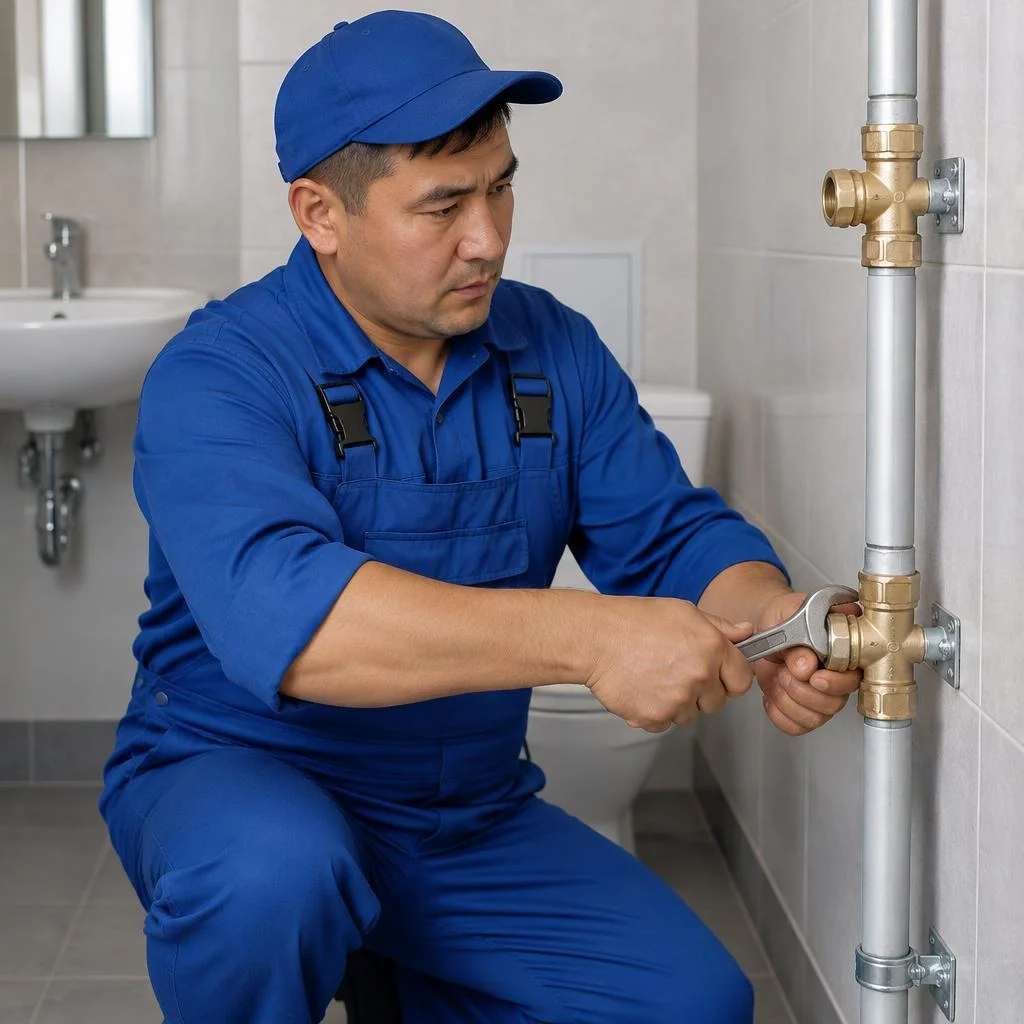
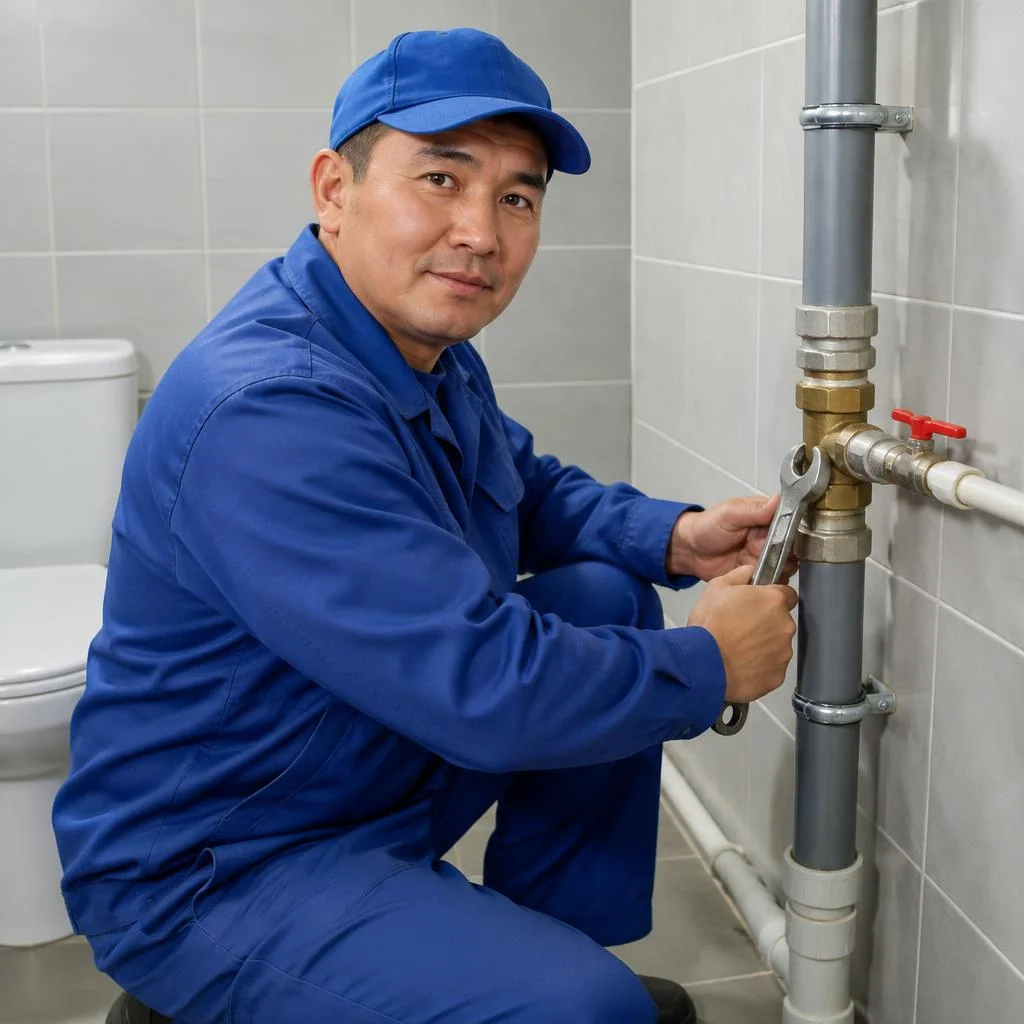
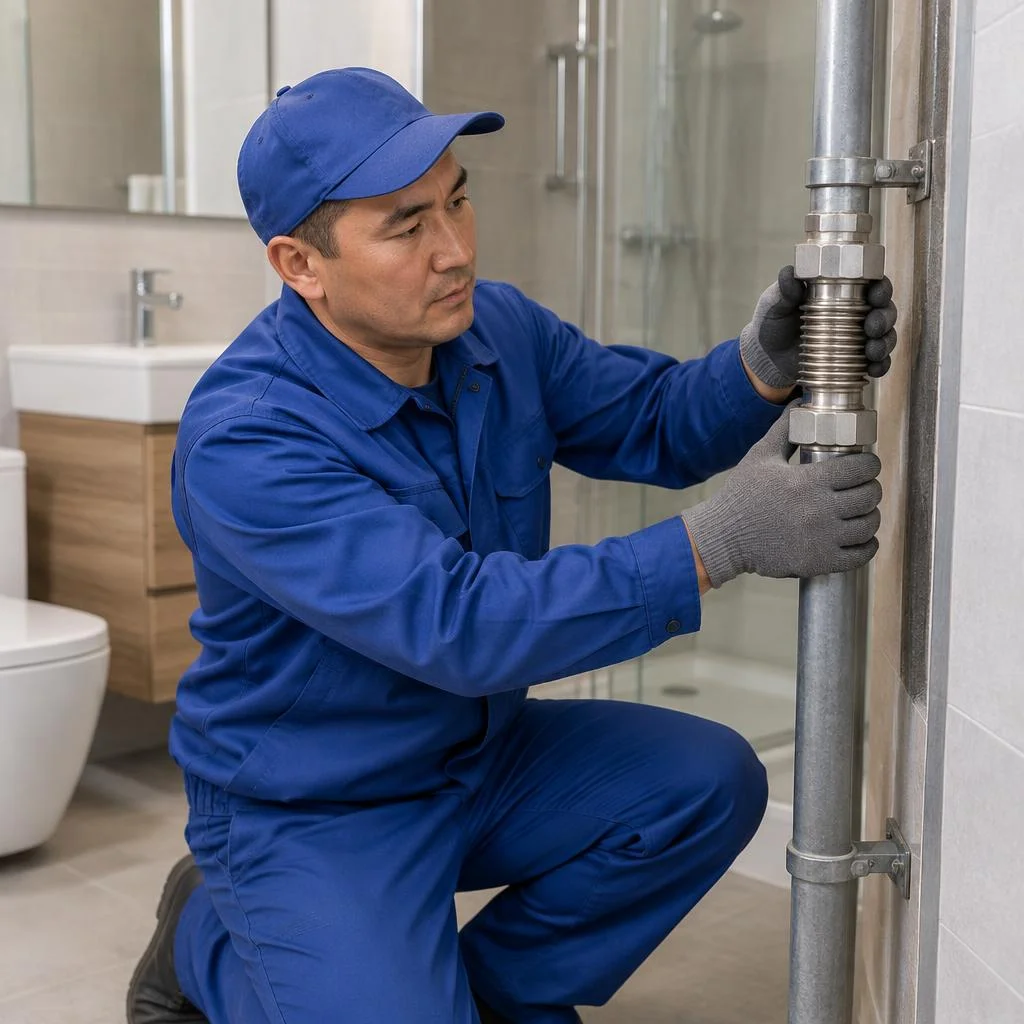
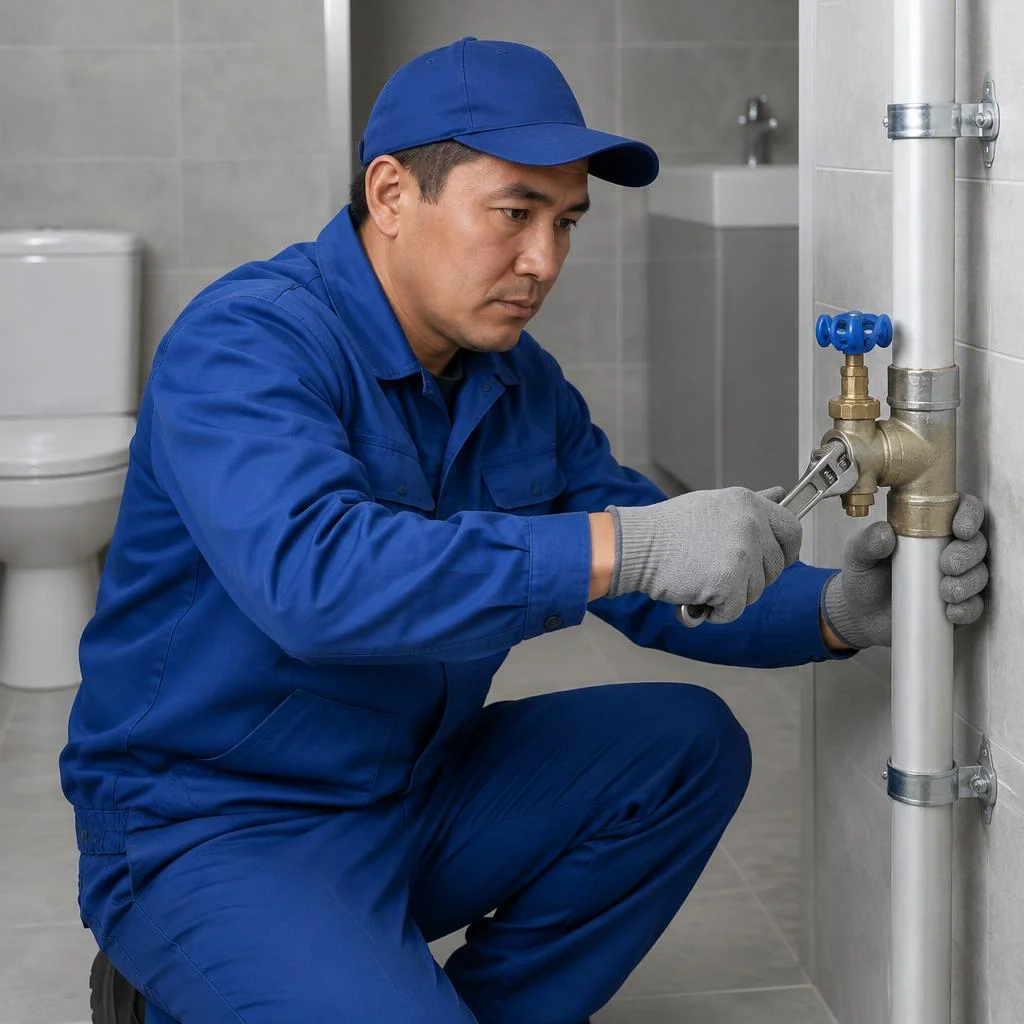
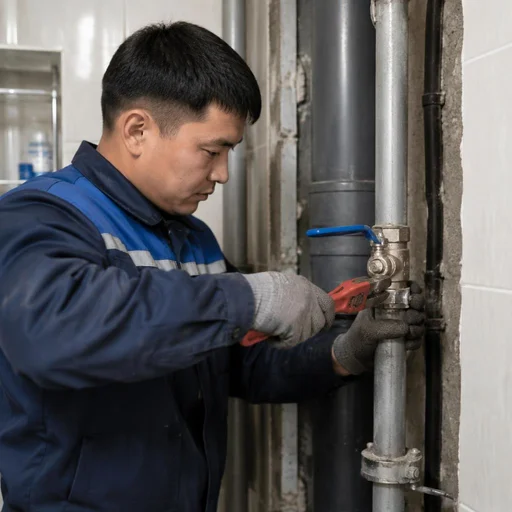
Eco-Service replaces cold water and hot water risers in apartments and basements: the cold riser operates under pressure up to 6 bar, the hot one — up to 10 bar and at temperatures up to 75 °C, which is why pipes with an increased temperature margin are used for hot water. For cold water, reinforced PN20 polypropylene is sufficient; for hot water, PN25 or cross-linked polyethylene PEX-a with an oxygen barrier is installed — saving on hot water costs more than replacing the material. In the basement, the hot water riser gets an inlet unit with shut-off valves and a pressure gauge; in the apartment, only branches to the plumbing fixtures. Clients often search for "riser replacement in Bishkek" — and land on our page, although in fact we're talking about two different circuits with different fittings. On a hot water riser, an expansion compensator is mandatory — without it, the polypropylene pipe, when thermally expanding, presses against the floor slab and cracks along the seam already in the first heating season.
Sewer riser: how it differs from water supply
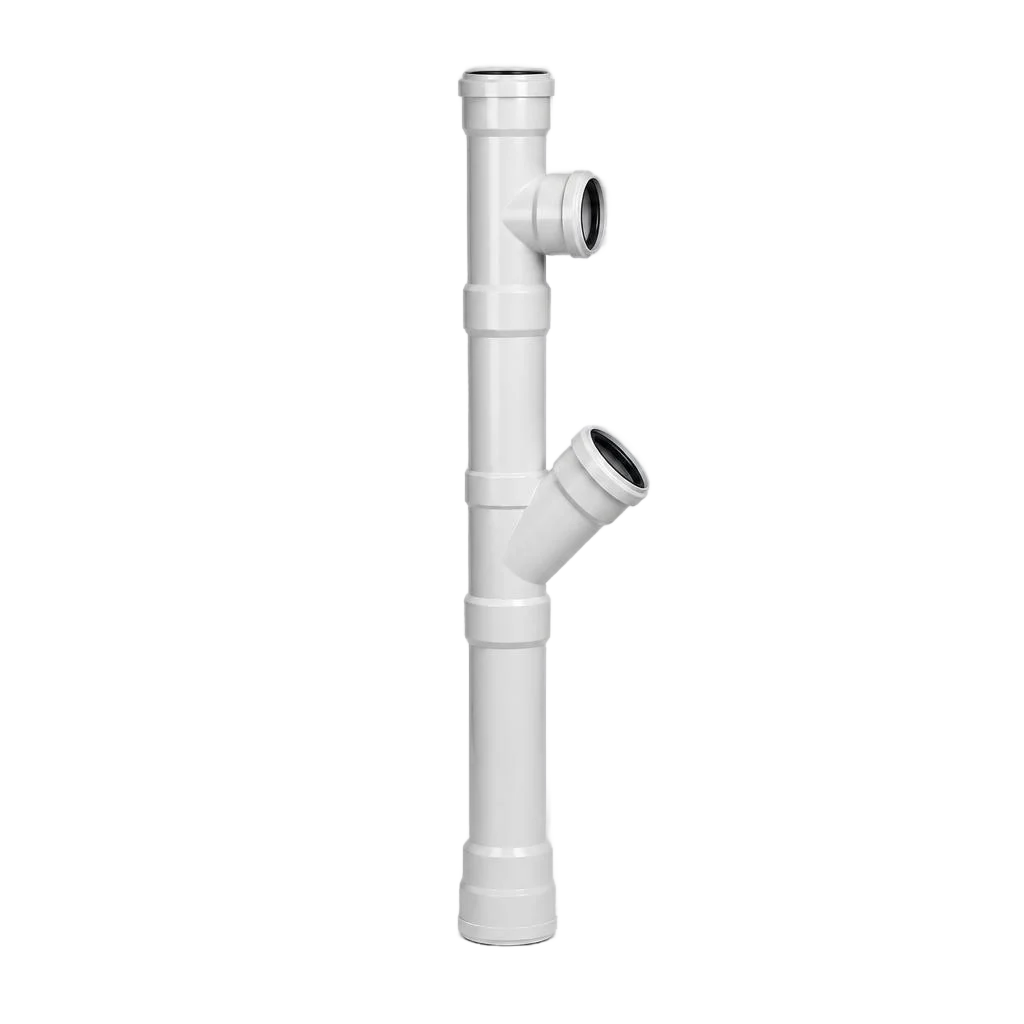
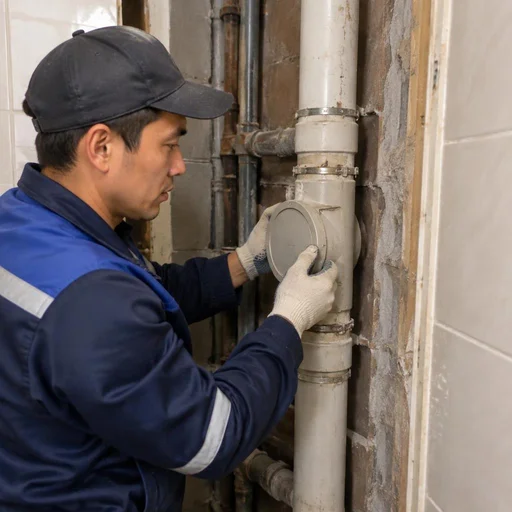
Eco-Service replaces the sewer riser in apartments and basements: diameter 110 mm, branch slope 2 cm per meter, connections — socket-type with rubber seals, no welding. Sewerage works by gravity, so the main thing in it is not pressure but geometry: a branch misaligned by even 5 mm causes stagnation and odor in the bathroom. For the riser, PP pipes with a wall thickness of 3.2 mm are used (not 2.2 mm, as in light series), and a fire-stop collar is installed where it passes through the floor slab. The cleanout is brought out at 1 m from the floor so that rod cleaning goes from top to bottom, not bottom to top. The sewer riser cannot be capped overnight "until morning" — the smell from the basement travels through the entire shaft, so dismantling and installation are done in a single working day.
Which components get replaced together with the riser
| Component | Where it's located | Why it's replaced |
|---|---|---|
| Tee | Point where the branch ties into the riser | Cracks in the casting, pinhole leak on the thread |
| Branch | Bend of the pipe toward the fixture | Fouls up inside, loses flow capacity |
| Compensator | On the hot water riser, at the floor slab | Absorbs thermal expansion of the pipe |
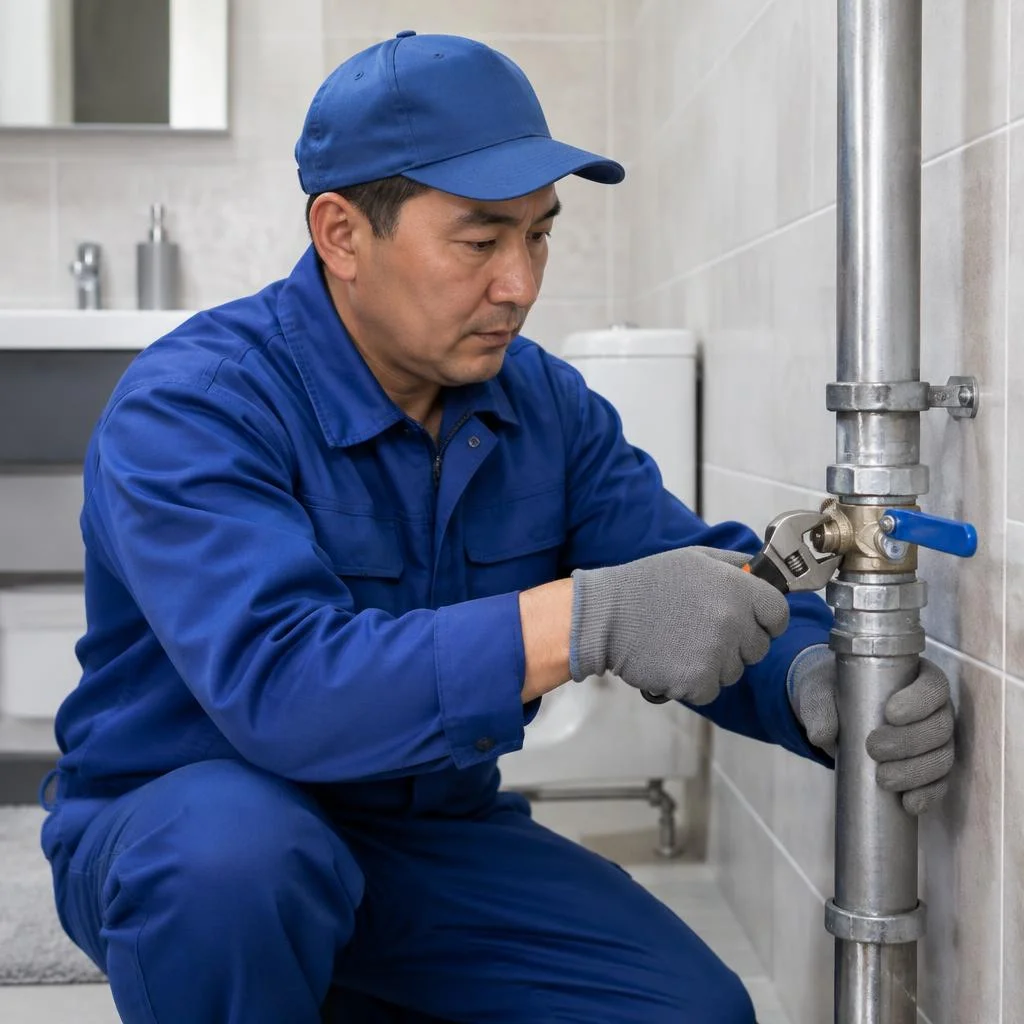
| Shut-off valve | Before the first branch into the apartment | Doesn't hold water, stem seizes up |
| Cleanout | On the sewer riser, 1 m from the floor | Seal hardens, leaks along the thread |
Together with the riser, Eco-Service replaces tees, branches, compensators, shut-off valves and cleanouts — these components wear out faster than the pipe, and with old fittings the new main line won't stay sealed. The shut-off valve is installed before the first branch into the apartment: in case of an accident, the water is shut off without going into the basement and without calling the management company.
Water supply riser replacement price — what's included in the work
- What is billed separately: hidden work — chasing for branches and sealing joints — is not included in the base estimate; it is calculated after inspection.
- Dismantling of the old pipe: cutting out the cast-iron or steel riser, removing the cut-offs, preparing the shaft for installation.
- Installation of the new main line: polypropylene welding or PEX pressure testing, fastening to the floor slab, bringing out branches for the fixtures.
- Replacement of components: tees, branches, compensators, shut-off valves, cleanouts — based on actual wear.
- Testing and disposal: hydraulic testing at pressure above the working pressure and removal of waste to a container.
The cost of water supply work depends on the type of riser and the number of components, so an estimate for a riser is always requested after inspection, not over the phone. A separate matter is the price of replacing a riser in the bathroom: a narrow bathroom requires dismantling the box and relocating the branches, which lengthens the work and adds volume of hidden operations.
Replacing risers in an apartment: how the work is done and how long it takes
Replacing a riser in an apartment is a one-to-two-day job with the water shut off. Below we break down the stages, the actual timelines, and how the shutdown is coordinated with the management company.
Stages of replacing a riser in an apartment
- Water shutoff: the management company closes off the riser, the technician drains the remaining water from the pipes and checks that there is no pressure on the gauge.
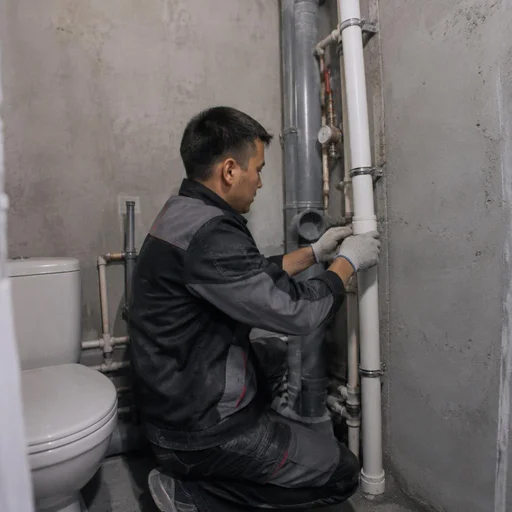
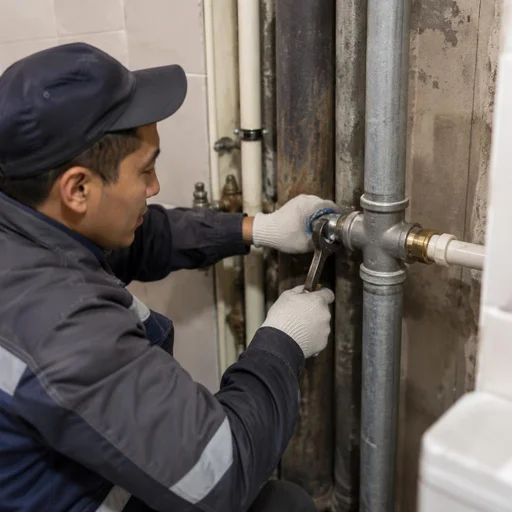
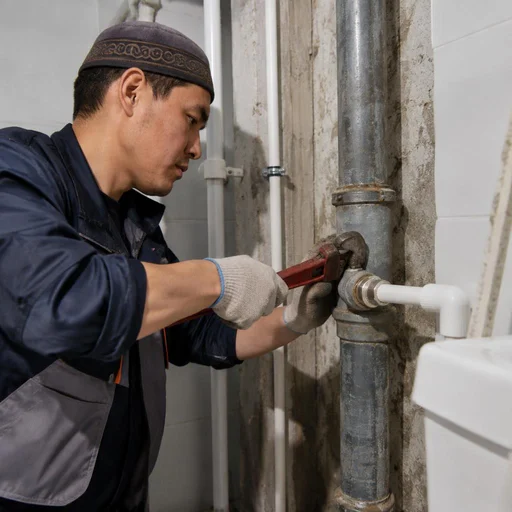
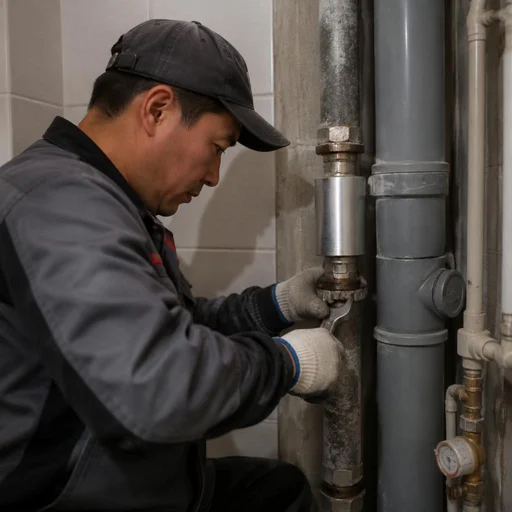
- Dismantling: the old cast-iron or steel pipe is removed, and the components are freed up — the tee, the bend, the shutoff valve, the inspection fitting.
- Installation: a new pipe made of polypropylene or cross-linked polyethylene is installed, and the connections and fastenings are assembled according to the project.
- Hydraulic testing: the system is tested at a pressure 50% above the working pressure, and the joints are inspected for tightness.
- Sealing the chases: the channels in the wall are closed up, and the junction with the floor slab and the finish is restored.
How long replacing a riser takes
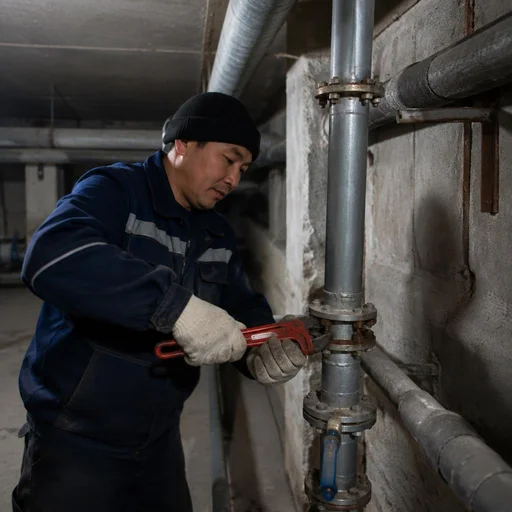
At Eco-Service, replacing a riser in an apartment takes one working day; replacing a riser in the basement takes up to two days if a tie-in to the shared horizontal pipe is required. Dismantling a cast-iron pipe with bell-and-spigot joints takes more time than installing new polypropylene: the cast iron is cut into sections with an angle grinder and carried out piece by piece rather than pulled out whole. Replacing risers in Bishkek is a process where the timeline also depends on access: in Khrushchyovka buildings with a narrow bathroom, opening up the box takes longer than in panel buildings of a series with a niche for the utilities. The timeline stretches if the riser is replaced on its own: the neighbours above and below remain on the old pipes, and the joint at the floor slab has to be assembled with an adapter — this adds half a day.
Water shutoff: how it is done and for how long
Eco-Service coordinates the riser shutdown with the management company or the homeowners' association in advance: the water is off for 4-6 hours during dismantling and installation, and is turned back on for the testing. The request is submitted 2-3 days in advance: the dispatcher of the management company adds the work to the schedule so it does not overlap with scheduled building-wide shutdowns. If the riser is replaced on its own, the water is shut off only on your branch — neighbours on other risers in the entrance keep their water. The shutdown is arranged in writing through the management company — closing off a riser without notifying neighbours risks a complaint and a fine from the management company.
Riser replacement in the bathroom price — specifics of work in the bathroom
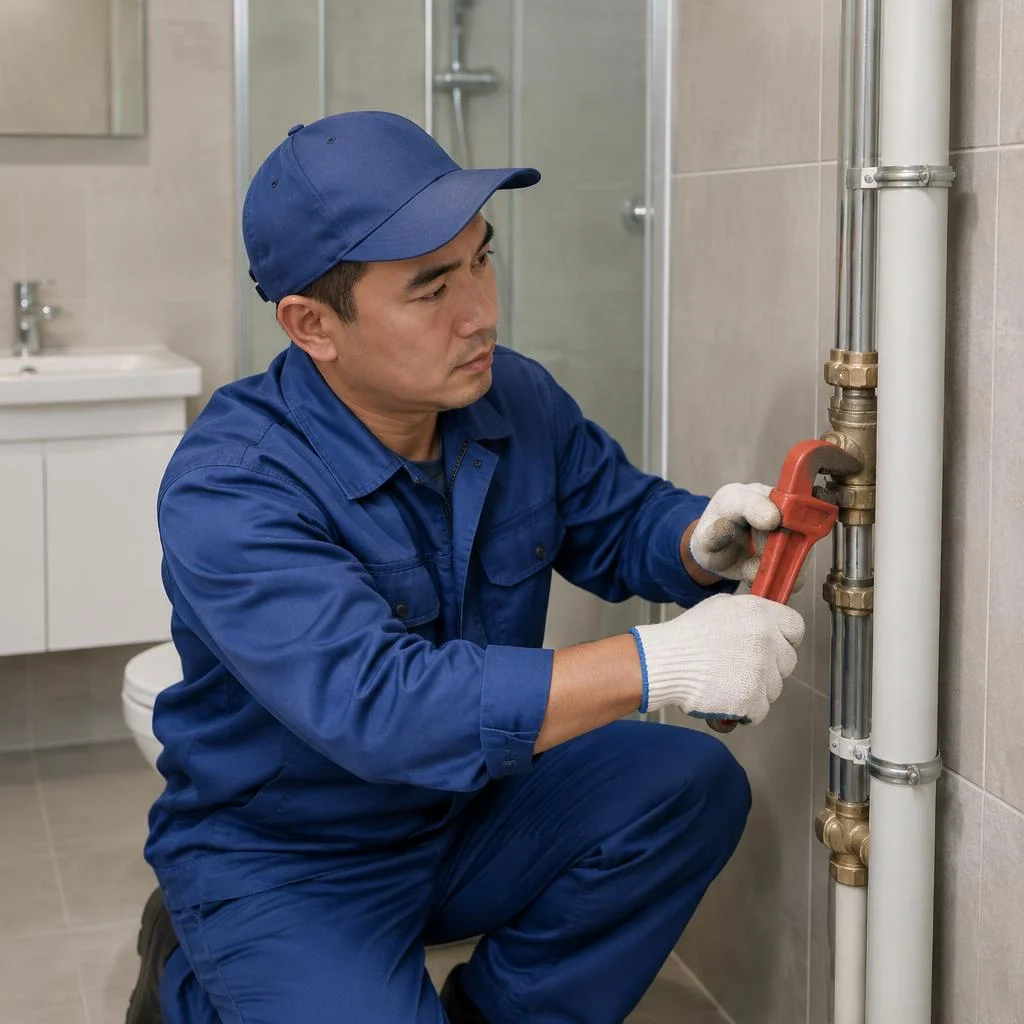
At Eco-Service, replacing a riser in the bathroom includes dismantling the box or tiles around the pipe, replacing the pipe and components, and sealing it back up — the scope of finishing work depends on how the riser is enclosed. In panel buildings in Bishkek, the riser is more often hidden behind a drywall box, which is removed in an hour and reassembled onto the same frame. With brick enclosure, the tiles are dismantled along the seam, and restoring them is counted as a separate line item — the price of replacing a sewer riser in an apartment is then higher, because the estimate includes the masonry and the cladding. If the riser is enclosed with drywall, the box is taken apart and reassembled without losing tiles; with brick enclosure, the tiles are removed, and restoring them is counted as a separate line item.
Coordination with the HOA, housing association and neighbors: who is responsible and what is needed
The riser runs through all floors and is part of the common property, so replacing it almost always comes down to coordination. Let's break down where the management company's zone ends and the owner's responsibility begins, what documents are needed, and why it is sometimes more advantageous to come to an agreement with neighbors.
Who should replace the riser — the management company or the owner
Under the Housing Code of the Kyrgyz Republic, the riser up to the first shut-off valve is common property, and its scheduled replacement is carried out by the management company; the section inside the apartment after the valve is the owner's responsibility. The boundary runs precisely at the shut-off valve: everything further along the distribution to the plumbing fixtures is serviced by the resident themselves, while the vertical through the floor slabs, tees, inspection ports and expansion joints is the responsibility of the management company or housing association. In practice, scheduled work by the management company in Bishkek follows the major repair program once every 25-30 years, whereas cast-iron risers in buildings from the 1960s-1980s become unserviceable noticeably earlier. Owners more often order emergency work themselves, document it with a report, and only then file a claim with the management company demanding a recalculation or compensation. If the riser starts leaking at a floor slab, don't wait for scheduled repairs — call a technician and simultaneously submit a written application to the management company.
Is coordination required for replacing a riser
- Written notification to the management company or housing association: an application stating the apartment, type of work and start date — without it, the management company has the right to deny the crew access to the common property.
- Coordination of shutting off the riser: the management company confirms the date and time of the water shutoff for the entrance so that neighbors can be warned in advance.
- Permit for work on common property: a document authorizing the opening of floor slabs and intervention in the vertical — it is issued before dismantling begins.
- Contacting Eco-Service: the service helps assemble the package of documents and coordinate the work schedule with the management company before the crew arrives.
Collective riser replacement with neighbors
Eco-Service performs collective work on the riser: if neighbors in the same entrance replace the pipe simultaneously, the water shutoff is done once for everyone, and the joints at the floor slabs are assembled without adapters. This format solves several tasks at once — renovating one riser at a time costs more due to repeat visits and downtime, while a collective application allows the work to be completed in one or two days for the entire entrance. Neighbors on the riser usually distribute the scope among apartments: some take the section from floor to ceiling, others only replace the tee or inspection port, and the vertical between floors is installed with a single material. The collective format eliminates the main problem of a solo repair — dissimilar cast-iron-to-polypropylene joints at the floor slab, which are the first to leak. Renovating risers in a Bishkek apartment together with neighbors in the entrance is also cheaper per apartment, because the shared work is divided among all participants.
What to clarify before starting work
Before signing the permit, check with the management company who is responsible for the shut-off valves in the basement and whether the building's balance sheet includes expansion joints on the vertical. Clients often phrase their request briefly — riser replacement in an apartment price — and from this phrase the technician immediately understands that a calculation for a specific section is needed. Many search for the cost of replacing a heating riser — and land on this page, because the total depends on the pipe material, the number of floors and the scope of distribution work. The cost of work in an apartment also depends on how quickly access and shutoff can be coordinated, so documents should be prepared in advance, not on the day the crew arrives. Request the current distribution diagram from the management company: in buildings after major repairs, some risers have already been converted to polypropylene, and this changes the scope of work and the set of components that will have to be replaced along with the vertical. Separately, record in writing who is responsible for restoring the finish in the places where floor slabs are opened — this clause in the contract with the management company is often omitted, and later there are disputes about repairing the ceiling of the neighbors below.
Materials and technologies: polypropylene, cross-linked polyethylene, cast iron
The material of the riser determines the service life, installation method and maintainability of the assembly. We break down what goes into cold water supply, hot water supply and sewerage, how the dismantling of old cast iron differs, and how the system is tested before the chases are sealed.
Polypropylene or cross-linked polyethylene: what to choose
| Material | Where used | Service life | Installation |
|---|---|---|---|
| Polypropylene (PPR) | Cold water supply, hot water supply with reinforcement, sewerage | 25-30 years | Socket fusion welding, repairable |
| Cross-linked polyethylene (PEX) | Cold water supply, hot water supply, heating | 40-50 years | Press fittings, concealed installation |
| Reinforced polypropylene | Hot water supply with temperature up to 90 °C | 25-30 years | Welding with stripping of the reinforcing layer |
| Cast iron | Sewerage (horizontal run, outlet) | 40+ years | Socket, caulking |
For a hot water riser, polypropylene is taken with reinforcement — without a reinforcing layer, the pipe at 75 °C loses rigidity and sags between fastenings. Cross-linked polyethylene withstands water hammer better and does not become overgrown inside, but requires a press tool and concealed installation in a chase. Through Eco-Service you can install both options: polypropylene is more often taken for open installation in the bathroom, PEX — when the riser is hidden in the wall.
Dismantling a cast iron riser: why it is a separate job
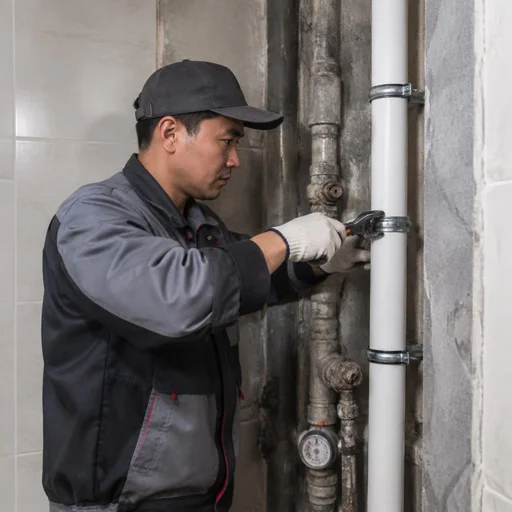
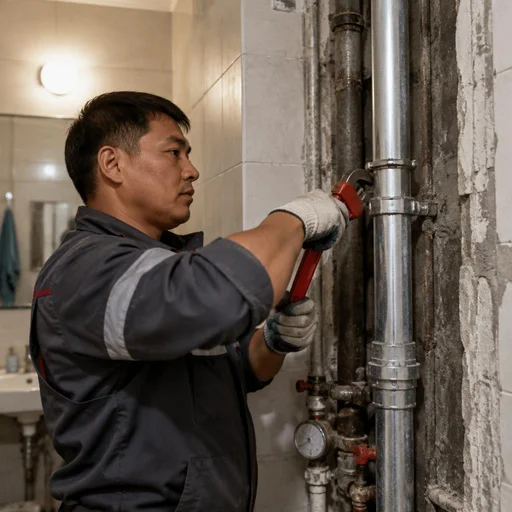
Dismantling an emergency cast iron riser proceeds in sections: the pipe is cut with an angle grinder between floors, the joints are caulked out, and the sockets in the floor slab are freed without striking the load-bearing slab. Cast iron is brittle — vibration from a rotary hammer is transmitted to the slab and opens old cracks in the socket joint, so the section is removed while suspended, not knocked down. In Bishkek buildings of series 1-464 and 105 with thin bathroom walls this is especially critical: an 80 mm partition does not dampen the impact, and a chip along the edge of the slab will show up after the new pipe is installed. If the old section is stuck in the socket for good, it is heated and broken out in pieces — this way the base remains intact, and the new pipe fits into the same opening without additional grouting.
Hydraulic tests and acceptance of the riser
We carry out hydraulic tests of the riser at a pressure 50% above the working pressure and hold the system for at least 15 minutes — joints and assemblies are checked under load before the chases are sealed. For cold water supply, the test pressure is held at 1.5 times the working pressure; for hot water supply, hot water is additionally run through and the behavior of compensators and the reinforcing layer is observed. The pressure gauge is placed at the lowest point of the riser, and the upper floors are inspected for leaks at threaded connections and press fittings. Tests are carried out before the riser is walled in: if a joint leaks after finishing, opening the box and re-sealing will be a separate expense item. Acceptance is documented with a report recording the pressure and holding time — this document is needed if a dispute with the management company arises later. In search, clients often type in cold water riser replacement price and land here, although the final estimate depends on the material and the number of assemblies, while the tests themselves are included in the work by default.
2-year warranty, service center and acceptance of work
A warranty and our own service center are what distinguish a direct supplier from a private handyman with an ad on Lalafo. We break down the terms, the procedure for making a claim, and the acceptance of work after riser replacement.
2-year warranty on riser replacement
Eco-Service provides a 2-year warranty on the replacement of cold water, hot water and sewer risers — it covers the pipe, the components and the quality of installation, including joints and connections. The warranty list includes polypropylene and cross-linked polyethylene sections, expansion compensators, tees, bends and shut-off valves that are installed on the riser. Most often, claims concern the joints: if the soldering was done with overheating, the connection leaks in the first weeks of operation, and such a case is covered under warranty at no charge. The warranty is valid as long as access to the riser is maintained: if the box is sealed shut without an inspection hatch, a warranty visit for a joint becomes paid, so leave a hatch of at least 30 by 30 centimeters opposite each connection.
Our own service center in Bishkek
Eco-Service operates as a direct supplier with its own service center in Bishkek: requests are accepted in person, and the technician travels from the center, not through an intermediary dispatcher. The address and reception hours are confirmed upon contact — a request can be left via 2GIS or Telegram, but in-person reception speeds up diagnostics if you need to show a photo of the riser or the entire assembly. A direct supplier is responsible for the work as a whole — when making a claim, you don't have to figure out who is at fault: the technician or the intermediary company that sent him. In our practice, disputed cases more often arise where a third party stands between the customer and the contractor: a dispatcher takes the request, passes it to a subcontractor, and the warranty visit drags on for weeks. Our own center eliminates this gap: a claim is registered under the same contract as the installation.
How to accept work after riser replacement
When accepting the riser, Eco-Service shows a report listing the work, the results of hydraulic tests, and leaves access to the shut-off valve — three points that are checked before signing. The report is used to verify all replaced components: the pipe, tees, bends, compensators and valve — the sections must match what was actually installed. The pressure test result is checked on the pressure gauge: the riser holds pressure without dropping for the control time, otherwise the connection is re-sealed before signing. The shut-off valve is opened and closed by hand — the stem moves smoothly, without dripping at the gland and threads. If you want to know how much sewer riser replacement costs or the price of riser replacement at your address, the estimate is made after an inspection — based on the number of components and the number of floors.
Conclusion
We have gathered the main things that determine the outcome of riser work in a multi-story building in Bishkek: the boundaries of responsibility, the approval procedure and the technical control points that must not be missed.
Main conclusions
- Boundaries of responsibility: the riser up to the first valve is common property of the building, the section inside the apartment is the owner's area, and this determines who pays for the work.
- Approval with the management company: a written request to the management company takes 2-5 days; verbal agreements with the plumber are not enough.
- Materials: polypropylene and cross-linked polyethylene are workable solutions for cold and hot water; cast iron is dismantled without striking the floor slab.
- Testing: hydraulic tests are carried out before the riser is sealed into the wall — after finishing, access to the joints is closed off.
- Collective approach: when neighbors update the riser at the same time, the question "how much does riser replacement cost" is resolved by one contractor for the entire entrance, rather than by separate call-outs.
- Budget guideline: the query "sewer riser replacement price" is best resolved before the first leak — a planned estimate is lower than an emergency one and repairs for neighbors.